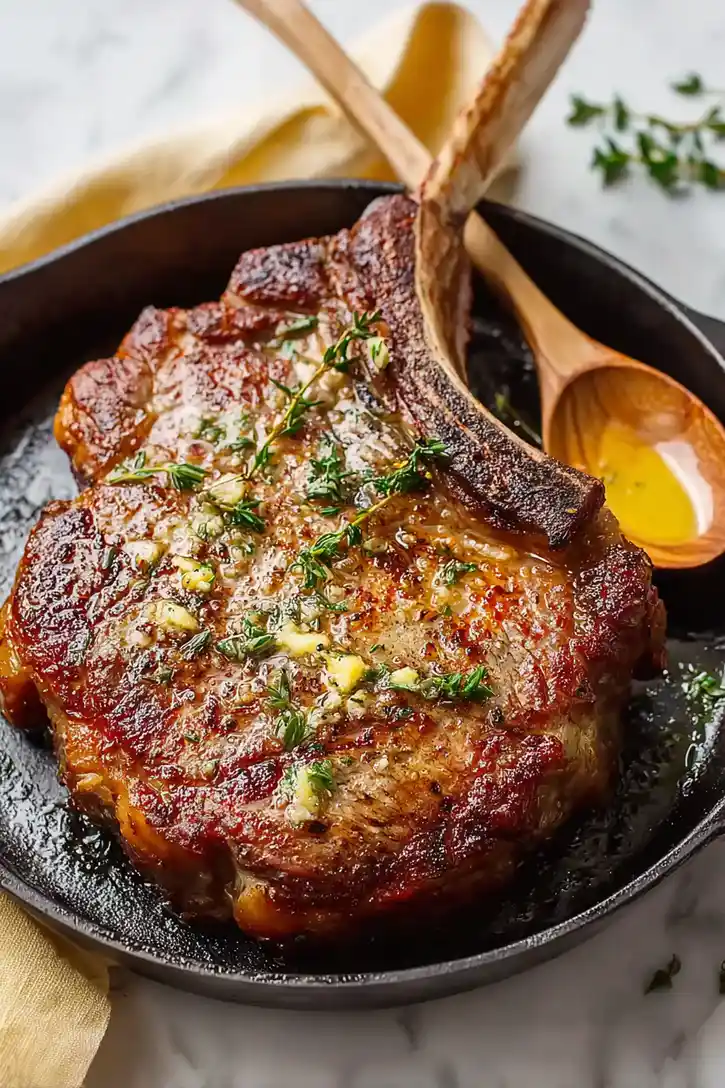
Here is my go-to tomahawk steak recipe, with simple seasoning, perfect searing technique, and a foolproof method for getting that thick, bone-in ribeye cooked just right every time.
This tomahawk steak has become our special occasion dinner when we want to treat ourselves to something fancy at home. I love how impressive it looks on the plate, and my family always gets excited when they see me pulling this big beauty out of the fridge. Plus, it’s way easier to cook than you might think!
Why You’ll Love This Tomahawk Steak
- Restaurant-quality results at home – This impressive cut delivers the same steakhouse experience you’d pay premium prices for, but right in your own kitchen.
- Simple ingredients with big flavor – Just a few basic seasonings and aromatics like garlic, butter, and thyme are all you need to make this steak shine.
- Perfect for special occasions – The dramatic presentation of a tomahawk steak makes any dinner feel like a celebration, whether it’s an anniversary or just treating yourself.
- Surprisingly straightforward technique – Despite looking intimidating, this recipe uses basic cooking methods that any home cook can master with confidence.
What Kind of Tomahawk Steak Should I Use?
When shopping for a tomahawk steak, you’ll want to look for one that’s at least 1 ½ to 2 inches thick to get that perfect crust while keeping the inside juicy. Most butchers will have them available, but you might need to call ahead since they’re not always sitting in the display case. Look for good marbling throughout the meat – those white streaks of fat are what make this cut so flavorful and tender. If you can, go for USDA Prime or Choice grade, and don’t worry if the bone looks a bit intimidating – that’s just part of the tomahawk’s charm and helps with even cooking.

Options for Substitutions
While tomahawk steak is pretty special on its own, here are some swaps you can make if needed:
- Tomahawk steak: If you can’t find a tomahawk, a thick-cut ribeye (at least 1½ inches) will work great. You could also use a bone-in ribeye or even a thick porterhouse, though cooking times may vary slightly.
- Fresh thyme: Rosemary sprigs work beautifully as a substitute and give the steak a different but equally nice flavor. You could also use oregano or sage if that’s what you have on hand.
- Unsalted butter: Salted butter is fine to use – just go easy on adding extra salt to the steak. If you’re out of butter entirely, you can skip it, though you’ll miss out on that rich basting flavor.
- Whole garlic head: If you don’t have a whole head, 4-5 individual cloves work just fine. You can also use garlic powder (about 1 teaspoon) mixed into the salt and pepper, though fresh gives better flavor.
- Olive oil: Any neutral cooking oil with a high smoke point works well – try avocado oil, grapeseed oil, or even vegetable oil for searing.
Watch Out for These Mistakes While Grilling
The biggest mistake when cooking tomahawk steak is not letting it come to room temperature before cooking, which can result in uneven cooking with a cold center and overcooked edges – pull your steak out of the fridge at least 45 minutes before you plan to cook it.
Another common error is trying to cook this thick cut over direct high heat the entire time, which will char the outside before the inside reaches your desired temperature – instead, sear it over high heat for 2-3 minutes per side, then move it to indirect heat or finish in a 400°F oven.
Don’t skip using a meat thermometer since the bone can make it tricky to judge doneness by feel, and remember that the steak will continue cooking after you remove it from heat, so pull it off about 5 degrees before your target temperature.
Finally, resist the urge to cut into your steak immediately – let it rest for 10-15 minutes so the juices redistribute throughout the meat instead of running all over your cutting board.
What to Serve With Tomahawk Steak?
A tomahawk steak is such a showstopper that you’ll want sides that can hold their own without competing for attention. Creamy mashed potatoes or roasted fingerling potatoes are my go-to choices since they soak up all those amazing pan juices from the steak. For vegetables, roasted asparagus or sautéed mushrooms work perfectly with the garlic and thyme flavors already in the dish. A simple arugula salad with lemon vinaigrette helps cut through the richness of the meat and makes the whole meal feel balanced.
Storage Instructions
Refrigerate: Leftover tomahawk steak keeps well in the fridge for up to 3 days when wrapped tightly in foil or stored in an airtight container. I like to slice it before storing since it’s easier to portion out later. This makes great steak salads or sandwiches throughout the week!
Freeze: You can freeze cooked tomahawk steak for up to 3 months if wrapped well in plastic wrap and then foil. Slice it first before freezing so you can thaw just what you need. It’s perfect for quick steak and eggs or adding to pasta dishes later on.
Reheat: The best way to warm up leftover steak is in a low oven at 250°F until it reaches your desired temperature. You can also quickly sear slices in a hot pan for about 30 seconds per side. Avoid the microwave if possible since it can make the meat tough and chewy.
| Preparation Time | 20-30 minutes |
| Cooking Time | 30-40 minutes |
| Total Time | 50-70 minutes |
| Level of Difficulty | Medium |
Estimated Nutrition
Estimated nutrition for the whole recipe (without optional ingredients):
- Calories: 1450-1700
- Protein: 105-125 g
- Fat: 110-130 g
- Carbohydrates: 5-10 g
Ingredients
For the steak:
- 2 tbsp olive oil (I use extra virgin for better flavor)
- 1 tomahawk rib-eye steak (about 1 3/4 inches thick, room temperature for even cooking)
- Kosher salt, as needed (for seasoning just before cooking)
- Fresh ground black pepper, as needed (freshly ground preferred for more flavor)
For the garlic thyme butter:
- 1 small whole garlic head (separated into cloves)
- 4 tbsp unsalted butter (softened to room temperature)
- 4 large sprigs fresh thyme (for aromatic richness)
Step 1: Prepare the Steak and Start Roasting the Garlic
- 1 tomahawk rib-eye steak
- 1 small whole garlic head
- 1 tbsp olive oil
- Kosher salt
Remove your tomahawk steak from the refrigerator 30-40 minutes before cooking to bring it to room temperature—this ensures even cooking throughout the meat.
While the steak comes to temperature, preheat your oven to 350°F.
Cut the top quarter off your garlic head to expose the cloves, then place it on a small piece of foil, drizzle with 1 tablespoon of olive oil, sprinkle with a pinch of kosher salt, wrap it loosely, and place it directly in the oven.
The garlic will roast for 30 minutes while you prepare the steak.
Step 2: Sear the Steak to Build a Golden Crust
- 1 tomahawk rib-eye steak
- 2 tbsp olive oil
- Kosher salt
- Fresh ground black pepper
Pat the room-temperature steak completely dry with paper towels—moisture prevents proper browning and crust development.
Season generously on both sides with kosher salt and freshly ground black pepper just before the pan hits the heat.
Heat 2 tablespoons of olive oil in a large cast-iron or heavy-bottomed skillet over high heat until it’s shimmering and just starting to smoke.
Place the steak in the pan and sear for 3 minutes on each flat side without moving it, then sear the thin edge for 1 minute.
I like to listen for the sizzle—it tells you the crust is forming properly.
Once you finish searing, remove the steak and increase the oven temperature to 425°F.
Step 3: Finish Cooking in the Oven
- 1 tomahawk rib-eye steak
- Roasted garlic from Step 1
Transfer your seared steak to a baking sheet and place it in the 425°F oven.
Roast for 9 to 10 minutes for medium-rare, adjusting slightly based on the thickness of your particular cut and your preferred doneness.
While the steak finishes cooking, remove the roasted garlic from the oven—it should be soft and caramelized by now.
Step 4: Create the Garlic-Herb Butter Baste
- 4 tbsp unsalted butter
- Roasted garlic from Step 1
- 4 large sprigs fresh thyme
While the steak is in the oven finishing, melt the softened butter in your now-empty skillet over medium heat.
Squeeze the soft roasted garlic cloves out of their skins directly into the melted butter.
Add the fresh thyme sprigs and cook for 2 minutes, stirring occasionally to infuse the butter with the garlic and herb flavors.
The whole kitchen will smell incredible—you’ll know it’s ready when the butter is golden and fragrant.
Step 5: Baste and Rest the Steak
- 1 tomahawk rib-eye steak
- Garlic-herb butter mixture from Step 4
Remove the steak from the oven and carefully place it directly into the pan with the garlic-herb butter.
Tilt the pan and baste the steak continuously with the foaming butter for about 1 minute, tilting to coat all surfaces.
This final butter baste adds incredible flavor and richness to the crust.
Transfer the steak to a cutting board and let it rest for 10 minutes—I let it rest undisturbed because this allows the juices to redistribute throughout the meat, keeping each bite tender and juicy.
Step 6: Slice and Serve
- Rested steak from Step 5
- Remaining garlic-herb butter from Step 4
After resting, slice the steak against the grain into your desired thickness, then transfer to a serving platter or individual plates.
Drizzle the remaining garlic-herb butter from the pan over the top of the sliced steak.
Serve immediately while the steak is still warm and the butter is silky.