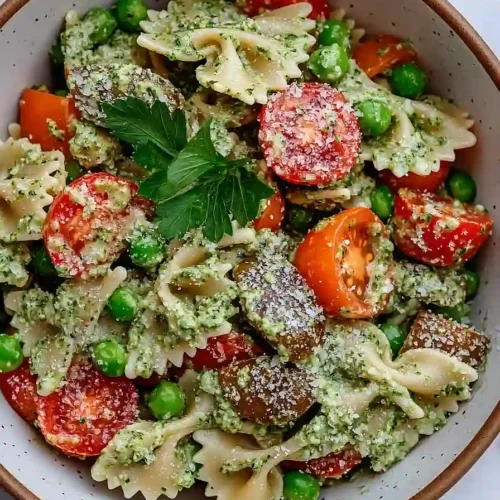
20-Minute Pasta Salad with Pumpkin Seeds
Delicious 20-Minute Pasta Salad with Pumpkin Seeds recipe with step-by-step instructions.
Ingredients
For the pumpkin seed pesto::
- 1/2 cup pumpkin seeds
- 3.5 tbsp lemon juice (freshly squeezed for best acidity)
- 2 garlic cloves
- 1 cup parsley
- 2 tbsp tahini (I use Soom Foods for a smoother consistency)
- 1/2 tsp salt
- 1/2 tsp pepper
- 1 tsp agave syrup
- 2 tsp hot water
For the pasta salad::
- 2 cups farfalle (I always use Barilla for the best al dente texture)
- 3/4 cup peas
- 1.5 bell pepper
- 1/2 cup cherry tomatoes
Instructions
- Fill a large pot with salted water and bring it to a boil—this will be your pasta water. While waiting for it to boil, prep your vegetables: mince the garlic cloves finely, chop the bell pepper into bite-sized pieces, halve the cherry tomatoes, and roughly chop the parsley. Having everything ready before you start cooking ensures smooth workflow and prevents bottlenecks.
- Once your water is boiling, add the farfalle and cook according to package directions until al dente—I always use Barilla because it holds its texture beautifully. While the pasta cooks, place the peas in a bowl and let them thaw at room temperature or run them under warm water to speed up the process. Drain the cooked pasta and transfer to a large mixing bowl, setting it aside.
- In a food processor or blender, combine the pumpkin seeds, lemon juice, minced garlic from Step 1, chopped parsley from Step 1, tahini, salt, pepper, and agave syrup. Blend for 1-2 minutes until the mixture becomes relatively smooth with a slight texture from the seeds. Add the hot water one spoonful at a time, pulsing between additions, until you reach a smooth, pourable consistency. I find that this gradual water addition gives you much better control over the final texture than adding it all at once.
- Pour the pumpkin seed pesto over the cooked pasta in the bowl. Add the chopped bell pepper from Step 1, halved tomatoes from Step 1, and thawed peas from Step 2. Toss everything together gently but thoroughly, making sure the pesto coats all the pasta and vegetables evenly. The warm pasta will help distribute the pesto's flavors throughout the dish.
- Divide the warm pasta salad into serving bowls or plates and enjoy immediately. The warm temperature allows all the flavors to shine together beautifully.