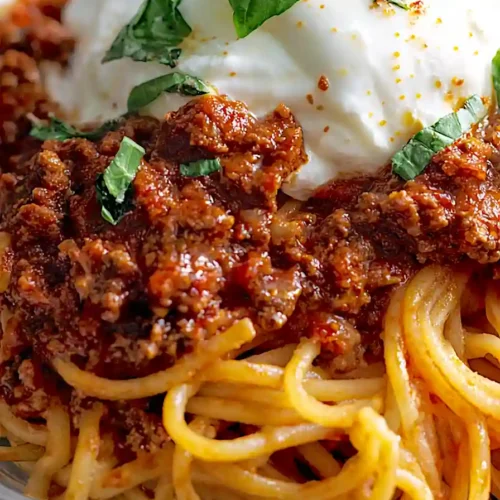
Authentic Spaghetti Bolognese with Burrata
Delicious Authentic Spaghetti Bolognese with Burrata recipe with step-by-step instructions.
Ingredients
For the bolognese
- 1.5 tbsp olive oil (I prefer Bertolli Extra Virgin for a robust flavor)
- 1 large onion
- 4 garlic cloves (freshly minced for best flavor)
- 2 tbsp italian herbs
- 1.2 lb mixed beef and pork mince (look for an 80/20 fat ratio for best texture and moisture)
- 6 oz tomato paste
- 14.1 oz tomato soup (I use Campbell's for the perfect sweetness)
- 14.1 oz diced tomatoes
- 1 tsp sugar
- 1/4 cup dry red wine (e.g., Merlot or Cabernet Sauvignon)
- 4 bay leaves
- salt
- pepper
For the pasta
- 16 oz spaghetti (boil in heavily salted water to season the noodles)
For the topping
- 5.3 oz burrata (let sit at room temperature for 30 minutes to make it extra creamy and rich)
Instructions
- Dice the onion and mince the garlic cloves fresh. Measure out the Italian herbs, tomato paste, tomato soup, diced tomatoes, red wine, and sugar into separate containers for easy access. This prep work ensures you won't scramble when the meat starts cooking. Heat the olive oil in a large, heavy-bottomed pot or Dutch oven over medium heat until it shimmers slightly.
- Add the diced onion to the hot oil and cook for about 4 minutes, stirring occasionally, until it becomes translucent and softens. Add the minced garlic and Italian herbs, stirring constantly for about 2-3 minutes until fragrant. This blooming of aromatics in oil releases their essential oils and creates the flavor backbone of your sauce. I find that this technique makes the final sauce taste much more developed than if you rush through it.
- Increase heat to medium-high and add the mixed beef and pork mince to the pot, breaking it up with a wooden spoon as it cooks. Stir frequently for 3-4 minutes until the meat is no longer pink and begins to brown slightly—you're looking for some color development, which adds depth to the sauce. Pour in the red wine and scrape the bottom of the pot with your spoon to release any browned bits stuck to the surface (this is called deglazing and captures all that built-up flavor).
- Stir in the tomato paste and cook for about 1 minute to caramelize it slightly, which deepens its flavor. Add the tomato soup, diced tomatoes, sugar, and bay leaves, stirring well to combine. Bring the sauce to a boil over medium-high heat, then reduce to low heat, partially cover the pot, and simmer gently for 45-60 minutes. The longer simmer allows the flavors to meld and intensify, and the sauce will thicken slightly. I like to stir it occasionally and taste it around the 45-minute mark—if the flavors feel muted, give it another 10-15 minutes. Remove the bay leaves and season to taste with salt and pepper just before finishing.
- While the sauce simmers (around the 30-minute mark), bring a large pot of heavily salted water to a rolling boil—the water should taste like the sea. Add the spaghetti and cook according to package directions until al dente, stirring occasionally to prevent sticking. Drain the pasta in a colander but do not rinse it; the starch on the noodles helps the sauce cling to them. Reserve about 1/2 cup of the pasta cooking water in case you need to loosen the sauce when combining.
- Divide the cooked spaghetti among serving bowls or plates. Ladle the Bolognese sauce generously over the pasta. Gently place a piece of burrata (which should be at room temperature for maximum creaminess) on top of each portion. Finish with a crack of fresh black pepper and a small handful of fresh basil if desired. The warmth of the sauce will gently soften the burrata, creating a luxurious, creamy element that contrasts beautifully with the rich meat sauce.