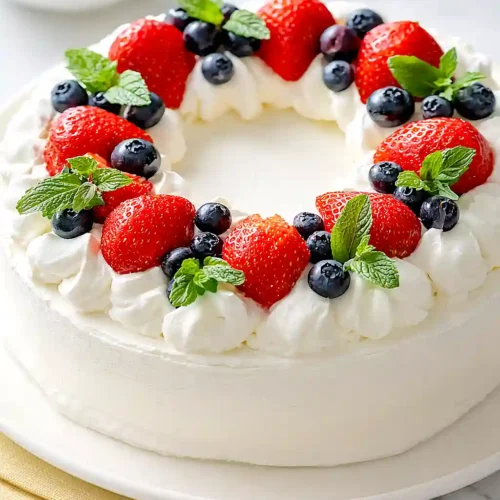
Best Japanese Strawberry Shortcake
Delicious Best Japanese Strawberry Shortcake recipe with step-by-step instructions.
Ingredients
For the sponge cake::
- 1.5 tbsp butter (to grease the pan for easy release)
- 3.5 tbsp unsalted butter (I prefer Kerrygold for a richer flavor)
- 3 tbsp milk (room temperature, about 70°F)
- 4 large eggs
- 1/2 cup sugar
- 1 tsp vanilla extract
- 1 cup cake flour (I always use King Arthur for a light, airy crumb)
For the syrup::
- 2 tbsp water
- 3 tbsp sugar
- 1 tbsp liquor (Kirsch or Grand Marnier adds a sophisticated floral note)
For the frosting and assembly::
- 2 cups heavy cream (very cold, makes it extra creamy and stable)
- 3.5 tbsp sugar
- 1.25 lbs strawberries (hulled and sliced into 1/4-inch segments)
- 10 blueberries
- 2 sprigs mint leaves
Instructions
- Preheat your oven to 350°F. While it heats, grease a 9-inch round cake pan with the 1.5 tbsp butter, then line it with parchment paper for easy release. Sift the cake flour twice into a separate bowl to aerate it—this is crucial for the light, fluffy crumb that defines a proper Japanese shortcake. Set aside all your ingredients measured and ready before you begin the batter, as the subsequent steps move quickly.
- Fill a large bowl with hot water (around 140°F) and place a smaller heatproof bowl on top, ensuring it doesn't touch the water. Add the 4 eggs and 1/2 cup sugar to the smaller bowl and whisk constantly until the mixture reaches about 104°F—this gentle heat expands the eggs and helps them incorporate more air. Once warm, remove the bowl from heat and continue whisking on high speed for 2 minutes, then switch to low speed and beat until the mixture reaches the ribbon stage (it should fall from the whisk in a ribbon and briefly hold its shape).
- While the eggs are beating, melt the 3.5 tbsp unsalted butter in a small heatproof bowl over hot water, then stir in the 3 tbsp room-temperature milk to cool it slightly. Once your egg foam reaches ribbon stage, gently fold in the sifted cake flour from Step 1 in two parts using a spatula, being careful not to deflate the foam. Take one scoop of the batter and stir it into the butter-milk mixture to temper it, then gently fold this lightened mixture back into the main batter. I find this technique prevents the butter from sinking to the bottom and creates an incredibly moist, tender crumb.
- Pour the batter into the prepared pan from Step 1 and tap the bottom firmly on the counter a few times to release large air bubbles. Bake at 350°F for 20-25 minutes until a toothpick inserted in the center comes out clean and the top is pale golden. As soon as it comes out, drop the pan from about 4 inches onto a heat-safe surface to shock it—this helps the cake cool evenly and prevent doming. Turn the cake out onto a wire rack and immediately cover it with a damp towel as it cools; this keeps the exterior tender and prevents it from drying out.
- While the cake cools, hull and slice the strawberries into 1/4-inch segments. In a small bowl, combine the 2 tbsp water, 3 tbsp sugar, and 1 tbsp liquor, then microwave for 1 minute to dissolve the sugar completely—this syrup adds moisture and elegant flavor to the cake layers. Next, place a metal bowl in an ice bath and pour in the 2 cups very cold heavy cream. Whisk until soft peaks form (the cream should hold a peak but still be fluffy and light), then gently fold in the 3.5 tbsp sugar. I prefer to whisk by hand here rather than using an electric mixer so I have better control and end up with a silkier texture.
- Once the cooled cake is completely cool, carefully slice it horizontally into two even layers using a serrated knife or cake leveler. Place the bottom layer on your serving plate and brush it generously with the syrup from Step 5. Spread a portion of the whipped cream from Step 5 over the syrup, then arrange a layer of sliced strawberries on top. Set the second cake layer in place and brush its top with the remaining syrup. Cover the entire top and sides of the cake with the remaining whipped cream, creating an elegant crumb coat, then pipe decorative rosettes on top with a piping bag if desired.
- Crown the top of the cake with the reserved sliced strawberries, arranging them in an attractive pattern. Scatter the 10 blueberries among the strawberries for color contrast, then finish with the 2 sprigs of fresh mint for a touch of elegance. Serve immediately or refrigerate until ready to serve; the cake is best enjoyed the same day it's assembled for optimal texture and flavor.