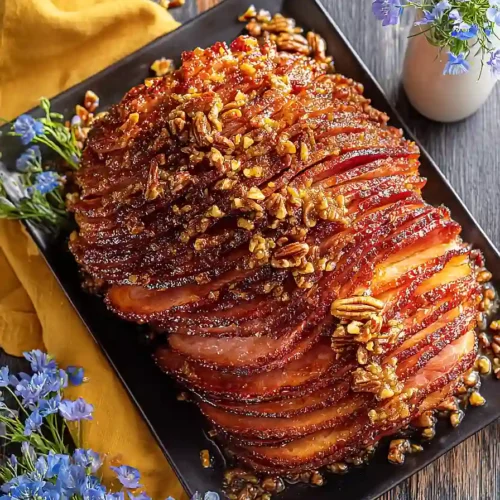
Caramelized Maple Pecan Ham
Delicious Caramelized Maple Pecan Ham recipe with step-by-step instructions.
Ingredients
For the ham:
- 1/2 cup water (for basting and moisture)
- 8 to 10 lb precooked spiral ham (bone-in preferred for moisture and flavor)
For the glaze:
- 1 cup light brown sugar (packed)
- 1/4 tsp ground cloves (freshly ground if possible)
- 1 cup pecans (chopped into 1/4-inch pieces for even distribution)
- 2 tbsp soy sauce
- 3 tbsp Dijon mustard
- 2 tbsp orange marmalade
- 3 tbsp maple syrup (pure maple syrup preferred for authentic flavor)
Instructions
- Preheat your oven to 325°F. Remove the ham from its packaging and place it cut-side down in a large roasting pan. Add 1/2 cup of water to the bottom of the pan—this creates steam that keeps the ham moist during the long bake and prevents the pan drippings from burning. The water will gradually evaporate and baste the ham as it cooks.
- While the oven preheats, combine the brown sugar, Dijon mustard, soy sauce, orange marmalade, maple syrup, and ground cloves in a medium saucepan. Bring the mixture to a boil over medium-high heat, stirring occasionally to dissolve the sugar completely. Let it boil for 2-4 minutes until it thickens noticeably—you should see the mixture coat the back of a spoon. This cooking time concentrates the flavors and gives you a glaze with better texture and shine. Remove from heat and set aside.
- Once the glaze from Step 2 has cooled slightly, brush about one-third of it evenly over the surface of the ham, working it into the spiral slices. Reserve the remaining two-thirds of glaze in the saucepan. Cover the ham tightly with aluminum foil to trap moisture and ensure even cooking. Place the ham in the preheated 325°F oven and bake for 1 hour 45 minutes to 2 hours, depending on the exact weight—use about 12-15 minutes per pound as your guide.
- About 20 minutes before the ham finishes cooking, warm the reserved glaze from Step 2 over low heat, stirring gently. Once warm, stir in the chopped pecans until they're evenly distributed throughout the glaze. I find that warming the glaze slightly helps the pecans coat better and sticks to the ham more effectively. When the ham's initial baking time is almost complete, carefully remove it from the oven and peel back the foil.
- Brush the pecan-studded glaze from Step 4 generously over the entire surface of the ham, making sure pecans nestle into the spiral grooves. Leave the foil off so the glaze can caramelize and brown. Return the uncovered ham to the oven and bake for 15-20 minutes until the glaze bubbles at the edges and turns a deep, glossy brown. Watch carefully during this final stage—the sugar in the glaze will darken quickly, and you want it golden-brown, not burnt.
- Remove the ham from the oven and let it rest in the pan for 10-15 minutes before slicing. This resting period allows the juices to redistribute throughout the meat, keeping each slice tender and moist. I always let glazed hams rest because the residual heat continues to set the glaze while the meat relaxes, resulting in cleaner slices. The ham is already precooked, so resting is purely for texture and presentation. Transfer to a serving platter and slice along the spiral cuts for elegant presentation.