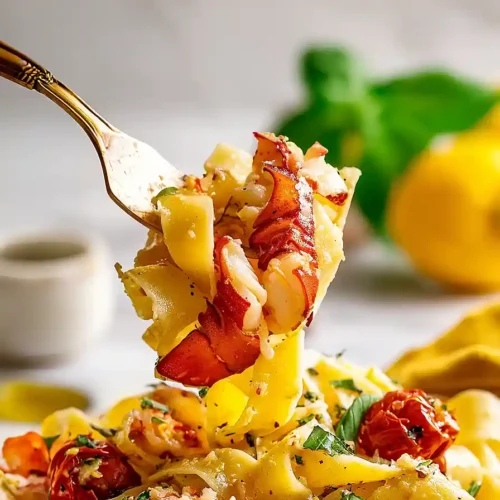
Classic Summer Lobster Pasta
Delicious Classic Summer Lobster Pasta recipe with step-by-step instructions.
Ingredients
For the pasta and lobster
- 12 oz lobster meat (cut into 1-inch chunks for better meat-to-pasta ratio)
- 1 lb linguine (De Cecco recommended)
- 5 tbsp high-quality olive oil
- 2 large shallots (finely diced)
- 6 garlic cloves (thinly sliced)
- 3/4 tsp red pepper flakes
- 1/2 tsp granulated sugar (to balance tomato acidity)
- 2 1/2 cups cherry tomatoes (halved)
- 1/2 cup dry white wine (like Pinot Grigio)
- 3 tbsp unsalted butter
- Kosher salt to taste
- Freshly cracked black pepper to taste
For the topping
- 2 handfuls fresh basil (torn)
- 2 tbsp fresh flat-leaf parsley (finely chopped)
- 1 large lemon (zested and juiced)
Instructions
- Dice the shallots finely and thinly slice the garlic cloves, keeping them separate since they cook at different rates. Halve the cherry tomatoes, zest the lemon, and juice it into a small bowl. Tear the basil into bite-sized pieces and finely chop the parsley. Put a large pot of salted water on to boil—this will take several minutes, so starting it now ensures pasta cooks while you build the sauce. Cut the lobster meat into 1-inch chunks and set aside.
- Once pasta water is boiling, add the linguine and cook according to package directions. While pasta cooks, heat the olive oil in a large, shallow pan over medium-high heat. Add the diced shallots and cook for about 1 minute until they begin to soften and become fragrant. Add the sliced garlic and red pepper flakes, stirring constantly for 30 seconds to avoid burning the garlic—this bloom releases the spice's full flavor. Add the halved cherry tomatoes, a pinch of salt and pepper, and the sugar to balance the tomato acidity. Cook for 3-4 minutes, stirring occasionally, until the tomatoes begin to burst and release their juices.
- Pour the dry white wine into the tomato mixture, scraping up any flavorful bits from the bottom of the pan. Let the wine simmer for 2-3 minutes until it reduces by about half and the alcohol cooks off. I like to let the sauce reduce slightly more than you'd think—this concentrates the flavors and prevents the pasta from tasting watered down. The sauce should smell fragrant and slightly caramelized at this point.
- Add the lobster meat chunks and unsalted butter to the sauce, stirring gently to combine. Cook for about 1 minute, just until the butter is fully incorporated and the lobster is heated through—you don't want to overcook the delicate meat. The butter will add richness and create a silky sauce that clings beautifully to the pasta.
- Drain the cooked linguine, reserving about 1/2 cup of the starchy pasta water. Add the drained pasta directly to the lobster and tomato sauce, tossing gently to coat every strand. If the sauce seems too thick, add pasta water a splash at a time until you reach the right consistency—it should coat the pasta but still flow slightly. Taste and adjust seasoning with salt and pepper. I find adding the zest right at the end, rather than earlier, gives a brighter, fresher lemon pop that doesn't get lost in the cooking process.
- Remove from heat and stir in the fresh basil, lemon juice, and lemon zest. Transfer to serving bowls and garnish each portion with the chopped parsley. Serve immediately while the pasta is hot and the flavors are at their peak.