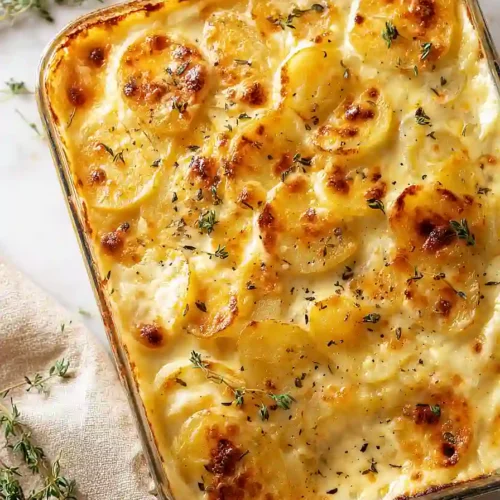
Creamy Freezer Meal Scalloped Potatoes
Delicious Creamy Freezer Meal Scalloped Potatoes recipe with step-by-step instructions.
Ingredients
- 3 tbsp butter (I like Kerrygold unsalted butter for this)
- 1 large onion
- 3 garlic cloves
- 1 tbsp thyme
- 1 1/2 tsp salt
- 1/2 tsp pepper
- 3 lb russet potatoes (peeled and sliced into 1/8-inch thick rounds)
- 1 cup chicken broth (I always use Swanson for the best savory base)
- 1 1/4 cup heavy cream
- 2 bay leaves
- 5 oz cheddar cheese (shredded, makes it extra creamy and rich)
- 1/4 tsp ground nutmeg
Instructions
- Peel and slice the russet potatoes into 1/8-inch thick rounds—I like to use a mandoline for consistent thickness so they cook evenly. Dice the onion into small pieces, mince the garlic cloves, and shred the cheddar cheese. Have all ingredients prepped and ready before you start cooking, as the sauce comes together quickly and you won't have time to chop once the heat is on.
- Melt the butter in a large pot over medium heat and add the diced onion. Cook for about 4 minutes until the onion becomes translucent and softened. Add the minced garlic, thyme, salt, and pepper, stirring constantly for about 30 seconds until fragrant. This short cooking time for the garlic and herbs is intentional—it releases their flavors without burning them.
- Pour the chicken broth and heavy cream into the pot with the aromatic base, stirring to combine. Add the sliced potatoes from Step 1 and the bay leaves, then bring the mixture to a gentle simmer. Simmer for 10 minutes—this partially cooks the potatoes so they'll finish properly in the oven and helps thicken the sauce slightly. The potatoes should still be firm at this point, not tender.
- Remove the bay leaves from the pot and discard them. Stir in the shredded cheddar cheese and the ground nutmeg until the cheese is completely melted and the sauce is creamy and smooth. Spray a 9x13 inch baking dish (or similar size) with cooking spray, then pour the entire potato mixture, including the sauce, into the prepared pan. I find the nutmeg adds a subtle warmth that keeps the dish from tasting too heavy.
- Bake the scalloped potatoes at 425°F for 15-20 minutes until the top is golden brown and the sauce is bubbling around the edges. The high heat finishes cooking the potatoes while creating a lightly browned top that adds texture and flavor. If freezing for later, allow the dish to cool completely before covering and freezing—it will keep for up to 3 months.
- Remove the baking dish from the oven and let it sit for 10 minutes before serving. This resting time allows the sauce to set slightly so the potatoes hold together better when plated, and it makes serving much easier.