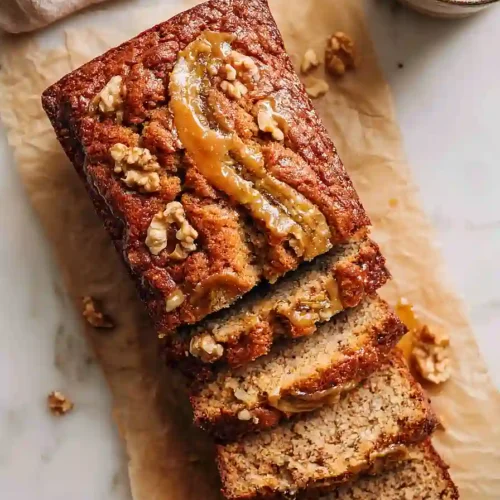
Easy Vegan Gluten Free Banana Bread
Delicious Easy Vegan Gluten Free Banana Bread recipe with step-by-step instructions.
Ingredients
For the flax egg::
- 1.5 tbsp flaxseed meal (I use Bob's Red Mill for best binding)
- 3 tbsp water
For the batter::
- 3 bananas (mashed until mostly smooth with some small chunks)
- 1/4 cup almond butter (I prefer Barney Butter for a creamy consistency)
- 3 tbsp avocado oil
- 1/3 cup coconut sugar
- 4 tbsp maple syrup
- 3/4 tsp salt
- 3/4 cup almond milk (room temperature to prevent oil from seizing)
- 1 tbsp baking powder
- 1 tsp ground cinnamon
- 1 3/4 cup almond meal
- 1 1/4 cup flour blend (I always use King Arthur Measure for Measure)
- 1 1/3 cup oats
- 1/2 cup walnuts (roughly chopped into 1/4-inch pieces for crunch)
Instructions
- Heat your oven to 350°F and grease a 9x5 inch loaf pan or similar size with oil or cooking spray. While the oven preheats, whisk together the flaxseed meal and water in a small bowl until combined, then set aside for 5 minutes to thicken—this creates the binding agent that holds the bread together in place of eggs. I like using Bob's Red Mill flaxseed meal because it hydrates evenly and creates a more stable batter.
- Add the mashed bananas to the flax egg mixture and stir until well combined. Pour in the almond butter, avocado oil, coconut sugar, maple syrup, and salt, then whisk vigorously for about 1 minute until the mixture is smooth and the sugar is mostly dissolved. The bananas and sweeteners should be fully incorporated to ensure even distribution throughout the bread. Pour in the room-temperature almond milk last and whisk until everything is well combined—using almond milk at room temperature prevents the oil from seizing and creating a separated or lumpy batter.
- In a separate bowl, whisk together the baking powder, ground cinnamon, almond meal, gluten-free flour blend, and oats until evenly distributed. I always use King Arthur Measure for Measure flour blend because it has the right ratio of starches and binders that work perfectly with gluten-free baking. Gently fold the dry ingredient mixture into the wet ingredients from Step 2 using a spatula, stirring until just combined—don't overmix, as this can make the bread dense. Fold in half of the chopped walnuts into the batter, reserving the remaining half for topping.
- Pour the batter into the prepared loaf pan, smoothing the top with a spatula. Scatter the reserved walnuts evenly over the surface of the batter to create a crunchy top layer. Bake for 1 hour to 1 hour 15 minutes, until a toothpick inserted into the center comes out clean or with just a few moist crumbs (not wet batter). The top should be golden brown and the bread should spring back slightly when gently pressed.
- Remove the bread from the oven and let it cool in the pan for 10 minutes—this resting time allows the crumb structure to set so it won't fall apart when you turn it out. Run a thin knife around the edges to loosen it from the pan, then turn the bread out onto a wire cooling rack to cool completely before slicing. This prevents condensation from making the bottom soggy.