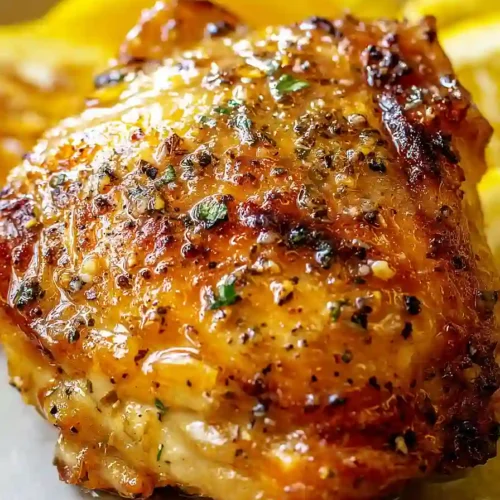
Golden Lemon Garlic Chicken Thighs
Delicious Golden Lemon Garlic Chicken Thighs recipe with step-by-step instructions.
Ingredients
- 4 tbsp unsalted butter
- 1.5 tsp sea salt
- 1.5 tsp black pepper
- 6 chicken thighs (bone-in, skin-on for best flavor)
- 6 cloves garlic, minced (about 1/4 cup)
- 1.5 tsp lemon zest
- 2.5 tsp dried oregano
- 2 sprigs fresh thyme
- 1/2 cup dry white wine (like Pinot Grigio or Sauvignon Blanc)
- 1/2 lemon (sliced)
Instructions
- Pat the chicken thighs completely dry with paper towels—this is crucial for achieving crispy, golden skin. Combine the sea salt and black pepper in a small bowl, then season the chicken thighs generously on both sides with this mixture, making sure to get some seasoning under the skin where possible. Mince the garlic, zest the lemon, and have the wine and lemon slices ready nearby. I like to do all my prep work with chicken before it hits the pan so there are no interruptions during cooking.
- Melt the butter in a large skillet over medium-high heat. Once foaming, carefully place the chicken thighs skin-side down in the pan and cook undisturbed for 3-4 minutes until the skin is golden and crispy. Flip the thighs and cook the other side for another 3-4 minutes until golden. This high-heat searing develops deep flavor through browning and renders some of the fat from the skin.
- Reduce the heat to medium and add the minced garlic to the pan, stirring constantly for about 30 seconds until fragrant but not browned. Sprinkle the lemon zest directly over the chicken, then add the dried oregano and stir gently to distribute the aromatics around the thighs. Pour in the white wine, scraping up any browned bits from the bottom of the pan—these flavorful bits are liquid gold for your sauce.
- Add the fresh thyme sprigs to the pan and let everything simmer gently on medium heat for 12-15 minutes, until the chicken reaches an internal temperature of 165°F when checked with a meat thermometer at the thickest part (without touching bone). The sauce will reduce and thicken as it simmers. I find that letting the sauce reduce naturally creates a silkier, more concentrated flavor than rushing it—don't be tempted to turn up the heat.
- Transfer the cooked chicken thighs to a serving platter and let them rest for 3-4 minutes. Pour the pan sauce (with the lemon slices and thyme) over the chicken just before serving. This resting period allows the juices to redistribute throughout the meat, ensuring each bite stays tender and juicy.