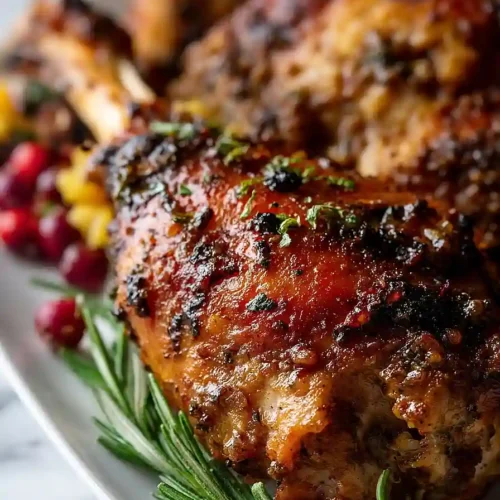
Golden Spatchcock Jerk Turkey
Delicious Golden Spatchcock Jerk Turkey recipe with step-by-step instructions.
Ingredients
For the turkey:
- 1 young turkey (10–12 lb)
- 1 cup all-purpose flour (or cassava flour for Whole30)
- 2 tbsp butter (or ghee for Whole30)
For the dry seasoning mix:
- 2 tbsp brown sugar (omit for Whole30)
- 2 tbsp garlic powder
- 2 tbsp onion powder
- 1 tbsp paprika
- 1/2 tsp cayenne pepper
- 1/2 tsp ground black pepper
- 2 tsp salt (iodized sea salt or coarse salt)
For the jerk flavor:
- 1/2 cup jerk seasoning (store-bought or 1 batch homemade jerk seasoning)
Instructions
- Begin by spatchcocking the turkey: remove the backbone using kitchen shears and press the turkey flat. Sprinkle the entire turkey with the flour, making sure it's coated. Let it rest for 15 minutes; this step helps to reduce the gamey taste of turkey. After resting, thoroughly rinse the turkey under cold water to remove the flour, then pat it dry completely with paper towels and set aside.
- In a quart-size ziplock bag, combine the brown sugar (omit if on Whole30), garlic powder, onion powder, paprika, cayenne pepper, black pepper, and salt. Seal the bag and shake to thoroughly mix the spices, creating a well-blended dry rub. I like to make extra dry rub to sprinkle on roasted vegetables later!
- Lay the cleaned, dry turkey (from Step 1) flat with the underside facing up. Rub about half of the dry rub (from Step 2) onto the underside of the turkey, followed by about 3 tablespoons of jerk seasoning (or half of your homemade batch). Flip the turkey breast side up and apply the remaining dry rub, then the remaining jerk seasoning. Don't forget to season the neck cavity generously with both dry rub and jerk seasoning.
- Place the seasoned turkey (from Step 3) on a tray or in a large dish and refrigerate uncovered to marinate overnight if possible, or up to three days for maximum flavor. Before baking, remove the turkey from the refrigerator two hours ahead to bring it to room temperature. I always find that letting the turkey sit at room temperature before roasting helps it cook more evenly.
- Preheat your oven to 400°F. Place the marinated turkey breast side up in a large roasting pan, ensuring it lays flat. Rub two tablespoons of butter (or ghee for Whole30) over the turkey breasts. The fat helps with browning and keeps the meat juicy.
- Roast the turkey uncovered at 400°F for 1 hour. Baste the turkey with the pan juices at the 30-minute mark to keep it moist. Then, reduce the oven temperature to 375°F, baste the turkey again, and cover it loosely with foil. Continue baking for an additional 30 to 45 minutes, or until the thickest part of the turkey reaches an internal temperature of 165°F. I always check the temperature in both the breast and thigh to ensure it's fully cooked.
- Remove the turkey from the oven and let it rest for about 10 minutes before carving. This helps the juices redistribute throughout the meat, resulting in a more flavorful and moist turkey. Carve and serve warm to enjoy your delicious jerk-seasoned holiday turkey.