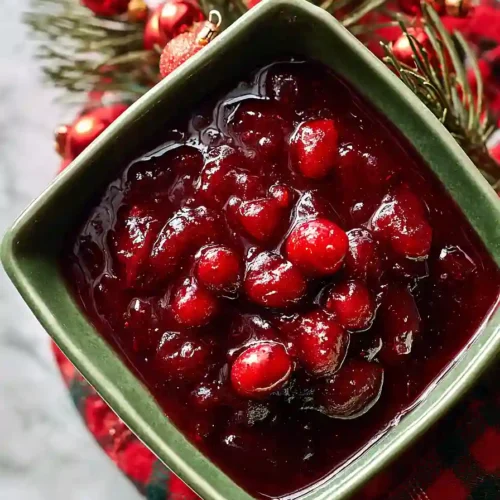
Holiday Cranberry-Port Wine Sauce
Delicious Holiday Cranberry-Port Wine Sauce recipe with step-by-step instructions.
Ingredients
- 4 cups cranberries (fresh or frozen work equally well)
- 2 cups water
- 1 1/3 cups sugar
- 1/2 cup port wine (adds depth and complexity)
- 1 mandarin orange (zest and juice)
Instructions
- Zest the mandarin orange using a microplane or fine grater, then cut it in half and juice it, straining out any seeds or pulp. Measure out the cranberries, sugar, water, and port wine so everything is ready to go. Having all components prepped prevents scrambling once the cooking begins and ensures the sauce develops properly.
- Combine the cranberries, sugar, water, mandarin juice, and zest in a heavy-bottomed pot and bring to a boil over medium heat. Stir occasionally to help the sugar dissolve, then let it boil until the cranberries begin to pop and break down, approximately 8-12 minutes. This initial boil develops the sauce's body and allows the tartness of the cranberries to mellow while the sugar caramelizes slightly—I find this creates a more complex base than rushing the process.
- Using a potato masher or the back of a wooden spoon, gently mash the cooked cranberries in the pot to break them down further and release their juice and seeds, creating a thicker, more cohesive sauce. Continue boiling for 5 more minutes, stirring occasionally. I like to mash just enough to break the cranberries without over-crushing them—you want some texture, not a completely smooth puree.
- Remove the pot from heat briefly, then add the port wine and stir to combine. Return to medium heat and simmer for 5 more minutes to allow the alcohol to cook off while the wine's deep, complex flavors meld into the sauce. The slight cooling between additions helps prevent the wine's volatile compounds from overwhelming the delicate cranberry notes.
- Remove the sauce from heat and let it cool to room temperature, which allows the sauce to thicken and the flavors to fully settle and round out. As it cools, the natural pectin in the cranberries will help the sauce reach its final consistency—perfect for serving alongside poultry, ham, or desserts. The sauce will continue to thicken slightly as it cools completely.