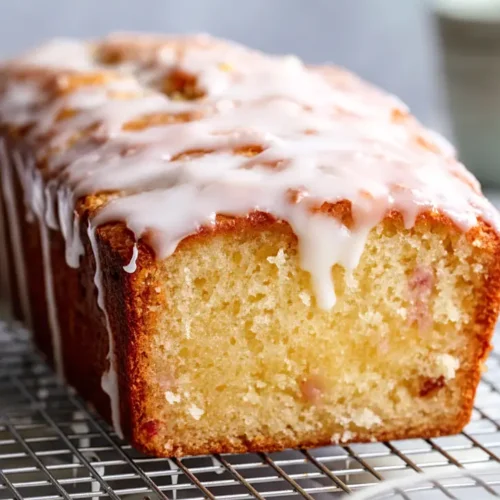
Mouthwatering Glazed Rhubarb Bread
Delicious Mouthwatering Glazed Rhubarb Bread recipe with step-by-step instructions.
Ingredients
For the bread
- 1 1/2 cups granulated sugar
- 3/4 cup unsalted butter, softened
- 3 large eggs, room temperature
- 1 tablespoon fresh lemon juice
- 3/4 cup whole milk
- 1 tablespoon fresh lemon zest
- 1 teaspoon vanilla extract
- 3 cups all-purpose flour
- 3 teaspoons baking powder
- 3/4 teaspoon salt
- 1/4 teaspoon ground ginger
- 2 1/4 cups fresh rhubarb, chopped into 1/2-inch pieces
For the glaze
- 1 1/4 cups icing sugar, sifted
- 2 tablespoons fresh lemon juice
Instructions
- Preheat your oven to 375°F and grease a 9x5 inch loaf pan or similar size, making sure to coat the bottom and sides thoroughly to prevent sticking. While the oven preheats, chop the fresh rhubarb into 1/2-inch pieces and set aside in a bowl. Measure out all your dry ingredients (flour, baking powder, salt, and ginger) into a separate bowl and whisk them together to distribute the leavening agents evenly—this prevents lumps when you combine the wet and dry mixtures.
- In a large mixing bowl, combine the softened butter and granulated sugar, then beat on medium speed for 3-4 minutes until the mixture is light, fluffy, and pale in color. This creaming process incorporates air into the batter, which helps the bread rise and creates a tender crumb. The butter should be soft enough to combine easily but still hold its shape—if it's too warm, the mixture won't incorporate air properly.
- Add the room-temperature eggs one at a time to the creamed butter mixture, beating well after each addition to fully incorporate. Then stir in the lemon juice, fresh lemon zest, vanilla extract, and milk until everything is well combined. The mixture may look slightly curdled at this stage, which is normal—the dry ingredients will bring it together. I like to add the milk last to help smooth out any texture issues before mixing with the dry ingredients.
- Pour the dry ingredient mixture from Step 1 into the wet mixture from Step 3, then stir gently with a spatula or wooden spoon just until combined—do not overmix, as this can lead to a tough, dense crumb. The batter should look slightly lumpy; overmixing develops gluten, which is the enemy of tender quick breads. Stop stirring as soon as you don't see streaks of flour.
- Fold the chopped rhubarb from Step 1 gently into the batter using a spatula, being careful not to crush the fruit pieces or overmix. Pour the batter into the prepared loaf pan and smooth the top gently. Bake at 375°F for approximately 40 minutes, until a toothpick inserted into the center comes out with just a few moist crumbs—it should not be wet with batter. I let the bread cool in the pan for about 10 minutes before turning it out onto a cooling rack, which helps it set without breaking apart.
- While the bread cools, whisk together the sifted icing sugar and the 2 tablespoons of fresh lemon juice in a small bowl until you achieve a smooth, pourable consistency. The glaze should be thick enough to coat the bread but thin enough to drip slightly down the sides. Once the bread has cooled completely on the rack, drizzle the glaze over the top, letting it flow naturally across the surface for an attractive finish.