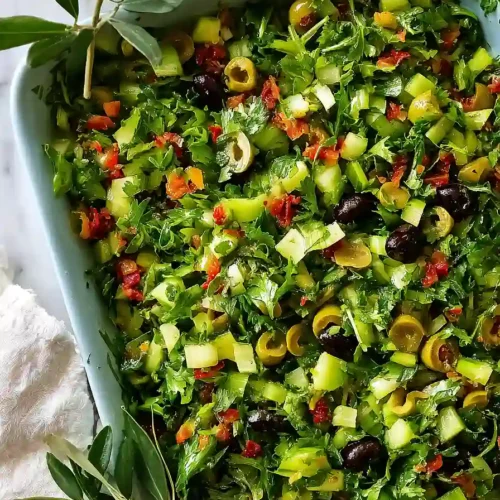
Mouthwatering Mediterranean Celery Salad
Delicious Mouthwatering Mediterranean Celery Salad recipe with step-by-step instructions.
Ingredients
For the salad::
- 5 cups celery (thinly sliced on a diagonal for better crunch)
- 2.5 cups arugula
- 1/2 cup parsley
- 1 tbsp thyme
- 1 cup green olives (I use Castelvetrano for a buttery flavor)
- 4.25 oz black olives
- 1/2 cup apricots (sliced into 1/4-inch strips)
- 1/2 cup dates
For the dressing::
- 1/2 cup olive oil (I prefer Lucini Premium Select for dressings)
- 1.5 lemons
- 2 tsp italian seasoning
- 1/2 tbsp fresh tarragon (finely minced to release the oils)
- 1.5 tsp pepper
- 1/4 tsp sea salt
Instructions
- Thinly slice the celery on a diagonal to maximize crunch and surface area for the dressing to coat. Roughly chop the parsley and measure out the thyme and arugula, keeping them separate for now. When mincing the tarragon, crush it slightly between your fingers as you work—this releases the essential oils and intensifies its distinctive anise-like flavor, which is key to this salad's complexity.
- Juice the lemons into a bowl and zest one of them directly over the juice—the zest adds bright, concentrated citrus oils that juice alone can't provide. Whisk together the lemon juice and zest with the olive oil, Italian seasoning, minced tarragon, sea salt, and pepper. Let this dressing sit for a few minutes so the flavors can begin to meld. I've found that a high-quality olive oil like Lucini really makes a difference here since it's the main flavor carrier—don't skip on this ingredient.
- In a large bowl, combine the sliced celery, arugula, chopped parsley, and thyme. Pit and halve the green olives (or use them whole if preferred), and add them along with the black olives to the bowl. Slice the apricots into thin strips and halve the dates lengthwise, then add both to the bowl. This combination of fresh herbs, vegetables, and dried fruit creates layers of flavor and texture that define Mediterranean cuisine.
- Pour the lemon-herb dressing from Step 2 over the salad components and toss gently but thoroughly, making sure every piece of celery and herb gets coated. Transfer to a serving bowl or platter and refrigerate for at least 1 hour before serving—this allows the flavors to meld and the dressing to fully penetrate the vegetables and aromatics. I find that chilling actually improves this salad, as the herbs continue to release their oils into the dressing and the celery softens just slightly while maintaining its signature crunch.