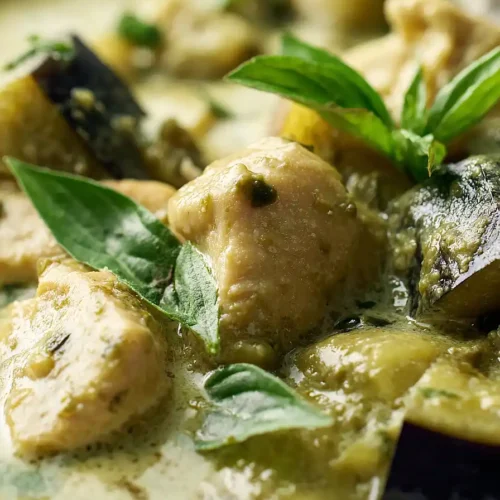
Mouthwatering Thai Eggplant and Chicken Curry
Delicious Mouthwatering Thai Eggplant and Chicken Curry recipe with step-by-step instructions.
Ingredients
For the curry
- 2 tbsp avocado oil
- 1 large onion, sliced
- 2 serrano peppers, sliced
- 4 tsp garlic paste
- 1.5 tsp ginger paste
- 3.5 tbsp green curry paste
- 1.5 lb chicken thighs, cut into 1-inch pieces
- 1/3 cup low-sodium chicken broth
- 1 tbsp fish sauce
- 1/2 tsp salt
- 1/2 tsp ground black pepper
- 1/2 tsp turmeric
- 20 oz Thai eggplant, diced
- 13.5 oz full-fat coconut milk
- 1 can water chestnuts, drained
- 1 large bell pepper, sliced
- 1 tbsp brown sugar
- 3 kaffir lime leaves
For the finish
- 2 tbsp fresh lime juice
- 1 cup fresh Thai basil leaves
Instructions
- Slice the onion into thin, even pieces and slice the serrano peppers. Have the garlic paste, ginger paste, and green curry paste measured and ready. Dice the Thai eggplant into bite-sized pieces, slice the bell pepper, drain the water chestnuts, and measure out the coconut milk and chicken broth. This preparation ensures smooth cooking once you start—there's nothing worse than scrambling for ingredients mid-curry.
- Heat the avocado oil in a large pot or Dutch oven over medium-high heat until shimmering. Working in batches if needed to avoid crowding, add the chicken thigh pieces and sear them until golden brown on most sides, about 4-5 minutes total. You're not cooking them through yet—just building a flavorful crust. Don't move them around too much; let them sit to develop that golden color.
- Add the sliced onion and serrano peppers to the browned chicken and stir frequently for about 1 minute to soften slightly. Then add the garlic paste, ginger paste, and green curry paste, stirring constantly for another minute. This blooming step releases the aromatic oils in the curry paste and creates a flavor foundation. I like to keep the heat at medium-high here so the paste doesn't scorch—you want to smell toasted spices, not burnt ones.
- Add the diced Thai eggplant and stir for about 1-2 minutes until it begins to soften slightly and absorb the aromatics. Then pour in the coconut milk and chicken broth, followed by the fish sauce, brown sugar, turmeric, salt, and black pepper. Stir everything together until well combined, making sure the curry paste is fully incorporated. Add the water chestnuts and bring the mixture to a gentle simmer.
- Reduce the heat to medium and let the curry simmer gently for 8-10 minutes, stirring occasionally. The chicken should be cooked through, the eggplant tender, and the flavors well blended. Add the sliced bell pepper during the last 2-3 minutes of simmering so it stays slightly crisp. Taste and adjust seasonings as needed—you may want a touch more fish sauce for depth or lime juice for brightness.
- Remove the curry from heat and stir in the fresh lime juice and kaffir lime leaves (tear them slightly as you add them to release their oils). Gently fold in the fresh Thai basil leaves, reserving a small handful for garnish. The lime and basil brighten the rich, creamy curry at the last moment—don't skip this step or you'll miss the final flavor lift that makes this dish special.
- Ladle the curry into bowls over steamed jasmine or white rice. Garnish with the reserved Thai basil leaves and any additional sliced fresh serrano peppers if desired. The creamy, aromatic curry pairs beautifully with rice to soak up every drop of sauce.