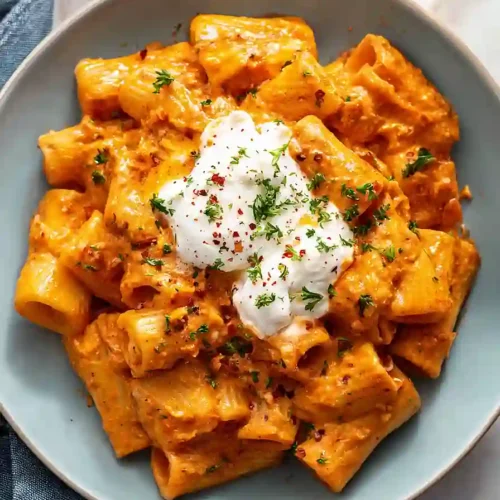
Quick Burrata Pasta
Delicious Quick Burrata Pasta recipe with step-by-step instructions.
Ingredients
For the liquid sauce base
- 2.5 cups beef broth
- 1 cup half and half
- 2 tsp worcestershire sauce
- 1 tsp dried oregano
- 1 tsp dried basil
- 1 tsp dried parsley
- 3/4 tsp mustard powder
For the pasta
- 4 oz prosciutto (sliced into thin ribbons)
- 1 tbsp olive oil
- 2/3 cup dry white wine
- 1.5 tbsp unsalted butter
- 4 garlic cloves, minced
- 3 tbsp tomato paste
- 8 oz tomato sauce
- 1/2 lb ziti pasta
- 2/3 cup freshly grated parmesan
For the garnish
- 8 oz burrata cheese
- Fresh basil leaves, chiffonade
- 1/2 tsp red pepper flakes
- 1 tbsp balsamic glaze
Instructions
- While you'll be building the sauce, start by bringing a large pot of salted water to a boil and cooking the ziti according to package directions—drain and set aside when finished. Meanwhile, mince your garlic cloves, slice the prosciutto into thin ribbons, and measure out all your broth, wine, tomato paste, tomato sauce, and herbs into separate small bowls. In another bowl, whisk together the beef broth, half and half, worcestershire sauce, dried oregano, dried basil, dried parsley, mustard powder, and red pepper flakes to create your sauce base—this ensures even distribution of all the flavors and prevents lumps when you add it to the pot.
- Heat the olive oil in a large, deep skillet or Dutch oven over medium-high heat. Add the prosciutto ribbons and cook for 5-7 minutes, stirring occasionally, until the edges begin to crisp and the fat renders out—this develops deep, savory flavor. Remove the prosciutto with a slotted spoon and set it aside on a paper towel. Pour the dry white wine into the same pot, scraping up any browned bits from the bottom, and let it simmer for 4 minutes to reduce slightly and concentrate the flavor.
- Reduce the heat to medium and add the unsalted butter to the pot along with your minced garlic. Cook for about 1 minute, stirring constantly, just until fragrant—don't let the garlic brown or it will turn bitter. Add the tomato paste and stir it into the butter and garlic mixture, cooking for 2 minutes to caramelize it slightly and remove any raw tomato flavor. Pour in the tomato sauce followed by the sauce mixture you prepared in Step 1, stirring well to combine all ingredients into a cohesive sauce.
- Add the cooked ziti pasta from Step 1 to the sauce, stirring gently to coat every piece evenly. Lower the heat to medium-low and stir in the cooked prosciutto and the freshly grated Parmesan cheese until well combined—I find it helps to stir gently to prevent breaking up the pasta. Tear the burrata cheese into bite-sized pieces and scatter them over the top of the pasta mixture without stirring them in; this lets the burrata stay creamy and creates beautiful pockets of soft cheese throughout the dish.
- Remove the pot from heat, cover it with a lid, and let the pasta stand for 1-2 minutes off heat. This gentle resting time allows the burrata to slightly warm and soften while maintaining its creamy texture, and it gives all the flavors a chance to meld together beautifully. Divide the pasta into bowls, making sure each serving gets some of the creamy burrata cheese, and finish with a drizzle of balsamic glaze and a handful of fresh basil chiffonade for brightness and color.