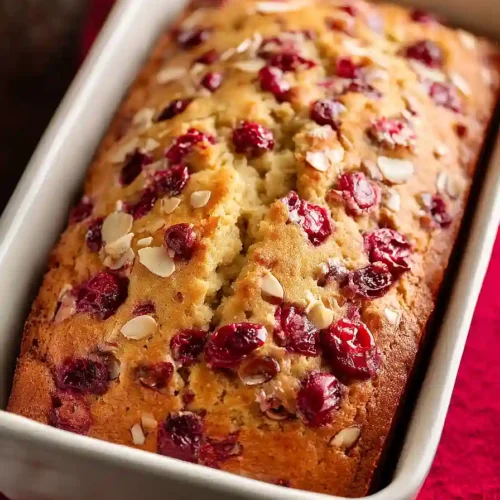
Simple Cranberry Orange Almond Quick Bread
Delicious Simple Cranberry Orange Almond Quick Bread recipe with step-by-step instructions.
Ingredients
For the dry ingredients:
- 1/8 tsp ground cinnamon (freshly ground for best flavor)
- 1/4 tsp sea salt
- 1/3 cup tapioca flour
- 1/4 tsp baking powder
- zest of 2 medium oranges (about 2 tbsp, finely grated)
- 3/4 tsp baking soda
- 2.75 cups almond flour (I use Bob's Red Mill for consistent results)
For the wet ingredients:
- 1/3 cup light olive oil
- 1/3 cup maple syrup (pure maple, not pancake syrup)
- 1/2 tsp vanilla extract
- 3 large eggs (room temperature for better emulsification)
- 1/4 cup fresh orange juice (freshly squeezed recommended)
- 1/2 tsp orange extract
For the bread:
- 1 cup fresh cranberries (tossed in 1 tbsp almond flour to prevent sinking)
Instructions
- Preheat your oven to 350°F and line a loaf pan with parchment paper. While the oven heats, whisk together the almond flour, tapioca flour, baking soda, baking powder, sea salt, cinnamon, and orange zest in a medium bowl. I prefer to finely grate the orange zest right before mixing because it keeps the citrus oils bright and aromatic. Set this dry mixture aside—the combination of baking soda and baking powder is crucial for the right crumb structure in this dense, almond-based bread.
- In a large mixing bowl, whisk together the light olive oil, pure maple syrup, fresh orange juice, vanilla extract, and orange extract until well combined and slightly emulsified. The maple syrup should be fully incorporated and the mixture should look slightly glossy. Now add the room temperature eggs one at a time, whisking thoroughly after each addition to ensure proper emulsification—this helps create a tender crumb rather than a dense, heavy texture. Room temperature eggs mix more smoothly with the liquid ingredients and trap air more effectively.
- Add the dry ingredient mixture from Step 1 to the wet ingredients from Step 2, stirring gently just until combined—do not overmix, as this can develop gluten and make the bread tough. The batter will be thick and somewhat lumpy, which is exactly what you want. Toss the fresh cranberries in the 1 tablespoon of almond flour (this prevents them from sinking to the bottom during baking), then gently fold them into the batter using a spatula or wooden spoon, distributing them evenly throughout.
- Pour the batter into your prepared loaf pan, smoothing the top gently with a spatula so it bakes evenly. Place the pan in your preheated 350°F oven and bake for 20 minutes uncovered. At the 20-minute mark, cover the top of the pan loosely with aluminum foil to prevent over-browning while the interior continues to cook through.
- Continue baking for another 25-30 minutes with the foil covering. The bread is done when a toothpick inserted into the center comes out clean or with just a few moist crumbs clinging to it—you're not looking for a completely dry toothpick, as almond flour naturally stays a bit moist. The top should be golden brown and slightly domed. I recommend starting to check at 25 minutes, as oven temperatures vary and you don't want to overbake this delicate bread.
- Remove the bread from the oven and let it cool in the pan for 15 minutes—this resting time allows the crumb structure to set properly so it won't fall apart when you turn it out. After 15 minutes, carefully run a thin knife around the edges of the bread to loosen it, then turn it out onto a wire cooling rack to cool completely. The bread will continue to firm up as it cools and can be sliced once it reaches room temperature.