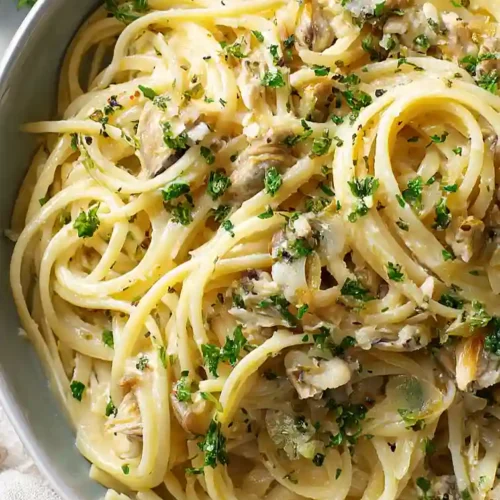
Simple Linguine with Canned Clam Sauce
Delicious Simple Linguine with Canned Clam Sauce recipe with step-by-step instructions.
Ingredients
For the breadcrumbs::
- 5 slices day-old bread (processed into coarse crumbs for better crunch)
- 3/4 tsp salt
- 3 tbsp olive oil (I use Bertolli extra virgin)
- 1 garlic clove
- 3 tbsp parsley
For the pasta and sauce::
- 1 lb linguine (I always use Barilla for the perfect al dente texture)
- 5 tbsp olive oil
- 8 garlic cloves (thinly sliced to infuse the oil without burning)
- 5 anchovy fillets
- 1/2 tsp red pepper flakes
- 1/2 cup white wine
- 30 oz canned clams (I prefer Snow's chopped clams in juice)
- 1/4 cup parsley
- 3 tbsp butter (I like Kerrygold unsalted for a richer finish)
- 1 lemon (zest only)
- 2 cups pasta water (starchy water helps the sauce emulsify)
Instructions
- Pulse the day-old bread in a food processor until you have coarse, uneven crumbs—you want texture, not fine powder. Add the garlic clove, parsley, and salt, then drizzle in the olive oil while pulsing until the mixture is moistened but still crumbly. Transfer to a skillet over medium heat and toast for 5-7 minutes, stirring occasionally, until golden and fragrant. Set aside on a plate. I like to make this first so it's completely cooled and ready to garnish at the end.
- Fill a large pot with salted water (it should taste like the sea) and bring to a boil—this needs time, so start it early. While waiting, open the canned clams and pour them into a fine-mesh strainer set over a bowl, reserving every drop of juice. Set the clams and juice aside separately.
- Heat the olive oil in a large skillet over medium heat. Add the thinly sliced garlic and cook gently for about 1 minute until it just starts to become fragrant—you want it to infuse the oil without browning or burning. Add the anchovy fillets and stir constantly for about 2 minutes, breaking them down into the oil until they almost dissolve into a paste. This creates an umami-rich foundation without a fishy taste. Stir in the red pepper flakes and cook for 30 seconds to bloom the heat.
- Pour the white wine into the skillet, stirring to lift any flavorful bits stuck to the bottom. Increase heat to medium-high and let it bubble for 2-3 minutes, reducing by about half and cooking off the harsh alcohol while concentrating the wine's flavor.
- Pour the reserved clam juice into the skillet and lower the heat to medium-low—the sauce should simmer gently, not boil aggressively. Stir in the strained clams and let them warm through, about 1-2 minutes. At the same time, add the linguine to the boiling salted water and cook until about 1 minute before the package says it's done (al dente means the pasta should have a slight firmness when you bite it). I always cook pasta a minute short because it will finish cooking in the sauce and absorb all those flavors.
- Reserve about 2 cups of the starchy pasta cooking water, then drain the linguine and transfer it directly into the simmering clam sauce. Toss constantly for about 1 minute, allowing the pasta to finish cooking and absorb the sauce. If it looks too thick, add the pasta water a splash at a time until it reaches a silky consistency—the starch in that water helps emulsify the sauce. Remove from heat, then stir in the butter and fresh parsley until the butter melts and coats everything. Finish with a shower of lemon zest for brightness.
- Divide the linguine among shallow bowls and top generously with the toasted garlic breadcrumbs from Step 1. The contrast between the tender pasta and crunchy breadcrumbs is what makes this dish special.