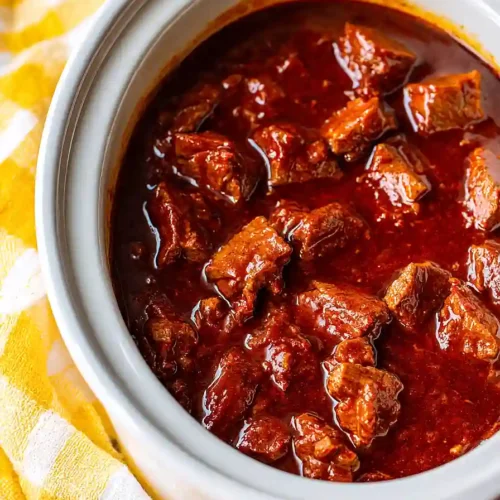
Slow Cooker Chili Colorado
Delicious Slow Cooker Chili Colorado recipe with step-by-step instructions.
Ingredients
For the chile sauce:
- 4 cups beef broth
- 1 tsp ground cumin
- 6 dried guajillo chiles (the base of authentic Colorado red chile)
- 2 dried ancho chiles
- 2 tsp dried oregano (Mexican oregano preferred)
- 1 tsp sea salt
- 2 tsp garlic powder
- 1 small yellow onion (roughly chopped)
- 2 dried arbol chiles (for heat and depth)
For the beef:
- 1 tsp sea salt
- 2 tbsp avocado oil (or any neutral oil like canola)
- 1/4 cup gluten-free all-purpose flour (for coating)
- 3 lb beef stew meat (cut into 1-inch chunks)
- 1/2 tsp black pepper (freshly ground preferred)
- 2 bay leaves
Instructions
- Bring the beef broth to a boil in a pot, then add all dried chilies (guajillo, ancho, and arbol). Remove from heat and let the chilies steep for 10-15 minutes until they soften and absorb the broth flavor. This hydration step is crucial for extracting the deep, complex flavors that make authentic chili colorado special. The longer soak also makes the chiles easier to blend into a smooth sauce.
- Remove the softened chilies from the broth with a slotted spoon and discard the stems and seeds. Add the chilies, soaked broth, roughly chopped onion, oregano, cumin, garlic powder, and 1 teaspoon of salt to a blender. Blend on high until completely smooth, about 2-3 minutes. Pour the sauce through a fine strainer into a bowl, pressing gently with the back of a spoon to extract as much liquid as possible while leaving the pulp behind. I find straining the sauce gives a silkier final texture that's more authentic to traditional chili colorado.
- While the chile sauce is blending, toss the beef stew meat chunks with the gluten-free flour, remaining 1 teaspoon of salt, and freshly ground black pepper in a bowl until evenly coated. Heat the avocado oil in a large skillet over medium-high heat until it shimmers. Working in batches to avoid crowding the pan, sear the beef for 2-3 minutes per side until deeply browned on the exterior (don't worry about cooking through—it will finish in the slow cooker). Transfer each batch to a plate as it finishes browning. The browning step builds deep, savory flavor through the Maillard reaction, which is essential for rich chili.
- Transfer the seared beef from Step 3 to your slow cooker. Pour the strained chile sauce from Step 2 over the beef and stir well to combine. Add the bay leaves and give everything a final stir. Cover and cook on High for 4 hours or Low for 8 hours. The long, gentle cooking allows the meat to become tender and the flavors to meld beautifully. I prefer the Low setting when time allows—it gives the spices more time to develop and keeps the meat incredibly tender.