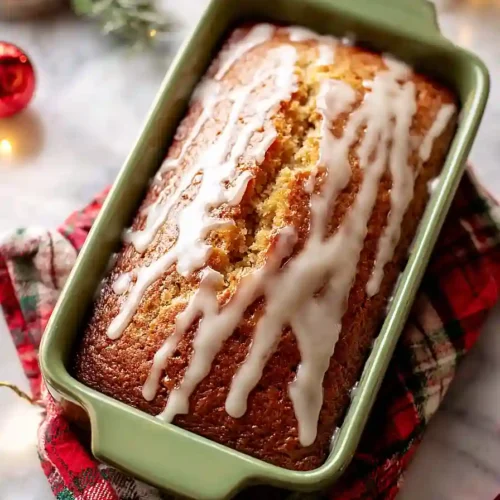
Tasty Eggnog Bread
Delicious Tasty Eggnog Bread recipe with step-by-step instructions.
Ingredients
For the bread:
- 1 cup sugar
- 1/2 cup vegetable oil (or any neutral oil like canola)
- 3/4 tsp ground cinnamon (freshly ground preferred for more flavor)
- 2.25 cups all-purpose flour (I use King Arthur all-purpose flour)
- 1 cup eggnog (chilled, gives better texture and moisture)
- 1/2 tsp kosher salt
- 2 tbsp unsalted butter (melted and cooled to room temperature)
- 2 large eggs (room temperature)
- 2.5 tsp baking powder
- 1 tbsp rum
- 1.5 tsp vanilla extract
- 1/2 tsp ground nutmeg (freshly ground preferred for more flavor)
For the glaze:
- 2 tbsp eggnog (chilled)
- 1 cup powdered sugar (sifted to remove lumps)
- 1/4 tsp ground cinnamon
- 1/8 tsp ground nutmeg
- 1/2 tsp rum
Instructions
- Preheat your oven to 350°F and prepare a loaf pan by lightly greasing it or lining it with parchment paper. While the oven heats, sift together the flour, baking powder, salt, cinnamon, and nutmeg in a medium bowl. Sifting incorporates air and prevents lumps, which helps the bread rise evenly and gives it a tender crumb.
- In a large mixing bowl, whisk the room-temperature eggs together until they're broken up, then add the sugar and whisk until the mixture becomes pale and slightly thickened—this takes about 2-3 minutes and helps incorporate air for a better crumb. Pour in the vegetable oil, cooled melted butter, chilled eggnog, vanilla extract, and rum, whisking after each addition to emulsify the mixture. I like to add the eggnog last because its cold temperature helps keep the batter cohesive, and the alcohol in the rum adds subtle depth without overpowering the bread.
- Pour the dry ingredient mixture from Step 1 into the wet ingredients from Step 2 and fold together gently with a rubber spatula or wooden spoon until just combined—some small lumps are fine and actually desirable here. Overmixing develops gluten and creates a tough, dense bread, so stop as soon as you don't see streaks of flour. Pour the batter into your prepared loaf pan and smooth the top gently. Bake for 50-65 minutes until a toothpick inserted into the center comes out clean or with just a few moist crumbs clinging to it.
- Let the bread cool in the pan for 10 minutes—this allows the crumb to set slightly so it won't fall apart when you turn it out. Then carefully turn the bread out onto a wire cooling rack and let it cool completely to room temperature. I find that cooling completely before glazing prevents the glaze from sliding off and melting too quickly, giving you a more even, professional-looking finish.
- While the bread cools, sift the powdered sugar into a small bowl to remove any lumps, then whisk in the cinnamon and nutmeg until evenly distributed. Add the rum and chilled eggnog one tablespoon at a time, whisking well after each addition, until the glaze reaches a pourable but not too thin consistency—it should coat the back of a spoon. The glaze will continue to thicken slightly as it sits, so aim for the consistency of heavy cream rather than pancake batter.
- Once the bread is completely cool, drizzle the glaze over the top in a decorative pattern, letting it pool slightly in the center and drip down the sides. Allow the glaze to set for about 15-20 minutes before slicing and serving. The bread actually tastes even better after sitting for a day, as the flavors meld and the texture becomes more moist.