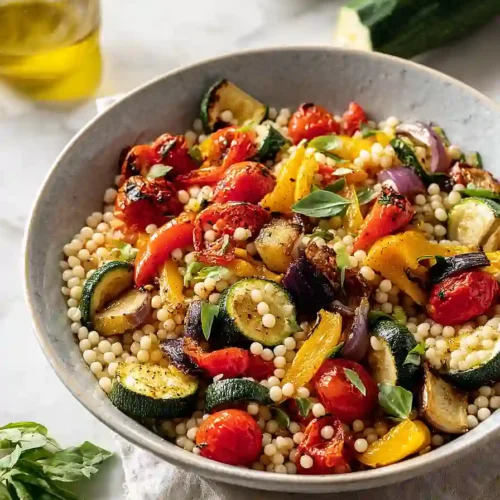
Warm Israeli Couscous Salad with Roasted Vegetables
Delicious Warm Israeli Couscous Salad with Roasted Vegetables recipe with step-by-step instructions.
Ingredients
For the roasted vegetables::
- 2 zucchini (cut into 1/2-inch thick half-moons)
- 1 pint tomatoes
- 1 red onion (diced into 1-inch chunks to roast evenly)
- 2 bell peppers
- 3 garlic cloves (left whole in skins to prevent burning)
- 4 tbsp olive oil (I prefer Lucini Premium Select for roasting)
- 1.25 tsp salt
- 0.75 tsp pepper
- 1/4 tsp dried oregano
For the couscous::
- 1 tbsp olive oil
- 1 cup couscous (I use Bob’s Red Mill Pearl Couscous for the best chew)
- 2 cups vegetable stock
For the vinaigrette::
- 2/3 cup olive oil
- 3 tbsp balsamic vinegar (I recommend Fini for a thick, syrupy finish)
- 1 tsp dijon mustard (helps emulsify the dressing and adds tang)
- 1.5 tsp lemon juice
- salt to taste
- pepper to taste
Instructions
- Preheat your oven to 400°F. Cut the zucchini into 1/2-inch thick half-moons, dice the red onion into 1-inch chunks, cut the bell peppers into large pieces, halve the tomatoes, and leave the garlic cloves whole in their skins to prevent them from burning. On a large baking sheet, toss all the vegetables together with 4 tablespoons of olive oil, 1 teaspoon of salt, 3/4 teaspoon of pepper, and the dried oregano until evenly coated. Spread them in a single layer and roast for 40-45 minutes, stirring halfway through, until the vegetables are caramelized and tender. I prefer using a premium olive oil like Lucini for roasting because it adds a subtle richness that elevates the entire dish.
- While the vegetables roast, heat 1 tablespoon of olive oil in a medium pot over medium heat. Add the couscous and toast it for 5-8 minutes, stirring frequently, until it becomes golden and fragrant—this toasting step develops a nutty flavor that makes the couscous more interesting. Pour in the vegetable stock, bring it to a boil, then reduce the heat to low, cover, and simmer for 20 minutes until the liquid is fully absorbed and the couscous is tender. I like using Bob's Red Mill Pearl Couscous specifically because it holds its shape and has the best chew compared to other brands.
- In a small bowl, whisk together 2/3 cup of olive oil, 3 tablespoons of balsamic vinegar, 1 teaspoon of Dijon mustard, and 1.5 teaspoons of lemon juice. The mustard acts as an emulsifier, helping the oil and vinegar blend smoothly rather than separating, while adding a subtle tangy bite. Season with additional salt and pepper to taste. A quality balsamic vinegar like Fini will give you that thick, syrupy finish that coats the couscous beautifully without making it watery.
- Once the couscous is cooked and still warm, transfer it to a large serving bowl. Add the roasted vegetables from Step 1 (including the caramelized pieces and the soft garlic cloves) and pour the vinaigrette from Step 3 over everything. Toss gently but thoroughly to distribute the dressing evenly and let the warm couscous absorb the flavors. The warmth of the freshly cooked components helps the vinaigrette meld with the other ingredients, creating a cohesive, flavorful dish rather than simply coating the surface.