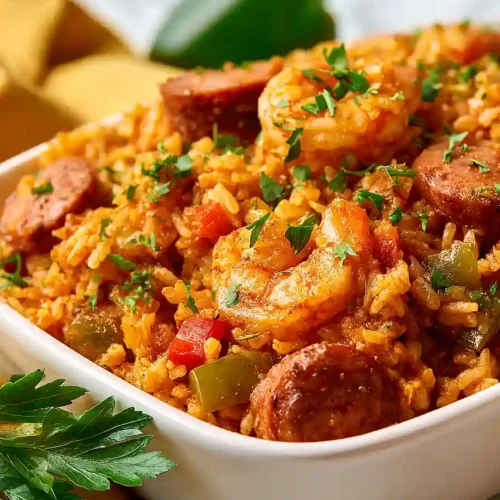
Easy Gluten Free Jambalaya
Delicious Easy Gluten Free Jambalaya recipe with step-by-step instructions.
Ingredients
For the shrimp and sausage
- 1 lb shrimp (peeled and deveined)
- 14 oz smoked sausage (thinly sliced)
- 2 1/2 tsp cajun seasoning
- 1/2 tsp smoked paprika
For the base
- 2 tbsp garlic-infused olive oil
- 1 1/4 cups bell pepper (diced into 1/2-inch pieces)
- 1/2 cup leek leaves (finely chopped)
- 1 1/2 celery stalks (sliced)
- 1 cup long-grain white rice
- 1 1/2 tbsp tomato paste
- 2 tsp cajun seasoning
- 1 3/4 cups chicken bone broth
- 14.5 oz tomatoes (crushed or petite diced with juice)
- 1 tbsp tamari
- 1 bay leaf
- 2 tbsp fresh parsley (chopped for garnish)
Instructions
- Pat the shrimp dry with paper towels and season with 1 teaspoon of Cajun seasoning, setting them aside on a plate. Season the sliced smoked sausage with the remaining 1 teaspoon of Cajun seasoning and set aside separately. Having your proteins prepped and seasoned ensures they cook evenly and allows the seasoning to adhere better when they hit the hot oil. Dice the bell pepper into 1/2-inch pieces, finely chop the leek leaves, slice the celery stalks, and mince the garlic or measure out the garlic-infused oil—this mise en place keeps your cooking efficient and prevents scrambling once you start.
- Heat the garlic-infused olive oil in a large pot or Dutch oven over medium-high heat until it shimmers. Add the seasoned shrimp and sear for about 5 minutes, flipping halfway through until they turn pink and opaque, then remove to a plate. In the same pot, brown the seasoned sausage for about 1 minute per side to develop color and render some fat, then remove to another plate. I like to cook the shrimp first because it cooks faster and won't overcook while you're browning the sausage—this keeps everything tender and flavorful.
- In the same pot with the remaining oil and fond (browned bits), add the diced bell pepper, chopped leek leaves, and sliced celery. Sauté over medium heat for 2 minutes, stirring occasionally, until the vegetables soften slightly and release their aromatics—this creates the flavor foundation of your jambalaya. Stir in the tomato paste and the remaining 2 teaspoons of Cajun seasoning, cooking for 1 minute while stirring constantly to distribute the seasoning and allow the tomato paste to caramelize slightly.
- Add the long-grain white rice to the pot and stir constantly for about 1 minute, allowing each grain to toast lightly and absorb the flavorful oil—this adds a subtle nutty dimension and prevents the rice from becoming mushy. Pour in the chicken bone broth and use a wooden spoon to scrape up all the browned bits from the bottom of the pot, stirring well to combine.
- Stir in the crushed or petite diced tomatoes with their juice and the tamari (or soy sauce), then nestle the bay leaf on top of the mixture—don't stir it in, as it will be easier to find and remove later. Return the browned sausage to the pot and stir to combine all ingredients evenly. If using a pressure cooker, seal the lid and cook on high pressure for 5 minutes. If cooking on the stovetop, bring to a boil, then reduce heat to low, cover partially, and simmer for 18-20 minutes until the rice is tender and the liquid is mostly absorbed.
- If pressure cooking, allow the pressure to release naturally for 8 minutes, then carefully release any remaining pressure according to your cooker's instructions. Remove and discard the bay leaf, then gently stir the jambalaya to fluff the rice. Add the cooked shrimp from Step 2 back into the pot and stir gently to combine without breaking apart the shrimp—they only need to warm through, about 1 minute. For a brighter finish, I always add fresh parsley at the end rather than during cooking, as it preserves its vibrant color and fresh herbal notes.