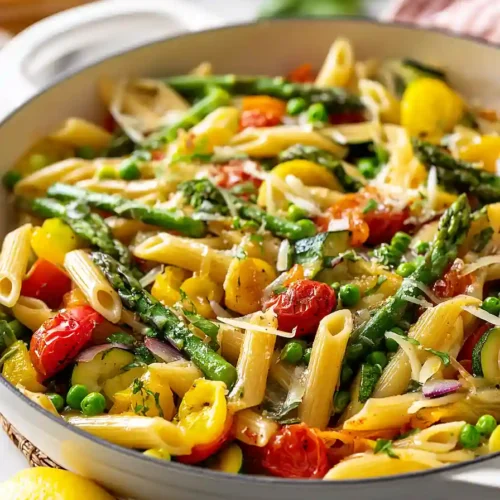
Irresistible Summer Vegetable Pasta Primavera
Delicious Irresistible Summer Vegetable Pasta Primavera recipe with step-by-step instructions.
Ingredients
For the pasta and vegetables
- 12 oz pasta (I prefer Barilla Penne Rigate for its texture)
- 3 tbsp olive oil
- 4 garlic cloves (freshly minced for best flavor)
- 1 red onion, thinly sliced
- 1 cup cherry tomatoes (halved)
- 1 cup zucchini (sliced into 1/4-inch thick rounds)
- 1 cup yellow squash (sliced into 1/4-inch half-moons)
- 1 cup asparagus (trimmed and cut into 1-inch pieces)
- 1/2 cup red bell pepper, thinly sliced
- 1 cup peas (I use Birds Eye sweet peas)
- 1 cup corn
- 1/4 teaspoon crushed red pepper flakes
For the finishing touches
- 2/3 cup Parmesan (freshly grated for a smoother melt)
- 1/4 cup heavy cream
- 1/4 cup fresh basil, chiffonade
- 1/4 cup fresh parsley, chopped
- 1/2 teaspoon kosher salt to taste
- 1/4 teaspoon freshly ground black pepper to taste
- 1 lemon (zested and juiced for brightness)
Instructions
- Bring a large pot of salted water to a boil for the pasta. While waiting, prepare all your vegetables: mince the garlic, thinly slice the red onion, halve the cherry tomatoes, slice zucchini and yellow squash into 1/4-inch rounds, trim asparagus and cut into 1-inch pieces, thinly slice the red bell pepper, and zest and juice the lemon. Having everything prepped ensures you can work quickly once cooking begins. I like to use freshly minced garlic for this dish rather than pre-minced—the difference in flavor is noticeable.
- Add the pasta to the boiling water and cook according to package directions until al dente. About 2 minutes before the pasta finishes, reserve 1 cup of the starchy pasta water in a separate bowl, then drain the pasta in a colander. The starchy pasta water is essential for creating a silky sauce that coats each piece of pasta.
- While the pasta cooks, heat the olive oil in a large skillet or wide sauté pan over medium heat. Add the minced garlic and sliced red onion, stirring frequently for 3-4 minutes until the onion becomes translucent and the garlic is fragrant but not browned. This gentle cooking develops a sweet, mellow onion flavor that serves as the foundation for the sauce.
- Add the halved cherry tomatoes, zucchini, yellow squash, asparagus, red bell pepper, peas, and corn to the pan with the aromatics. Sprinkle the crushed red pepper flakes over the vegetables and stir gently to combine. Sauté for 5-7 minutes, stirring occasionally, until the vegetables are tender-crisp and the squash and zucchini develop light golden edges. I find this timing keeps the vegetables bright and fresh-tasting rather than mushy.
- Add the cooked pasta from Step 2 to the pan with the sautéed vegetables. Pour in 1/4 cup of the reserved pasta water and stir gently to combine everything together. Add the heavy cream and freshly grated Parmesan cheese, stirring constantly over medium heat until the cheese melts and creates a light, silky sauce that coats the pasta. Add more reserved pasta water as needed—a few tablespoons at a time—to reach your desired sauce consistency. The starch in the pasta water helps emulsify the cream and cheese into a cohesive coating rather than clumpy sauce.
- Remove the pan from heat and stir in the fresh basil chiffonade and chopped parsley, then season with kosher salt and freshly ground black pepper to taste. Finish with the lemon zest and juice, which adds brightness and cuts through the richness of the cream and cheese. Taste and adjust seasonings as needed, adding more salt, pepper, or lemon juice to balance the flavors.
- Divide the pasta primavera into bowls or plates and serve immediately while hot. Offer extra freshly grated Parmesan and lemon wedges at the table for guests to customize their portions.