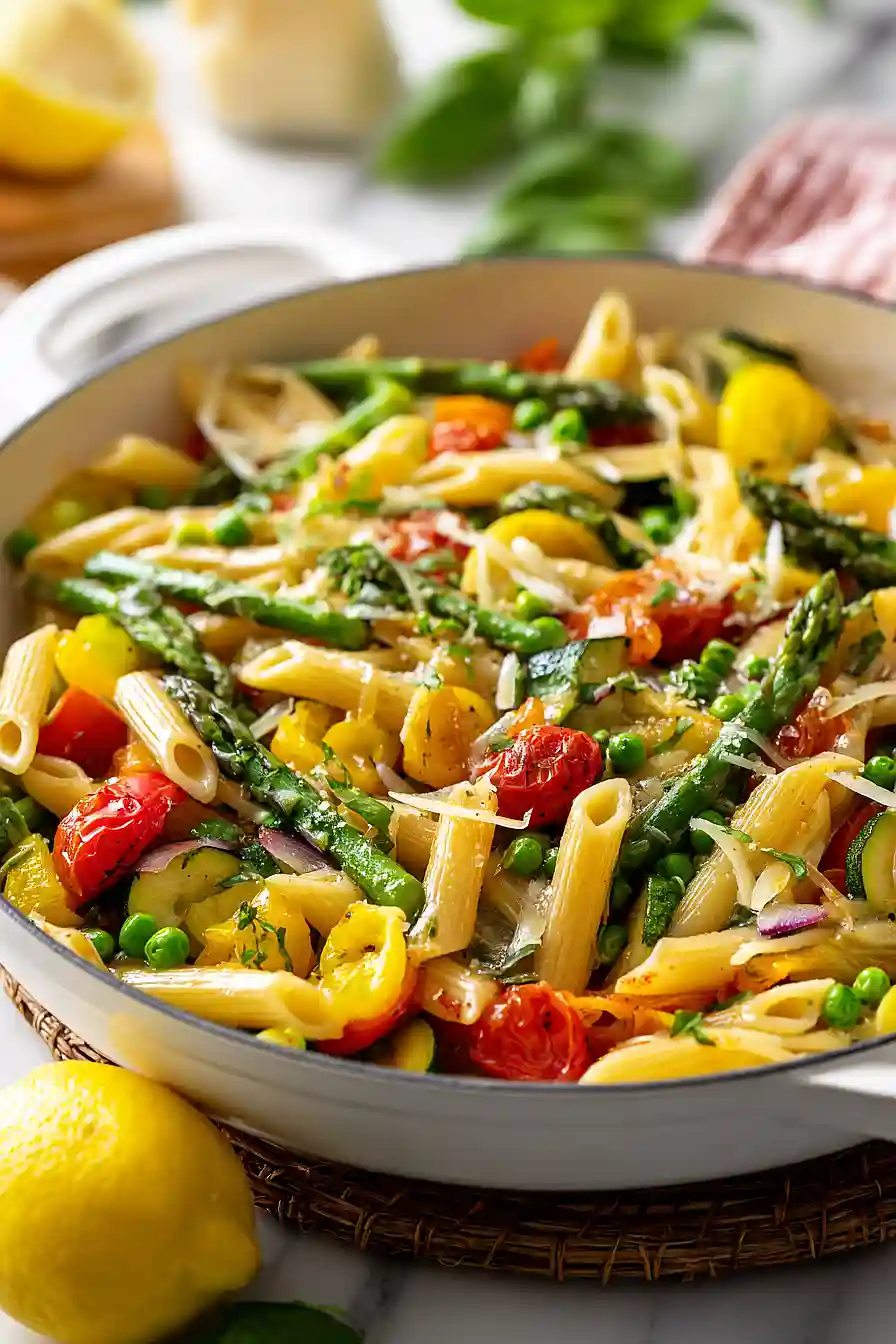
Here is my favorite summer vegetable pasta primavera recipe, loaded with fresh zucchini, asparagus, cherry tomatoes, sweet corn, peas, and bell peppers, all tossed in a light cream sauce with garlic, lemon, and plenty of Parmesan.
This pasta is what I make when my farmers market haul is overflowing with summer veggies and I need to use them up fast. It’s become our go-to weeknight dinner because it comes together in about 30 minutes, and my kids actually eat their vegetables without complaining.
Why You’ll Love This Summer Vegetable Pasta Primavera
- Fresh, seasonal vegetables – This recipe is packed with colorful summer produce like zucchini, bell peppers, and cherry tomatoes that bring bright flavors to every bite.
- Quick weeknight meal – Ready in under an hour, this pasta comes together fast enough for busy evenings when you want something homemade without spending all night in the kitchen.
- Vegetarian-friendly – It’s a satisfying meatless option that doesn’t skimp on flavor or leave you feeling hungry an hour later.
- Flexible recipe – You can easily swap in whatever vegetables you have on hand or find at the farmer’s market, making it perfect for using up produce in your fridge.
- Light and healthy – This pasta is loaded with veggies and uses simple, wholesome ingredients, so you can feel good about serving it to your family.
What Kind of Pasta Should I Use?
For pasta primavera, you’ll want to pick a shape that can catch and hold onto all those delicious vegetables and sauce. Short pasta shapes like penne, fusilli, or farfalle work perfectly because their nooks and crannies grab the veggies with every bite. If you prefer long pasta, linguine or fettuccine are also great options, though you might find the vegetables easier to eat with the shorter shapes. Fresh pasta will give you a softer, more tender texture and cooks in just a few minutes, while dried pasta holds up better and has a nice bite to it. Whichever you choose, just make sure to cook it al dente so it doesn’t get mushy when you toss it with the vegetables.
Options for Substitutions
This pasta dish is all about using what you have on hand, so feel free to mix things up:
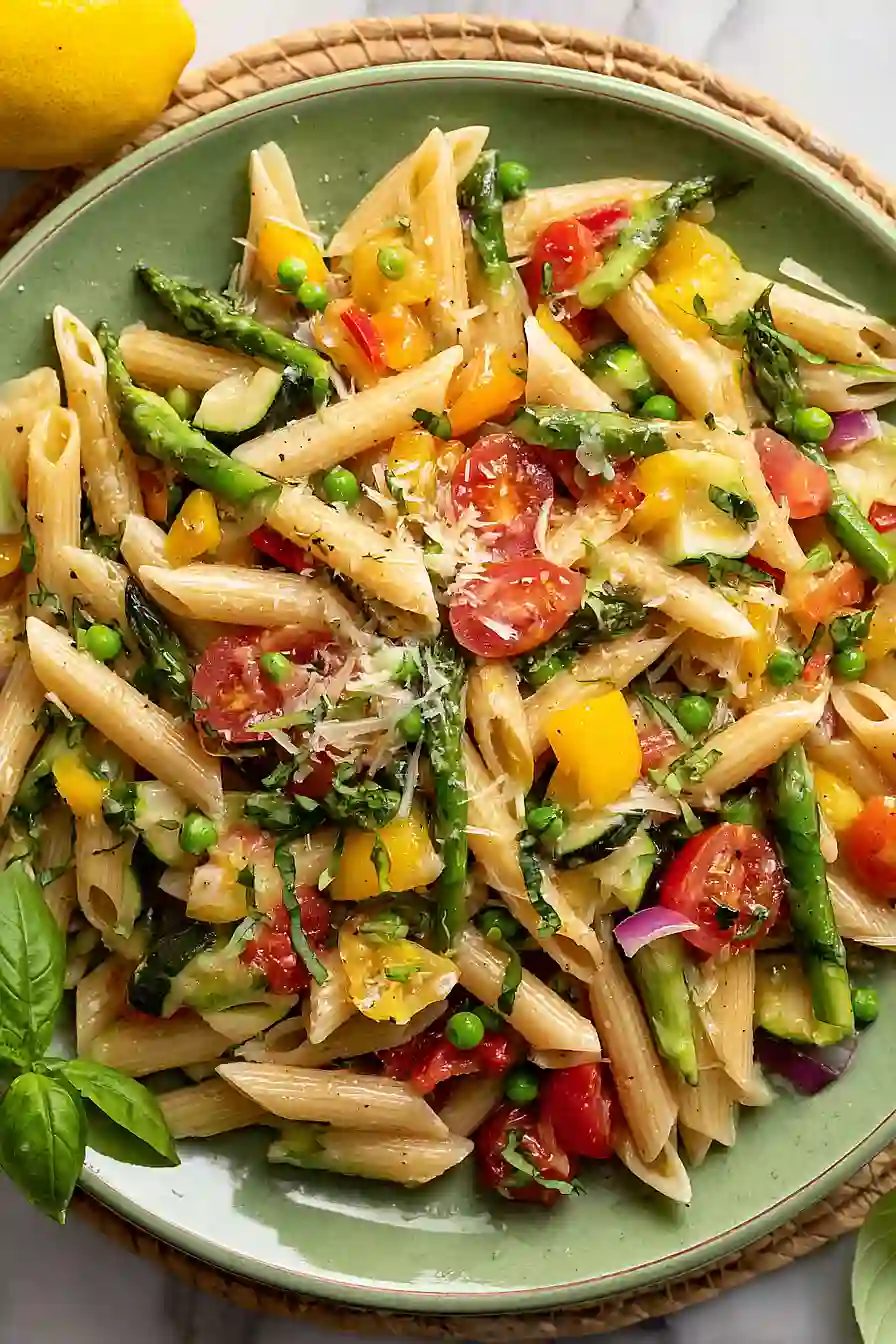
- Pasta: Any short pasta shape works great here – penne, fusilli, and farfalle are suggested, but rotini, rigatoni, or even bowties will catch all those tasty vegetables just fine.
- Summer vegetables: The beauty of primavera is that you can swap in whatever vegetables look good at the market. Try green beans, broccoli florets, snap peas, or mushrooms. Just keep the cooking times in mind – harder vegetables like broccoli need a bit longer than tender ones like spinach.
- Fresh herbs: If you don’t have fresh basil or parsley, you can use dried herbs (about 1 tablespoon total), but add them earlier in the cooking process. Fresh herbs really do make a difference here though, so grab them if you can.
- Parmesan cheese: Pecorino Romano or Asiago cheese work well as substitutes. For a dairy-free version, try nutritional yeast for a cheesy flavor, though you’ll want to add a bit more salt.
- Frozen peas and corn: Fresh is always nice, but frozen vegetables are perfectly fine and sometimes more convenient. Just add them toward the end of cooking so they don’t get mushy.
Watch Out for These Mistakes While Cooking
The biggest mistake when making pasta primavera is overcooking the vegetables, which turns them mushy and dull – aim for tender-crisp by cooking them for just 5-7 minutes over medium-high heat so they keep their texture and color.
Many people forget to save pasta water before draining, but that starchy liquid is your secret weapon for creating a silky sauce that clings to the pasta instead of leaving everything dry.
Another common error is adding all the vegetables at once, even though harder vegetables like asparagus need more time than delicate ones like peas – start with the asparagus and bell pepper, then add the softer vegetables in the last 2-3 minutes.
Finally, don’t skip seasoning as you go; add salt and pepper while cooking the vegetables rather than just at the end, which builds better flavor throughout the dish.
What to Serve With Pasta Primavera?
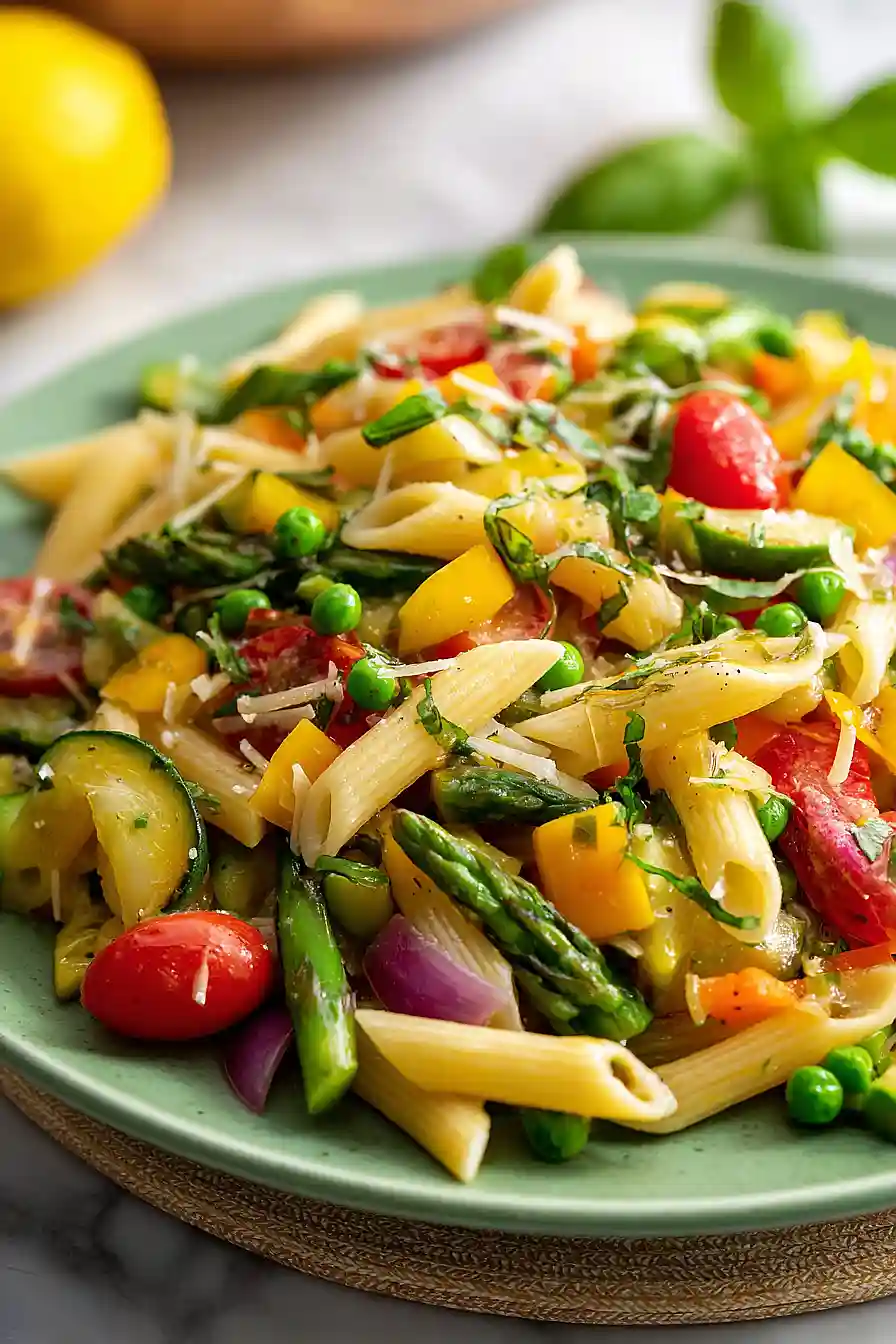
Since pasta primavera is already packed with veggies, I like to keep the sides simple and let the pasta be the star of the show. A warm loaf of garlic bread or focaccia is perfect for soaking up any extra sauce at the bottom of your bowl, and it adds a nice crispy contrast to the tender pasta and vegetables. If you want to add some protein to make it more filling, grilled chicken, shrimp, or even some white beans tossed right into the pasta work great. A light Caesar salad or mixed greens with a lemony vinaigrette on the side rounds out the meal without making it feel too heavy for a summer dinner.
Storage Instructions
Store: Keep your pasta primavera in an airtight container in the fridge for up to 4 days. The vegetables will soften a bit as it sits, but the flavors actually get better overnight as everything marinates together.
Freeze: While you can freeze this dish for up to 2 months in a freezer-safe container, just know that the veggies won’t have quite the same crisp texture when thawed. It still tastes good, but it’s best enjoyed fresh or from the fridge.
Reheat: Warm it up in a skillet over medium heat with a splash of olive oil or a bit of water to keep it from drying out. You can also microwave individual portions, stirring halfway through. Add a little extra Parmesan and fresh herbs right before serving to brighten it up.
| Preparation Time | 15-20 minutes |
| Cooking Time | 20-30 minutes |
| Total Time | 35-50 minutes |
| Level of Difficulty | Easy |
| Servings | 6 servings |
Estimated Nutrition
Estimated nutrition for the whole recipe (without optional ingredients):
- Calories: 1600-1800
- Protein: 45-55 g
- Fat: 38-46 g
- Carbohydrates: 270-300 g
Ingredients
For the pasta and vegetables:
- 12 oz pasta (I prefer Barilla Penne Rigate for its texture)
- 3 tbsp olive oil
- 4 garlic cloves (freshly minced for best flavor)
- 1 red onion, thinly sliced
- 1 cup cherry tomatoes (halved)
- 1 cup zucchini (sliced into 1/4-inch thick rounds)
- 1 cup yellow squash (sliced into 1/4-inch half-moons)
- 1 cup asparagus (trimmed and cut into 1-inch pieces)
- 1/2 cup red bell pepper, thinly sliced
- 1 cup peas (I use Birds Eye sweet peas)
- 1 cup corn
- 1/4 teaspoon crushed red pepper flakes
For the finishing touches:
- 2/3 cup Parmesan (freshly grated for a smoother melt)
- 1/4 cup heavy cream
- 1/4 cup fresh basil, chiffonade
- 1/4 cup fresh parsley, chopped
- 1/2 teaspoon kosher salt to taste
- 1/4 teaspoon freshly ground black pepper to taste
- 1 lemon (zested and juiced for brightness)
Step 1: Prepare Mise en Place and Start Pasta Water
- 4 garlic cloves, minced
- 1 red onion, thinly sliced
- 1 cup cherry tomatoes, halved
- 1 cup zucchini, sliced into 1/4-inch rounds
- 1 cup yellow squash, sliced into 1/4-inch half-moons
- 1 cup asparagus, trimmed and cut into 1-inch pieces
- 1/2 cup red bell pepper, thinly sliced
- 1 lemon, zested and juiced
Bring a large pot of salted water to a boil for the pasta.
While waiting, prepare all your vegetables: mince the garlic, thinly slice the red onion, halve the cherry tomatoes, slice zucchini and yellow squash into 1/4-inch rounds, trim asparagus and cut into 1-inch pieces, thinly slice the red bell pepper, and zest and juice the lemon.
Having everything prepped ensures you can work quickly once cooking begins.
I like to use freshly minced garlic for this dish rather than pre-minced—the difference in flavor is noticeable.
Step 2: Cook Pasta to Al Dente
- 12 oz pasta
Add the pasta to the boiling water and cook according to package directions until al dente.
About 2 minutes before the pasta finishes, reserve 1 cup of the starchy pasta water in a separate bowl, then drain the pasta in a colander.
The starchy pasta water is essential for creating a silky sauce that coats each piece of pasta.
Step 3: Build the Aromatics Base
- 3 tbsp olive oil
- 4 garlic cloves, minced
- 1 red onion, thinly sliced
While the pasta cooks, heat the olive oil in a large skillet or wide sauté pan over medium heat.
Add the minced garlic and sliced red onion, stirring frequently for 3-4 minutes until the onion becomes translucent and the garlic is fragrant but not browned.
This gentle cooking develops a sweet, mellow onion flavor that serves as the foundation for the sauce.
Step 4: Sauté Summer Vegetables with Seasoning
- 1 cup cherry tomatoes, halved
- 1 cup zucchini, sliced into 1/4-inch rounds
- 1 cup yellow squash, sliced into 1/4-inch half-moons
- 1 cup asparagus, trimmed and cut into 1-inch pieces
- 1/2 cup red bell pepper, thinly sliced
- 1 cup peas
- 1 cup corn
- 1/4 teaspoon crushed red pepper flakes
Add the halved cherry tomatoes, zucchini, yellow squash, asparagus, red bell pepper, peas, and corn to the pan with the aromatics.
Sprinkle the crushed red pepper flakes over the vegetables and stir gently to combine.
Sauté for 5-7 minutes, stirring occasionally, until the vegetables are tender-crisp and the squash and zucchini develop light golden edges.
I find this timing keeps the vegetables bright and fresh-tasting rather than mushy.
Step 5: Combine Pasta with Vegetables and Create Silky Sauce
- 12 oz cooked pasta from Step 2
- sautéed vegetables from Step 4
- 1/4 cup heavy cream
- 2/3 cup Parmesan, freshly grated
- reserved pasta water from Step 2
Add the cooked pasta from Step 2 to the pan with the sautéed vegetables.
Pour in 1/4 cup of the reserved pasta water and stir gently to combine everything together.
Add the heavy cream and freshly grated Parmesan cheese, stirring constantly over medium heat until the cheese melts and creates a light, silky sauce that coats the pasta.
Add more reserved pasta water as needed—a few tablespoons at a time—to reach your desired sauce consistency.
The starch in the pasta water helps emulsify the cream and cheese into a cohesive coating rather than clumpy sauce.
Step 6: Finish with Fresh Herbs, Seasonings, and Brightness
- 1/4 cup fresh basil, chiffonade
- 1/4 cup fresh parsley, chopped
- 1/2 teaspoon kosher salt
- 1/4 teaspoon freshly ground black pepper
- lemon zest and juice from Step 1
Remove the pan from heat and stir in the fresh basil chiffonade and chopped parsley, then season with kosher salt and freshly ground black pepper to taste.
Finish with the lemon zest and juice, which adds brightness and cuts through the richness of the cream and cheese.
Taste and adjust seasonings as needed, adding more salt, pepper, or lemon juice to balance the flavors.
Step 7: Serve Immediately
Divide the pasta primavera into bowls or plates and serve immediately while hot.
Offer extra freshly grated Parmesan and lemon wedges at the table for guests to customize their portions.
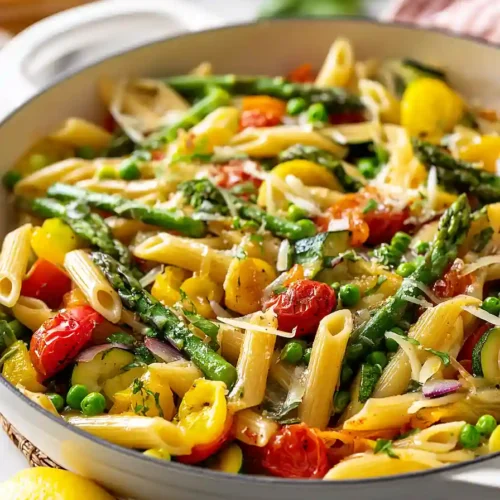
Irresistible Summer Vegetable Pasta Primavera
Ingredients
For the pasta and vegetables
- 12 oz pasta (I prefer Barilla Penne Rigate for its texture)
- 3 tbsp olive oil
- 4 garlic cloves (freshly minced for best flavor)
- 1 red onion, thinly sliced
- 1 cup cherry tomatoes (halved)
- 1 cup zucchini (sliced into 1/4-inch thick rounds)
- 1 cup yellow squash (sliced into 1/4-inch half-moons)
- 1 cup asparagus (trimmed and cut into 1-inch pieces)
- 1/2 cup red bell pepper, thinly sliced
- 1 cup peas (I use Birds Eye sweet peas)
- 1 cup corn
- 1/4 teaspoon crushed red pepper flakes
For the finishing touches
- 2/3 cup Parmesan (freshly grated for a smoother melt)
- 1/4 cup heavy cream
- 1/4 cup fresh basil, chiffonade
- 1/4 cup fresh parsley, chopped
- 1/2 teaspoon kosher salt to taste
- 1/4 teaspoon freshly ground black pepper to taste
- 1 lemon (zested and juiced for brightness)
Instructions
- Bring a large pot of salted water to a boil for the pasta. While waiting, prepare all your vegetables: mince the garlic, thinly slice the red onion, halve the cherry tomatoes, slice zucchini and yellow squash into 1/4-inch rounds, trim asparagus and cut into 1-inch pieces, thinly slice the red bell pepper, and zest and juice the lemon. Having everything prepped ensures you can work quickly once cooking begins. I like to use freshly minced garlic for this dish rather than pre-minced—the difference in flavor is noticeable.
- Add the pasta to the boiling water and cook according to package directions until al dente. About 2 minutes before the pasta finishes, reserve 1 cup of the starchy pasta water in a separate bowl, then drain the pasta in a colander. The starchy pasta water is essential for creating a silky sauce that coats each piece of pasta.
- While the pasta cooks, heat the olive oil in a large skillet or wide sauté pan over medium heat. Add the minced garlic and sliced red onion, stirring frequently for 3-4 minutes until the onion becomes translucent and the garlic is fragrant but not browned. This gentle cooking develops a sweet, mellow onion flavor that serves as the foundation for the sauce.
- Add the halved cherry tomatoes, zucchini, yellow squash, asparagus, red bell pepper, peas, and corn to the pan with the aromatics. Sprinkle the crushed red pepper flakes over the vegetables and stir gently to combine. Sauté for 5-7 minutes, stirring occasionally, until the vegetables are tender-crisp and the squash and zucchini develop light golden edges. I find this timing keeps the vegetables bright and fresh-tasting rather than mushy.
- Add the cooked pasta from Step 2 to the pan with the sautéed vegetables. Pour in 1/4 cup of the reserved pasta water and stir gently to combine everything together. Add the heavy cream and freshly grated Parmesan cheese, stirring constantly over medium heat until the cheese melts and creates a light, silky sauce that coats the pasta. Add more reserved pasta water as needed—a few tablespoons at a time—to reach your desired sauce consistency. The starch in the pasta water helps emulsify the cream and cheese into a cohesive coating rather than clumpy sauce.
- Remove the pan from heat and stir in the fresh basil chiffonade and chopped parsley, then season with kosher salt and freshly ground black pepper to taste. Finish with the lemon zest and juice, which adds brightness and cuts through the richness of the cream and cheese. Taste and adjust seasonings as needed, adding more salt, pepper, or lemon juice to balance the flavors.
- Divide the pasta primavera into bowls or plates and serve immediately while hot. Offer extra freshly grated Parmesan and lemon wedges at the table for guests to customize their portions.