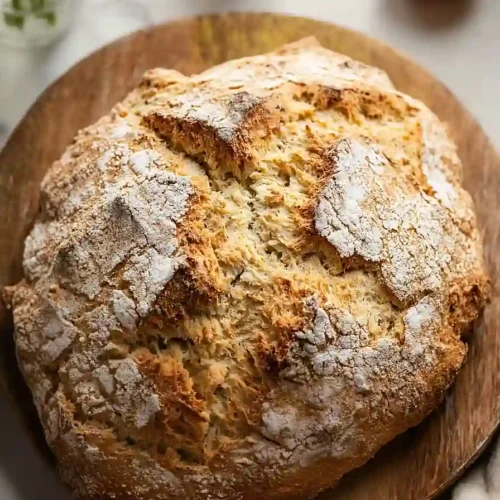
Rustic Irish Soda Bread with Caraway Seeds
Delicious Rustic Irish Soda Bread with Caraway Seeds recipe with step-by-step instructions.
Ingredients
- 3.75 cups flour (I always use King Arthur all-purpose flour)
- 1.5 tbsp sugar
- 1.5 tsp salt
- 1 tsp baking soda (sifted to remove lumps)
- 2 tsp caraway seeds
- 5 tbsp butter (I like Kerrygold unsalted butter for this)
- 1.5 cups buttermilk
- 1 tsp orange zest
Instructions
- Measure out all your ingredients and preheat your oven to 450°F. In a large mixing bowl, whisk together the flour, sugar, salt, sifted baking soda, caraway seeds, and orange zest. Make sure the baking soda is sifted to remove any lumps—this ensures even leavening throughout the bread. I always sift my baking soda separately before mixing because lumps can create bitter spots in the finished loaf. This dry mixture is the foundation for your bread, so take a moment to distribute the leavening and flavorings evenly.
- Cut the cold butter into small cubes and add it to the dry mixture. Using your fingertips, quickly rub the butter into the flour until the mixture resembles coarse breadcrumbs with pea-sized pieces of butter still visible. This technique is crucial for Irish soda bread—the small butter pieces create pockets of steam that give the bread its characteristic tender crumb. Work quickly and keep your hands cool; if the butter gets too warm, it'll incorporate too fully and the bread will be dense rather than light.
- Make a well in the center of the flour mixture and pour in the buttermilk. Using a fork or wooden spoon, gently stir from the center outward, incorporating flour gradually until a shaggy dough forms. Be careful not to overmix—Irish soda bread relies on baking soda reacting with the buttermilk's acidity, and overworking the dough develops gluten that makes the bread tough. The dough should be slightly sticky and rough; this is exactly what you want.
- Turn the dough out onto a lightly floured work surface and gently gather it into a round ball with minimal kneading—just a few turns to bring it together cohesively. Shape it into a loaf approximately 6-7 inches in diameter. Transfer to a parchment-lined baking sheet, then using a sharp knife, cut a deep cross about ½ inch deep across the top of the loaf. This cross serves both a traditional purpose and a practical one: it helps the bread rise evenly and creates those signature crusty edges inside the loaf.
- Place the loaf in your preheated 450°F oven and bake for 15 minutes—this initial high heat sets the crust and gives the baking soda time to fully activate before the interior sets. After 15 minutes, reduce the oven temperature to 400°F and continue baking for 25 minutes more. I like to rotate the pan halfway through the second baking stage to ensure even browning. The bread is done when it's deep golden brown on top and sounds hollow when tapped on the bottom—this should take about 40 minutes total.
- Remove the bread from the oven and let it cool on the baking sheet for 5-10 minutes. This brief resting period allows the crumb structure to set properly. Transfer the loaf to a wire rack to cool completely before slicing. Resist the temptation to cut into it while warm—the interior will continue to firm up as it cools, giving you cleaner slices with better texture.