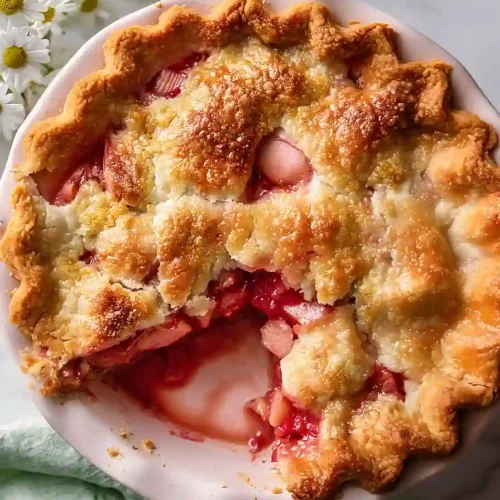
Traditional Rhubarb Pie Cake
Delicious Traditional Rhubarb Pie Cake recipe with step-by-step instructions.
Ingredients
For the dough
- 3 1/4 cups flour (I always use King Arthur all-purpose flour)
- 1 tsp baking soda
- 1/4 cup sugar
- 1/2 teaspoon salt
- 1/3 cup butter (I like Kerrygold unsalted butter for this)
- 1 large egg
- 3/4 cup buttermilk (room temperature, about 70°F)
For the filling
- 5 cups rhubarb (cut into 1-inch chunks)
- 3 tbsp flour
- 1 1/2 cups sugar
- 1 teaspoon vanilla extract
- 1/2 teaspoon ground cinnamon
Instructions
- Heat your oven to 350°F and grease a 10-inch pie plate with butter or cooking spray. Cut the rhubarb into 1-inch chunks and set aside in a bowl. Measure out all dry ingredients (flour, baking soda, sugar, salt) and the wet ingredients (egg, buttermilk, vanilla) so everything is ready when you start mixing. I like to have everything prepped before I begin the dough so the process feels smooth and unrushed.
- In a large bowl, whisk together the flour, baking soda, 1/4 cup sugar, and salt. Cut the cold butter into small cubes and add to the dry mixture. Using your fingertips or a pastry cutter, rub the butter into the flour until the mixture resembles coarse breadcrumbs—this creates a tender, flaky crust. In a separate small bowl, whisk together the egg and buttermilk until combined. Pour the wet mixture into the dry ingredients and gently mix until a shaggy dough forms. Knead the dough just a few times until it comes together, then divide it into two equal pieces. I find that keeping the dough slightly cool and not overworking it results in a more tender crust.
- On a lightly floured surface, roll out one piece of dough from Step 2 into a circle approximately 11 inches in diameter (slightly larger than your pie plate to account for sides). Transfer it carefully to the greased 10-inch pie plate, letting it settle naturally into the corners and up the sides. You can use a small piece of scrap dough to patch any tears if needed.
- In a medium bowl, combine 1 1/2 cups sugar, 3 tablespoons flour, vanilla extract, and ground cinnamon. Add the prepared rhubarb from Step 1 and toss gently until all pieces are evenly coated with the sugar-flour mixture. This allows the rhubarb to macerate slightly and creates the filling base. Pour the entire rhubarb mixture into the dough-lined pie plate, distributing it evenly.
- Roll out the second piece of dough from Step 2 into a circle approximately 10-11 inches in diameter. Lay it over the filled pie, allowing it to drape naturally. Trim any excess dough hanging over the edge, then fold the edges of both crusts under and crimp or press them together firmly with your fingers or a fork to seal. This creates a tight seal that prevents filling from leaking during baking. Cut 4-5 small slits in the top crust to allow steam to escape during baking.
- Brush the top crust lightly with a bit of buttermilk or water, then sprinkle a light coating of sugar over the entire surface for a subtle sweetness and gentle crunch. Place the pie on a sheet pan (to catch any drips) and bake at 350°F for 45-55 minutes, until the crust is golden brown and the filling begins to bubble slightly around the edges. The pie is done when you see just a hint of filling peeking through the slits at the top.
- Remove the pie from the oven and let it rest on a wire rack or countertop for at least 15 minutes before slicing. This resting period allows the filling to set slightly and makes serving much cleaner. The pie can be enjoyed warm or at room temperature.