If you ask me, rhubarb deserves way more love than it gets.
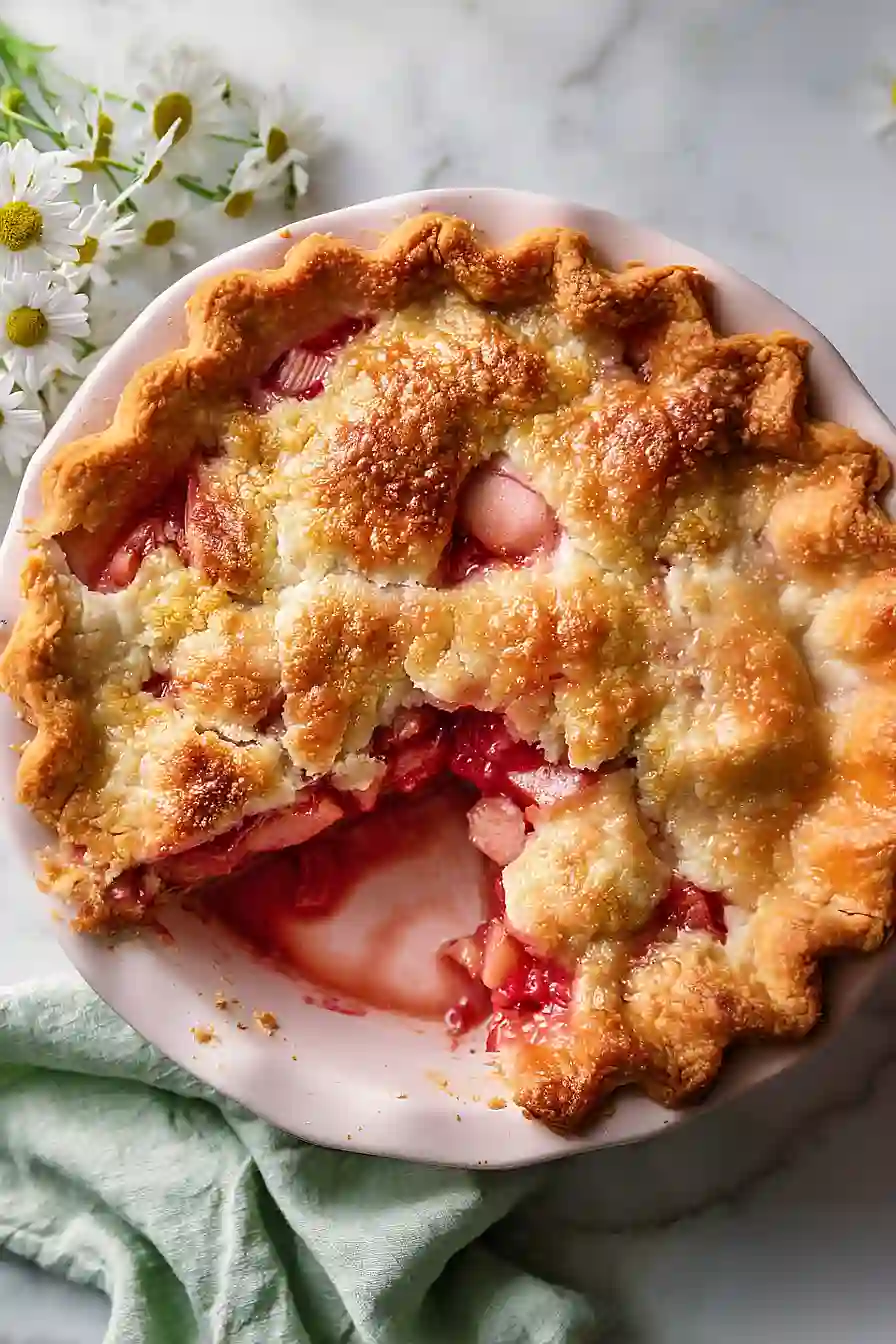
This rhubarb pie cake is the kind of dessert that makes people ask for seconds. It’s got a tender, biscuit-like base that holds up chunks of tart rhubarb tossed with cinnamon and vanilla.
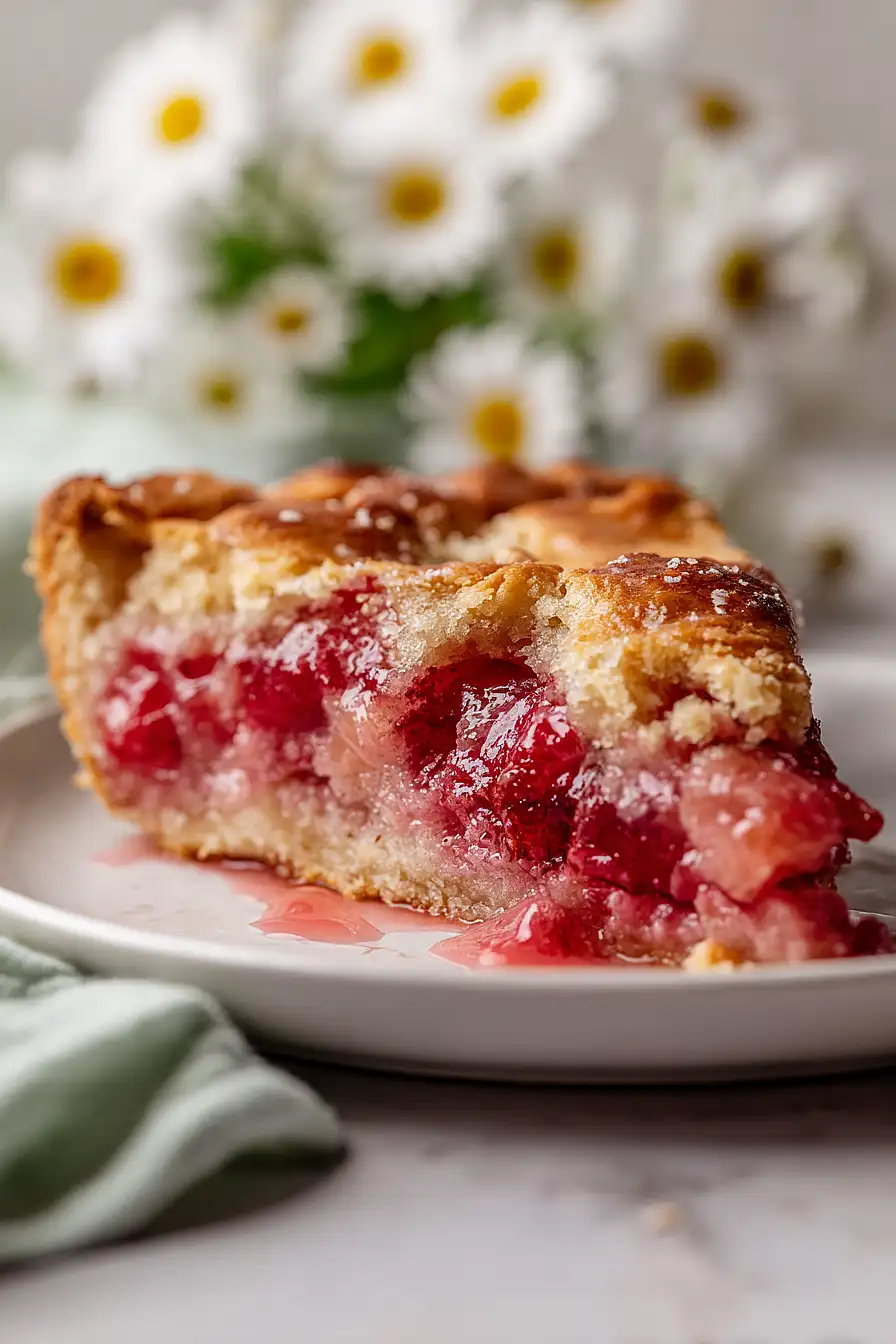
The rhubarb gets sweet and jammy as it bakes, while the cake part stays soft and just a little crumbly. It’s somewhere between a cobbler and a coffee cake, with all the best parts of both.
It’s a simple dessert that comes together without much fuss, perfect for when rhubarb season rolls around.
Why You’ll Love This Rhubarb Pie Cake
- Best of both worlds – This recipe combines the flaky, buttery goodness of pie with the soft, tender crumb of cake, so you don’t have to choose between your two favorite desserts.
- Simple ingredients – You probably have most of these pantry staples on hand already, and fresh rhubarb is the star of the show.
- Perfect for spring and summer – This is a great way to use up rhubarb when it’s in season, and the tart-sweet flavor is refreshing for warmer weather.
- Ready in about an hour – From start to finish, you can have this dessert on the table in just over an hour, making it doable for weeknight dinners or last-minute gatherings.
What Kind of Rhubarb Should I Use?
Fresh rhubarb is always your best bet for this recipe, and you’ll find it in season during spring and early summer at most grocery stores and farmers markets. The color of the stalks – whether they’re deep red, pink, or more green – doesn’t really affect the taste, so don’t worry if your rhubarb looks different from what you see in photos. Just make sure to trim off and discard the leaves, as they’re toxic, and cut away any parts of the stalks that look dried out or damaged. If fresh rhubarb isn’t available, you can use frozen rhubarb instead – just thaw it first and drain off any excess liquid before measuring it out for your recipe.

Options for Substitutions
This recipe is pretty straightforward, but here are a few swaps you can make if needed:
- Buttermilk: Don’t have buttermilk? Make your own by adding 1 tablespoon of lemon juice or white vinegar to 3/4 cup of regular milk. Let it sit for 5 minutes before using.
- Rhubarb: Fresh rhubarb is best for this recipe, but if you only have frozen, that works too. Just thaw it completely and drain off any excess liquid before using, or your cake might turn out soggy.
- Butter: You can use margarine or shortening instead of butter, though butter gives you the best flavor. If using salted butter, skip the pinch of salt in the recipe.
- Baking soda: In a pinch, you can substitute with 3 teaspoons of baking powder, but keep in mind this might slightly change the texture of your cake.
Watch Out for These Mistakes While Baking
The biggest mistake when making rhubarb pie cake is not draining excess moisture from the rhubarb, which can lead to a watery filling that makes the bottom crust soggy – let your cut rhubarb sit in a colander for 15-20 minutes and pat it dry before tossing with the sugar and flour mixture.
Another common error is overworking the dough when kneading, so keep it gentle and stop as soon as it comes together, otherwise you’ll end up with a tough, dense crust instead of a tender one.
Don’t skip placing the pie on a baking sheet, as rhubarb releases a lot of juice during baking that can bubble over and make a mess in your oven, plus the sheet helps the bottom crust bake more evenly.
Finally, resist cutting into the pie right away – that 15-minute rest isn’t just a suggestion, it allows the filling to set up so your slices hold together nicely instead of falling apart on the plate.
What to Serve With Rhubarb Pie Cake?
This rhubarb pie cake is perfect on its own, but a scoop of vanilla ice cream on top takes it to the next level – the cold, creamy ice cream melts into the warm cake and creates an amazing contrast. If you’re serving it for brunch or breakfast, a dollop of whipped cream or a drizzle of heavy cream works beautifully alongside a hot cup of coffee. For an afternoon dessert, try pairing it with fresh strawberries since they’re in season at the same time as rhubarb and complement the tart flavor really well. You could also serve it with a simple custard sauce or even just a dusting of powdered sugar if you want to keep things simple.
Storage Instructions
Store: Keep your rhubarb pie cake covered with plastic wrap or in an airtight container at room temperature for up to 2 days. If you want it to last longer, store it in the fridge for up to 5 days – just know it might lose a bit of that fresh-baked texture.
Freeze: This cake freezes really well for up to 3 months. Wrap individual slices tightly in plastic wrap, then place them in a freezer bag. That way you can grab just one piece whenever you’re craving it without thawing the whole thing.
Serve: Let frozen slices thaw in the fridge overnight or at room temperature for about an hour. I actually think this tastes best slightly warm, so feel free to pop it in the microwave for 15-20 seconds before serving.
| Preparation Time | 20-30 minutes |
| Cooking Time | 45-55 minutes |
| Total Time | 65-85 minutes |
| Level of Difficulty | Medium |
| Servings | 8 slices |
Estimated Nutrition
Estimated nutrition for the whole recipe (without optional ingredients):
- Calories: 2150-2350
- Protein: 32-36 g
- Fat: 48-54 g
- Carbohydrates: 410-440 g
Ingredients
For the dough:
- 3 1/4 cups flour (I always use King Arthur all-purpose flour)
- 1 tsp baking soda
- 1/4 cup sugar
- 1/2 teaspoon salt
- 1/3 cup butter (I like Kerrygold unsalted butter for this)
- 1 large egg
- 3/4 cup buttermilk (room temperature, about 70°F)
For the filling:
- 5 cups rhubarb (cut into 1-inch chunks)
- 3 tbsp flour
- 1 1/2 cups sugar
- 1 teaspoon vanilla extract
- 1/2 teaspoon ground cinnamon
Step 1: Prepare the Mise en Place and Preheat
- 5 cups rhubarb, cut into 1-inch chunks
- 3 1/4 cups flour
- 1 tsp baking soda
- 1/4 cup sugar
- 1/2 teaspoon salt
- 1 large egg
- 3/4 cup buttermilk, room temperature
Heat your oven to 350°F and grease a 10-inch pie plate with butter or cooking spray.
Cut the rhubarb into 1-inch chunks and set aside in a bowl.
Measure out all dry ingredients (flour, baking soda, sugar, salt) and the wet ingredients (egg, buttermilk, vanilla) so everything is ready when you start mixing.
I like to have everything prepped before I begin the dough so the process feels smooth and unrushed.
Step 2: Make the Pie Dough
- 3 1/4 cups flour
- 1 tsp baking soda
- 1/4 cup sugar
- 1/2 teaspoon salt
- 1/3 cup butter, cold and cubed
- 1 large egg
- 3/4 cup buttermilk, room temperature
In a large bowl, whisk together the flour, baking soda, 1/4 cup sugar, and salt.
Cut the cold butter into small cubes and add to the dry mixture.
Using your fingertips or a pastry cutter, rub the butter into the flour until the mixture resembles coarse breadcrumbs—this creates a tender, flaky crust.
In a separate small bowl, whisk together the egg and buttermilk until combined.
Pour the wet mixture into the dry ingredients and gently mix until a shaggy dough forms.
Knead the dough just a few times until it comes together, then divide it into two equal pieces.
I find that keeping the dough slightly cool and not overworking it results in a more tender crust.
Step 3: Line the Pie Plate with Bottom Crust
- pie dough
- flour for dusting work surface
On a lightly floured surface, roll out one piece of dough from Step 2 into a circle approximately 11 inches in diameter (slightly larger than your pie plate to account for sides).
Transfer it carefully to the greased 10-inch pie plate, letting it settle naturally into the corners and up the sides.
You can use a small piece of scrap dough to patch any tears if needed.
Step 4: Prepare and Add the Rhubarb Filling
- 5 cups rhubarb from Step 1
- 1 1/2 cups sugar
- 3 tbsp flour
- 1 teaspoon vanilla extract
- 1/2 teaspoon ground cinnamon
In a medium bowl, combine 1 1/2 cups sugar, 3 tablespoons flour, vanilla extract, and ground cinnamon.
Add the prepared rhubarb from Step 1 and toss gently until all pieces are evenly coated with the sugar-flour mixture.
This allows the rhubarb to macerate slightly and creates the filling base.
Pour the entire rhubarb mixture into the dough-lined pie plate, distributing it evenly.
Step 5: Add Top Crust and Seal the Pie
- pie dough
- water
Roll out the second piece of dough from Step 2 into a circle approximately 10-11 inches in diameter.
Lay it over the filled pie, allowing it to drape naturally.
Trim any excess dough hanging over the edge, then fold the edges of both crusts under and crimp or press them together firmly with your fingers or a fork to seal.
This creates a tight seal that prevents filling from leaking during baking.
Cut 4-5 small slits in the top crust to allow steam to escape during baking.
Step 6: Finish and Bake the Pie
- assembled pie from Step 5
- buttermilk or water for brushing
- sugar for sprinkling
Brush the top crust lightly with a bit of buttermilk or water, then sprinkle a light coating of sugar over the entire surface for a subtle sweetness and gentle crunch.
Place the pie on a sheet pan (to catch any drips) and bake at 350°F for 45-55 minutes, until the crust is golden brown and the filling begins to bubble slightly around the edges.
The pie is done when you see just a hint of filling peeking through the slits at the top.
Step 7: Cool and Serve
Remove the pie from the oven and let it rest on a wire rack or countertop for at least 15 minutes before slicing.
This resting period allows the filling to set slightly and makes serving much cleaner.
The pie can be enjoyed warm or at room temperature.
Traditional Rhubarb Pie Cake
Ingredients
For the dough
- 3 1/4 cups flour (I always use King Arthur all-purpose flour)
- 1 tsp baking soda
- 1/4 cup sugar
- 1/2 teaspoon salt
- 1/3 cup butter (I like Kerrygold unsalted butter for this)
- 1 large egg
- 3/4 cup buttermilk (room temperature, about 70°F)
For the filling
- 5 cups rhubarb (cut into 1-inch chunks)
- 3 tbsp flour
- 1 1/2 cups sugar
- 1 teaspoon vanilla extract
- 1/2 teaspoon ground cinnamon
Instructions
- Heat your oven to 350°F and grease a 10-inch pie plate with butter or cooking spray. Cut the rhubarb into 1-inch chunks and set aside in a bowl. Measure out all dry ingredients (flour, baking soda, sugar, salt) and the wet ingredients (egg, buttermilk, vanilla) so everything is ready when you start mixing. I like to have everything prepped before I begin the dough so the process feels smooth and unrushed.
- In a large bowl, whisk together the flour, baking soda, 1/4 cup sugar, and salt. Cut the cold butter into small cubes and add to the dry mixture. Using your fingertips or a pastry cutter, rub the butter into the flour until the mixture resembles coarse breadcrumbs—this creates a tender, flaky crust. In a separate small bowl, whisk together the egg and buttermilk until combined. Pour the wet mixture into the dry ingredients and gently mix until a shaggy dough forms. Knead the dough just a few times until it comes together, then divide it into two equal pieces. I find that keeping the dough slightly cool and not overworking it results in a more tender crust.
- On a lightly floured surface, roll out one piece of dough from Step 2 into a circle approximately 11 inches in diameter (slightly larger than your pie plate to account for sides). Transfer it carefully to the greased 10-inch pie plate, letting it settle naturally into the corners and up the sides. You can use a small piece of scrap dough to patch any tears if needed.
- In a medium bowl, combine 1 1/2 cups sugar, 3 tablespoons flour, vanilla extract, and ground cinnamon. Add the prepared rhubarb from Step 1 and toss gently until all pieces are evenly coated with the sugar-flour mixture. This allows the rhubarb to macerate slightly and creates the filling base. Pour the entire rhubarb mixture into the dough-lined pie plate, distributing it evenly.
- Roll out the second piece of dough from Step 2 into a circle approximately 10-11 inches in diameter. Lay it over the filled pie, allowing it to drape naturally. Trim any excess dough hanging over the edge, then fold the edges of both crusts under and crimp or press them together firmly with your fingers or a fork to seal. This creates a tight seal that prevents filling from leaking during baking. Cut 4-5 small slits in the top crust to allow steam to escape during baking.
- Brush the top crust lightly with a bit of buttermilk or water, then sprinkle a light coating of sugar over the entire surface for a subtle sweetness and gentle crunch. Place the pie on a sheet pan (to catch any drips) and bake at 350°F for 45-55 minutes, until the crust is golden brown and the filling begins to bubble slightly around the edges. The pie is done when you see just a hint of filling peeking through the slits at the top.
- Remove the pie from the oven and let it rest on a wire rack or countertop for at least 15 minutes before slicing. This resting period allows the filling to set slightly and makes serving much cleaner. The pie can be enjoyed warm or at room temperature.