Late summer in the Southwest means one thing: hatch chile season. I wait for it every year like some people wait for pumpkin spice. There’s something about that smoky, earthy heat that makes everything taste better. And when I can get my hands on fresh hatch chiles, I want to put them in everything.
That’s exactly how this pasta came to be. I had a bag of roasted hatch chiles sitting in my fridge, and I was staring at a box of pasta wondering what to make for dinner. Sometimes the best recipes happen when you just start cooking with what you have. The chiles add just enough heat without being overwhelming, and they give the whole dish a smoky depth that regular bell peppers just can’t match.
Want something creamy and comforting? This is it. Looking for a way to use up those hatch chiles before they go bad? Perfect. Honestly, this has become my go-to weeknight dinner when I want something that feels special but doesn’t require a trip to three different stores.
Why You’ll Love This Hatch Chile Pasta
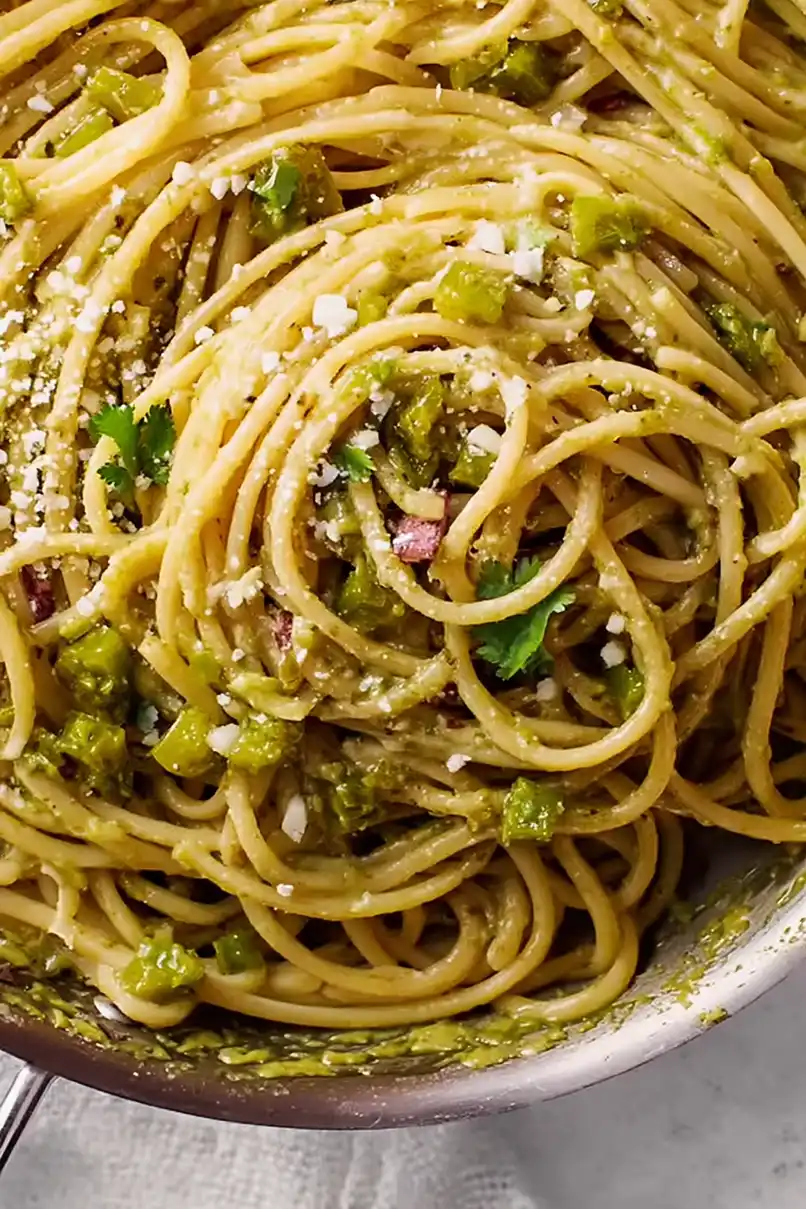
- Bold, smoky flavor – The fire-roasted hatch chiles bring a unique smoky heat that’s way more interesting than regular pasta sauce, giving you that authentic Southwest taste.
- Quick weeknight dinner – Ready in under an hour, this pasta comes together fast enough for busy weeknights but tastes like you spent way more time on it.
- Creamy, cheesy goodness – The combination of sour cream, cotija, and Monterey Jack creates a rich, creamy sauce that perfectly balances the heat from the chiles.
- Simple ingredients – Most of these ingredients are pantry staples or easy to find at your local grocery store, making this recipe accessible any time you’re craving something different.
- Perfect spice level – Hatch chiles give you that warm, earthy heat without being too spicy, so the whole family can enjoy it together.
What Kind of Hatch Chiles Should I Use?
For this pasta recipe, you’ll want to use fire-roasted hatch chiles, which you can find fresh during hatch chile season (late summer) or frozen year-round in many grocery stores. Fresh hatch chiles will give you the best flavor, but frozen ones work perfectly fine and are much more convenient since they’re already roasted and peeled. If you can’t find hatch chiles at all, poblano peppers make a good substitute, though they’ll be a bit milder. Make sure to remove the seeds and stems before chopping, and if you’re sensitive to heat, you can remove the white ribs inside the chiles to tone down the spice level.
Options for Substitutions
This pasta is pretty adaptable, so here are some swaps you can make if needed:
- Hatch chiles: If you can’t find hatch chiles, poblano peppers are your best bet for a similar mild heat and flavor. You can also use Anaheim chiles or even canned green chiles in a pinch, though the flavor will be a bit different.
- Cotija cheese: Don’t have cotija? Queso fresco works great, or you can use feta cheese for a similar salty, crumbly texture. Even freshly grated Parmesan will do the job.
- Monterey Jack cheese: Feel free to swap this with mild cheddar, pepper jack for extra heat, or even mozzarella if that’s what you have on hand.
- Sour cream: Greek yogurt makes a great substitute and adds a nice tangy flavor. You can also use heavy cream or cream cheese (use about 3 tablespoons) for richness.
- Spaghetti: Any long pasta works well here – try linguine, angel hair, or even penne if you prefer shorter pasta shapes.
- Vegetable broth: Chicken broth works just as well, or you can use the pasta cooking water for extra starch to help bind the sauce.
Watch Out for These Mistakes While Cooking
The biggest mistake when making hatch chile pasta is not saving enough pasta water – you’ll need that starchy liquid to bring the sauce together, so reserve at least a full cup before draining your spaghetti.
Another common error is adding the sour cream while the pan is too hot, which can cause it to curdle and break, so always remove the pan from heat and let it cool slightly before stirring in the sour cream.
Don’t forget to taste your hatch chiles before adding them since their heat level can vary dramatically – start with less and add more as needed to avoid an overly spicy dish.
For the smoothest sauce, add the pasta water gradually while tossing the noodles, and remember that the sauce will thicken as it cools, so it should look slightly loose in the pan.
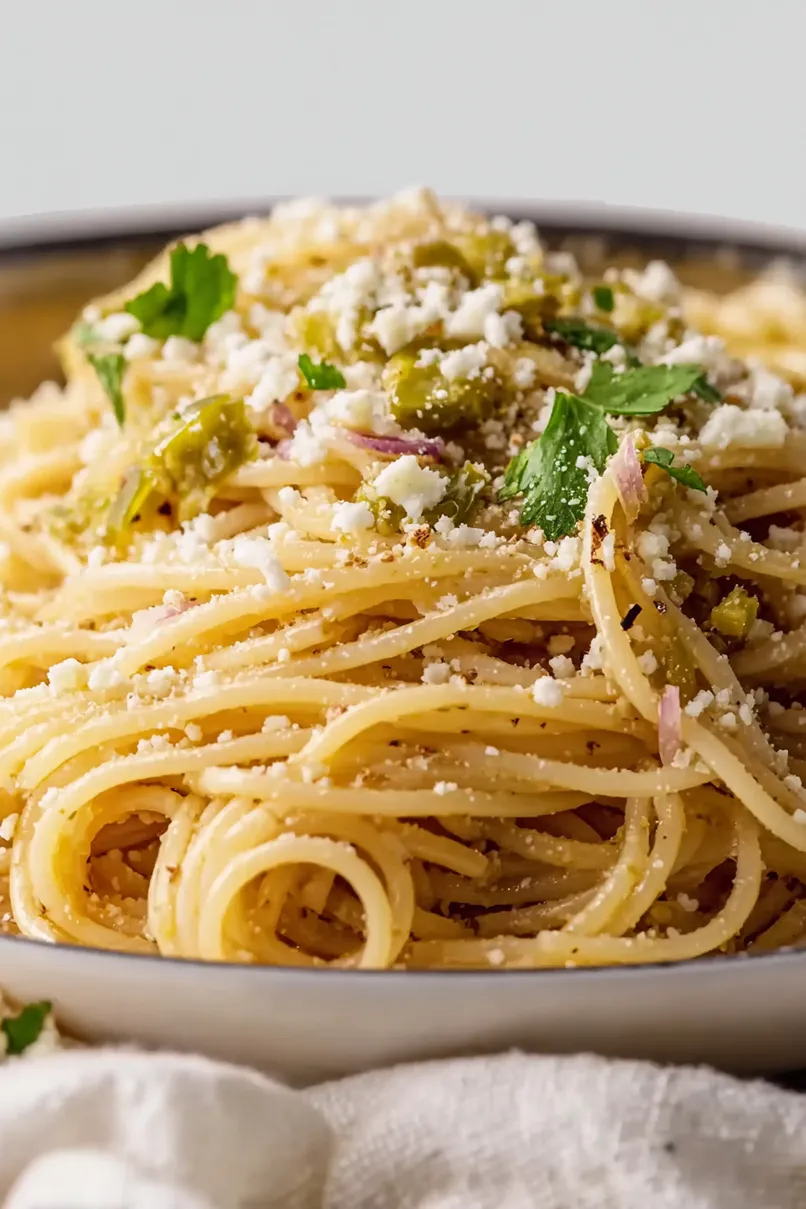
What to Serve With Hatch Chile Pasta?
This creamy, spicy pasta pairs perfectly with some warm flour tortillas or crusty bread to help cool down the heat from those fire-roasted hatch chiles. A simple side salad with avocado, lime, and mixed greens balances out the richness of the sour cream and cheese beautifully. For protein, grilled chicken or shrimp work great mixed right into the pasta, or you can serve some black beans on the side for a vegetarian option. Don’t forget to have some extra lime wedges and maybe a dollop of Greek yogurt nearby – trust me, you’ll want them to tame the spice!
Storage Instructions
Refrigerate: This hatch chile pasta keeps really well in the fridge for up to 4 days in an airtight container. The flavors actually get even better after sitting overnight, so it makes great leftovers! Just keep in mind that the pasta will absorb some of the sauce as it sits.
Freeze: You can freeze this pasta for up to 2 months, though the texture of the sour cream might change slightly when thawed. I like to freeze individual portions in freezer-safe containers so I can grab just what I need for a quick meal later.
Warm Up: To bring your pasta back to life, add a splash of broth or water and heat it gently on the stove over medium-low heat, stirring frequently. You can also microwave it in 30-second intervals, stirring between each one. Top with fresh cilantro and a sprinkle of cotija cheese to make it taste fresh again.
| Preparation Time | 15-20 minutes |
| Cooking Time | 20-30 minutes |
| Total Time | 35-50 minutes |
| Level of Difficulty | Medium |
Estimated Nutrition
Estimated nutrition for the whole recipe (without optional ingredients):
- Calories: 1700-1900
- Protein: 55-65 g
- Fat: 45-55 g
- Carbohydrates: 270-300 g
Ingredients
For the pasta:
- 1/2 to 3/4 cup pasta cooking water (reserved from cooking)
- 1 lb spaghetti
For the hatch chile sauce:
- 1 1/2 tbsp olive oil (I use extra virgin for this)
- 1/2 cup monterey jack cheese, shredded (freshly grated preferred)
- 1/2 cup sour cream (room temperature)
- 1 cup cilantro, chopped (freshly chopped for best flavor)
- 1/2 tsp chili powder
- 2 cups seeded, chopped fire-roasted hatch peppers
- 1/2 large onion, finely diced (about 1/2-inch pieces)
- 4 cloves garlic (minced)
- 3/4 cup vegetable broth
- 1/2 tsp sea salt
For serving:
- Extra chopped cilantro (for garnish)
- 1/4 cup cotija cheese, crumbled
- Additional chili powder (for garnish)
Step 1: Start the Pasta and Prepare Ingredients
- 1 lb spaghetti
- 4 cloves garlic
- 1/2 large onion, finely diced
- 1 cup cilantro, chopped
Bring a large pot of salted water to a boil and add the spaghetti, cooking according to package directions.
While the pasta cooks, prepare your mise en place: mince the garlic, dice the onion into uniform pieces, and chop the cilantro.
When the pasta is al dente, reserve 1/2 to 3/4 cup of the starchy cooking water before draining the pasta completely.
The starch in this water will help emulsify the sauce and give it a silky texture.
Step 2: Build the Sauce Base
- 1 1/2 tbsp olive oil
- 1/2 large onion, finely diced
- 4 cloves garlic
Heat the olive oil in a large skillet over medium heat.
Add the diced onion and cook for 3-5 minutes, stirring occasionally, until it begins to soften and turn translucent.
Add the minced garlic and cook for about 1 minute until fragrant.
This gentle start allows the aromatics to release their flavors into the oil without burning.
Step 3: Simmer the Peppers and Broth
- 2 cups seeded, chopped fire-roasted hatch peppers
- 3/4 cup vegetable broth
- 1/2 tsp sea salt
- 1/2 tsp chili powder
Add the fire-roasted hatch peppers, vegetable broth, sea salt, and chili powder to the skillet with the aromatics from Step 2.
Stir to combine and let simmer for 3-5 minutes.
I like to let the peppers really soften and the flavors meld together during this time—it deepens the overall taste of the sauce.
The broth reduces slightly and concentrates, intensifying the chile flavor.
Step 4: Finish the Sauce with Dairy and Herbs
- 1/2 cup sour cream
- 1/2 cup monterey jack cheese, shredded
- 1 cup cilantro, chopped
- 1/2 to 3/4 cup pasta cooking water
Remove the skillet from heat and stir in the room-temperature sour cream and shredded monterey jack cheese until fully incorporated.
Add the chopped cilantro and stir gently.
Slowly pour in the reserved pasta water, 1/4 cup at a time, stirring until you reach your desired consistency—you want a silky, pourable sauce that coats the pasta without being too thick.
I find starting with 1/2 cup and adjusting from there gives you the best control.
Step 5: Combine and Serve
- Cooked spaghetti from Step 1
- Sauce from Step 4
- Extra chopped cilantro
- 1/4 cup cotija cheese, crumbled
- Additional chili powder
Add the cooked spaghetti from Step 1 to the sauce in the skillet and toss gently but thoroughly to coat every strand.
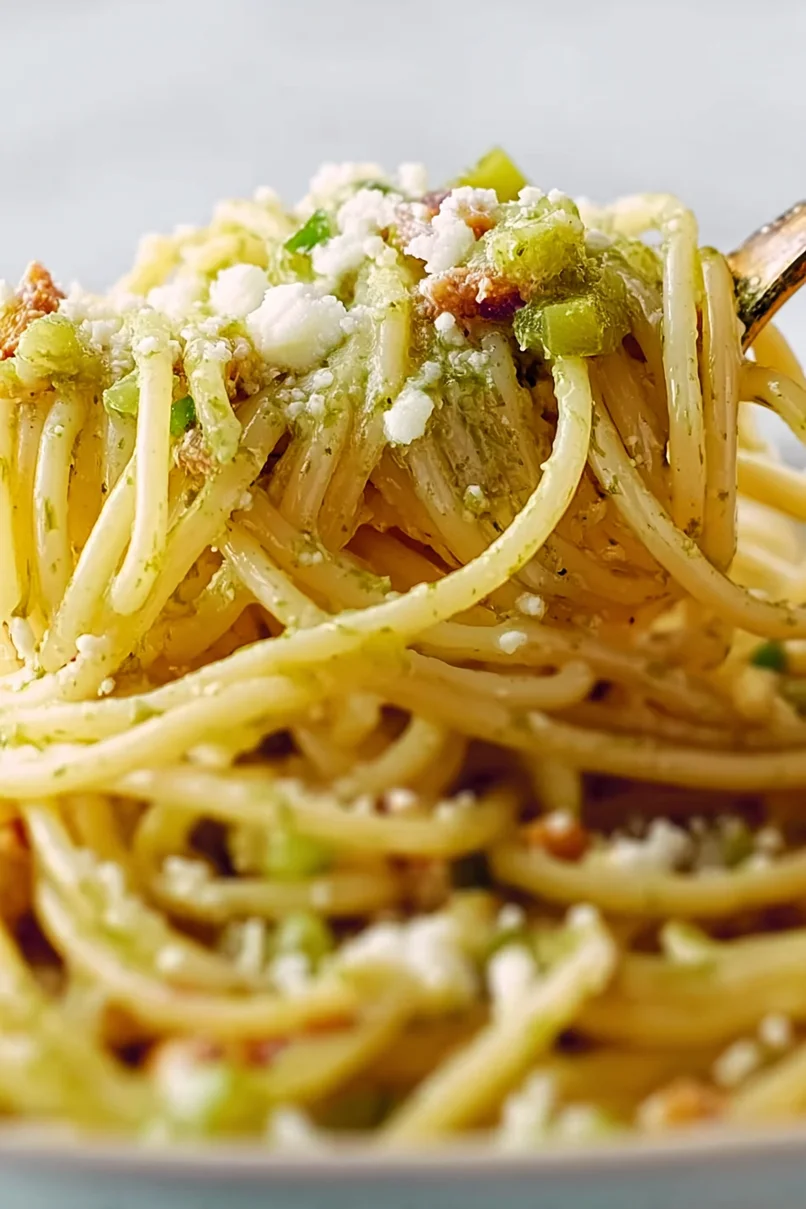
Divide among serving bowls and top each portion with additional chopped cilantro, crumbled cotija cheese, and a light dusting of chili powder for garnish.