Fall has always been my favorite season for baking. I love the smell of cinnamon and nutmeg filling my kitchen as much as I love the leaves changing colors outside. But that doesn’t mean I want to spend hours making something complicated when the kids are asking for a snack every five minutes. I prefer treats that come together quickly and taste like they took all day.
That’s why these fried pumpkin donuts have become my go-to fall treat. I can whip up a batch in about thirty minutes, and they disappear even faster than that. The batter comes together while my oil is heating up, so there’s no waiting around. Plus, I usually have all the ingredients in my pantry already.
Want something crispy on the outside and soft on the inside? These are perfect. More of a cake donut person? These work for that too. Honestly, I make a double batch because my family goes through them so fast.

Why You’ll Love These Pumpkin Donuts
- Perfect fall flavors – The combination of pumpkin puree, pumpkin spice, and nutmeg creates that cozy autumn taste you crave all season long.
- Fluffy, tender texture – Using yeast and the right flour blend gives these donuts that perfect bakery-style lightness that’s so much better than dense cake donuts.
- Fresh and homemade – Nothing beats the taste and smell of donuts made in your own kitchen, plus you control exactly what goes into them.
- Great for sharing – This recipe makes plenty of donuts, making them perfect for family breakfasts, office treats, or fall gatherings with friends.
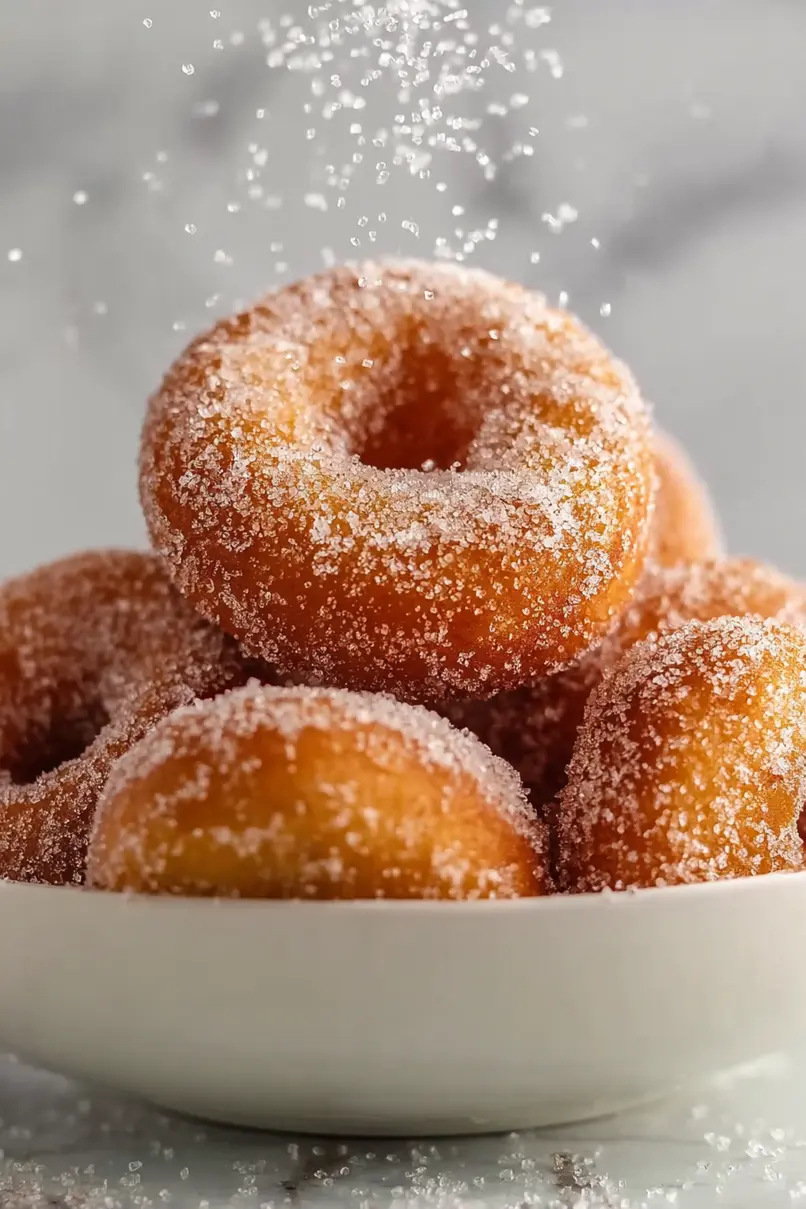
- Classic cinnamon sugar coating – The warm donuts get tossed in sweet cinnamon sugar while they’re still hot, creating that irresistible crispy-sweet exterior we all love.
What Kind of Flour Should I Use?
For these pumpkin donuts, you have a couple of good options when it comes to flour. You can use all bread flour for a chewier texture, or mix half bread flour and half all-purpose flour for a lighter, more tender donut. Bread flour has more protein, which helps create structure and gives the donuts a nice bite, while all-purpose flour makes them a bit more cake-like. If you only have all-purpose flour on hand, that’ll work too – your donuts will just be a little softer and more delicate. Just make sure your flour is fresh and stored properly, as old flour can affect how well your yeast works and how your dough rises.

Options for Substitutions
These fluffy pumpkin donuts are pretty forgiving when it comes to swaps, but there are a few key things to keep in mind:
- Bread flour: You can use all-purpose flour instead of bread flour, but your donuts might be slightly less chewy. The 50/50 mix mentioned in the recipe is actually a great middle ground if you want to try that route.
- Pumpkin puree: Make sure you’re using pure pumpkin puree, not pumpkin pie filling. In a pinch, you could substitute with sweet potato puree or butternut squash puree, but the flavor will be different.
- Instant dry yeast: If you only have active dry yeast, use the same amount but dissolve it in the warm milk first and let it foam for 5 minutes before adding to your dough.
- Warm milk: You can swap this with buttermilk for a slight tang, or use plant-based milk like oat or almond milk if needed. Just make sure it’s warmed to the right temperature.
- Pumpkin spice: Don’t have pumpkin spice blend? Mix together 1/2 tsp cinnamon, 1/4 tsp ginger, 1/8 tsp cloves, and 1/8 tsp allspice to make your own.
- Cooking oil: Use neutral oils with high smoke points like vegetable, canola, or peanut oil. Avoid olive oil as it has too strong a flavor and lower smoke point for frying.
Watch Out for These Mistakes While Cooking
The biggest mistake when making fried pumpkin donuts is not getting your oil temperature right – if it’s too hot (over 375°F), your donuts will brown too quickly on the outside while staying raw inside, and if it’s too cool (under 350°F), they’ll absorb too much oil and become greasy.
Another common error is overworking the dough after adding the butter, which can make your donuts tough instead of light and fluffy, so mix just until the ingredients come together.
Don’t skip letting the shaped donuts rise for the second time before frying – this step is crucial for getting that airy texture, and rushing it will leave you with dense, heavy donuts.
Finally, make sure your pumpkin puree is well-drained and not watery, as excess moisture can throw off the dough consistency and make the donuts fall apart in the oil.
What to Serve With Fried Pumpkin Donuts?
These warm, spiced donuts are perfect on their own, but they’re even better with a hot cup of coffee or apple cider for dipping and sipping. I love serving them alongside a cozy fall breakfast with scrambled eggs and crispy bacon – the sweet and savory combo is really satisfying. For an afternoon treat, try pairing them with vanilla ice cream or a dollop of whipped cream for an indulgent dessert. They also make a great addition to any fall brunch spread with fresh fruit and maybe some maple sausage links on the side.
Storage Instructions
Keep Fresh: These pumpkin donuts are best enjoyed fresh and warm, but you can store them in an airtight container at room temperature for up to 2 days. The cinnamon sugar coating might lose some of its crispness, but they’ll still taste great. Just keep them away from moisture to prevent them from getting soggy.
Freeze: You can freeze these donuts for up to 3 months in a freezer-safe container with parchment paper between layers. I like to freeze them before adding the cinnamon sugar coating, then roll them in fresh coating after thawing for the best texture.
Warm Up: To bring back that fresh-from-the-fryer taste, pop your donuts in a 350°F oven for about 5-7 minutes or microwave them for 15-20 seconds. If you froze them without coating, let them thaw completely first, then warm them up and roll in the cinnamon sugar mixture while they’re still warm.
| Preparation Time | 30-45 minutes |
| Cooking Time | 20-30 minutes |
| Total Time | 50-75 minutes |
| Level of Difficulty | Medium |
Estimated Nutrition
Estimated nutrition for the whole recipe (without optional ingredients):
- Calories: 3300-3600
- Protein: 55-65 g
- Fat: 100-120 g
- Carbohydrates: 530-570 g
Ingredients
For the dough:
- 2 tbsp sugar
- 4 cups bread flour (or use half bread, half all-purpose)
- 2 large eggs (room temperature for better incorporation)
- 2 1/4 tsp instant yeast
- 1/2 tsp salt
- 1/2 cup pumpkin puree (I use Libby’s for consistent results)
- 1/2 cup warm milk (110°F, helps activate yeast)
- 1/4 tsp ground nutmeg
- 4 tbsp unsalted butter, softened (I prefer Kerrygold)
- 1 tsp vanilla extract
- 1 tsp pumpkin pie spice blend (for authentic autumn flavor)
For deep frying:
- 4 cups neutral cooking oil (vegetable, canola, or peanut oil)
For the sugar coating:
- 1 cup sugar (cinnamon-sugar coating for crispness)
- 2 tbsp ground cinnamon (freshly ground preferred for better flavor)
Step 1: Prepare Mise en Place and Activate the Yeast
- 4 cups bread flour
- 1 tsp pumpkin pie spice blend
- 1/4 tsp ground nutmeg
- 1/2 tsp salt
- 1/2 cup warm milk
- 2 1/4 tsp instant yeast
- 2 tbsp sugar
- 1 cup sugar
- 2 tbsp ground cinnamon
Combine the bread flour, pumpkin pie spice, ground nutmeg, and salt in a medium bowl and set aside—this dry mixture forms the backbone of your dough structure.
In a large mixing bowl or the bowl of a stand mixer, combine the warm milk (110°F is crucial for proper yeast activation), instant yeast, and sugar.
Let this sit for 1-2 minutes until it becomes foamy, which signals the yeast is alive and ready to work.
While waiting, combine the cinnamon and sugar in a small bowl for the coating and set aside.
Step 2: Build the Wet Dough Base
- 2 large eggs
- 1/2 cup pumpkin puree
- 4 tbsp unsalted butter, softened
- 1 tsp vanilla extract
- foamy yeast mixture from Step 1
To your foamy yeast mixture, add the room-temperature eggs, pumpkin puree, softened butter, and vanilla extract.
Using a stand mixer with the paddle attachment or mixing by hand, blend these ingredients until fully combined and smooth.
The pumpkin and butter will incorporate more easily when the eggs and milk are already mixed, creating an emulsified base that distributes moisture evenly throughout the dough.
This takes about 2-3 minutes with a mixer or 4-5 minutes by hand.
Step 3: Mix and Knead the Dough
- dry ingredient mixture from Step 1
- wet ingredient mixture from Step 2
Add the dry ingredient mixture from Step 1 to the wet ingredients from Step 2, combining on low speed with the mixer or stirring by hand until all flour is incorporated and a shaggy dough forms.
Then switch to the dough hook and knead for 6-8 minutes on medium speed (or knead by hand for 10 minutes), until the dough becomes smooth, elastic, and slightly tacky but not sticky.
I like to test the dough by gently poking it—it should spring back slowly but leave a slight impression.
The dough is ready when it holds together in a cohesive ball.
Step 4: First Rise and Dough Development
- kneaded dough from Step 3
- small amount of neutral oil for coating
Transfer the kneaded dough to a lightly oiled bowl, turning it once to coat all sides with oil (this prevents a crust from forming).
Cover the bowl loosely with a damp kitchen towel or plastic wrap and let it rise at room temperature for 60-90 minutes, until it has roughly doubled in size.
You’ll know it’s ready when the dough springs back slowly when poked with a floured finger.
This bulk fermentation develops flavor and creates the light, airy crumb you want in fried donuts.
Step 5: Shape and Proof the Donuts
- risen dough from Step 4
Turn the risen dough out onto a lightly floured surface and gently press it down to release excess gas.
Roll it out to 1/4-inch thickness using a rolling pin, then cut out donut shapes using a donut cutter or two different-sized round cutters (a 3-inch cutter for the outer ring and a 1-inch cutter for the hole).
Place the cut donuts and holes on parchment paper squares, leaving 2 inches between each piece to allow room for expansion.
Cover loosely with a damp towel and let them proof for 45-60 minutes at room temperature until they’re puffy and jiggly—this second rise creates light, pillowy donuts rather than dense ones.
Step 6: Heat Oil and Fry the Donuts
- 4 cups neutral cooking oil
- proofed donuts from Step 5
Pour the neutral cooking oil into a heavy-bottomed pot or deep skillet and heat to 325°F (163°C), using a candy or deep-fry thermometer to monitor temperature precisely—this lower temperature cooks the donuts through without burning the outside.
Once at temperature, carefully place 2-3 donuts at a time into the oil (don’t overcrowd), holding them briefly against the side of the pot to prevent sticking.
Fry for 2-3 minutes per side until deep golden brown, then carefully remove with a slotted spoon or spider strainer and drain on paper towels.
I find that 325°F takes a bit longer but gives you a more tender, less greasy result than higher temperatures.
Step 7: Coat and Serve
- fried donuts from Step 6
- cinnamon-sugar coating from Step 1
While the donuts are still warm (but not piping hot), toss them in the cinnamon-sugar mixture from Step 1 in batches until fully coated on all sides.
Work quickly so the sugar adheres to the warm oil on the donut surface—the cinnamon-sugar coating will stick best while the donuts are still warm.
Serve immediately for the best texture, as the donuts will start to set as they cool.