I was skeptical the first time someone told me to throw leftover kimchi into fried rice. Growing up, fried rice meant soy sauce, scrambled eggs, and maybe some frozen peas if we were feeling fancy. Kimchi seemed too spicy and funky for something so simple.
But here’s what I learned after trying it—kimchi fried rice is actually easier than regular fried rice. The kimchi brings all the flavor, so you don’t need to worry about getting the seasoning just right. Plus, it’s the perfect way to use up that jar of kimchi that’s been sitting in your fridge. Add some chicken, and you’ve got a complete meal that takes less time than ordering takeout.
Why You’ll Love This Kimchi Fried Rice
- Quick weeknight dinner – Ready in just 30-45 minutes, this one-pan meal is perfect when you want something satisfying without spending hours in the kitchen.
- Bold, exciting flavors – The tangy kimchi and spicy gochujang create an addictive combination that’s way more interesting than regular fried rice.
- Great way to use leftovers – This recipe works perfectly with leftover rice and any kimchi sitting in your fridge, turning simple ingredients into something special.
- Complete meal in one pan – With protein from chicken and eggs, plus plenty of vegetables, you get everything you need for a balanced dinner without multiple dishes to wash.
- Customizable heat level – You can easily adjust the spiciness by using more or less gochujang and kimchi to suit your taste preferences.
What Kind of Kimchi Should I Use?
For the best kimchi fried rice, you’ll want to use well-fermented kimchi that’s been sitting in your fridge for at least a week or two. The older, more sour kimchi actually works better than fresh kimchi because it has more developed flavors and won’t add too much moisture to your rice. You can find kimchi at most grocery stores these days, usually in the refrigerated section near other fermented foods, or at any Asian market. Don’t throw away that kimchi juice either – it’s liquid gold for this recipe and adds an extra punch of fermented flavor that really makes the dish shine.
Options for Substitutions
This fried rice is pretty forgiving when it comes to swaps, so here’s what you can change up:
- Sushi rice: Day-old jasmine rice or any short-grain rice works great here. The key is using rice that’s been refrigerated overnight – it fries up better and doesn’t get mushy.
- Chicken thighs: You can easily swap these for chicken breast, pork belly, or even leave out the meat entirely for a vegetarian version. If using breast meat, cook it a bit less to avoid drying out.
- Gochujang: If you can’t find gochujang, try sriracha mixed with a little tomato paste, or use sambal oelek with a pinch of sugar. The heat level will be different, so start with less and adjust to taste.
- Kimchi: This is really the star of the dish, so I wouldn’t recommend skipping it. But if yours isn’t very sour, add a splash of rice vinegar to make up for missing kimchi juice.
- Red pepper: Bell peppers of any color work fine, or you can use snap peas, broccoli, or whatever vegetables you have on hand.
- Nori: If you don’t have nori sheets, you can skip this garnish or sprinkle some toasted sesame seeds on top instead for extra crunch.
Watch Out for These Mistakes While Cooking
The biggest mistake when making kimchi fried rice is using freshly cooked, hot rice instead of day-old rice – warm rice will turn mushy and clump together, so always use rice that’s been refrigerated overnight or let fresh rice cool completely before frying.
Don’t overcrowd your pan with all the ingredients at once, as this will steam everything instead of getting that nice crispy texture you want – cook the chicken first until golden, then remove it and add it back at the end.
Another common error is not draining your kimchi properly, which can make your fried rice watery and bland, so give it a good squeeze before adding it to the pan and save that flavorful juice to add back in controlled amounts.
Finally, resist the urge to keep stirring constantly – let the rice sit undisturbed for a minute or two between stirs to develop those crispy, caramelized bits that make fried rice so good.
What to Serve With Kimchi Fried Rice?
This kimchi fried rice is pretty much a complete meal on its own, but I love serving it with some crispy Korean side dishes to make it feel like a proper feast. A simple cucumber salad dressed with rice vinegar and a pinch of sugar helps cool down the spicy heat from the gochujang and kimchi. You could also add some steamed or sautéed bok choy on the side for extra greens, or even some pickled radishes if you can find them at your local Asian market. For something a bit heartier, try serving it alongside some miso soup or a light vegetable broth to round out the meal.
Storage Instructions
Refrigerate: Leftover kimchi fried rice keeps really well in the fridge for up to 4 days in an airtight container. The flavors actually get even better after sitting overnight, so don’t worry if you have extras! Just make sure to let it cool completely before putting it away.
Freeze: This fried rice freezes nicely for up to 3 months in freezer-safe containers or bags. I like to portion it out into individual servings so I can grab just what I need for a quick meal. The texture of the vegetables might be slightly softer after freezing, but it’s still delicious.
Reheat: To warm it up, just toss it in a pan with a splash of oil over medium heat for a few minutes, stirring occasionally. You can also microwave it, but I find the stovetop gives you that nice crispy texture again. Add a drizzle of sesame oil or extra soy sauce if it seems a bit dry.
| Preparation Time | 10-15 minutes |
| Cooking Time | 20-30 minutes |
| Total Time | 30-45 minutes |
| Level of Difficulty | Medium |
Estimated Nutrition
Estimated nutrition for the whole recipe (without optional ingredients):
- Calories: 1150-1300
- Protein: 45-55 g
- Fat: 40-50 g
- Carbohydrates: 140-160 g
Ingredients
For the fried rice:
- 2 boneless chicken thighs, cubed (into 3/4-inch pieces)
- 2/3 cup chopped kimchi (use a good quality Korean brand)
- 2 garlic cloves, crushed
- 1 large carrot, grated
- 3 large eggs (room temperature for better incorporation)
- 1 1/2 tbsp vegetable oil, divided (or groundnut oil)
- 1 red bell pepper, diced (into 1/4-inch pieces)
- 1/2 onion, minced
- 2 tsp fresh ginger, chopped (about 1-inch piece, peeled)
- 1 1/4 cups sushi rice (day-old, chilled for best texture)
For the sauce:
- 2 tbsp kimchi brine (reserved from kimchi jar)
- 3 tbsp soy sauce
- 1 tbsp gochujang (Korean chili paste, adds authentic spicy flavor)
For serving:
- 2 tsp sesame seeds (toasted preferred for deeper flavor)
- Nori sheets, cut into thin 1.5-inch strips
- 2 scallions, finely sliced (white and green parts separated)
Step 1: Prepare Mise en Place and Make the Sauce
- 1/2 onion, minced
- 2 tsp fresh ginger, chopped
- 2 boneless chicken thighs, cubed
- 1 large carrot, grated
- 1 red bell pepper, diced
- 2 garlic cloves, crushed
- 2 scallions, finely sliced
- 1 tbsp gochujang
- 3 tbsp soy sauce
- 2 tbsp kimchi brine
Gather all ingredients and prep your workspace.
Mince the onion, chop the ginger, cube the chicken into 3/4-inch pieces, grate the carrot, dice the bell pepper into 1/4-inch pieces, crush the garlic cloves, and slice the scallions (keeping white and green parts separate).
In a small bowl, whisk together the gochujang, soy sauce, and kimchi brine until smooth—this creates your flavorful sauce base.
Having everything prepped and your sauce ready means you can work quickly once the pan gets hot, which is crucial for building proper flavor and texture in fried rice.
Step 2: Sear Chicken and Build the Flavor Base
- 1 tbsp vegetable oil
- 1/2 onion, minced
- 2 tsp fresh ginger, chopped
- 2 boneless chicken thighs, cubed
Heat 1 tbsp of vegetable oil in a large wok or skillet over medium-high heat until it shimmers.
Add the minced onion and chopped ginger, stirring for about 30 seconds until fragrant—this creates an aromatic foundation.
Add the cubed chicken and cook for 4-5 minutes, stirring occasionally, until the pieces are browned on the outside and cooked through (no pink inside).
I like to let the chicken sit undisturbed for a minute or two between stirs to get a nice golden color, which adds depth to the final dish.
Step 3: Add Vegetables and Finish the Protein
- 1 large carrot, grated
- 1 red bell pepper, diced
- 2/3 cup chopped kimchi
- 2 garlic cloves, crushed
Add the grated carrot, diced bell pepper, and chopped kimchi to the pan with the cooked chicken.
Stir constantly for 2-3 minutes until the vegetables begin to soften slightly and release their moisture into the pan—this helps distribute flavor throughout.
Push everything to the side of the pan, add the crushed garlic to the cleared space, and cook for 30 seconds until fragrant, then stir it all together.
The garlic finishes at the end of this stage to prevent it from burning, which would make it bitter.
Step 4: Combine Rice and Sauce
- 1 1/4 cups sushi rice
- sauce mixture from Step 1
Add the day-old chilled sushi rice directly to the pan and break up any clumps with your spatula or wooden spoon, stirring constantly for 1-2 minutes to coat every grain.
Pour the sauce mixture from Step 1 evenly over the rice and stir vigorously for another 1-2 minutes, making sure the sauce coats everything evenly and the rice is heated through.
The rice should look glossy and cohesive, with no white dry patches.
I find that using chilled day-old rice is essential here—freshly cooked rice will clump together and become mushy, but cold rice grains stay separate and crispy.
Step 5: Cook the Eggs and Assemble
- 1/2 tbsp vegetable oil
- 3 large eggs
- kimchi fried rice from Step 4
- scallion greens
- 2 tsp sesame seeds
- Nori sheets, cut into strips
While the rice is finishing, heat the remaining 1/2 tbsp of vegetable oil in a separate pan over medium-high heat.
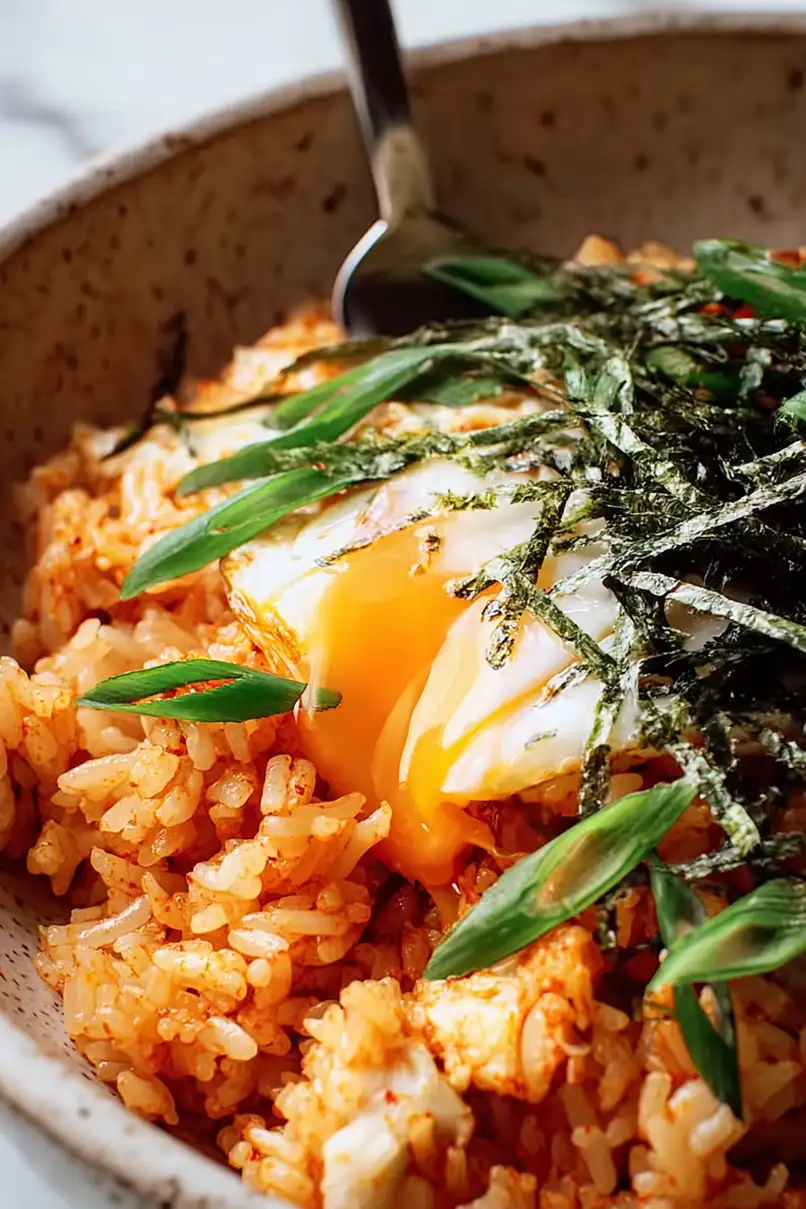
Crack the room-temperature eggs directly into the pan and fry them to your preference—sunny-side up looks beautiful and allows the yolk to become a sauce when mixed in.
Divide the kimchi fried rice from Step 4 among serving plates or bowls.
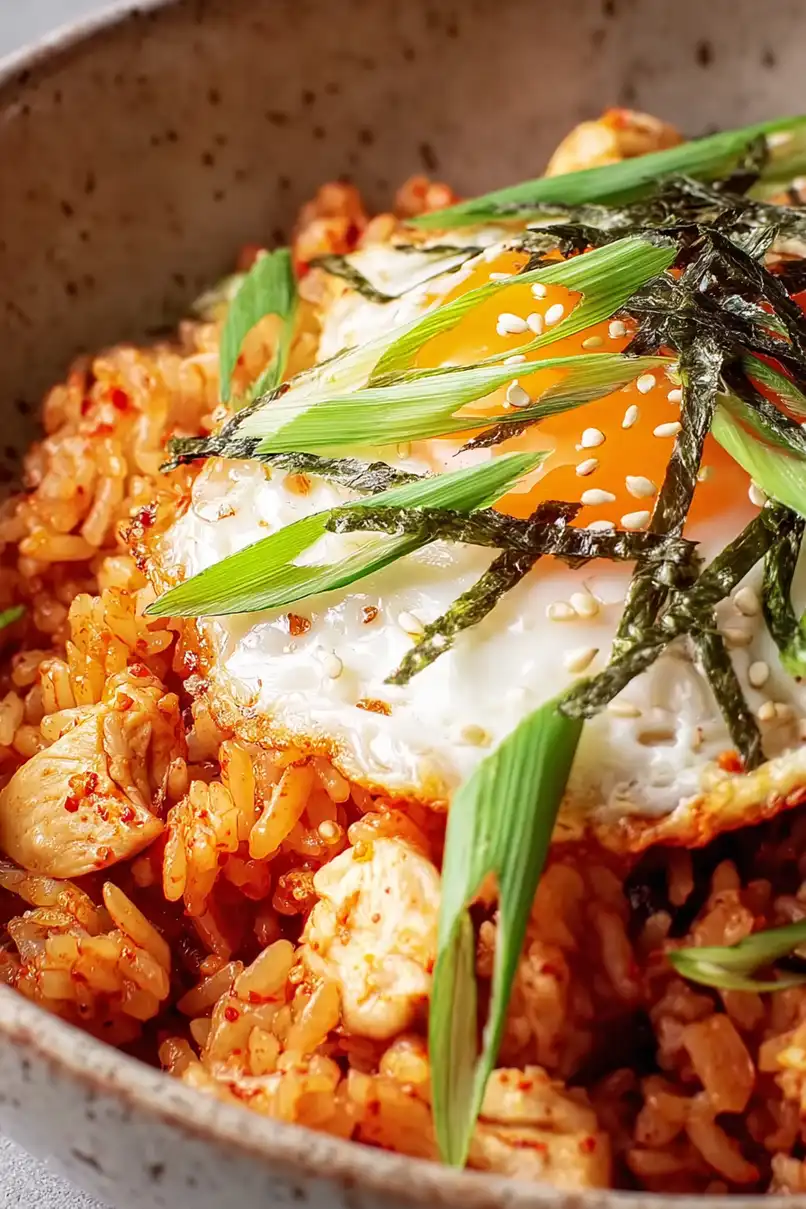
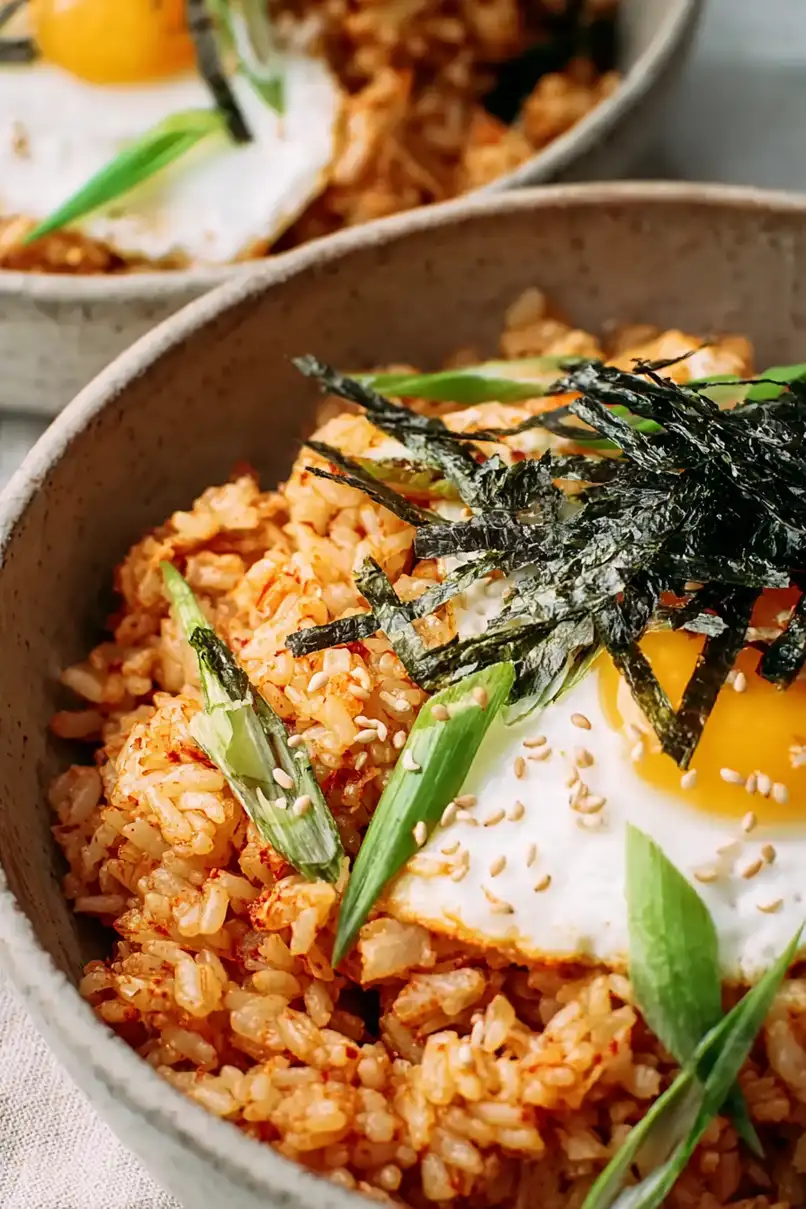
Top each portion with a fried egg, scallion whites (and reserved greens), toasted sesame seeds, and nori strips.
Room-temperature eggs will incorporate more smoothly into the warm rice and create a silkier texture than cold eggs straight from the fridge.