If you ask me, spaghetti carbonara is pure comfort food magic.
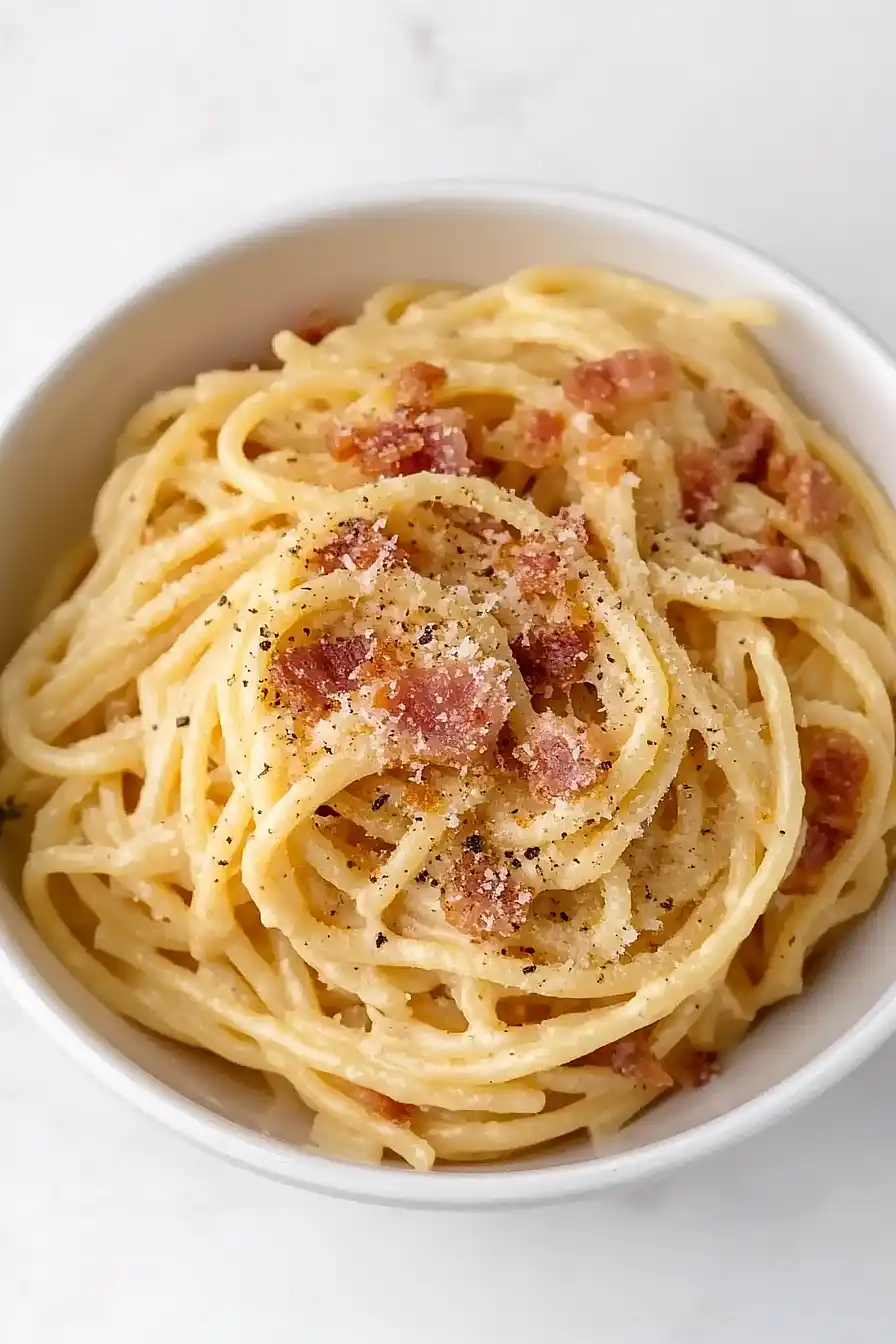
This classic Italian pasta dish makes a satisfying weeknight dinner that’s packed with creamy, salty goodness. Silky eggs and sharp Pecorino Romano cheese combine with crispy pancetta or bacon.
It’s tossed with hot spaghetti and finished with cracked black pepper and a splash of pasta water. Simple ingredients and proper technique help the whole thing come together.
It’s a restaurant-quality dish that comes together quickly, a perfect cozy evening meal.
Why You’ll Love This Spaghetti Carbonara
- Quick weeknight dinner – Ready in just 25-35 minutes, this pasta dish is perfect when you need something satisfying but don’t have hours to spend in the kitchen.
- Simple ingredients – You probably already have most of these pantry staples at home – just eggs, cheese, pasta, and pancetta create this creamy, restaurant-quality meal.
- No cream needed – The silky, creamy sauce comes from just eggs and cheese, making it lighter than heavy cream-based pasta dishes while still being incredibly rich and satisfying.
- Classic comfort food – This traditional Italian dish delivers that perfect combination of salty pancetta, sharp cheese, and silky pasta that hits all the right comfort food notes.
- Impressive but easy – It looks and tastes like something from a fancy Italian restaurant, but the technique is simple enough for any home cook to master.
What Kind of Pasta Should I Use?
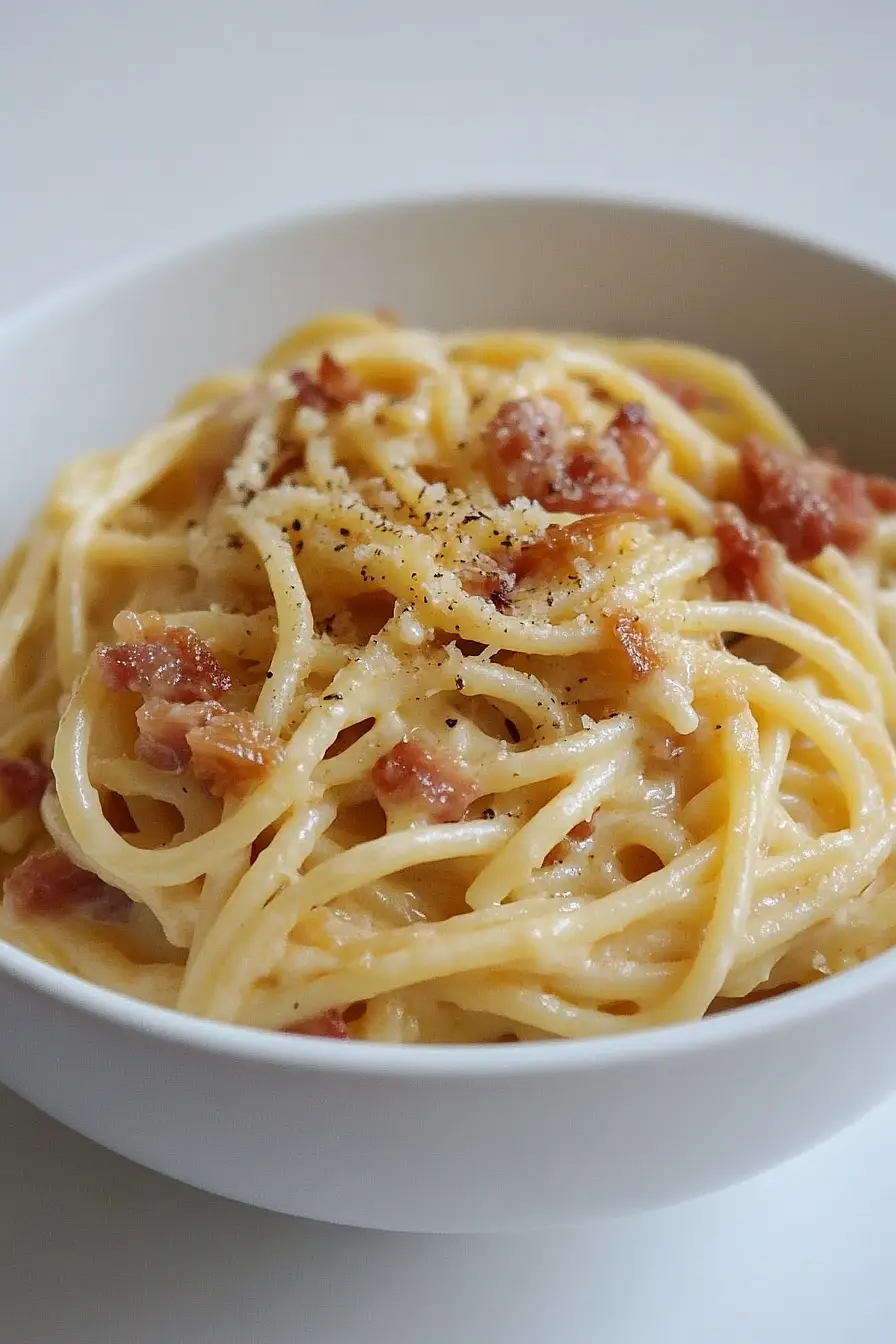
Spaghetti is the classic choice for carbonara, but you’ve got some flexibility here. Bucatini works great too – it’s basically thick spaghetti with a hole running through the center that helps hold onto that creamy sauce. Fettuccine is another solid option if that’s what you have on hand, though it will give you a slightly different texture experience. The key is using a long pasta that can really grab and hold onto all that cheesy, eggy goodness. Whatever you choose, make sure to cook it just until al dente since it’ll continue cooking a bit when you toss it with the hot pancetta and egg mixture.
Options for Substitutions
While carbonara is a classic that’s best kept traditional, there are a few swaps you can make if needed:
- Pancetta: If you can’t find pancetta, thick-cut bacon works great as a substitute. You can also use guanciale if you want to go super traditional, though it might be harder to find.
- Pecorino Romano cheese: Parmesan is a fine substitute for pecorino, though pecorino gives a sharper, more authentic flavor. You can also do a mix of both cheeses – about half and half works nicely.
- Spaghetti: Bucatini, fettuccine, or even linguine work well here. The key is using a pasta shape that holds the creamy sauce nicely.
- Whole eggs: Some recipes use just egg yolks for extra richness, but whole eggs work perfectly fine and are what most home cooks have on hand.
- Olive oil or butter: You can skip this entirely if your pancetta or bacon renders enough fat. Just use the rendered fat to cook your garlic if you’re including it.
Watch Out for These Mistakes While Cooking
The biggest mistake with carbonara is adding the egg mixture to pasta that’s too hot, which will scramble your eggs instead of creating that creamy, silky sauce you’re after – always let the pasta cool for a minute or two after draining before mixing.
Another common error is not having your pasta water hot enough when you add it to the egg and cheese mixture, since the starchy pasta water is what helps create the proper sauce consistency, so save at least a cup before draining.
Don’t forget to work quickly once you start combining everything, and keep tossing the pasta constantly while adding the egg mixture gradually – this prevents the eggs from cooking too fast and ensures even coating.
Finally, resist the urge to add cream or milk, as traditional carbonara gets its creaminess purely from the eggs, cheese, and pasta water working together.
What to Serve With Spaghetti Carbonara?
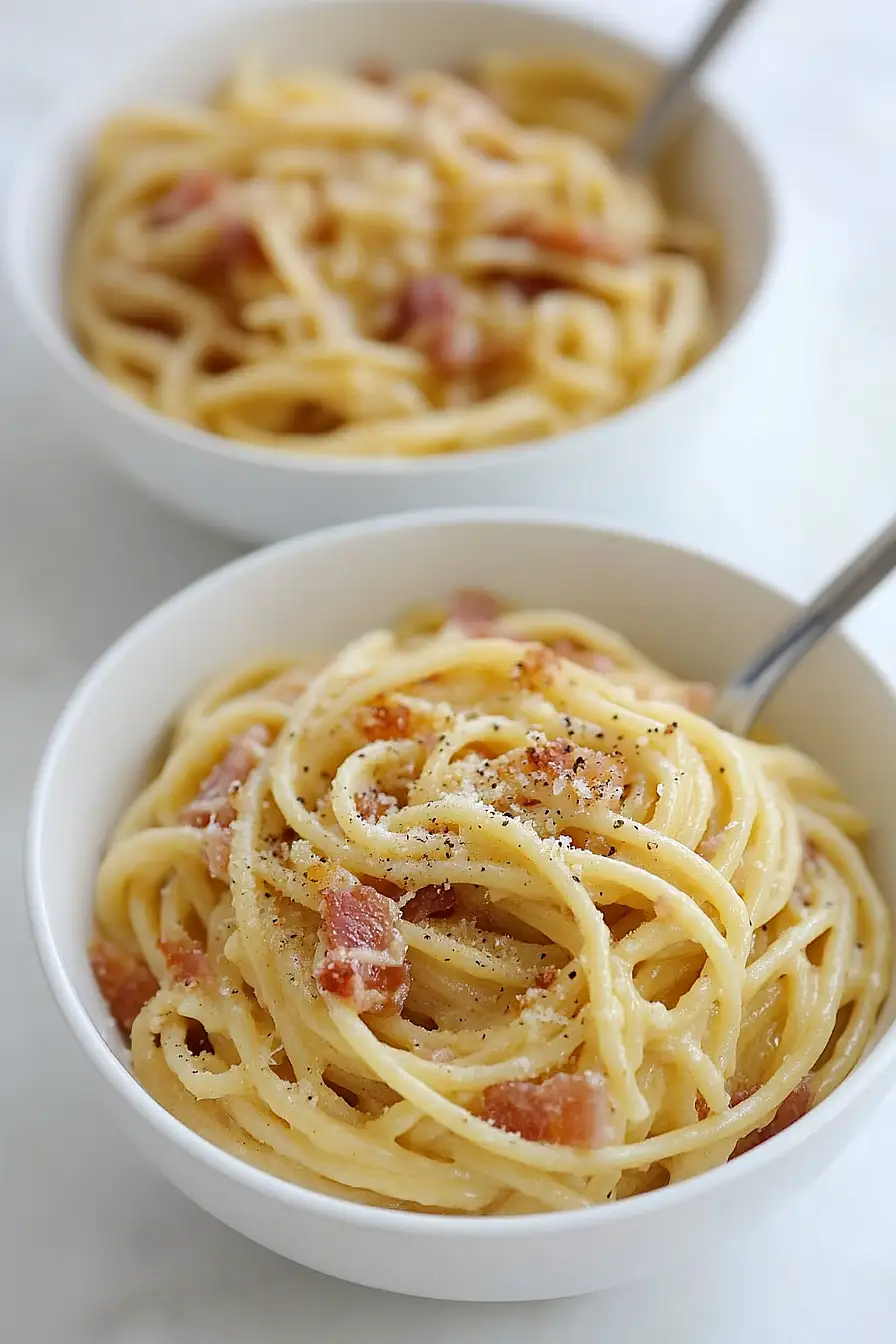
Since carbonara is already pretty rich and creamy with all that cheese and pancetta, I like to keep the sides simple and fresh. A crisp Caesar salad or mixed greens with a light lemon vinaigrette cuts through the richness perfectly and adds some much-needed freshness to the meal. Garlic bread is always a crowd-pleaser too, especially if you want something to soak up any extra sauce on your plate. For a more Italian approach, try serving it with some roasted vegetables like asparagus or broccoli, which pair beautifully with the salty pancetta and creamy sauce.
Storage Instructions
Refrigerate: Carbonara is definitely best enjoyed fresh, but leftovers will keep in the fridge for up to 3 days in an airtight container. The creamy sauce might look a bit separated when cold, but don’t worry – that’s totally normal with egg-based sauces.
Freeze: I honestly don’t recommend freezing carbonara since the egg and cheese sauce doesn’t hold up well to freezing and thawing. You’ll end up with a grainy, separated mess that just won’t taste the same as the original silky goodness.
Reheat: To bring leftover carbonara back to life, add a splash of pasta water or regular water to a pan over low heat. Gently warm the pasta while stirring constantly – this helps the sauce come back together. You can also microwave it on low power, stirring every 30 seconds, but the stovetop method works better.
| Preparation Time | 10-15 minutes |
| Cooking Time | 15-20 minutes |
| Total Time | 25-35 minutes |
| Level of Difficulty | Medium |
Estimated Nutrition
Estimated nutrition for the whole recipe (without optional ingredients):
- Calories: 2200-2500
- Protein: 85-100 g
- Fat: 90-110 g
- Carbohydrates: 270-300 g
Ingredients
For the pasta:
- 1 tbsp salt (for salting pasta water generously)
- 1 lb spaghetti (or bucatini or fettuccine)
- 1 tbsp extra-virgin olive oil (I use Libby’s)
For the bacon mixture:
- 1/2 lb pancetta or thick-cut bacon (cut into 1/4-inch pieces)
- 1-2 cloves garlic, minced (optional, about 1 tsp)
- Black pepper, to taste (freshly ground preferred)
For the cheese and eggs:
- 3-4 whole eggs (room temperature, for creamier sauce)
- 1 cup grated Pecorino Romano cheese (or parmesan, freshly grated for best results)
Step 1: Prepare Mise en Place and Start Pasta Water
- 1 tbsp salt
- 1-2 cloves garlic, minced
- 1/2 lb pancetta or thick-cut bacon, cut into 1/4-inch pieces
- 1 cup grated Pecorino Romano cheese
- 3-4 whole eggs
Bring a large pot of water to a boil and add salt generously—the water should taste like the sea.
While waiting for the water to boil, mince the garlic, cut the pancetta into 1/4-inch pieces, grate the Pecorino Romano cheese (I always grate it fresh rather than using pre-grated, as it melts much more smoothly into the sauce), and crack the eggs into a small bowl.
This prep work ensures everything is ready when you need it, preventing scrambled eggs or overcooked pasta.
Step 2: Cook Pancetta and Build Flavor Base
- 1 tbsp extra-virgin olive oil
- 1/2 lb pancetta or thick-cut bacon, cut into 1/4-inch pieces
- 1-2 cloves garlic, minced
Heat the olive oil in a large pan over medium heat.
Add the pancetta pieces and cook until they’re crispy and the fat has rendered, about 5-7 minutes.
Add the minced garlic (if using) and cook for just 1 minute until fragrant—any longer and it will burn.
Remove the pan from heat and set aside; the residual heat will keep the pancetta warm while you cook the pasta.
Step 3: Prepare the Egg and Cheese Mixture
- 3-4 whole eggs
- 1/2 cup grated Pecorino Romano cheese
In a small bowl, whisk together the room-temperature eggs with half of the grated Pecorino Romano cheese.
Room temperature eggs are important here—they’ll create a silky sauce instead of scrambling when they hit the hot pasta.
Set this mixture aside until you’re ready to combine it with the pasta.
Step 4: Cook Pasta to Al Dente and Reserve Pasta Water
- 1 lb spaghetti
Once the salted water is at a rolling boil, add the spaghetti and cook until al dente (tender but still with a slight bite).
Before draining, reserve 1 cup of the starchy pasta water—this is crucial for creating the silky sauce.
The starch in the pasta water helps emulsify the eggs and cheese into a creamy coating rather than a chunky mixture.
Step 5: Combine Pasta with Pancetta and Finish the Sauce
- cooked spaghetti from Step 4
- pancetta and garlic mixture from Step 2
- egg and cheese mixture from Step 3
- reserved pasta water from Step 4
- 1/2 cup grated Pecorino Romano cheese
- Black pepper, to taste
Drain the pasta and immediately add it to the pan with the cooked pancetta and garlic.
Remove the pan from heat—this is critical to prevent the eggs from scrambling.
Working quickly, add the egg and cheese mixture from Step 3 and toss vigorously for about 30-45 seconds until the eggs coat the pasta in a creamy sauce.
The residual heat from the pasta will gently cook the eggs.
Add splashes of reserved pasta water as needed to achieve a silky consistency; I find that 2-4 tablespoons is usually enough, but start conservatively since you can always add more.
Finish with the remaining half of the cheese and freshly ground black pepper to taste.