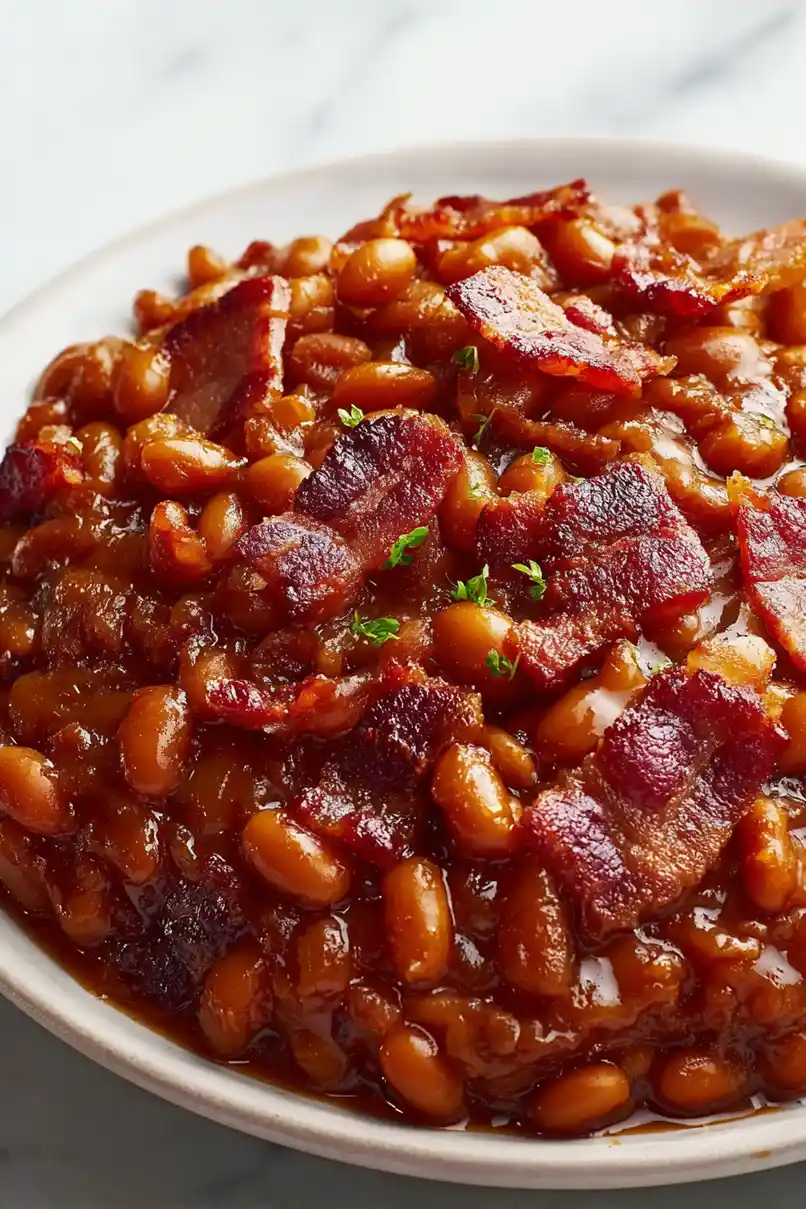
If you ask me, brown sugar and bacon baked beans are pure comfort food magic.
This hearty side dish takes regular beans and turns them into something special with smoky bacon and sweet brown sugar. The bacon adds a salty crunch while the brown sugar creates a rich, caramelized sauce.
Everything bakes together in the oven until the flavors meld and the sauce gets thick and bubbly. A touch of mustard and onion rounds out the taste with just the right amount of tang.
It’s the kind of dish that disappears fast at barbecues and family dinners, perfect for feeding a crowd.

Why You’ll Love These Brown Sugar and Bacon Baked Beans
- Perfect balance of sweet and smoky – The brown sugar and molasses create a rich sweetness that pairs beautifully with the crispy bacon, making these beans irresistible at any barbecue or family gathering.
- Simple ingredients you probably have – Most of these pantry staples are things you likely already keep on hand, so you can whip up this side dish without a special grocery run.
- Crowd-pleasing side dish – These beans are always a hit at potlucks, cookouts, and holiday meals – they complement everything from grilled burgers to roasted chicken.
- Make-ahead friendly – You can prepare these beans earlier in the day and just pop them in the oven when you’re ready, making meal planning so much easier.
- Better than store-bought – Once you taste these homemade baked beans with their rich, complex flavor, you’ll never want to go back to the canned versions.
What Kind of Beans Should I Use?
For this recipe, you’ll want to grab canned pork and beans from the grocery store – they’re usually found right next to the regular baked beans. Most brands like Bush’s, Van Camp’s, or even store brands will work perfectly fine, so don’t stress too much about finding a specific type. The key thing to remember is to buy the UNdrained cans, since that liquid helps create the perfect sauce consistency. If you can only find smaller 15.5-ounce cans, you’ll need about four of them to equal the 54-ounce size called for in the recipe.
Options for Substitutions
This baked beans recipe is pretty forgiving when it comes to swaps and substitutions:
- Bacon: If you don’t have bacon, try diced ham, turkey bacon, or even crumbled breakfast sausage. For a vegetarian version, skip the meat entirely and add a tablespoon of smoked paprika for that smoky flavor.
- Pork and beans: You can use navy beans, great northern beans, or cannellini beans instead. Just drain and rinse canned beans, then add an extra 1/2 cup of water or broth to the recipe since you won’t have the bean liquid.
- Molasses: No molasses? Try maple syrup or honey, but use about 2 tablespoons less since they’re sweeter than molasses.
- Brown sugar: White sugar works fine, or you can use coconut sugar for a slightly different flavor. You might want to add an extra tablespoon of molasses if using white sugar to keep that rich taste.
- Cider vinegar: White vinegar or even a splash of apple juice with a teaspoon of lemon juice will give you that tangy kick if you’re out of cider vinegar.
- Green bell pepper: Red bell pepper works just as well, or you can skip it altogether if peppers aren’t your thing.
Watch Out for These Mistakes While Baking
The biggest mistake when making baked beans is not cooking the bacon long enough before adding the other ingredients – you want it crispy and golden, not chewy, since it won’t get much crispier once mixed with all that liquid.
Another common error is skipping the step of sautéing the onions and peppers until they’re soft and translucent, which takes about 5-7 minutes and prevents you from ending up with crunchy vegetables in your finished dish.
Don’t forget to taste and adjust the sweetness before baking, as different brands of pork and beans vary in their sugar content, and you might need to add a bit more brown sugar or molasses to get that perfect balance.
Finally, resist the urge to cover the dish while baking – leaving it uncovered allows the top to caramelize and the sauce to thicken properly, giving you that rich, sticky consistency everyone loves.

What to Serve With Brown Sugar and Bacon Baked Beans?
These sweet and smoky baked beans are perfect alongside classic barbecue fare like grilled burgers, hot dogs, or pulled pork sandwiches. I love serving them at summer cookouts with coleslaw and cornbread – the creamy slaw cuts through the richness of the beans while the cornbread is perfect for soaking up that molasses-bacon goodness. For a complete comfort meal, try pairing them with grilled chicken or ribs, some buttery corn on the cob, and maybe a simple cucumber salad to balance out all those hearty flavors. They’re also great as a side for any barbecue spread where you want something substantial and satisfying.
Storage Instructions
Refrigerate: These baked beans actually taste even better the next day after all those flavors have had time to meld together! Store them in the fridge in a covered container for up to 5 days. I love having leftovers because they make such an easy side dish for weeknight dinners.
Freeze: You can definitely freeze these beans for later! Let them cool completely, then portion them into freezer-safe containers or bags and freeze for up to 3 months. Since this recipe makes a big batch, freezing half is a great way to have a ready-made side dish for your next barbecue.
Reheat: Warm up your leftover beans in the microwave or on the stovetop over medium-low heat, stirring occasionally. If they seem a bit thick after storing, just add a splash of water or broth to loosen them up. They’ll taste just as good as when you first made them!
| Preparation Time | 15-20 minutes |
| Cooking Time | 120-180 minutes |
| Total Time | 135-200 minutes |
| Level of Difficulty | Medium |
Estimated Nutrition
Estimated nutrition for the whole recipe (without optional ingredients):
- Calories: 2300-2500
- Protein: 60-70 g
- Fat: 50-60 g
- Carbohydrates: 410-440 g
Ingredients
For the bean mixture:
- 2 tsp ground dry mustard (freshly ground preferred for more flavor)
- 54 oz canned pork and beans, undrained (I use Bush’s brand)
- 1/4 cup molasses (for deep, rich sweetness)
- 1/2 green bell pepper (finely diced into 1/4-inch pieces)
- 1/4 cup apple cider vinegar (adds tangy balance)
- 4 tbsp ketchup
- 1 yellow onion (finely chopped, about 1/2-inch pieces)
- 2/3 cup packed brown sugar
For the bacon topping:
- 10 slices bacon (cut into 1-inch pieces)
Step 1: Prepare Ingredients and Render Bacon Fat
- 1 yellow onion, finely chopped
- 1/2 green bell pepper, finely diced
- 10 slices bacon, cut into 1-inch pieces
Start by finely chopping the yellow onion into 1/2-inch pieces and dicing the green bell pepper into 1/4-inch pieces.
Cut the bacon into 1-inch pieces.
This prep work ensures everything cooks evenly and your mise en place is ready before the oven goes on.
While you’re prepping, preheat your oven to 325°F and lightly grease a large baking dish (about 2-3 quart capacity).
I like to use a shallow ceramic dish for baked beans so they caramelize nicely on top during the long bake.
Step 2: Cook Bacon Halfway and Extract the Fat
- 10 slices bacon, cut into 1-inch pieces
In a large oven-safe skillet or Dutch oven, cook the bacon pieces over medium heat for 3-4 minutes, stirring occasionally, until they’re about halfway cooked and some fat has rendered—they should still be quite flexible and pale.
Don’t cook them until crispy; you want them to finish cooking later in the oven.
Transfer the bacon to a paper towel-lined plate using a slotted spoon, leaving the rendered fat in the pan.
This fat becomes your flavor base for sautéing the vegetables.
Step 3: Sauté Aromatics in Bacon Fat
- 1 yellow onion, finely chopped
- 1/2 green bell pepper, finely diced
- bacon fat rendered in Step 2
With the bacon fat still in the skillet over medium heat, add the chopped onion and diced bell pepper.
Sauté for 5 minutes, stirring occasionally, until the vegetables soften and become fragrant.
The bacon fat creates a rich, savory base that will infuse the entire dish.
You’ll notice the vegetables will start to caramelize slightly at the edges, which builds wonderful depth of flavor.
Step 4: Build the Bean Sauce Base
- 54 oz canned pork and beans, undrained
- 4 tbsp ketchup
- 1/4 cup molasses
- 2/3 cup packed brown sugar
- 1/4 cup apple cider vinegar
- 2 tsp ground dry mustard
- sautéed onion and bell pepper from Step 3
Add the undrained canned beans, ketchup, molasses, brown sugar, apple cider vinegar, and ground mustard to the skillet with the sautéed vegetables.
Stir everything together thoroughly to combine all ingredients evenly, then simmer over medium heat for 1 minute.
This simmering allows the flavors to begin melding together.
I find that freshly ground mustard adds noticeably more punch than the standard powder—if you have a spice grinder, it’s worth the extra step for this dish.
Step 5: Transfer to Baking Dish and Top with Bacon
- bean sauce mixture from Step 4
- partially cooked bacon from Step 2
Pour the entire bean mixture from the skillet into your prepared baking dish, spreading it in an even layer.
Scatter the partially cooked bacon pieces evenly over the top of the beans.
The bacon will finish cooking during the oven bake and crisp up while the beans become tender and the sauce reduces and concentrates.
Step 6: Low and Slow Bake Until Caramelized
- assembled bean and bacon mixture from Step 5
Place the baking dish in your preheated 325°F oven and bake uncovered for 2 to 3 hours.
During the first hour, the beans will gently heat through and begin to tenderize.
As time goes on, the liquid will gradually reduce, the flavors will concentrate and deepen, and the bacon will finish crisping.
I like to check at the 2-hour mark—the beans are done when the sauce has thickened noticeably and looks glossy and dark, with the bacon browned and crispy on top.
The longer bake also allows the brown sugar and molasses to caramelize slightly, creating incredible depth.
Step 7: Rest and Serve
Remove the baking dish from the oven and let it stand for 5 minutes before serving.
This brief rest allows the sauce to set slightly and the flavors to settle, making for a better presentation and texture.
Serve warm directly from the dish.