If you ask me, a good pork roast is one of the most satisfying meals you can make.
This hearty main dish brings comfort food vibes that fill your whole house with amazing smells. Tender, juicy meat pairs with simple seasonings that let the natural flavors shine through.
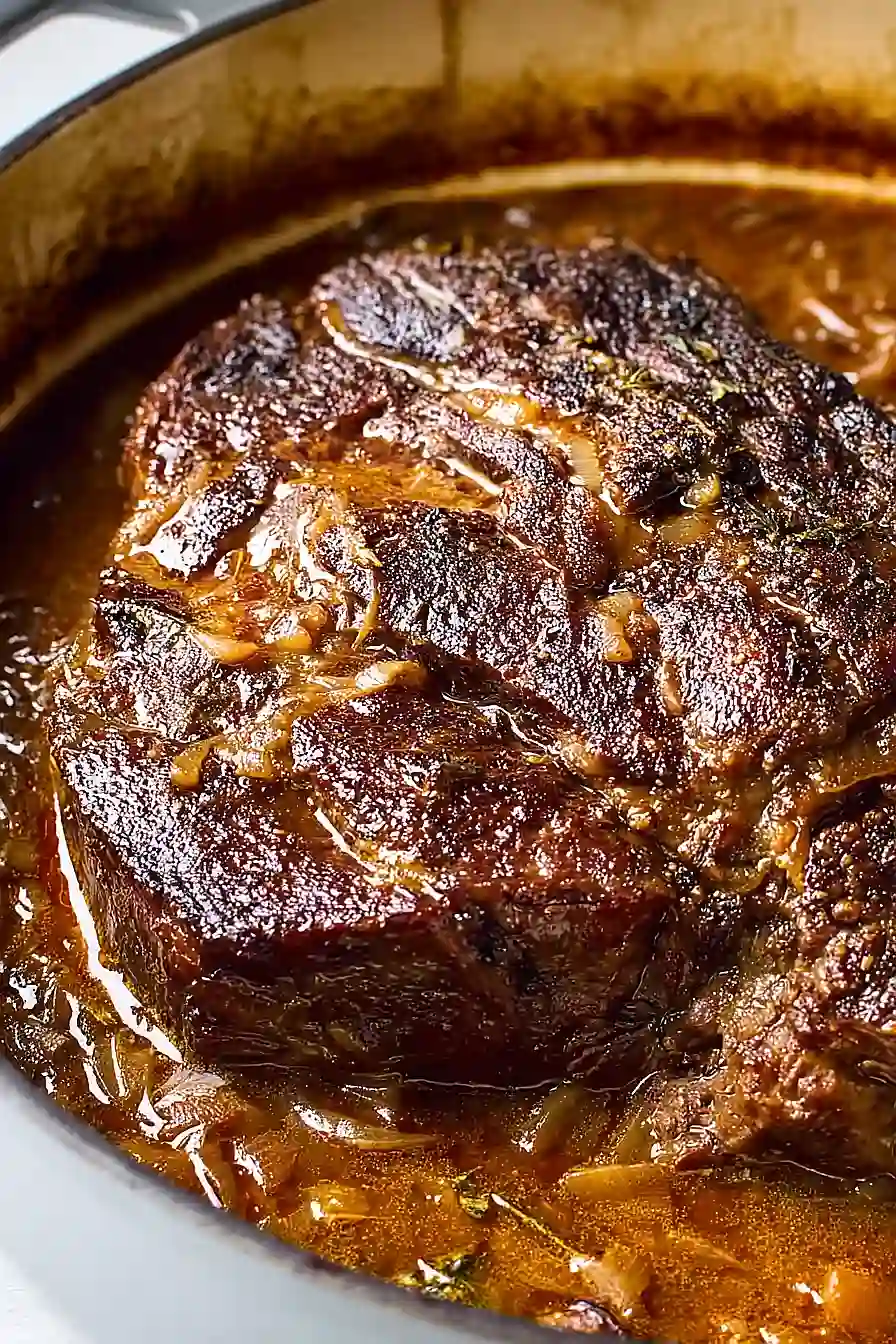
It’s roasted low and slow until it practically falls apart with a fork. Crispy edges and herb-crusted outside help the whole thing come together.
It’s a crowd-pleasing dish that feels fancy but is actually pretty simple, a perfect Sunday dinner centerpiece.
Why You’ll Love This Pork Roast
- One-pan dinner – Everything cooks together on one sheet pan, which means less cleanup and more time to relax after dinner.
- Quick weeknight meal – Ready in just over an hour, this roast is perfect for busy evenings when you want something special without spending all night in the kitchen.
- Sweet and savory flavors – The honey glaze creates a beautiful caramelized coating on the pork while the herbs and spices add depth that makes every bite delicious.
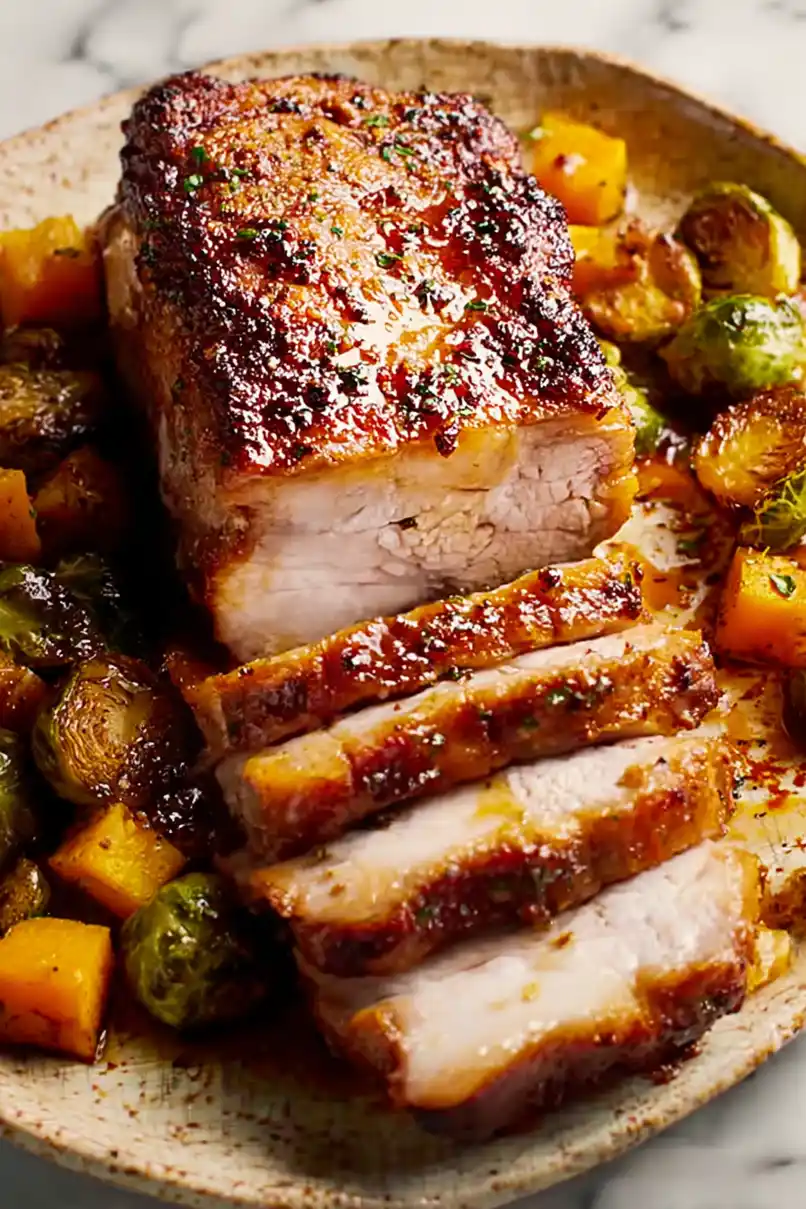
- Complete balanced meal – With tender pork, roasted brussels sprouts, and butternut squash all in one dish, you get your protein and vegetables without any extra sides to worry about.
- Simple ingredients – Made with pantry staples and fresh vegetables you can find at any grocery store, no specialty shopping required.
What Kind of Pork Loin Should I Use?
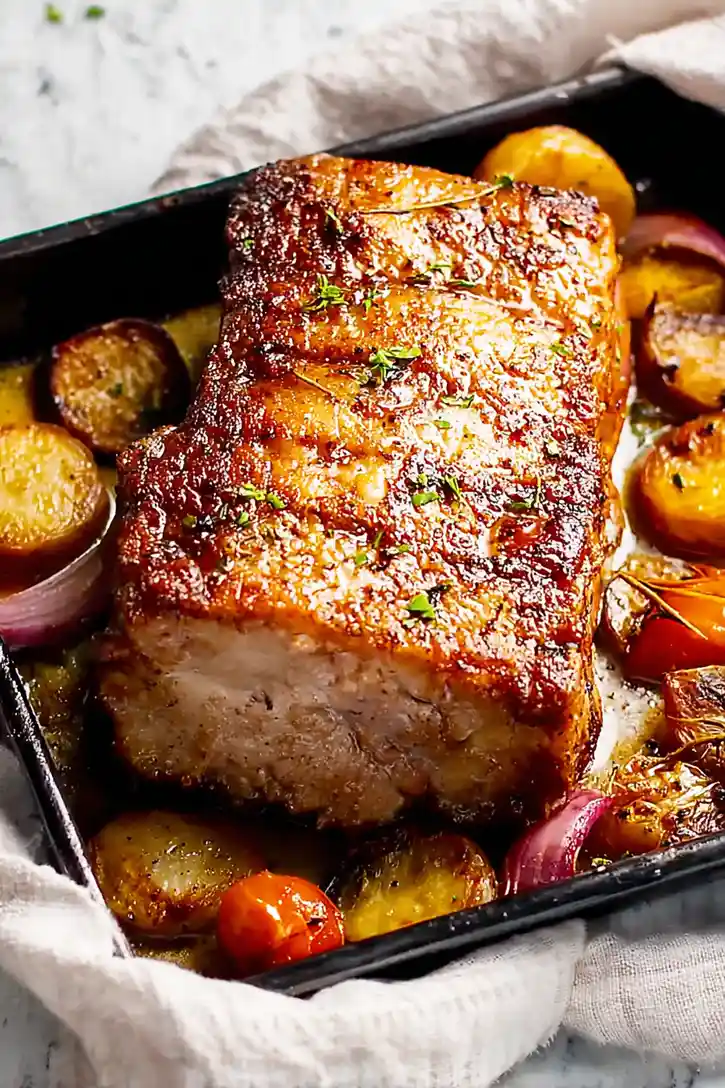
For this recipe, you’ll want to look for a boneless pork loin roast that’s around 3 pounds – this size cooks evenly and feeds about 6-8 people nicely. You can choose between a regular pork loin or a center-cut loin, though center-cut tends to be a bit more tender since it comes from the middle section of the loin. When shopping, look for meat that’s pale pink in color with a small amount of marbling, and avoid any packages with excess liquid in the bottom. If your pork loin comes with a thin layer of fat on top, you can leave it on for extra flavor, or trim it off if you prefer a leaner result.
Options for Substitutions
This pork roast recipe is pretty forgiving when it comes to swaps and substitutions:
- Pork loin: If you can’t find pork loin, pork tenderloin works great too, but reduce the cooking time since it’s smaller and cooks faster. Pork shoulder is another option, though it will need longer cooking time.
- Sweet paprika: Regular paprika or smoked paprika both work well here. Smoked paprika will add a nice smoky flavor to the roast.
- Dried herbs: Fresh herbs can replace dried ones – just use three times the amount. So if the recipe calls for 1/2 teaspoon dried thyme, use 1 1/2 teaspoons fresh.
- Honey: Maple syrup or brown sugar work as sweet substitutes. Use the same amount for maple syrup, or 3 tablespoons of brown sugar mixed with 1 tablespoon water.
- Soy sauce: If you don’t need gluten-free, regular soy sauce works fine. You can also use coconut aminos or worcestershire sauce for a different flavor profile.
- Brussels sprouts: Not a fan of brussels sprouts? Try broccoli, cauliflower, or green beans instead. They’ll roast up nicely alongside the pork.
- Butternut squash: Sweet potatoes, regular potatoes, or carrots make great substitutes. Cut them to similar sizes so everything cooks evenly.
Watch Out for These Mistakes While Cooking
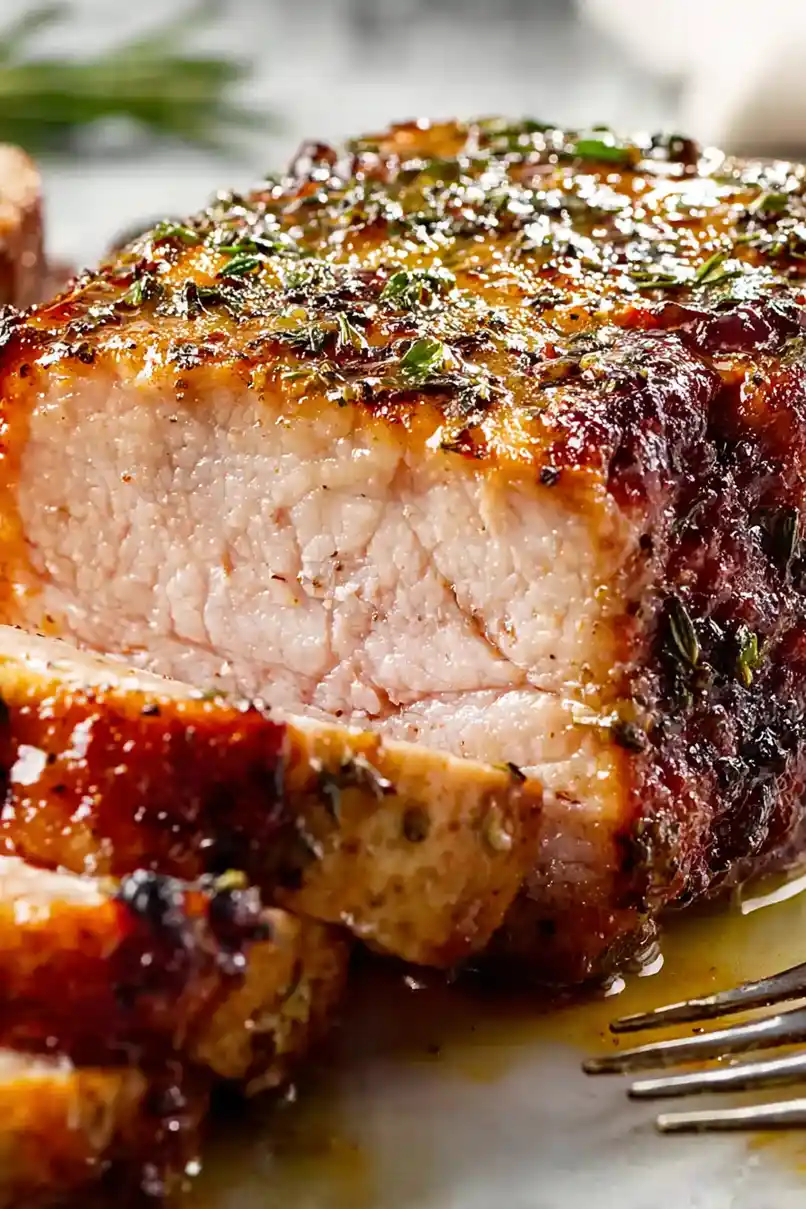
The biggest mistake when cooking pork loin is overcooking it, which turns this naturally lean cut dry and tough – aim for an internal temperature of 145°F and let it rest for 10 minutes afterward to reach the perfect doneness.
Don’t skip searing the pork before roasting, as this step creates a flavorful crust that locks in juices, and make sure your pan is hot enough that the meat sizzles when it hits the surface.
When preparing your vegetables, cut the Brussels sprouts and butternut squash into similar-sized pieces so they cook evenly, and if your squash pieces are much larger than the sprouts, add them to the pan about 10 minutes earlier.
For the glaze, brush it on during the last 15-20 minutes of cooking rather than at the beginning to prevent the honey from burning and turning bitter.
What to Serve With Pork Roast?
This honey-glazed pork roast is already paired with roasted Brussels sprouts and butternut squash, which makes for a pretty complete meal on its own. If you want to round things out even more, some creamy mashed potatoes or garlic mashed cauliflower would soak up all those delicious pan juices perfectly. A simple side salad with mixed greens and a light vinaigrette helps cut through the richness of the pork, or you could go with some warm dinner rolls for extra comfort. For wine lovers, this pairs beautifully with a glass of Pinot Noir or even a crisp white wine like Riesling that complements the honey glaze.
Storage Instructions
Refrigerate: Leftover pork roast keeps really well in the fridge for up to 4 days when stored in an airtight container. I like to slice it up before storing so it’s ready to grab for sandwiches or quick meals. The Brussels sprouts and butternut squash will also stay fresh alongside the pork.
Freeze: This pork roast freezes beautifully for up to 3 months! I recommend slicing the meat first, then wrapping it tightly in plastic wrap and placing it in freezer bags. You can freeze the roasted vegetables separately in their own containers if you want to use them later.
Warm Up: To enjoy your leftover pork roast, gently warm slices in a covered pan with a splash of broth or water over medium-low heat. You can also microwave individual portions on medium power. The vegetables reheat nicely in the oven at 350°F for about 10 minutes until heated through.
| Preparation Time | 15-20 minutes |
| Cooking Time | 50-65 minutes |
| Total Time | 65-85 minutes |
| Level of Difficulty | Medium |
Estimated Nutrition
Estimated nutrition for the whole recipe (without optional ingredients):
- Calories: 2500-2700
- Protein: 210-230 g
- Fat: 90-105 g
- Carbohydrates: 170-190 g
Ingredients
For the pork loin and vegetables:
- 1 lb brussels sprouts (halved lengthwise)
- Salt and freshly ground pepper to taste
- 1 lb butternut squash (peeled and diced into 1-inch cubes)
- 1 pork loin (3 lb, room temperature before cooking)
- 3 tbsp olive oil (divided use, I prefer extra virgin for roasting)
For the seasoning blend:
- 1 tsp sweet paprika
- 1/2 tsp dried thyme
- 1 tsp garlic powder
- 1/2 tsp dried rosemary (freshly dried preferred for more flavor)
- 1/2 tsp onion powder
For the honey-soy glaze:
- 1 tbsp dijon mustard
- 3 tbsp low-sodium soy sauce
- 4 garlic cloves (freshly minced, about 1/4-inch pieces)
- 1/4 cup honey (I use raw honey for better caramelization)
Step 1: Prepare the Mise en Place and Season the Pork
- 1 pork loin
- 1 tsp sweet paprika
- 1 tsp garlic powder
- 1/2 tsp onion powder
- 1/2 tsp dried thyme
- 1/2 tsp dried rosemary
- Salt and freshly ground pepper to taste
Preheat your oven to 375°F.
While it heats, pat the pork loin completely dry with paper towels—this is crucial for getting a good sear and crispy exterior.
In a small bowl, combine the paprika, garlic powder, onion powder, dried thyme, dried rosemary, salt, and pepper.
I prefer using freshly dried rosemary when I have it because the flavor is noticeably brighter.
Generously rub the spice mixture all over the pork loin, making sure to coat all sides evenly.
Step 2: Sear the Pork and Prepare the Glaze
- 2 tbsp olive oil
- 4 garlic cloves
- 1/4 cup honey
- 3 tbsp low-sodium soy sauce
- 1 tbsp dijon mustard
- 1 tbsp olive oil
Heat 2 tablespoons of olive oil in a large skillet over medium-high heat.
Once the oil shimmers, sear the seasoned pork for 3-5 minutes per side until it develops a deep brown crust.
While the pork sears, whisk together the minced garlic, honey, soy sauce, dijon mustard, and remaining 1 tablespoon of olive oil in a bowl.
I use raw honey because it caramelizes beautifully at roasting temperatures.
Reserve 2 tablespoons of this glaze separately for the vegetables later, then brush the remaining sauce over the seared pork.
Step 3: Initial Roasting and Vegetable Preparation
- 1 lb brussels sprouts
- 1 lb butternut squash
- Reserved glaze from Step 2
- Salt and freshly ground pepper to taste
Transfer the seared pork to a baking sheet and place it in the preheated oven for 25 minutes.
While the pork roasts, prepare your vegetables: halve the brussels sprouts lengthwise and cut the butternut squash into 1-inch cubes.
Toss the vegetables with the reserved 2 tablespoons of glaze from Step 2, along with a pinch of salt and pepper.
Step 4: Add Vegetables and Finish Roasting
- seasoned pork from Step 2
- prepared vegetables from Step 3
After 25 minutes, carefully remove the pork from the oven and arrange the prepared vegetables around it on the baking sheet, placing them cut-side down for better browning.
Cover the pork loosely with foil to prevent over-browning while the vegetables roast, then return everything to the oven for another 25-30 minutes.
About halfway through this final roasting period, stir the vegetables so they cook evenly.
The pork is done when it reaches an internal temperature of 145°F (63°C).
Step 5: Rest and Serve
Remove the baking sheet from the oven and tent the pork with foil, then let it rest for 10 minutes—this allows the juices to redistribute, keeping the meat incredibly tender and juicy.
While the pork rests, the vegetables continue to caramelize slightly from the residual heat.
Slice the pork and arrange it on a platter with the roasted vegetables alongside, spooning any pan juices over top.