Finding the perfect stuffing recipe that pleases everyone at the holiday table can feel like an impossible task. Between picky eaters, family traditions, and dietary preferences, it’s tough to create something that actually gets people excited about this classic side dish, especially when you’re already juggling a dozen other dishes for the big meal.
Thankfully, this southern cornbread stuffing hits all the right notes: it’s packed with flavor yet comforting, easy to make ahead of time, and flexible enough to customize with your family’s favorite add-ins like sausage, herbs, or extra vegetables.

Why You’ll Love This Cornbread Stuffing
- Perfect holiday side dish – This Southern-style stuffing brings authentic comfort food flavors to your Thanksgiving or Christmas table that guests will remember long after the meal.
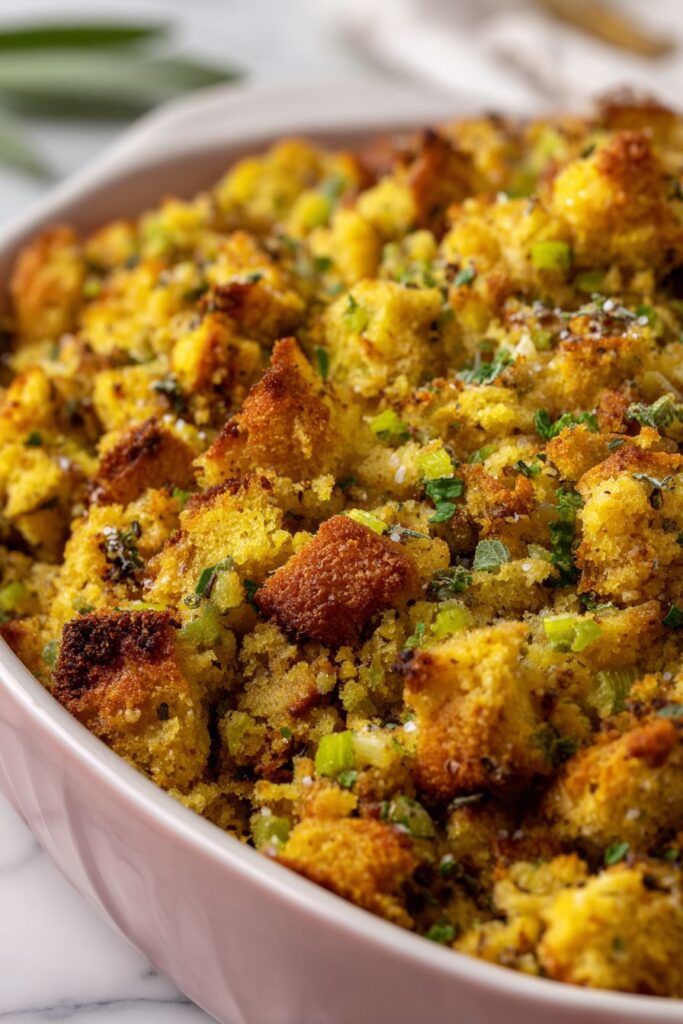
- Rich, savory flavors – The combination of sage sausage, fresh herbs, and homemade cornbread creates layers of taste that pair perfectly with turkey, ham, or any holiday main dish.
- Make-ahead friendly – You can prepare the cornbread base ahead of time and even assemble the stuffing the night before, making your holiday cooking much more manageable.
- Feeds a crowd – This recipe makes plenty to serve a large family gathering, and the leftovers taste just as good the next day.
- Traditional Southern comfort – Using unsweetened cornbread as the base gives this stuffing that authentic Southern taste that’s different from typical bread stuffings.
What Kind of Cornbread Should I Use?
The key to great cornbread stuffing is starting with day-old or slightly stale cornbread, which helps it hold up better when you add the liquid. You can use any style of cornbread you prefer, but Southern-style unsweetened cornbread works particularly well since it won’t compete with the savory flavors of the sausage and herbs. If your cornbread is fresh, you can cut it into cubes and let it sit out overnight, or even toast the pieces lightly in a low oven for about 10 minutes to help them dry out. The slightly firmer texture will absorb the chicken stock without turning to mush, giving you that perfect balance of crispy edges and tender interior that makes stuffing so good.
Options for Substitutions
This stuffing recipe is pretty forgiving when it comes to swaps, so here are some options if you need to make changes:
- Southern-style cornbread: If you don’t have homemade cornbread, store-bought works fine – just make sure it’s unsweetened. You can also use a mix of cornbread and regular white bread (about 60% cornbread, 40% bread) for a different texture.
- Sage sausage: Regular breakfast sausage or Italian sausage can work here. If using plain sausage, add an extra tablespoon of fresh sage to make up for the missing herbs. For a lighter option, try ground turkey sausage.
- Fresh sage: Dried sage works too – use about 1 tablespoon instead of 1/4 cup fresh. You can also try fresh thyme or rosemary, but use a bit less since they’re stronger flavors.
- Chicken stock: Vegetable broth works great for a lighter flavor, or turkey stock if you have it. Just avoid using anything too salty since the sausage already adds plenty of flavor.
- Fresh parsley: Green onions or chives make good substitutes, or you can skip the herbs entirely if you don’t have any on hand.
Watch Out for These Mistakes While Baking
The biggest mistake with cornbread stuffing is using fresh cornbread, which will turn into mush when mixed with the stock – make your cornbread a day ahead and let it dry out completely, or toast the cubes in a low oven for 15-20 minutes until they’re crispy.
Another common error is adding all the chicken stock at once, which can make your stuffing either too dry or too soggy – start with about 2 1/2 cups and gradually add more until the mixture feels moist but not wet when you squeeze a handful.
Don’t skip browning the sausage properly, as undercooked sausage will release grease during baking and make your stuffing greasy, and make sure to cook your vegetables until they’re soft before mixing everything together.
Finally, resist the urge to pack the stuffing too tightly in the baking dish, as this prevents even cooking and can result in a dense, heavy texture instead of the light, fluffy stuffing you want.

What to Serve With Southern Cornbread Stuffing?
This rich, savory stuffing is perfect alongside your Thanksgiving turkey or any roasted chicken dinner. The sage and sausage flavors pair beautifully with classic holiday sides like mashed potatoes, green bean casserole, and cranberry sauce. I love serving it with some roasted Brussels sprouts or a simple mixed greens salad to balance out all the hearty, comforting flavors. Don’t forget to have some good gravy on hand – this stuffing soaks it up like a dream and makes everything even more delicious.
Storage Instructions
Refrigerate: This stuffing keeps really well in the fridge for up to 4 days in a covered dish. I actually think it tastes even better the next day when all those flavors have had time to meld together. Just cover it tightly with foil or transfer to an airtight container.
Freeze: You can absolutely freeze this stuffing for up to 3 months! Let it cool completely first, then wrap it well in plastic wrap and foil, or store in freezer-safe containers. I like to portion it out so I can thaw just what I need for smaller meals.
Warm Up: To bring your stuffing back to life, cover it with foil and bake at 350°F for about 20-30 minutes until heated through. If it seems a bit dry, drizzle a little extra chicken broth over the top before warming. From frozen, it’ll take about 45 minutes to an hour to heat completely.
| Preparation Time | 30-45 minutes |
| Cooking Time | 55-60 minutes |
| Total Time | 85-105 minutes |
| Level of Difficulty | Medium |
Estimated Nutrition
Estimated nutrition for the whole recipe (without optional ingredients):
- Calories: 4200-4700
- Protein: 130-150 g
- Fat: 250-280 g
- Carbohydrates: 320-360 g
Ingredients
For the cornbread base:
- 1 batch unsweetened southern cornbread (about 2 1/2 lb, cubed into 3/4-inch pieces)
For the sausage mixture:
- 1/2 tsp ground black pepper
- 2 medium garlic cloves (finely minced for best flavor)
- Kosher salt (to taste)
- 4 large celery stalks (chopped into 1/2-inch pieces, about 2 cups)
- 1/4 cup fresh sage (chopped just before using)
- Freshly ground black pepper (as needed for finishing)
- 1 large yellow onion (chopped into 1/2-inch pieces, about 2 cups)
- 3 1/2 cups chicken stock (divided for layering)
- 1 1/2 lb sage-flavored sausage (casings removed, about 6-8 links)
- 8 tbsp unsalted butter (I use Kerrygold for richness)
To finish:
- 1/4 cup flat-leaf parsley (chopped fresh, divided for garnish)
- 4 large eggs (room temperature for even baking)
Step 1: Toast the Cornbread and Prepare Mise en Place
- 1 batch unsweetened southern cornbread
Preheat your oven to 425°F.
While it heats, spread the cornbread cubes evenly across two baking sheets and toast them for 10 minutes until they’re lightly dried but not browned—this step is crucial because it removes excess moisture so your stuffing stays cohesive rather than soggy.
While the cornbread toasts, prepare all your vegetables: chop the onion and celery into 1/2-inch pieces (about 2 cups each), mince the garlic finely, and chop the fresh sage just before using to preserve its flavor.
Once the cornbread finishes toasting, spread it on a clean surface to cool for 15 minutes.
Step 2: Brown the Sausage and Build the Aromatics Base
- 8 tbsp unsalted butter
- 1 1/2 lb sage-flavored sausage
- 1 large yellow onion
- 4 large celery stalks
- 2 medium garlic cloves
- 1/4 cup fresh sage
Melt 8 tablespoons of butter in a large pot over medium-high heat, then add the sausage (casings removed) and cook for about 8 minutes, breaking it into small pieces as it browns.
I always look for that rich caramelization on the meat—it adds tremendous depth to the final dish.
Once the sausage is cooked through and lightly browned, add the chopped onion, celery, minced garlic, and fresh sage, then cook for another 10 minutes until the vegetables soften and the aromatics release their flavors into the fat.
Step 3: Season the Sausage Mixture and Begin Binding
- sausage and vegetable mixture from Step 2
- 1 cup chicken stock
- Kosher salt
- 1/2 tsp ground black pepper
- 2 1/2 cups chicken stock
- 4 large eggs
- 3 tablespoons flat-leaf parsley
Remove the pot from heat and stir in 1 cup of chicken stock, kosher salt to taste, and 1/2 teaspoon ground black pepper.
In a separate bowl, whisk together the remaining 2 1/2 cups chicken stock, 4 room-temperature eggs, and 3 tablespoons of the chopped parsley until well combined—room temperature eggs incorporate more smoothly into the warm sausage mixture.
Slowly pour this egg mixture into the sausage mixture while stirring constantly to temper the eggs gently without scrambling them.
I find pouring slowly while stirring prevents any uneven cooking and creates a more uniform texture throughout.
Step 4: Combine Cornbread and Form the Stuffing
- toasted cornbread cubes from Step 1
- sausage mixture from Step 3
Gently fold the cooled cornbread cubes into the sausage and egg mixture using a rubber spatula, working carefully to break up as few cubes as possible while ensuring even distribution—you want distinct pieces of cornbread throughout, not a mushy consistency.
Transfer the entire mixture into a buttered 9×13-inch baking dish (or similar capacity), spreading it evenly and allowing the liquid to distribute throughout.
Step 5: Bake Until Golden and Set
- prepared stuffing from Step 4
Reduce the oven temperature to 375°F and bake the stuffing uncovered for 45 minutes, until the center reaches 150°F when measured with an instant-read thermometer and the top is golden brown.
The uncovered baking allows the top to develop a pleasant crust while the interior stays moist from the custard-like egg mixture.
Step 6: Rest and Finish with Fresh Garnish
- baked stuffing from Step 5
- 1 tablespoon flat-leaf parsley
- Freshly ground black pepper
Let the stuffing cool for 15 minutes before serving—this resting period allows the structure to set slightly and makes serving cleaner portions easier.
Just before bringing to the table, sprinkle the remaining 1 tablespoon of fresh chopped parsley over the top and finish with a light grind of freshly ground black pepper for color and a final flavor boost.