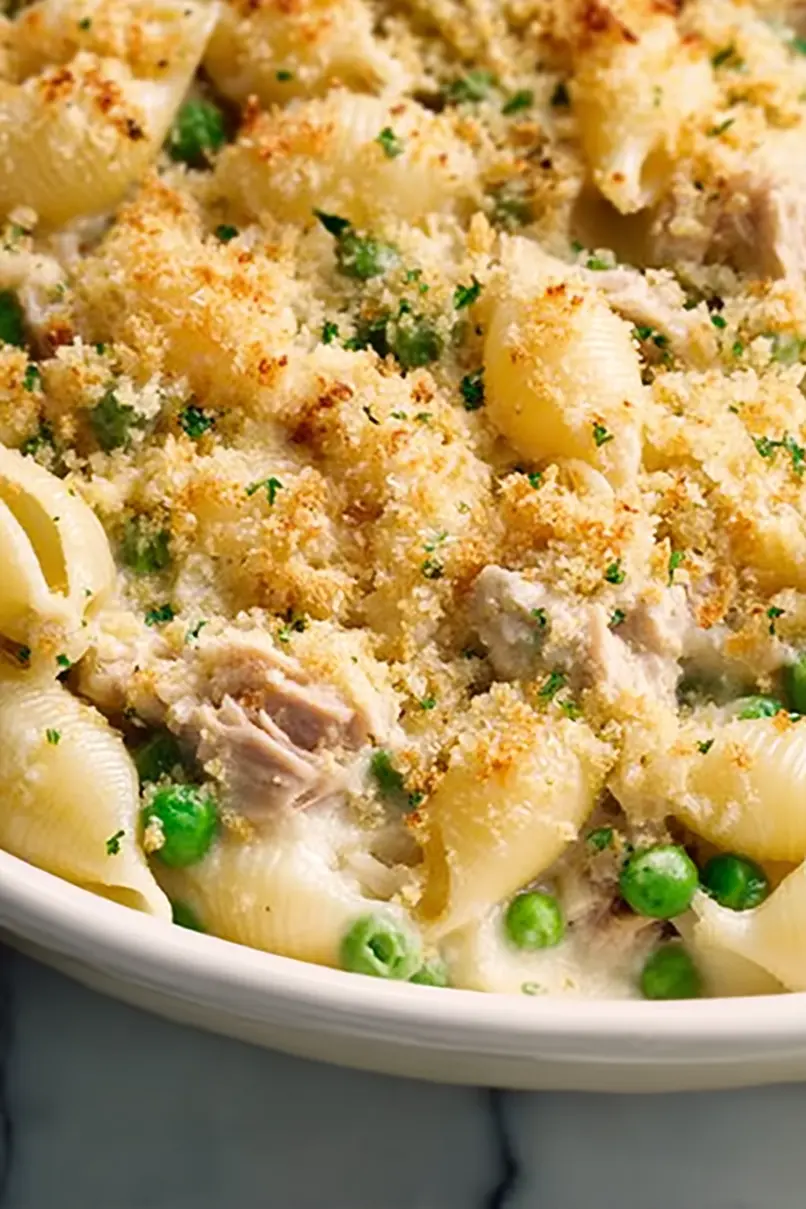
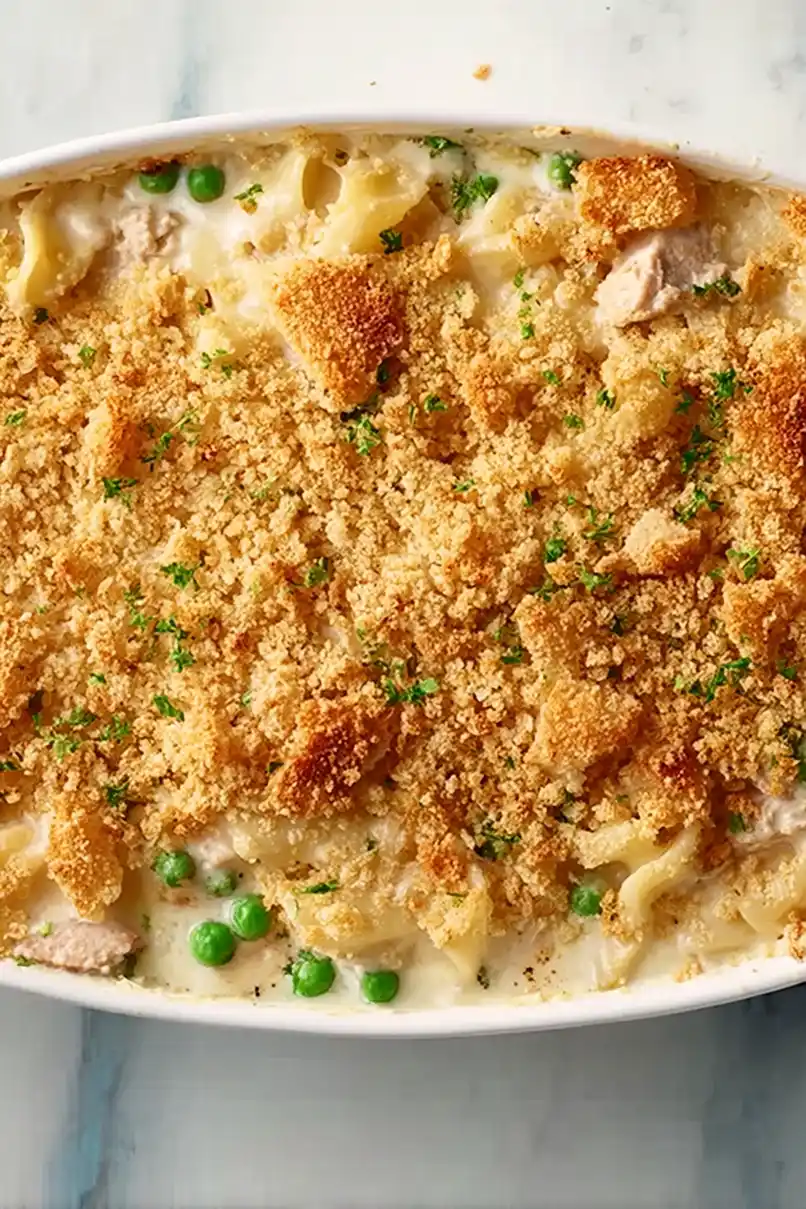
Here is my favorite tuna casserole recipe, made completely from scratch with egg noodles, a creamy sauce, tender tuna, sweet peas, and a crispy breadcrumb topping.
This tuna casserole is a dinner staple in my house that I’ve been making for years. It’s warm, comforting, and way better than any version from a can of soup. Plus, my kids actually ask for seconds!
Why You’ll Love This Tuna Casserole
- Made from scratch – No canned cream soup here! This homemade version uses real butter, fresh vegetables, and a creamy sauce you make yourself, so you know exactly what’s going into your meal.
- Quick weeknight dinner – Ready in under an hour, this casserole is perfect for busy evenings when you need something comforting on the table fast.
- Budget-friendly comfort food – Using pantry staples like canned tuna and pasta, this recipe transforms affordable ingredients into a satisfying family meal that won’t break the bank.
- Kid-approved classic – The creamy sauce, tender pasta, and crispy Ritz cracker topping make this a nostalgic dish that both kids and adults will happily devour.
What Kind of Tuna Should I Use?
For this casserole, I recommend using canned albacore white tuna packed in water rather than oil. Albacore has a milder flavor and firmer texture compared to chunk light tuna, which makes it perfect for casseroles where you want distinct pieces of fish throughout. Make sure to drain it really well before adding it to your dish – nobody wants a watery casserole! If you prefer a stronger tuna flavor or want to stretch your budget further, chunk light tuna will work just fine, though the pieces will be smaller and the taste a bit fishier.
Options for Substitutions
This classic casserole is easy to customize based on what you have in your pantry:
- Shell pasta: Any short pasta shape works great here – try elbow macaroni, penne, rotini, or even egg noodles. Just cook according to package directions.
- Albacore white tuna: You can use regular chunk light tuna instead, or even canned salmon for a different flavor. Leftover cooked chicken works too – just shred it and add the same amount.
- Chicken broth: Vegetable broth is a fine swap here, or you can use water with a bouillon cube dissolved in it.
- Parmesan cheese: Cheddar, gruyere, or a mix of Italian cheeses can replace the parmesan. Just keep the measurements the same.
- Ritz crackers: Panko breadcrumbs, crushed potato chips, or even cornflakes make a great crunchy topping. Mix with the melted butter the same way.
- Fresh herbs: If you don’t have fresh parsley, use 1 tablespoon of dried parsley instead. For the dill, you can substitute with dried thyme or Italian seasoning.
- Milk: Whole milk works best, but 2% is fine too. In a pinch, use half-and-half for a richer sauce, or even unsweetened almond milk if needed.
Watch Out for These Mistakes While Cooking
The biggest mistake with tuna casserole is overcooking the pasta during the initial boil – cook it 2 minutes less than the package directions since it’ll continue cooking in the oven, otherwise you’ll end up with mushy noodles. Another common error is not warming your milk before adding it to the roux, which can cause lumps in your sauce and an uneven texture throughout the casserole. Make sure to drain your canned tuna really well and even press it with paper towels to remove excess moisture, as too much liquid will make your casserole watery instead of creamy. For extra flavor, toast your cracker topping with the melted butter in a skillet for a minute before sprinkling it on top, and resist the urge to stir the casserole once it’s assembled – this keeps all your layers intact and gives you that perfect golden crust on top.
What to Serve With Tuna Casserole?
Tuna casserole is a hearty one-dish meal, so I like to keep the sides simple and fresh to balance out all that creamy goodness. A crisp green salad with a light vinaigrette is my go-to – something with mixed greens, cherry tomatoes, and cucumber works perfectly. Roasted or steamed green beans also make a great side, especially if you toss them with a little butter and garlic. If you want something a bit more filling, some buttery dinner rolls or garlic bread are always welcome at the table for soaking up any extra sauce.
Storage Instructions
Store: Keep leftover tuna casserole covered tightly with foil or in an airtight container in the fridge for up to 3 days. The pasta will soak up some of the sauce as it sits, but it still tastes great the next day. I actually think the flavors meld together even better after a night in the fridge!
Freeze: This casserole freezes really well for up to 2 months. You can freeze it either before or after baking – just wrap it tightly in plastic wrap and then foil. If you’re planning to freeze it, I’d recommend leaving off the cracker topping and adding it fresh when you’re ready to bake.
Reheat: To reheat, cover the casserole with foil and warm it in a 350°F oven for about 20-25 minutes until heated through. If it seems a bit dry, you can add a splash of milk or chicken broth before reheating. For individual portions, the microwave works fine – just heat on medium power for a couple minutes, stirring halfway through.
| Preparation Time | 15-20 minutes |
| Cooking Time | 25-30 minutes |
| Total Time | 40-50 minutes |
| Level of Difficulty | Medium |
Estimated Nutrition
Estimated nutrition for the whole recipe (without optional ingredients):
- Calories: 1700-1900
- Protein: 65-75 g
- Fat: 85-100 g
- Carbohydrates: 155-170 g
Ingredients
For the casserole:
- 2 celery stalks, diced (into 1/4-inch pieces)
- 4 tbsp unsalted butter, divided (I use Kerrygold for richness)
- 1 garlic clove, minced (freshly minced for best flavor)
- 1/4 tsp ground black pepper (freshly ground preferred)
- 5 tbsp all-purpose flour (I use King Arthur all-purpose flour)
- 8 oz medium pasta shells (cooked al dente, about 8-10 minutes)
- 5 oz canned white albacore tuna in water (drained well)
- 1/2 tsp kosher salt
- 1 cup warmed milk (brings ingredients together smoothly)
- 1 cup grated parmesan cheese, divided (freshly grated for better melting)
- 2 cups low-sodium chicken broth
- 2 tsp fresh lemon juice (adds brightness to the sauce)
- 1/4 cup diced onion (finely chopped, about 1/8-inch pieces)
- 3/4 cup frozen green peas
- 1/8 tsp dried dill weed
- 2 tbsp chopped fresh parsley
For the topping:
- 1/2 cup crushed Ritz crackers (optional but adds nice crunch and flavor)
- 1 tbsp melted butter
Step 1: Cook Pasta and Prepare Mise en Place
- 8 oz medium pasta shells
- 2 celery stalks, diced
- 1/4 cup diced onion
- 1 garlic clove, minced
Bring a large pot of salted water to a boil and cook the pasta shells until al dente, about 8-10 minutes—they should have a slight firmness when bitten.
While the pasta cooks, dice the celery into 1/4-inch pieces, finely chop the onion into 1/8-inch pieces, and mince the garlic clove.
Drain the pasta and set aside, reserving 1 tablespoon of pasta water in case you need to adjust the sauce consistency later.
Step 2: Sauté Vegetables and Build the Roux
- 4 tbsp unsalted butter, divided
- 2 celery stalks, diced
- 1/4 cup diced onion
- 1 garlic clove, minced
- 3/4 cup frozen green peas
- 5 tbsp all-purpose flour
Melt 2 tablespoons of butter in a large saucepan over medium heat.
Add the diced celery, onion, and minced garlic, cooking for 3-4 minutes until softened and fragrant.
Add the frozen green peas and stir for another 30 seconds.
Push the vegetables to the side of the pan, then add the remaining 2 tablespoons of butter to the empty space.
Once melted, sprinkle the flour over the butter and stir constantly for 1 minute to create a light roux—this cooks out the raw flour taste and creates the thickening base for your sauce.
Step 3: Create the Creamy Sauce Base
- 2 cups low-sodium chicken broth
- 1 cup warmed milk
Gradually whisk in the chicken broth and warmed milk, stirring constantly to avoid lumps—the warmth of the milk helps it incorporate smoothly with the roux.
Continue cooking over medium heat for 3-4 minutes, stirring frequently, until the sauce thickens enough to coat the back of a spoon.
I like to use warmed milk because it prevents the sauce from cooling down and lumping up, giving you a silky result every time.
Step 4: Season and Finish the Sauce
- 1/2 tsp kosher salt
- 1/4 tsp ground black pepper
- 1/8 tsp dried dill weed
- 2 tsp fresh lemon juice
- 2 tbsp chopped fresh parsley
- 1/2 cup grated parmesan cheese
Remove the pan from heat and stir in the salt, black pepper, dried dill, lemon juice, and fresh parsley.
Add 1/2 cup of the freshly grated parmesan cheese and stir until completely melted and smooth.
The lemon juice adds a subtle brightness that prevents the casserole from tasting heavy, and the fresh parsley brings a fresh flavor note to the dish.
Step 5: Combine All Elements and Assemble
- cooked pasta from Step 1
- sautéed vegetables from Step 2
- 5 oz canned white albacore tuna in water, drained well
- 1/2 cup grated parmesan cheese
Fold the cooked pasta from Step 1 into the sauce, followed by the sautéed vegetables from Step 2.
Gently fold in the drained tuna, breaking it apart slightly as you incorporate it—be careful not to overmix, as you want small flakes of tuna throughout rather than a paste.
Transfer the mixture to a buttered 9×13-inch baking dish and spread evenly.
Sprinkle the remaining 1/2 cup of parmesan cheese over the top, creating an even layer.
Step 6: Add Cracker Topping and Bake
- 1/2 cup crushed Ritz crackers
- 1 tbsp melted butter
In a small bowl, toss the crushed Ritz crackers with the melted butter until evenly coated.
Sprinkle this mixture evenly over the casserole—the crackers will toast and add a satisfying crunch that contrasts beautifully with the creamy filling.
Bake at 350°F for 25-30 minutes until the top is golden brown and the filling is bubbling slightly around the edges.
Step 7: Rest and Serve
Remove the casserole from the oven and let it rest for 5 minutes before serving.
This allows the sauce to set slightly, making it easier to portion and giving the flavors time to meld together.