If you ask me, Russian Tea Cakes are one of those cookies that never go out of style.
These buttery, melt-in-your-mouth cookies get rolled in powdered sugar twice for that snowy look everyone loves. They’re sometimes called Mexican Wedding Cookies or Snowballs, depending on where you’re from.
The traditional version has chopped pecans or walnuts, but this recipe skips the nuts entirely. That makes them perfect for anyone with allergies or if you just prefer a simpler cookie.
They’re tender, sweet, and just right for holiday cookie trays or any time you want something a little special without too much fuss.
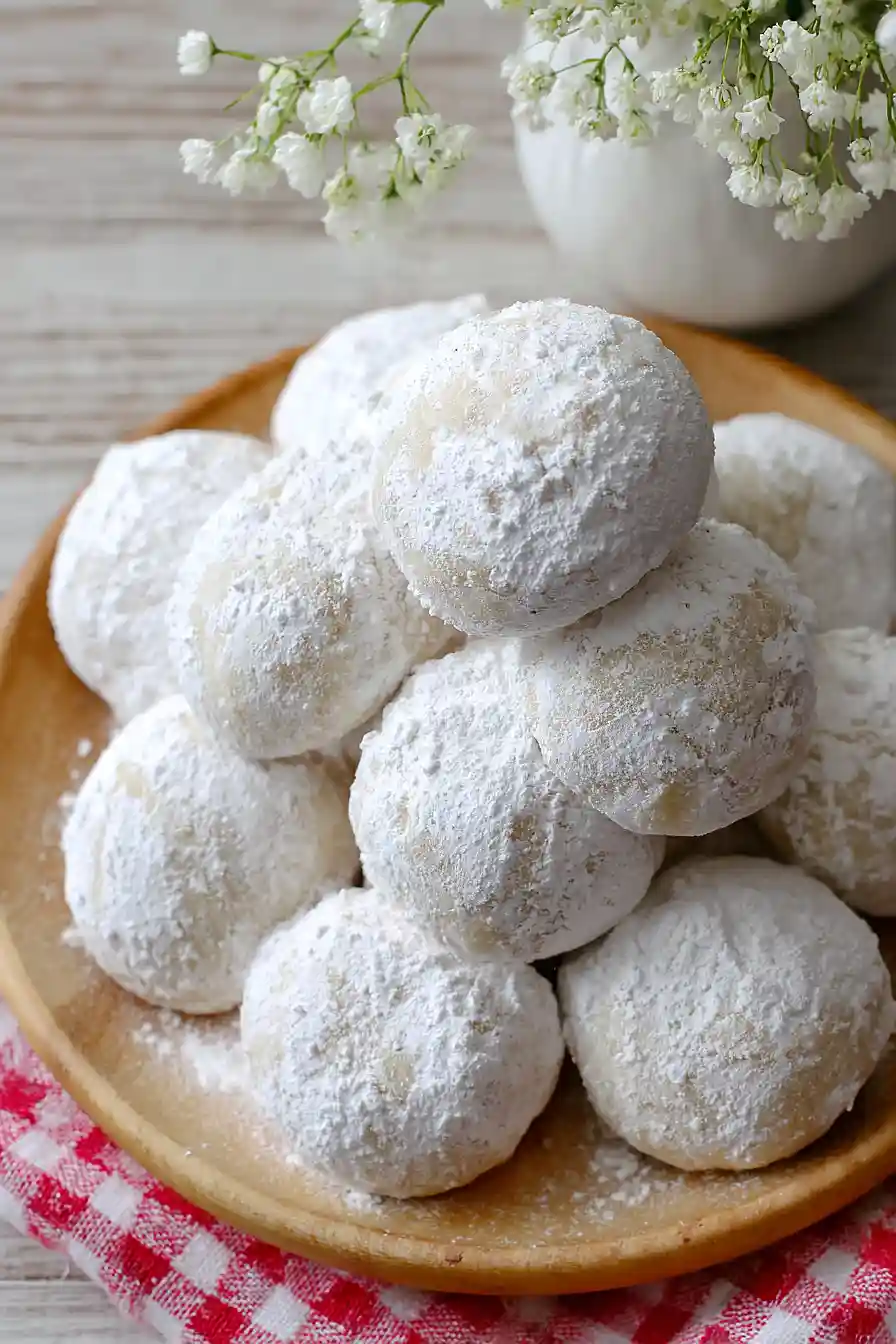
Why You’ll Love These Russian Tea Cakes
- Nut-free version – Perfect for anyone with nut allergies or those who simply prefer their cookies without nuts, while still getting that melt-in-your-mouth texture.
- Quick and easy – These cookies come together in under 30 minutes, making them ideal for last-minute holiday gatherings or when you need a homemade treat fast.
- Simple ingredients – You probably already have butter, sugar, flour, and vanilla in your pantry, so no special shopping trip required.
- Crowd-pleasing classic – These buttery, powdered sugar-coated cookies are a holiday favorite that everyone loves, and they look beautiful on any cookie platter.
- Make-ahead friendly – They store well for days and actually taste even better the next day, so you can bake them ahead for parties or gift-giving.
What Kind of Butter Should I Use?
For Russian tea cakes, regular unsalted butter is your best bet since it gives you better control over the salt level in your cookies. Make sure your butter is properly softened to room temperature – it should be soft enough to leave an indent when you press it, but not melted or greasy. If you’re in a pinch, salted butter will work too, just skip the added salt in the recipe or reduce it by half. European-style butter with higher fat content can make your cookies extra rich and tender, but standard American butter works perfectly fine and is what most people use for this recipe.

Options for Substitutions
These simple cookies are pretty forgiving, so here are some swaps you can make:
- Butter: You can use margarine or shortening instead of butter, though the flavor won’t be quite as rich. If using salted butter, skip the added salt in the recipe.
- Vanilla extract: Try almond extract for a different flavor profile, or use vanilla bean paste for a more intense vanilla taste. You can also experiment with lemon or orange zest for a citrus twist.
- All-purpose flour: While all-purpose flour works best for the right texture, you can substitute up to half with whole wheat flour for a nuttier flavor. Just know the cookies will be slightly denser.
- Confectioners sugar: Don’t substitute the confectioners sugar in the dough itself – it’s what gives these cookies their melt-in-your-mouth texture. For dusting, you can mix in a tablespoon of cocoa powder with the powdered sugar for a chocolate version.
Watch Out for These Mistakes While Baking
The biggest mistake with Russian tea cakes is overbaking them, which turns these delicate cookies dry and crumbly instead of melt-in-your-mouth tender – pull them from the oven when they’re just barely golden on the bottom, not browned.
Another common error is rolling the cookies in powdered sugar while they’re still piping hot, which causes the sugar to melt and disappear into the cookie – let them cool for about 5 minutes first, then roll them while they’re still warm for the first coat.
Make sure your butter is truly softened to room temperature (not melted or cold), as this affects how well the dough holds together and shapes into balls.
For the best coating, roll your cookies in powdered sugar twice – once when they’re slightly warm and again after they’ve cooled completely, which gives you that thick, snowy appearance everyone loves.
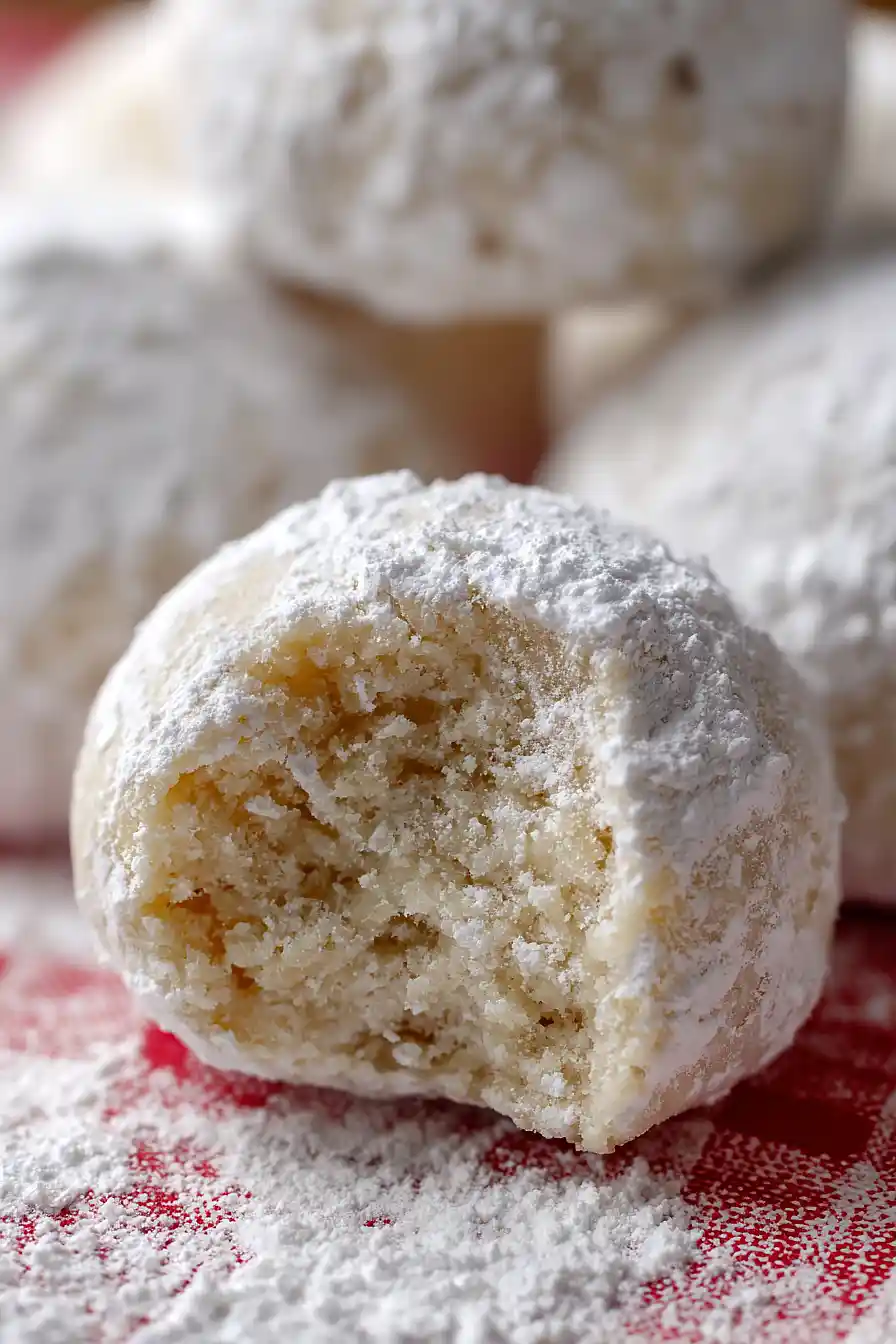
What to Serve With Russian Tea Cakes?
These buttery cookies are perfect alongside a hot cup of coffee, tea, or even hot chocolate during the holidays. I love setting them out on a dessert platter with other Christmas cookies like sugar cookies, gingerbread, or chocolate crinkles for a nice variety. They’re also great to pack up in tins as gifts for neighbors and friends, or to bring to cookie exchanges since they travel well and look so pretty dusted with powdered sugar. If you’re serving them at a party, pair them with some fresh berries or a cheese platter to balance out the sweetness.
Storage Instructions
Store: These cookies keep really well in an airtight container at room temperature for up to a week. Just layer them with parchment paper between each layer so they don’t stick together. The powdered sugar coating might settle a bit over time, but you can always dust them with a little more before serving.
Freeze: Russian tea cakes are perfect for freezing! You can freeze them either before or after dusting with powdered sugar for up to 3 months. I like to freeze them in a single layer first, then transfer to a freezer bag once they’re solid so they don’t stick together.
Serve: If you’re serving frozen cookies, just let them thaw at room temperature for about 30 minutes. They taste great cold or at room temperature. Give them a fresh dusting of powdered sugar right before serving to make them look pretty again.
| Preparation Time | 15-20 minutes |
| Cooking Time | 8-10 minutes |
| Total Time | 23-30 minutes |
| Level of Difficulty | Easy |
Estimated Nutrition
Estimated nutrition for the whole recipe (without optional ingredients):
- Calories: 2500-2700
- Protein: 18-22 g
- Fat: 140-150 g
- Carbohydrates: 310-340 g
Ingredients
- 1/4 tsp salt
- 1/2 cup confectioners sugar
- 1.25 cups confectioners sugar for coating (sifted to remove lumps)
- 1 tsp vanilla extract (pure vanilla preferred for best flavor)
- 2.25 cups flour (I use King Arthur all-purpose flour)
- 1 cup butter (softened to room temperature)
Step 1: Prepare Mise en Place and Preheat
- 1.25 cups confectioners sugar for coating
Preheat your oven to 400°F and position a rack in the center.
While the oven heats, remove the butter from the refrigerator if it hasn’t already softened to room temperature—it should be soft enough to easily indent with your finger but not greasy or melted.
Sift the 1.25 cups of confectioners sugar for coating into a shallow dish and set it aside; this removes any lumps and makes rolling easier.
Measure out all remaining dry ingredients and have them ready for mixing.
Step 2: Create the Cookie Dough Base
- 1 cup butter
- 1/2 cup confectioners sugar
- 1 tsp vanilla extract
- 2.25 cups flour
- 1/4 tsp salt
In a large mixing bowl, cream together the softened butter and ½ cup confectioners sugar until the mixture is light, fluffy, and pale in color—this takes about 2-3 minutes of mixing and incorporates air that helps create tender cookies.
Add the vanilla extract and mix until fully combined and fragrant.
In a separate bowl, whisk together the flour and salt to distribute the salt evenly.
Add the flour mixture to the butter mixture and stir until just combined; be careful not to overmix, as this can make the dough tough.
I prefer to mix by hand at this stage so I can feel when the dough just comes together.
Step 3: Chill the Dough
- dough from Step 2
Cover the bowl of dough with plastic wrap or foil and refrigerate for 1 hour.
This chilling time is essential—it allows the gluten to relax and the flavors to meld together, which results in cookies that hold their shape better during baking and have a more tender crumb.
While the dough chills, you can clean up your workspace and prepare your baking sheets.
Step 4: Shape and Bake the Cookies
- dough from Step 3
Remove the chilled dough from the refrigerator and break off pieces about the size of a walnut, rolling them between your palms into smooth 1-inch balls.
Arrange the balls on parchment-lined or ungreased baking sheets, spacing them about 1 inch apart since they’ll spread slightly.
Bake for 8-10 minutes, watching until the bottoms are just barely golden but the tops remain pale—the cookies should look almost underbaked when you remove them from the oven.
This is the key to keeping them tender and crumbly.
Step 5: Finish with Sugar Coating
- warm baked cookies from Step 4
- confectioners sugar from Step 1
Let the cookies cool on the baking sheet for about 5 minutes—they’ll firm up just enough to handle but will still be warm, which is crucial.
Working quickly while they’re still warm, gently roll each cookie in the prepared confectioners sugar, coating all sides generously.
I like to work in small batches so the cookies stay warm and the sugar adheres properly.
Transfer the coated cookies to a wire rack to cool completely.
If you want an extra-thick sugar coating, you can roll the cookies in sugar a second time once they’ve cooled.
Sweet Russian Tea Cakes
Ingredients
- 1/4 tsp salt
- 1/2 cup confectioners sugar
- 1.25 cups confectioners sugar for coating (sifted to remove lumps)
- 1 tsp vanilla extract (pure vanilla preferred for best flavor)
- 2.25 cups flour (I use King Arthur all-purpose flour)
- 1 cup butter (softened to room temperature)
Instructions
- Preheat your oven to 400°F and position a rack in the center. While the oven heats, remove the butter from the refrigerator if it hasn't already softened to room temperature—it should be soft enough to easily indent with your finger but not greasy or melted. Sift the 1.25 cups of confectioners sugar for coating into a shallow dish and set it aside; this removes any lumps and makes rolling easier. Measure out all remaining dry ingredients and have them ready for mixing.
- In a large mixing bowl, cream together the softened butter and ½ cup confectioners sugar until the mixture is light, fluffy, and pale in color—this takes about 2-3 minutes of mixing and incorporates air that helps create tender cookies. Add the vanilla extract and mix until fully combined and fragrant. In a separate bowl, whisk together the flour and salt to distribute the salt evenly. Add the flour mixture to the butter mixture and stir until just combined; be careful not to overmix, as this can make the dough tough. I prefer to mix by hand at this stage so I can feel when the dough just comes together.
- Cover the bowl of dough with plastic wrap or foil and refrigerate for 1 hour. This chilling time is essential—it allows the gluten to relax and the flavors to meld together, which results in cookies that hold their shape better during baking and have a more tender crumb. While the dough chills, you can clean up your workspace and prepare your baking sheets.
- Remove the chilled dough from the refrigerator and break off pieces about the size of a walnut, rolling them between your palms into smooth 1-inch balls. Arrange the balls on parchment-lined or ungreased baking sheets, spacing them about 1 inch apart since they'll spread slightly. Bake for 8-10 minutes, watching until the bottoms are just barely golden but the tops remain pale—the cookies should look almost underbaked when you remove them from the oven. This is the key to keeping them tender and crumbly.
- Let the cookies cool on the baking sheet for about 5 minutes—they'll firm up just enough to handle but will still be warm, which is crucial. Working quickly while they're still warm, gently roll each cookie in the prepared confectioners sugar, coating all sides generously. I like to work in small batches so the cookies stay warm and the sugar adheres properly. Transfer the coated cookies to a wire rack to cool completely. If you want an extra-thick sugar coating, you can roll the cookies in sugar a second time once they've cooled.







These sound delicious and I will soon be making them. However, I wish I knew even approximately how many cookies this recipe yields!