Finding a good keto cookie recipe that actually tastes like the real thing can feel impossible. Most low-carb cookies end up either crumbly, gritty, or just plain disappointing – and let’s be honest, when you’re cutting carbs, the last thing you need is a sad, cardboard-tasting cookie that leaves you missing the real deal even more.
That’s where these keto shortbread coconut flour cookies come in. They’re buttery, melt-in-your-mouth good, and have that classic shortbread texture you’re craving, all while keeping your carb count low and your taste buds happy.

Why You’ll Love These Keto Shortbread Cookies
- Keto-friendly and low-carb – Made with almond and coconut flour instead of regular flour, these cookies fit perfectly into your keto lifestyle without derailing your macros.
- Quick and easy to make – With just 26-40 minutes from start to finish, you can have fresh homemade cookies ready in less time than it takes to watch your favorite show.
- Simple ingredients – You probably already have most of these pantry staples on hand, making this an easy recipe to whip up whenever a cookie craving hits.
- Buttery, melt-in-your-mouth texture – The combination of butter and coconut butter creates that classic shortbread texture we all love, proving that low-carb cookies can taste just as good as the traditional kind.
What Kind of Coconut Flour Should I Use?
Any brand of coconut flour will work for these keto shortbread cookies, but keep in mind that not all coconut flours are created equal. Some brands are more finely ground than others, which can affect how much liquid they absorb – and coconut flour is already known for being super absorbent. If your dough seems too dry or crumbly, you can add a teaspoon of water or melted butter at a time until it comes together. On the flip side, if it’s too wet, just add a bit more coconut flour until you get a nice, workable dough that holds its shape.
Options for Substitutions
These keto cookies are pretty adaptable, though some ingredients are key to getting that perfect shortbread texture:
- Coconut flour: Coconut flour is really important here and shouldn’t be substituted. It absorbs moisture differently than other flours, so swapping it out will completely change the texture and you’ll end up with a different cookie altogether.
- Almond flour: You can use sunflower seed flour if you have a nut allergy, but keep in mind your cookies might turn slightly green due to a natural reaction with baking powder – they’re still totally safe to eat though!
- Erythritol: Other keto-friendly sweeteners like monk fruit sweetener or allulose work well here. Just make sure you’re using a powdered version for the right texture. Avoid liquid sweeteners as they’ll make the dough too wet.
- Butter: Coconut oil works as a dairy-free swap, but use it in solid form (not melted). Your cookies will have a slightly different flavor and might spread a bit more.
- Xanthan gum: This is optional anyway, but if you want to skip it, that’s fine. It just helps bind the dough together a bit better since we’re working with low-carb flours.
- Extract: Feel free to use vanilla extract instead of almond, or try other extracts like lemon or coconut for a fun twist.
Watch Out for These Mistakes While Baking
The biggest mistake with coconut flour cookies is not measuring accurately – coconut flour is incredibly absorbent, so even a tablespoon too much will turn your dough crumbly and impossible to work with, while too little makes them spread into flat puddles.
Make sure your butter is truly softened (not melted) to room temperature, as melted butter will cause the cookies to spread too thin and lose that classic shortbread texture.
Since coconut flour continues to absorb moisture as it sits, if your dough feels too dry after mixing, add a teaspoon of water or melted coconut oil at a time until it holds together when pressed.
Watch your baking time closely – these cookies can go from perfectly golden to burnt in just a minute or two, so start checking them at the 10-minute mark and remove them when the edges are just lightly golden.
What to Serve With Keto Shortbread Cookies?
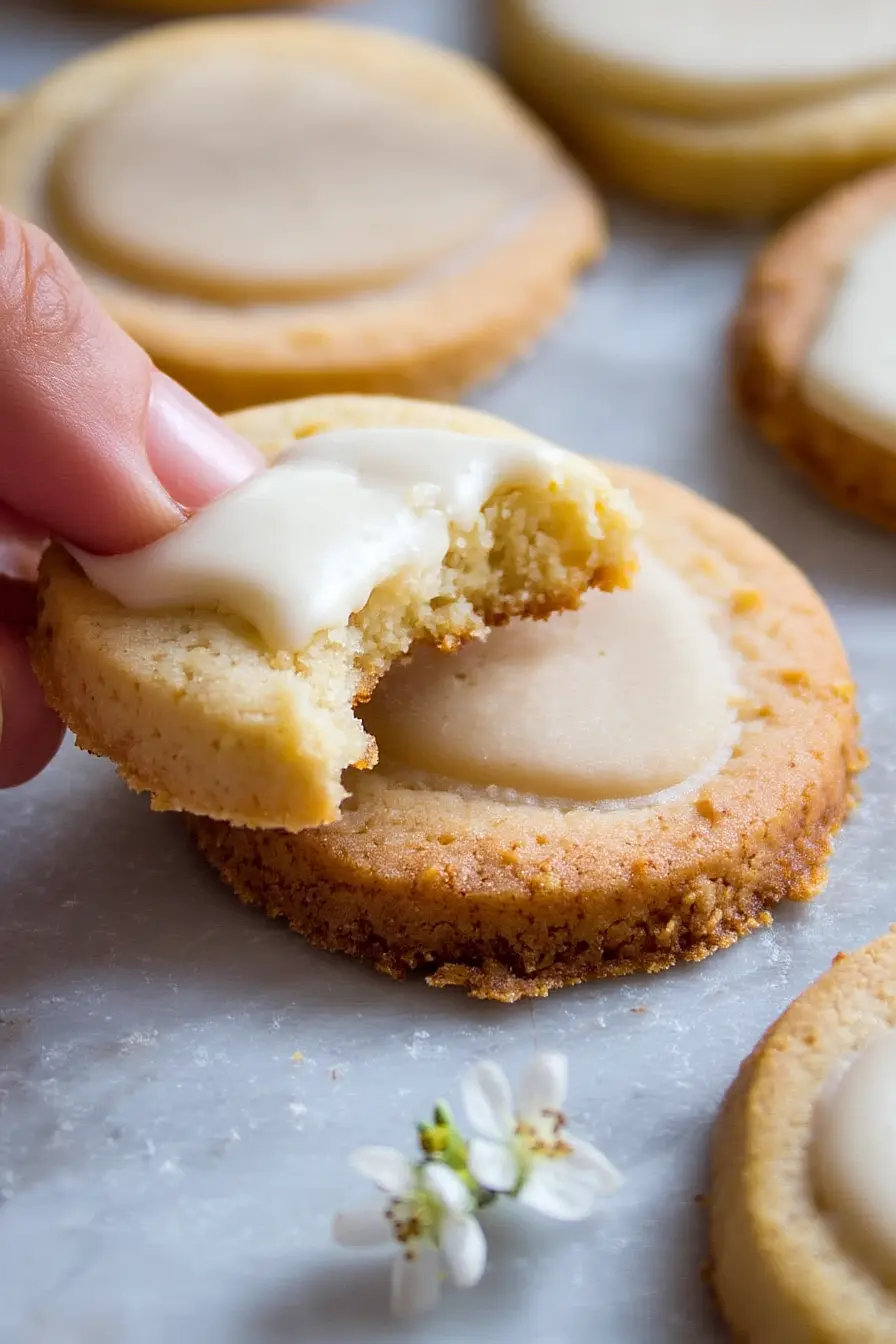
These keto shortbread cookies are perfect alongside a hot cup of coffee or tea for an afternoon snack that won’t derail your low-carb goals. I love pairing them with unsweetened almond milk or a creamy bulletproof coffee for a satisfying treat that keeps me full. They also work great as a light dessert after a keto-friendly dinner – try serving them with some fresh berries and whipped cream for something a bit more special. If you’re hosting, arrange them on a platter with some sugar-free chocolate squares and nuts for an easy low-carb dessert board that everyone can enjoy.
Storage Instructions
Store: These shortbread cookies stay fresh in an airtight container at room temperature for about a week. If you want them to last longer, keep them in the fridge for up to 2 weeks – they’ll get a bit firmer but still taste great.
Freeze: You can freeze these cookies for up to 3 months, either baked or as dough. If freezing the dough, shape it into a log, wrap it tightly in plastic wrap, and slice off what you need when a cookie craving hits. Baked cookies can go straight into a freezer bag with parchment between layers.
Enjoy: Let frozen cookies thaw at room temperature for about 20 minutes before eating. They’re actually pretty good straight from the freezer too if you like a firmer texture! No need to reheat these – they’re meant to be enjoyed at room temp or slightly chilled.
| Preparation Time | 20-30 minutes |
| Cooking Time | 6-10 minutes |
| Total Time | 26-40 minutes |
| Level of Difficulty | Easy |
Estimated Nutrition
Estimated nutrition for the whole recipe (without optional ingredients):
- Calories: 1400-1500
- Protein: 20-24 g
- Fat: 130-140 g
- Carbohydrates: 40-50 g
Ingredients
For the cookies:
- 1 tsp almond extract
- 1/4 tsp xanthan gum (prevents grittiness in keto baking)
- 1/3 cup coconut flour (sifted to remove lumps)
- 1/4 tsp baking powder
- 1/2 cup softened butter (room temperature, about 70°F)
- 1 cup almond flour (finely ground for smooth texture)
- 1/3 cup powdered erythritol
For the glaze:
- 2.5 tsp powdered erythritol
- 1/4 cup coconut butter (melted and cooled slightly)
Step 1: Preheat Oven and Prepare Mise en Place
- 1/3 cup coconut flour
Start by preheating your oven to 350°F (or 320°F if using a convection/fan oven).
While it heats, sift together the coconut flour to break up any lumps—this prevents grittiness in the final texture.
Measure out all your ingredients so everything is ready when you need it.
I like to sift the coconut flour even though it seems extra because it truly makes the difference between smooth cookies and ones with an unpleasant grainy texture.
Step 2: Mix Dry Ingredients Together
- 1/3 cup coconut flour
- 1 cup almond flour
- 1/3 cup powdered erythritol
- 1/4 tsp baking powder
- 1/4 tsp xanthan gum
In a medium bowl, combine the sifted coconut flour, almond flour, powdered erythritol, baking powder, and xanthan gum.
Whisk these together thoroughly to distribute the leavening agents and xanthan gum evenly throughout the dry mixture.
This ensures your cookies will have a consistent texture and rise properly during baking.
Step 3: Create Cookie Dough Base
- 1/2 cup softened butter
- 1/4 cup coconut butter
- 1 tsp almond extract
- dry ingredient mixture from Step 2
In a separate bowl, combine the softened butter, melted and cooled coconut butter, and almond extract.
Blend these together until smooth and well combined.
Then, fold in the dry ingredient mixture from Step 2 until a cohesive dough forms—don’t overmix, as this can make the cookies tough.
The dough should come together easily but still be workable.
Step 4: Chill and Shape Cookies
- cookie dough from Step 3
Divide the dough into 2 equal portions.
Place each portion between two sheets of parchment paper and roll flat to about 1/4-inch thickness.
Transfer the rolled dough (still between the parchment) to the refrigerator for 20 minutes, or to the freezer for 10 minutes if you’re short on time.
Chilling prevents the dough from spreading excessively during baking and helps maintain the crisp, shortbread texture.
Once chilled, remove from the fridge and use cookie cutters to cut out shapes.
Place the cut cookies onto a parchment-lined baking sheet, spacing them about an inch apart.
Step 5: Bake Until Golden
- shaped cookies from Step 4
Place the baking sheet in your preheated oven and bake for 6 minutes, watching carefully until the edges just begin to turn golden brown.
The cookies will continue to firm up as they cool, so don’t overbake them or they’ll become too crispy.
Remove from the oven and let the cookies cool on the baking sheet for a few minutes before transferring to a wire rack to cool completely.
Step 6: Prepare and Apply Glaze
- 1/4 cup coconut butter
- 2.5 tsp powdered erythritol
- cooled cookies from Step 5
While the cookies cool, warm the remaining coconut butter in a small saucepan over low heat or in the microwave for 20-30 seconds until it’s just pourable.
Stir in the powdered erythritol (2.5 tsp) until smooth and combined.
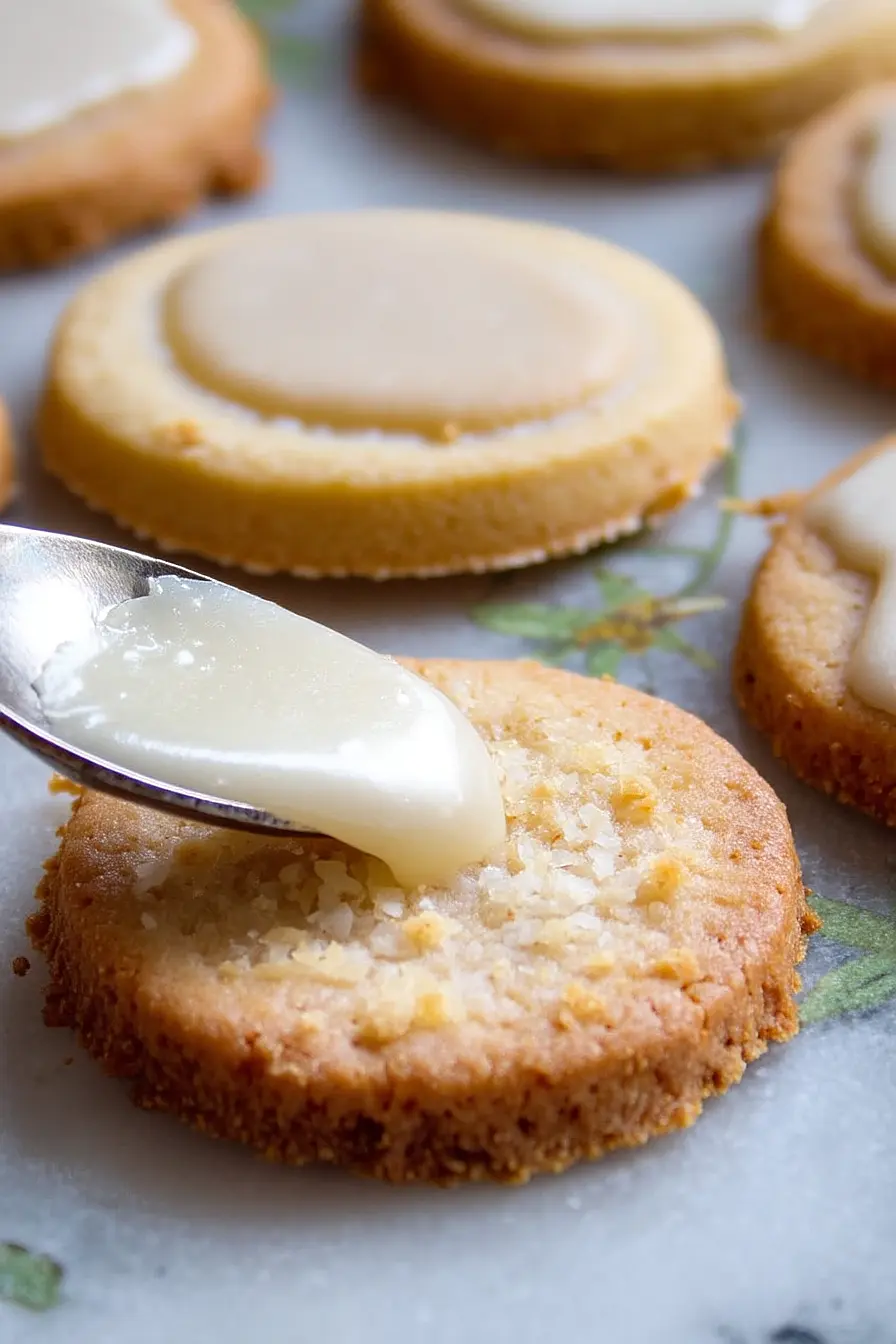
Once the cookies have cooled completely, drizzle the glaze over each cookie with a fork or small spoon, then let it set at room temperature for about 10 minutes.
I find that letting the glaze set at room temperature rather than chilling gives a nicer, less waxy finish on these delicate cookies.

Irresistible Keto Shortbread Coconut Flour Cookies
Ingredients
For the cookies:
- 1 tsp almond extract
- 1/4 tsp xanthan gum (prevents grittiness in keto baking)
- 1/3 cup coconut flour (sifted to remove lumps)
- 1/4 tsp baking powder
- 1/2 cup softened butter (room temperature, about 70°F)
- 1 cup almond flour (finely ground for smooth texture)
- 1/3 cup powdered erythritol
For the glaze:
- 2.5 tsp powdered erythritol
- 1/4 cup coconut butter (melted and cooled slightly)
Instructions
- Start by preheating your oven to 350°F (or 320°F if using a convection/fan oven). While it heats, sift together the coconut flour to break up any lumps—this prevents grittiness in the final texture. Measure out all your ingredients so everything is ready when you need it. I like to sift the coconut flour even though it seems extra because it truly makes the difference between smooth cookies and ones with an unpleasant grainy texture.
- In a medium bowl, combine the sifted coconut flour, almond flour, powdered erythritol, baking powder, and xanthan gum. Whisk these together thoroughly to distribute the leavening agents and xanthan gum evenly throughout the dry mixture. This ensures your cookies will have a consistent texture and rise properly during baking.
- In a separate bowl, combine the softened butter, melted and cooled coconut butter, and almond extract. Blend these together until smooth and well combined. Then, fold in the dry ingredient mixture from Step 2 until a cohesive dough forms—don't overmix, as this can make the cookies tough. The dough should come together easily but still be workable.
- Divide the dough into 2 equal portions. Place each portion between two sheets of parchment paper and roll flat to about 1/4-inch thickness. Transfer the rolled dough (still between the parchment) to the refrigerator for 20 minutes, or to the freezer for 10 minutes if you're short on time. Chilling prevents the dough from spreading excessively during baking and helps maintain the crisp, shortbread texture. Once chilled, remove from the fridge and use cookie cutters to cut out shapes. Place the cut cookies onto a parchment-lined baking sheet, spacing them about an inch apart.
- Place the baking sheet in your preheated oven and bake for 6 minutes, watching carefully until the edges just begin to turn golden brown. The cookies will continue to firm up as they cool, so don't overbake them or they'll become too crispy. Remove from the oven and let the cookies cool on the baking sheet for a few minutes before transferring to a wire rack to cool completely.
- While the cookies cool, warm the remaining coconut butter in a small saucepan over low heat or in the microwave for 20-30 seconds until it's just pourable. Stir in the powdered erythritol (2.5 tsp) until smooth and combined. Once the cookies have cooled completely, drizzle the glaze over each cookie with a fork or small spoon, then let it set at room temperature for about 10 minutes. I find that letting the glaze set at room temperature rather than chilling gives a nicer, less waxy finish on these delicate cookies.