I didn’t grow up drinking eggnog at Christmas—my family was more of a hot chocolate crowd. But when I married into a family that treated eggnog like liquid gold every December, I figured I should find more ways to use it than just pouring it in a glass.
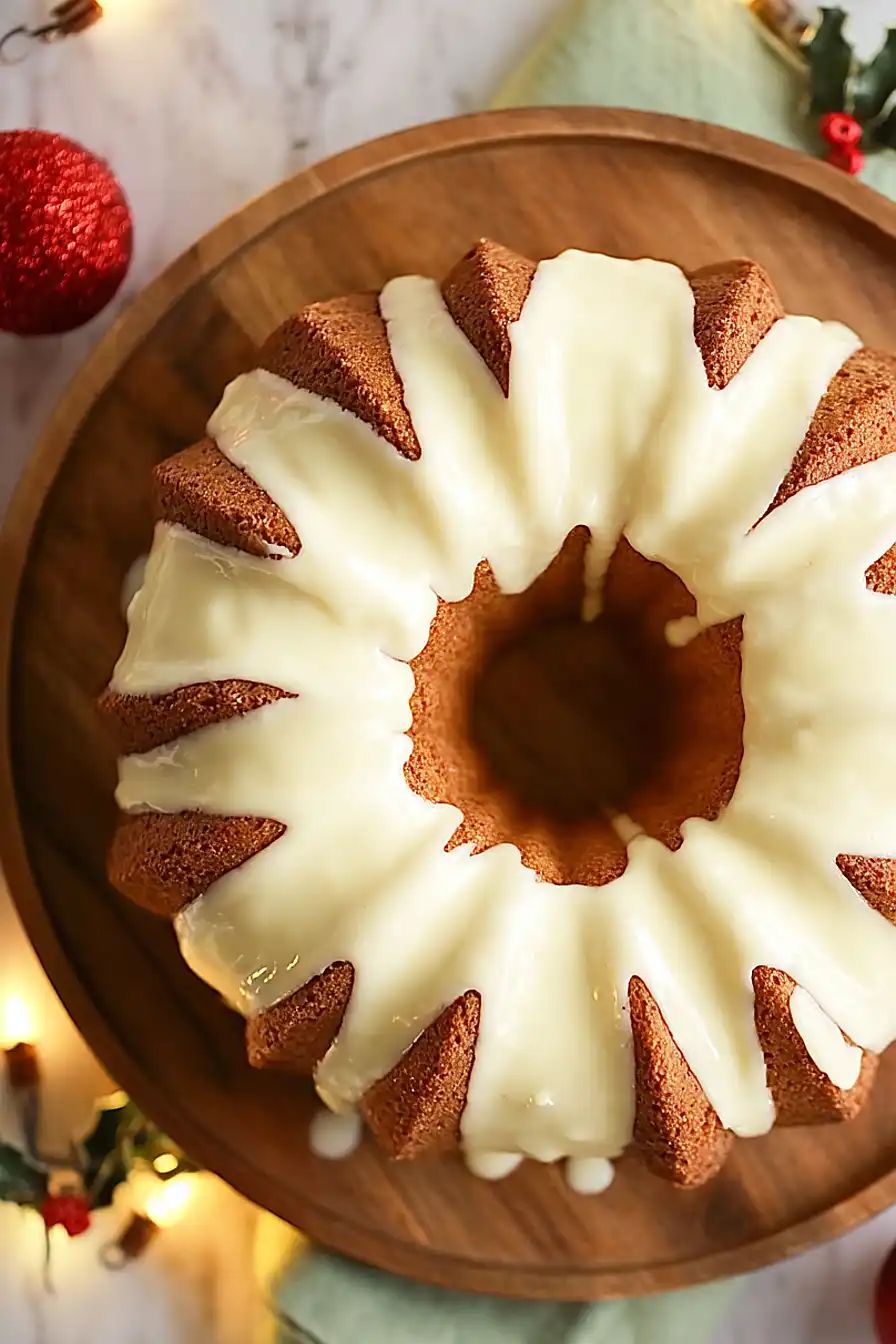
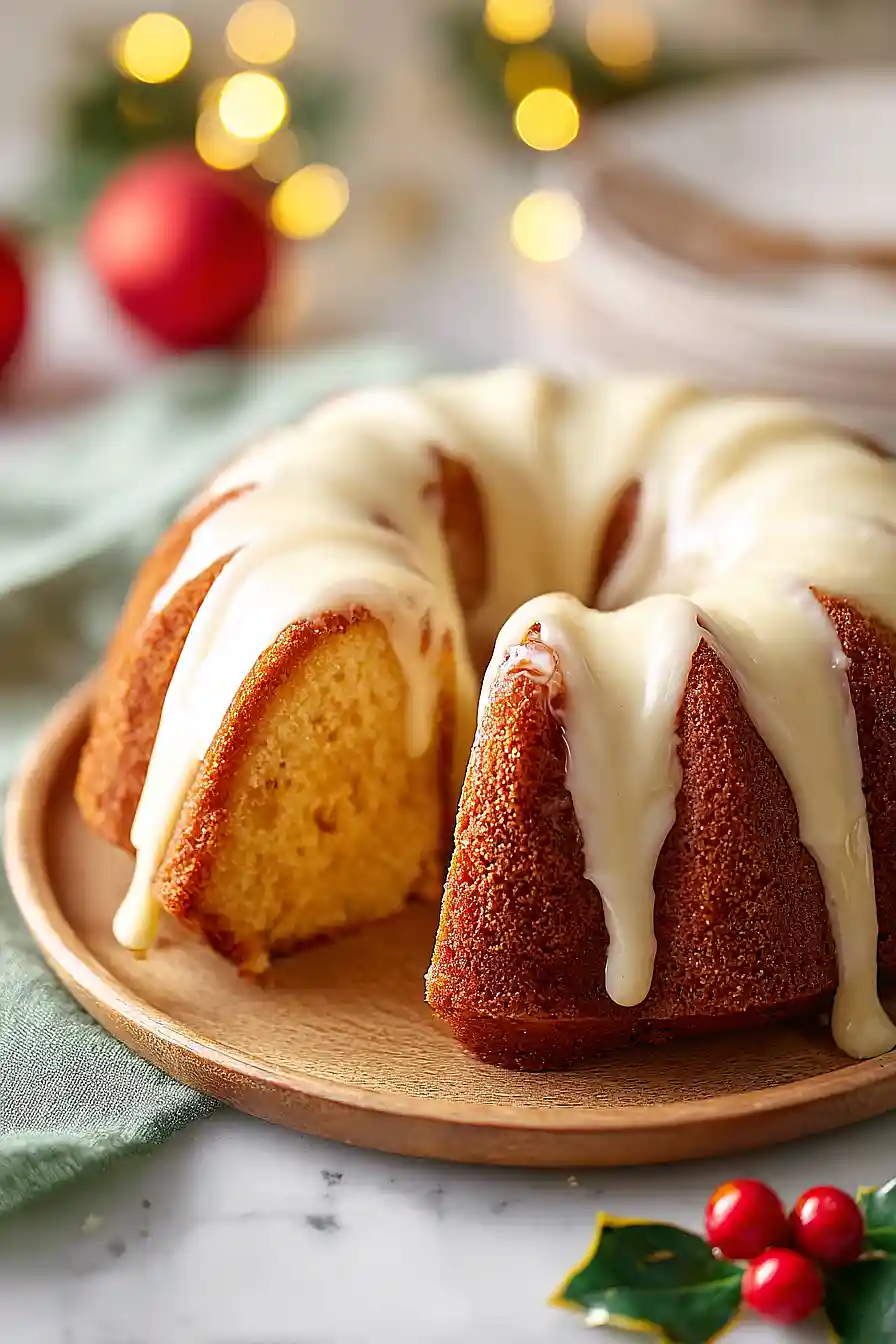
That’s when I discovered eggnog pound cake. It’s got all that cozy holiday flavor baked right in, plus a sweet eggnog glaze on top. The best part? You don’t need any fancy ingredients or techniques. If you can cream butter and sugar together, you can make this cake. And if you’ve got leftover eggnog sitting in your fridge after the holidays, this is exactly what you should do with it.
Why You’ll Love This Eggnog Pound Cake
- Perfect holiday dessert – This cake brings all the cozy flavors of eggnog into a moist, dense pound cake that’s ideal for Christmas gatherings or winter celebrations.
- Simple ingredients – You probably have most of these pantry staples on hand, and the eggnog does all the heavy lifting for flavor.
- Feeds a crowd – One cake serves plenty of people, making it great for potlucks, family dinners, or gift-giving during the holidays.
- Make-ahead friendly – Pound cakes actually taste better the next day, so you can bake this ahead of time and have one less thing to worry about when hosting.
What Kind of Eggnog Should I Use?
You can use any store-bought eggnog for this recipe, whether it’s the classic variety or a flavored version like vanilla or rum-flavored. The refrigerated eggnog you find in the dairy section works perfectly fine, and there’s no need to spring for expensive brands – the mid-range options will give you great results. If you want a richer flavor, full-fat eggnog is your best bet, but lower-fat versions will still work if that’s what you have on hand. Just make sure your eggnog is fresh and hasn’t been sitting in the fridge for too long, as you want that creamy consistency for both the cake batter and the glaze.
Options for Substitutions
This pound cake is pretty forgiving when it comes to swaps, though a few ingredients are best left as-is:
- Eggnog: Since eggnog is the star here, I wouldn’t substitute it. However, if you’re making this outside of the holiday season, you can make a quick substitute by mixing 1 cup whole milk with 1/4 teaspoon nutmeg, 1/4 teaspoon cinnamon, and 1 tablespoon rum extract.
- Unsalted butter: If you only have salted butter on hand, go ahead and use it but skip the added salt in the recipe. The cake will turn out just fine.
- All-purpose flour: Stick with all-purpose flour for this one. Cake flour will make it too delicate, and bread flour will make it too dense. The structure of pound cake really needs that middle-ground protein content.
- Baking powder: Don’t substitute baking soda here – pound cake needs the specific lift that baking powder provides. Make sure yours is fresh by testing it in warm water first.
- Ground nutmeg: Fresh grated nutmeg is even better if you have a whole nutmeg and a grater. You can also add a pinch of cinnamon or allspice to play up those warm spices.
- Vanilla extract: Rum extract or brandy extract would be nice alternatives that complement the eggnog flavor, or use half vanilla and half rum extract for a twist.
Watch Out for These Mistakes While Baking
The biggest mistake you can make with pound cake is not bringing your butter and eggs to room temperature before mixing, which can lead to a dense, uneven texture instead of the light, tender crumb you’re after.
Overmixing the batter once you add the flour is another common error – mix just until the ingredients are combined to avoid developing too much gluten, which makes the cake tough.
Since pound cakes are thick and dense, they need a long baking time at a moderate temperature, so resist the urge to crank up the heat or you’ll end up with a burnt outside and raw center.
To check for doneness, insert a toothpick into the center of the cake – it should come out with just a few moist crumbs, not wet batter, and let the cake cool in the pan for at least 15 minutes before removing it to prevent it from falling apart.
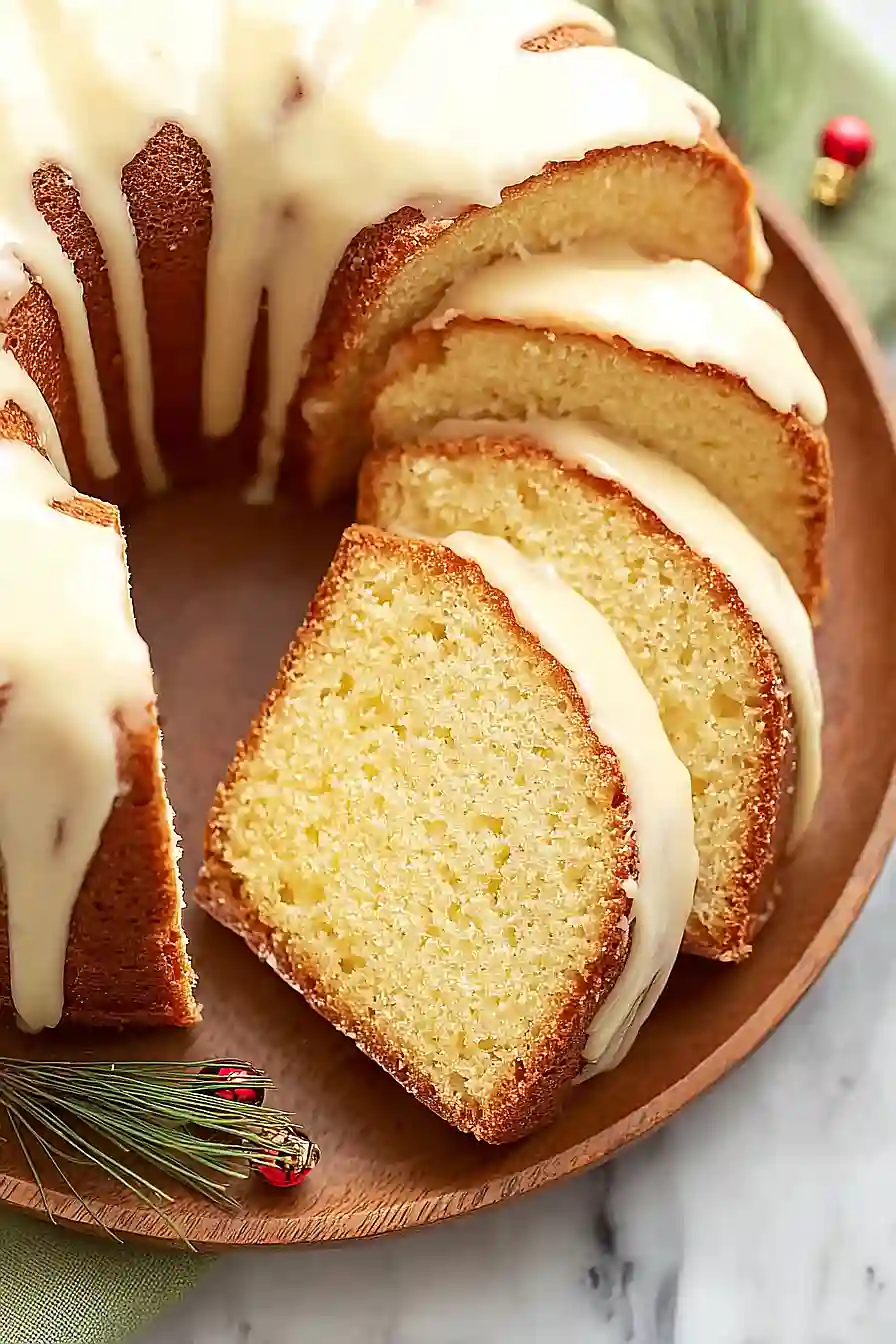
What to Serve With Eggnog Pound Cake?
This cake is perfect on its own with a cup of coffee or hot chocolate, but you can definitely dress it up for the holidays. A dollop of freshly whipped cream on the side is always a good idea, especially if you add a pinch of cinnamon or nutmeg to it. I love serving slices alongside vanilla ice cream or even a scoop of butter pecan, which really brings out the warm spices in the cake. For a festive brunch spread, pair it with fresh berries and a fruit salad, or serve it as dessert after a big holiday dinner with some warm caramel sauce drizzled on top.
Storage Instructions
Store: This eggnog pound cake stays moist and delicious for days. Keep it covered with plastic wrap or in an airtight container at room temperature for up to 3 days, or in the fridge for up to a week. The flavors actually get better after a day or two as everything settles in together.
Freeze: Pound cake is one of the best cakes for freezing! Wrap individual slices or the whole cake tightly in plastic wrap, then again in aluminum foil. It’ll keep in the freezer for up to 3 months and tastes just as good when you thaw it out.
Serve: Let frozen slices thaw at room temperature for about an hour, or overnight in the fridge if you’re doing the whole cake. If you want to refresh it a bit, warm slices in the microwave for about 10-15 seconds. The glaze might look a little different after freezing, but the taste is still there.
| Preparation Time | 20-30 minutes |
| Cooking Time | 55-65 minutes |
| Total Time | 90-110 minutes |
| Level of Difficulty | Medium |
| Servings | 12 slices |
Estimated Nutrition
Estimated nutrition for the whole recipe (without optional ingredients):
- Calories: 5600-6000
- Protein: 50-60 g
- Fat: 280-320 g
- Carbohydrates: 740-800 g
Ingredients
For the cake:
- 1.5 cups unsalted butter (softened to room temperature for easier creaming)
- 2 tsp vanilla extract (pure vanilla extract for best flavor)
- 5 eggs (room temperature, about 70°F)
- 2 tsp baking powder
- 3 cups all-purpose flour (sifted to remove lumps)
- 1 cup eggnog (chilled)
- 1/4 tsp ground nutmeg (freshly ground preferred)
- 3 cups sugar
- 1/2 tsp salt
For the glaze:
- 2 tbsp eggnog (use the same eggnog as the cake)
- 1 cup powdered sugar (sifted for smooth glaze)
Step 1: Prepare the Pan and Preheat the Oven
- Bundt pan
- butter or non-stick spray
Preheat your oven to 325°F, which is the ideal temperature for pound cake—it allows the cake to bake slowly and evenly without browning too quickly on the outside.
While the oven heats, thoroughly coat your Bundt pan with butter or non-stick spray, making sure to get into all the crevices and details so the cake releases cleanly after baking.
Step 2: Mix Dry Ingredients and Prepare Mise en Place
- 3 cups all-purpose flour
- 2 tsp baking powder
- 1/2 tsp salt
- 1/4 tsp ground nutmeg
In a medium bowl, whisk together the sifted flour, baking powder, salt, and nutmeg until well combined—this distributes the leavening and spices evenly throughout the dry mixture.
Set this aside.
Gather your room-temperature eggs, softened butter, sugar, eggnog, and vanilla extract in your workspace.
I like to have room-temperature eggs because they incorporate more smoothly into the batter, creating a lighter, more tender crumb.
Step 3: Cream Butter and Sugar
- 1.5 cups unsalted butter
- 3 cups sugar
In a large bowl, beat the softened butter and sugar together for 3-4 minutes until the mixture is light, pale, and fluffy.
This creaming process is crucial—it incorporates air into the batter, which helps the cake rise and creates a tender structure.
Stop occasionally to scrape down the bowl with a spatula to ensure everything is evenly mixed.
Step 4: Add Eggs and Vanilla to Build the Batter Base
- 5 eggs
- 2 tsp vanilla extract
Add the eggs one at a time to the butter-sugar mixture, beating well after each addition until fully incorporated before adding the next egg.
This gradual incorporation ensures the batter emulsifies properly and remains smooth.
After all eggs are in, add the vanilla extract and mix until combined.
I recommend beating for about 30 seconds after each egg so the batter stays light and airy.
Step 5: Alternate Dry Ingredients and Eggnog
- dry ingredient mixture from Step 2
- 1 cup eggnog
Begin by adding about a third of the dry ingredient mixture from Step 2 to the batter and mix on low speed until just combined—don’t overmix, as this can develop gluten and make the cake tough.
Then add half of the chilled eggnog and mix gently until incorporated.
Repeat this pattern: another third of dry mixture, then the remaining eggnog, then finish with the final third of dry mixture.
Each addition should be mixed just until the streaks disappear.
This alternating method ensures even distribution of flour without overdeveloping the batter.
Step 6: Bake the Pound Cake
- batter from Step 5
Pour the batter into your prepared Bundt pan and smooth the top gently with a spatula.
Place in the preheated 325°F oven and bake for 55 to 65 minutes, until a toothpick inserted into the thickest part of the cake comes out clean or with just a few moist crumbs.
The cake should be golden brown on top.
Remove from the oven and let cool in the pan for 10 minutes, then turn out onto a wire rack to cool completely before glazing.
Step 7: Prepare Glaze and Finish the Cake
- 1 cup powdered sugar
- 2 tbsp eggnog
- cooled cake from Step 6
Once the cake has cooled completely, whisk together the sifted powdered sugar and 2 tablespoons of eggnog to create a smooth, pourable glaze.
If the glaze seems too thick, add a touch more eggnog; if too thin, add a bit more powdered sugar.
Drizzle the glaze over the top of the cooled cake, letting it cascade down the sides naturally for an elegant presentation.
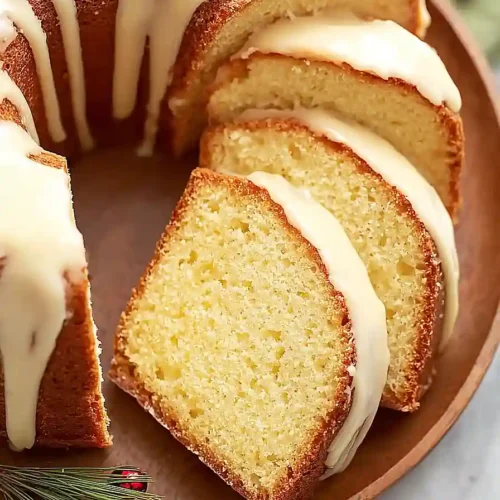
Simple Eggnog Pound Cake
Ingredients
For the cake:
- 1.5 cups unsalted butter (softened to room temperature for easier creaming)
- 2 tsp vanilla extract (pure vanilla extract for best flavor)
- 5 eggs (room temperature, about 70°F)
- 2 tsp baking powder
- 3 cups all-purpose flour (sifted to remove lumps)
- 1 cup eggnog (chilled)
- 1/4 tsp ground nutmeg (freshly ground preferred)
- 3 cups sugar
- 1/2 tsp salt
For the glaze:
- 2 tbsp eggnog (use the same eggnog as the cake)
- 1 cup powdered sugar (sifted for smooth glaze)
Instructions
- Preheat your oven to 325°F, which is the ideal temperature for pound cake—it allows the cake to bake slowly and evenly without browning too quickly on the outside. While the oven heats, thoroughly coat your Bundt pan with butter or non-stick spray, making sure to get into all the crevices and details so the cake releases cleanly after baking.
- In a medium bowl, whisk together the sifted flour, baking powder, salt, and nutmeg until well combined—this distributes the leavening and spices evenly throughout the dry mixture. Set this aside. Gather your room-temperature eggs, softened butter, sugar, eggnog, and vanilla extract in your workspace. I like to have room-temperature eggs because they incorporate more smoothly into the batter, creating a lighter, more tender crumb.
- In a large bowl, beat the softened butter and sugar together for 3-4 minutes until the mixture is light, pale, and fluffy. This creaming process is crucial—it incorporates air into the batter, which helps the cake rise and creates a tender structure. Stop occasionally to scrape down the bowl with a spatula to ensure everything is evenly mixed.
- Add the eggs one at a time to the butter-sugar mixture, beating well after each addition until fully incorporated before adding the next egg. This gradual incorporation ensures the batter emulsifies properly and remains smooth. After all eggs are in, add the vanilla extract and mix until combined. I recommend beating for about 30 seconds after each egg so the batter stays light and airy.
- Begin by adding about a third of the dry ingredient mixture from Step 2 to the batter and mix on low speed until just combined—don't overmix, as this can develop gluten and make the cake tough. Then add half of the chilled eggnog and mix gently until incorporated. Repeat this pattern: another third of dry mixture, then the remaining eggnog, then finish with the final third of dry mixture. Each addition should be mixed just until the streaks disappear. This alternating method ensures even distribution of flour without overdeveloping the batter.
- Pour the batter into your prepared Bundt pan and smooth the top gently with a spatula. Place in the preheated 325°F oven and bake for 55 to 65 minutes, until a toothpick inserted into the thickest part of the cake comes out clean or with just a few moist crumbs. The cake should be golden brown on top. Remove from the oven and let cool in the pan for 10 minutes, then turn out onto a wire rack to cool completely before glazing.
- Once the cake has cooled completely, whisk together the sifted powdered sugar and 2 tablespoons of eggnog to create a smooth, pourable glaze. If the glaze seems too thick, add a touch more eggnog; if too thin, add a bit more powdered sugar. Drizzle the glaze over the top of the cooled cake, letting it cascade down the sides naturally for an elegant presentation.