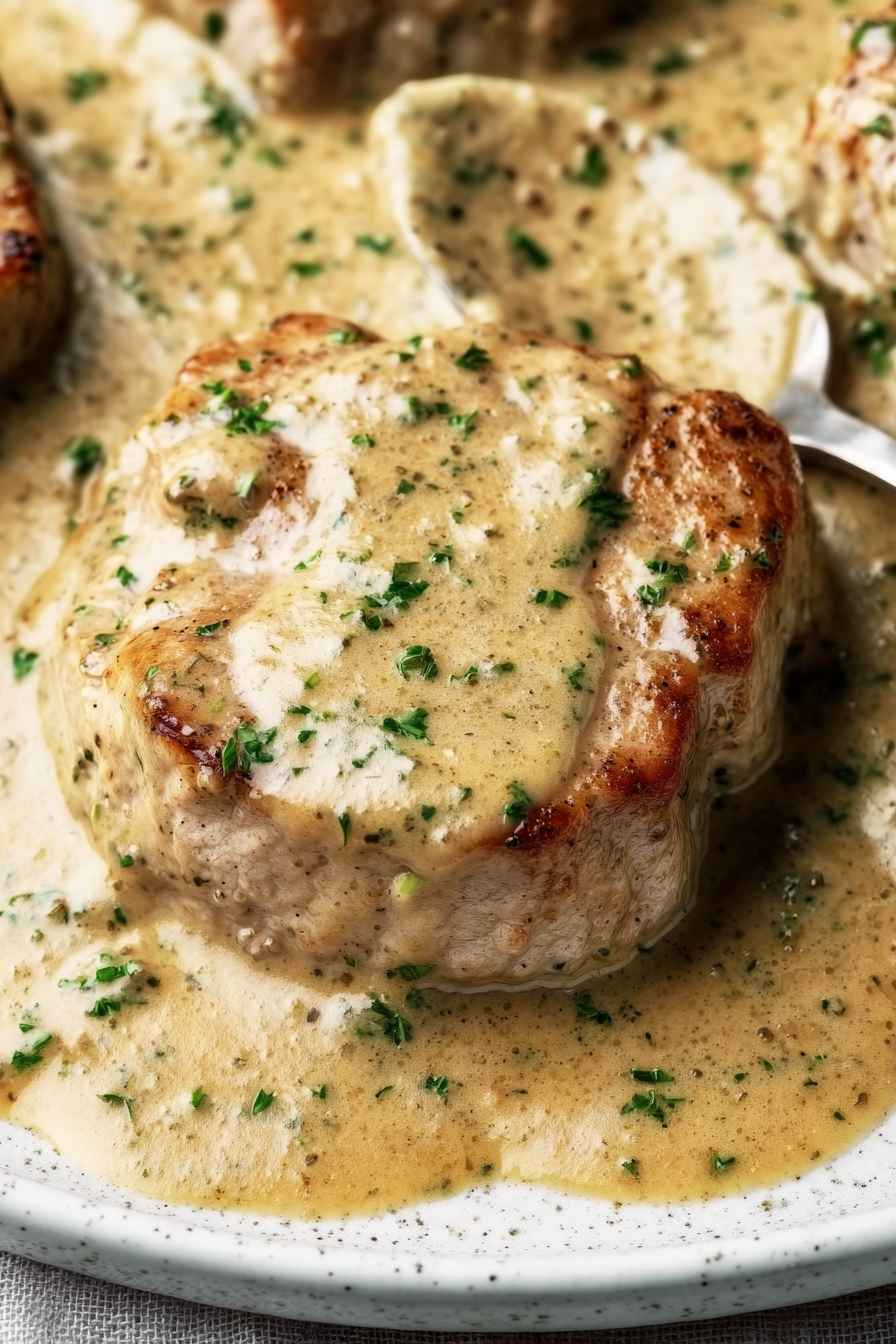
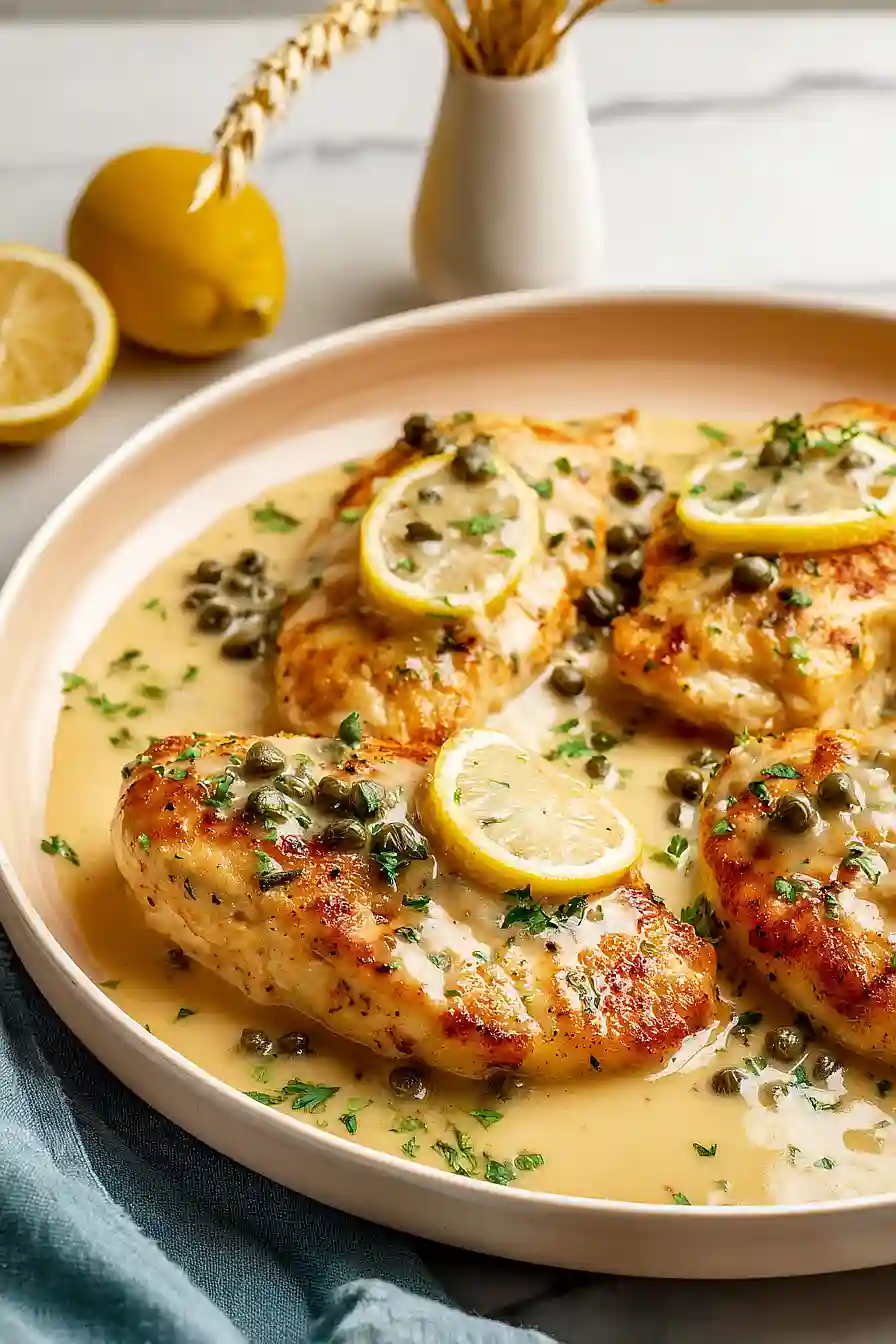
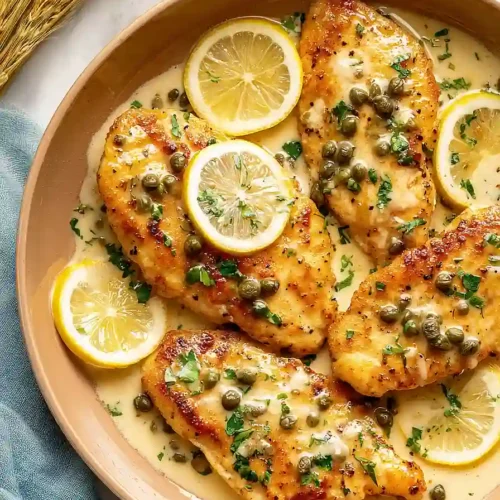
Here is my favorite chicken piccata recipe, with tender chicken breasts in a creamy lemon butter sauce, brightened with capers, garlic, and fresh parsley.
This chicken piccata is one of those dinners that feels fancy but comes together in about 30 minutes on a weeknight. The lemony sauce is so good, you’ll want to serve it over pasta or with crusty bread to soak up every last drop.
Why You’ll Love This Chicken Piccata
- Restaurant-quality meal at home – This chicken piccata tastes like something you’d order at an Italian restaurant, but you can make it in your own kitchen for a fraction of the price.
- Ready in under 30 minutes – From start to finish, you’ll have this elegant dinner on the table in less than half an hour, making it perfect for busy weeknights.
- Simple ingredients – You probably have most of these pantry staples on hand already, and the few special touches like capers and lemon make all the difference.
- Creamy, tangy sauce – The combination of butter, cream, lemon, and capers creates a rich sauce that’s both bright and indulgent, coating every bite of tender chicken.
- Easy enough for beginners – Don’t let the fancy name fool you—this recipe uses straightforward cooking techniques that anyone can master.
What Kind of Chicken Should I Use?
For chicken piccata, you’ll want to use boneless, skinless chicken breasts since they’re easy to pound thin and cook quickly. Look for breasts that are similar in size so they cook evenly, and if you can find smaller ones (around 6-8 ounces each), even better. You can also use chicken cutlets if your store sells them pre-sliced, which saves you the step of pounding them out. If chicken breasts are all you have on hand, just slice them in half horizontally to create thinner pieces, or place them between plastic wrap and gently pound them to about 1/2-inch thickness with a meat mallet or rolling pin.
Options for Substitutions
This classic Italian dish is pretty forgiving when it comes to swaps:
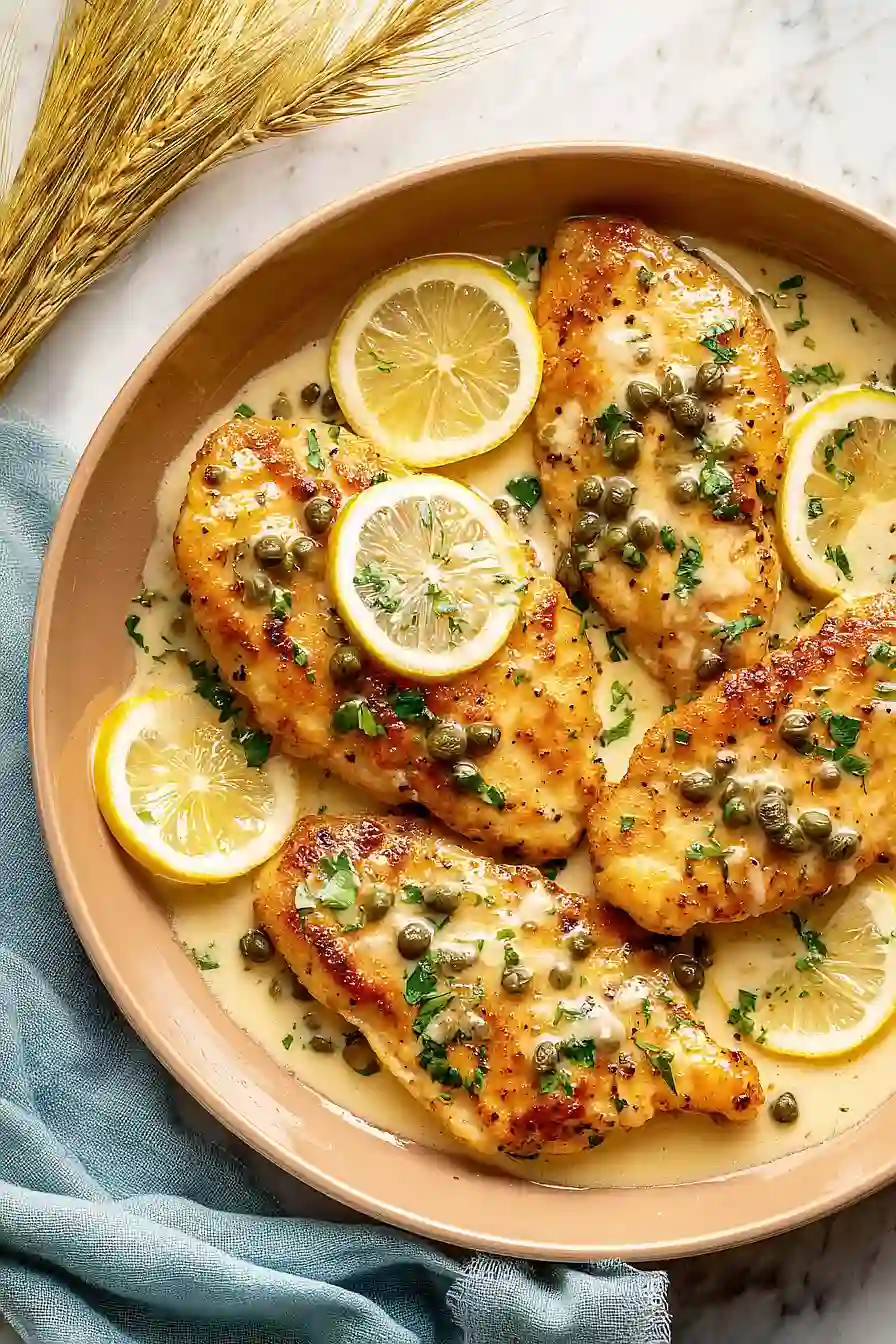
- Chicken breasts: You can use chicken thighs instead, which will give you a juicier result. Just make sure to pound them to an even thickness like you would with breasts.
- Flour: Regular all-purpose flour is what you want here – it creates that light coating that helps the sauce stick. You could try gluten-free flour if needed, but the texture might be slightly different.
- Butter: If you’re short on butter, you can use all olive oil instead, though you’ll lose some of that rich, buttery flavor that makes piccata special.
- Chicken broth: Vegetable broth or white wine work well here. If using wine, you might want to add a splash more to account for the alcohol cooking off.
- Cream: Half-and-half or whole milk can work in place of cream, though your sauce will be a bit thinner. You can also skip it entirely for a more traditional, lighter piccata sauce.
- Capers: Capers give piccata its signature tangy, briny flavor, so I’d recommend keeping them if possible. If you really can’t find them, finely chopped green olives can work in a pinch.
Watch Out for These Mistakes While Cooking
The biggest mistake when making chicken piccata is pounding the chicken breasts too thin or not at all – aim for an even 1/2-inch thickness so they cook through without drying out or staying raw in the middle.
Another common error is crowding the pan when searing the chicken, which causes it to steam instead of getting that golden crust, so cook in batches if needed and make sure your butter and oil are hot before adding the chicken.
Don’t skip deglazing the pan with the chicken broth – those brown bits stuck to the bottom are packed with flavor and will make your sauce taste way better.
Finally, be careful not to let the sauce boil once you add the cream, as high heat can cause it to separate and look curdled instead of smooth and silky.
What to Serve With Chicken Piccata?
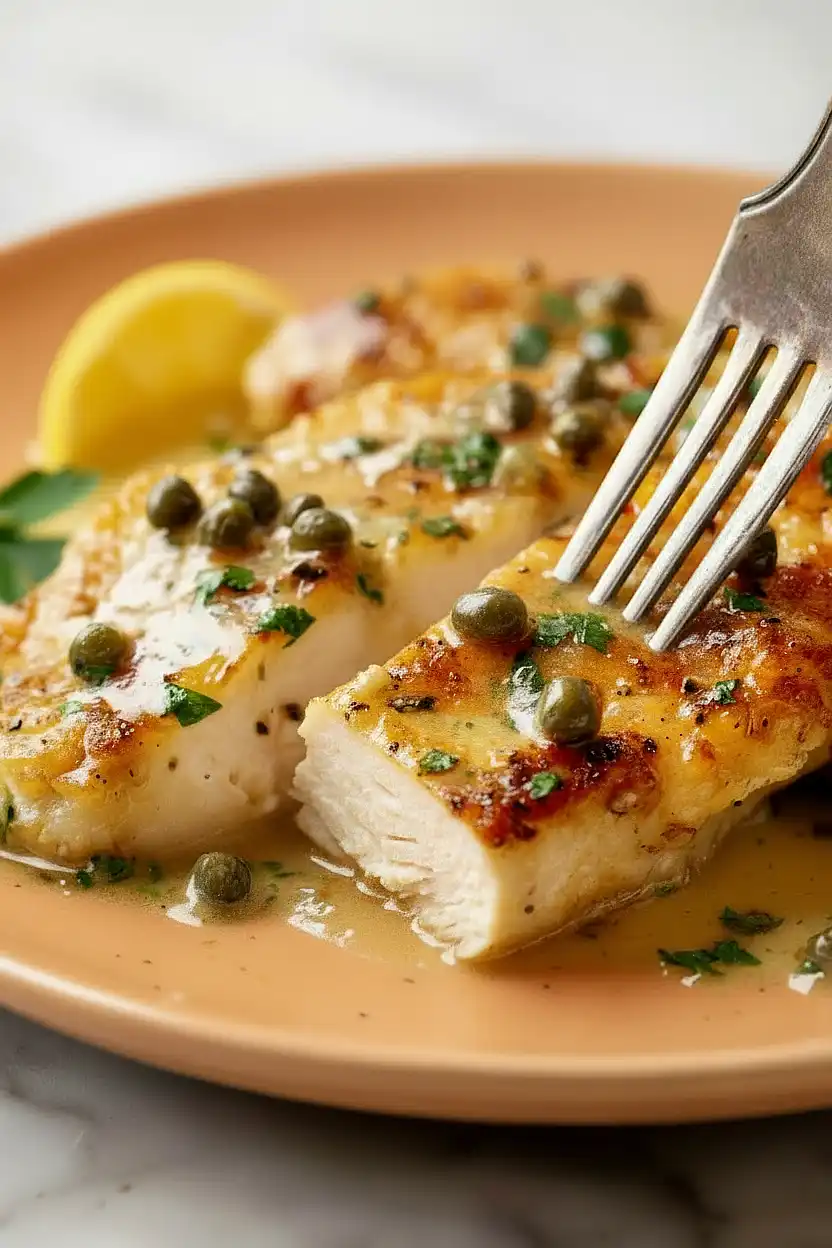
Chicken piccata is all about that tangy, lemony sauce, so you’ll want something that can soak it all up. I always serve mine over a bed of angel hair pasta or linguine, which catches all that buttery, caper-filled goodness perfectly. If you’re not in the mood for pasta, creamy mashed potatoes or garlic roasted potatoes work great too. A simple side of steamed green beans or roasted asparagus adds a nice fresh element that balances out the richness of the cream sauce, and don’t forget some crusty bread for mopping up any extra sauce left on your plate.
Storage Instructions
Store: Chicken piccata keeps well in the fridge for up to 3 days in an airtight container. The lemon cream sauce might thicken up a bit as it sits, but that’s totally normal and easy to fix when you reheat it.
Freeze: You can freeze this for up to 2 months, though cream-based sauces sometimes separate a little when thawed. If you’re planning to freeze it, I’d suggest slightly undercooking the chicken so it doesn’t dry out when you reheat it later.
Reheat: Warm it up gently on the stovetop over medium-low heat, adding a splash of chicken broth or cream to loosen the sauce. You can also use the microwave on medium power, stirring halfway through. Just be careful not to overheat or the chicken can get tough and rubbery.
| Preparation Time | 15-20 minutes |
| Cooking Time | 10-15 minutes |
| Total Time | 25-35 minutes |
| Level of Difficulty | Medium |
| Servings | 3 servings |
Estimated Nutrition
Estimated nutrition for the whole recipe (without optional ingredients):
- Calories: 900-1100
- Protein: 50-60 g
- Fat: 65-80 g
- Carbohydrates: 20-30 g
Ingredients
For the chicken:
- 3 chicken breasts
- salt
- black pepper
- 1/2 tsp garlic powder
- flour
- 4 tbsp butter (I like Kerrygold unsalted butter for this)
- 1 tbsp olive oil
For the sauce:
- 1/2 cup chicken broth
- 2 tbsp lemon juice
- 1 lemon zest
- 1 tbsp capers
- 1/2 cup cream
- 2 tbsp fresh parsley, chopped
Step 1: Prep and Pound the Chicken
- 3 chicken breasts
- salt
- black pepper
- 1/2 tsp garlic powder
- flour
Pat the chicken breasts dry with paper towels, then place them on a cutting board.
Using a meat mallet or the bottom of a heavy pan, gently pound each breast to an even thickness of about 1/4 inch—this ensures they cook evenly and quickly.
Season both sides generously with salt, black pepper, and garlic powder.
Spread flour on a shallow plate and coat each piece thoroughly, shaking off any excess.
Set the breaded chicken aside on a clean plate.
Step 2: Sear the Chicken Until Golden
- breaded chicken from Step 1
- 4 tbsp butter
- 1 tbsp olive oil
Heat 2 tablespoons of butter and 1 tablespoon of olive oil in a large skillet over medium-high heat until the butter foams and the pan is hot.
Carefully lay the breaded chicken pieces in the pan—they should sizzle immediately.
Cook for 4-5 minutes per side until golden brown and cooked through.
I like to let them develop a nice crust without moving them around too much, which gives you better color and flavor.
Transfer the cooked chicken to a clean plate and set aside.
Step 3: Build the Piccata Sauce
- 1/2 cup chicken broth
- 2 tbsp lemon juice
- 1 lemon zest
- 1 tbsp capers
- 2 tbsp butter
- 1/2 cup cream
With the pan still over medium heat, pour in the chicken broth and use a wooden spoon to scrape up all the flavorful brown bits stuck to the bottom—this deglazing step is where so much flavor lives.
Add the lemon juice, lemon zest, capers, and the remaining 2 tablespoons of butter, stirring until the butter melts and everything combines.
Let the sauce simmer for 1-2 minutes to meld the flavors together, then stir in the cream to create a silky, light sauce.
Step 4: Finish and Serve
- cooked chicken from Step 2
- piccata sauce from Step 3
- 2 tbsp fresh parsley, chopped
Return the cooked chicken to the pan with the sauce and cook for 1-2 minutes on low-to-medium heat, just long enough to warm the chicken through and let it absorb some of the sauce.
I find the chicken cooks best at a gentle simmer rather than a rolling boil, which keeps it tender.
Transfer to serving plates, spoon the sauce generously over the top, and garnish with fresh chopped parsley.
Serve immediately over pasta, rice, or with crusty bread to soak up the delicious sauce.
Best Chicken Piccata
Ingredients
For the chicken::
- 3 chicken breasts
- salt
- black pepper
- 1/2 tsp garlic powder
- flour
- 4 tbsp butter (I like Kerrygold unsalted butter for this)
- 1 tbsp olive oil
For the sauce::
- 1/2 cup chicken broth
- 2 tbsp lemon juice
- 1 lemon zest
- 1 tbsp capers
- 1/2 cup cream
- 2 tbsp fresh parsley, chopped
Instructions
- Pat the chicken breasts dry with paper towels, then place them on a cutting board. Using a meat mallet or the bottom of a heavy pan, gently pound each breast to an even thickness of about 1/4 inch—this ensures they cook evenly and quickly. Season both sides generously with salt, black pepper, and garlic powder. Spread flour on a shallow plate and coat each piece thoroughly, shaking off any excess. Set the breaded chicken aside on a clean plate.
- Heat 2 tablespoons of butter and 1 tablespoon of olive oil in a large skillet over medium-high heat until the butter foams and the pan is hot. Carefully lay the breaded chicken pieces in the pan—they should sizzle immediately. Cook for 4-5 minutes per side until golden brown and cooked through. I like to let them develop a nice crust without moving them around too much, which gives you better color and flavor. Transfer the cooked chicken to a clean plate and set aside.
- With the pan still over medium heat, pour in the chicken broth and use a wooden spoon to scrape up all the flavorful brown bits stuck to the bottom—this deglazing step is where so much flavor lives. Add the lemon juice, lemon zest, capers, and the remaining 2 tablespoons of butter, stirring until the butter melts and everything combines. Let the sauce simmer for 1-2 minutes to meld the flavors together, then stir in the cream to create a silky, light sauce.
- Return the cooked chicken to the pan with the sauce and cook for 1-2 minutes on low-to-medium heat, just long enough to warm the chicken through and let it absorb some of the sauce. I find the chicken cooks best at a gentle simmer rather than a rolling boil, which keeps it tender. Transfer to serving plates, spoon the sauce generously over the top, and garnish with fresh chopped parsley. Serve immediately over pasta, rice, or with crusty bread to soak up the delicious sauce.