If you ask me, a good Irish stew is one of the most comforting meals you can make.
This Gordon Ramsay version takes the classic recipe and turns it into something your whole family will ask for again and again. Tender lamb shoulder simmers with carrots, potatoes, and onions in a rich red wine and beef broth base.
The meat gets browned in olive oil first for extra flavor, then everything cooks low and slow until it’s fall-apart tender. Fresh thyme and bay leaf add that earthy warmth, while parsley brightens things up at the end.
It’s a hearty, filling dinner that’s perfect for cool evenings when you want something that feels like a warm hug.
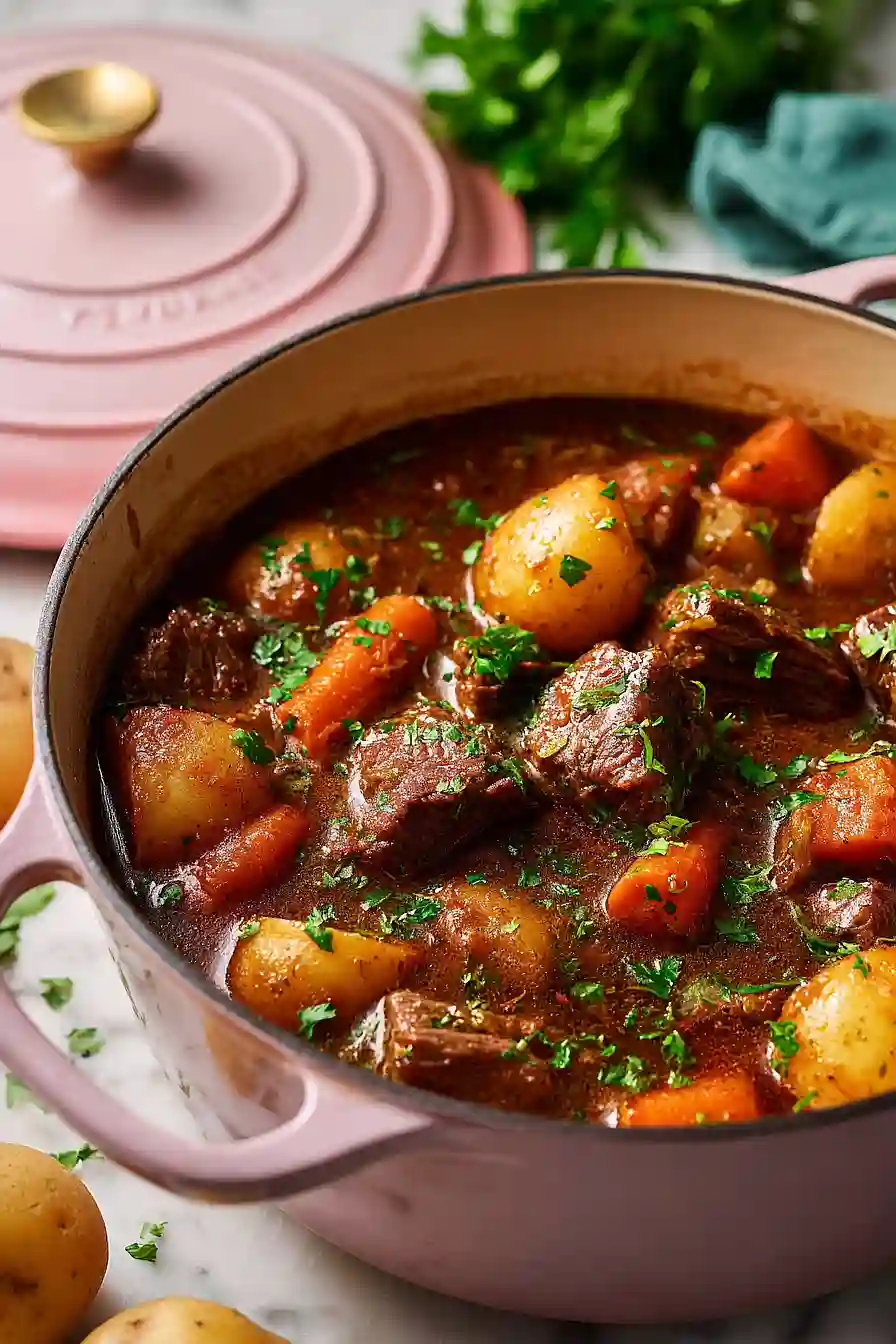
Why You’ll Love This Irish Stew
- Restaurant-quality results at home – Following Gordon Ramsay’s technique means you’ll get tender, fall-apart lamb and deeply flavored broth that tastes like it came from a fancy pub.
- One-pot meal – Everything cooks together in a single pot, which means less cleanup and all those flavors meld together beautifully.
- Hearty and filling – Packed with lamb, potatoes, and vegetables, this stew is a complete meal in a bowl that’ll keep you satisfied for hours.
- Perfect for meal prep – This stew actually tastes better the next day after the flavors have had time to develop, making it ideal for making ahead or enjoying leftovers throughout the week.
What Kind of Lamb Should I Use?
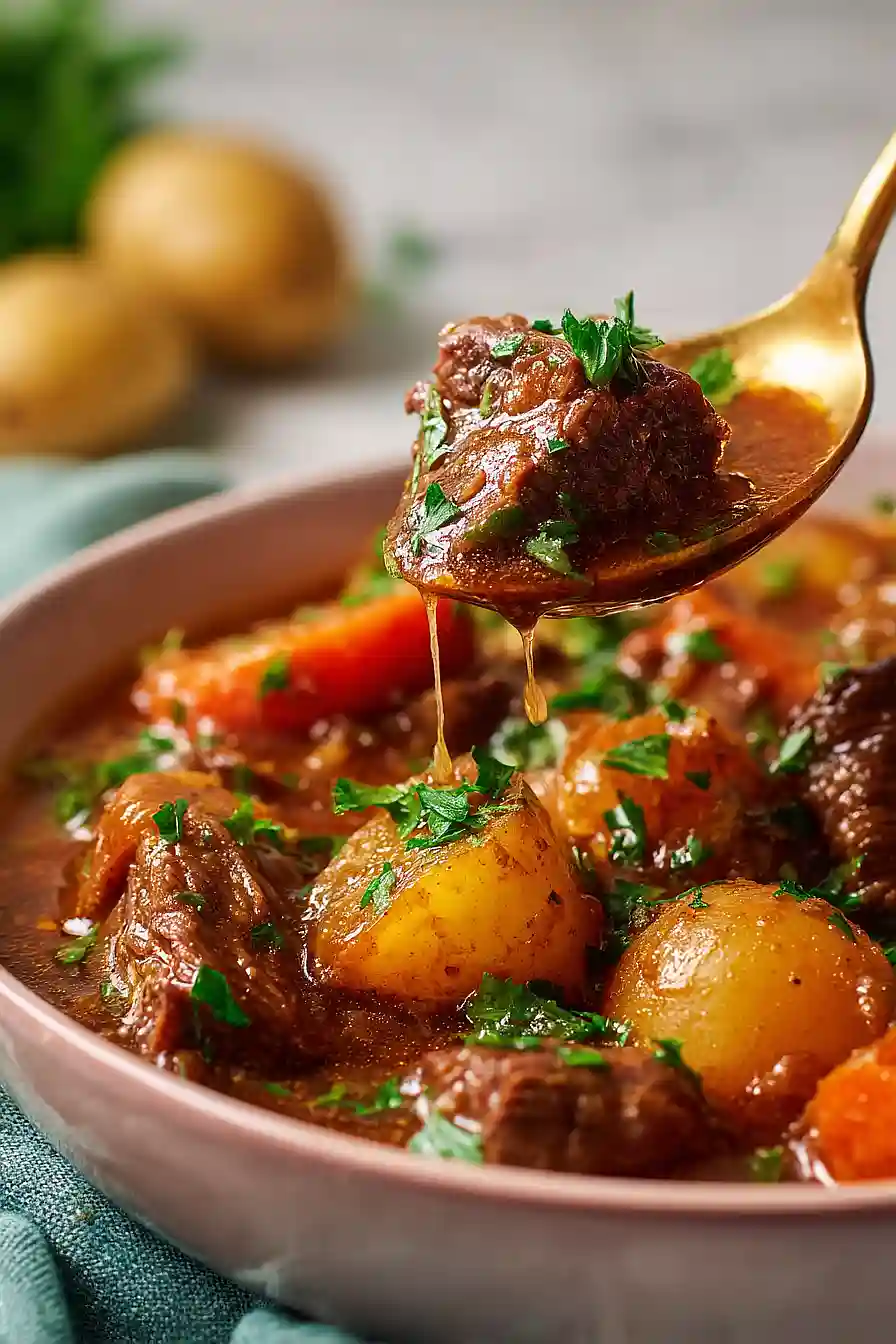
Lamb shoulder is really the best cut for this stew because it has enough fat and connective tissue to stay tender during the long cooking process. You could also use lamb neck or lamb shank if that’s what’s available at your butcher, as these cuts also break down beautifully when braised. Avoid using lean cuts like lamb leg, as they tend to dry out and become tough in a stew. When you’re at the store, look for pieces with some marbling throughout – that fat will melt into the stew and give you incredible flavor. If you can only find boneless lamb shoulder, that’s perfectly fine, though bone-in will add even more depth to your broth.
Options for Substitutions
This classic Irish stew is pretty forgiving when it comes to swaps:
- Lamb shoulder: If lamb isn’t your thing or you can’t find it, beef chuck makes a great substitute. You can also use lamb leg or neck, though shoulder is ideal because it stays tender during the long cooking process.
- Red wine: No wine on hand? Use extra stock plus a tablespoon of red wine vinegar or balsamic vinegar to get that tangy richness.
- Stock: Beef or lamb stock works best here, but chicken or vegetable stock will do in a pinch. Just know the flavor will be a bit lighter.
- Potatoes: Any waxy potato like Yukon gold, red potatoes, or even fingerlings will work. Avoid russets as they tend to fall apart too easily in stews.
- Fresh thyme: If you only have dried thyme, use about 1 teaspoon instead of 2 teaspoons fresh. Dried herbs are more concentrated in flavor.
- Fresh parsley: While fresh is always better for garnish, you can skip it or use a bit of fresh cilantro if that’s what you have available.
Watch Out for These Mistakes While Cooking
The biggest mistake when making Irish stew is not browning the lamb properly – you need a good sear on all sides to develop deep flavor, so resist the urge to crowd the pot and work in batches if necessary.
Many home cooks add the potatoes too early, which causes them to break down and turn mushy, so it’s better to add them during the last 45 minutes of cooking if you want them to hold their shape.
Don’t skip deglazing the pot with red wine after cooking the vegetables, as those browned bits stuck to the bottom are packed with flavor that will make your stew taste richer.
Finally, keep your simmer gentle and low – if the stew is bubbling too hard, the lamb will toughen up instead of becoming tender, so aim for just a few lazy bubbles breaking the surface every few seconds.
What to Serve With Irish Stew?
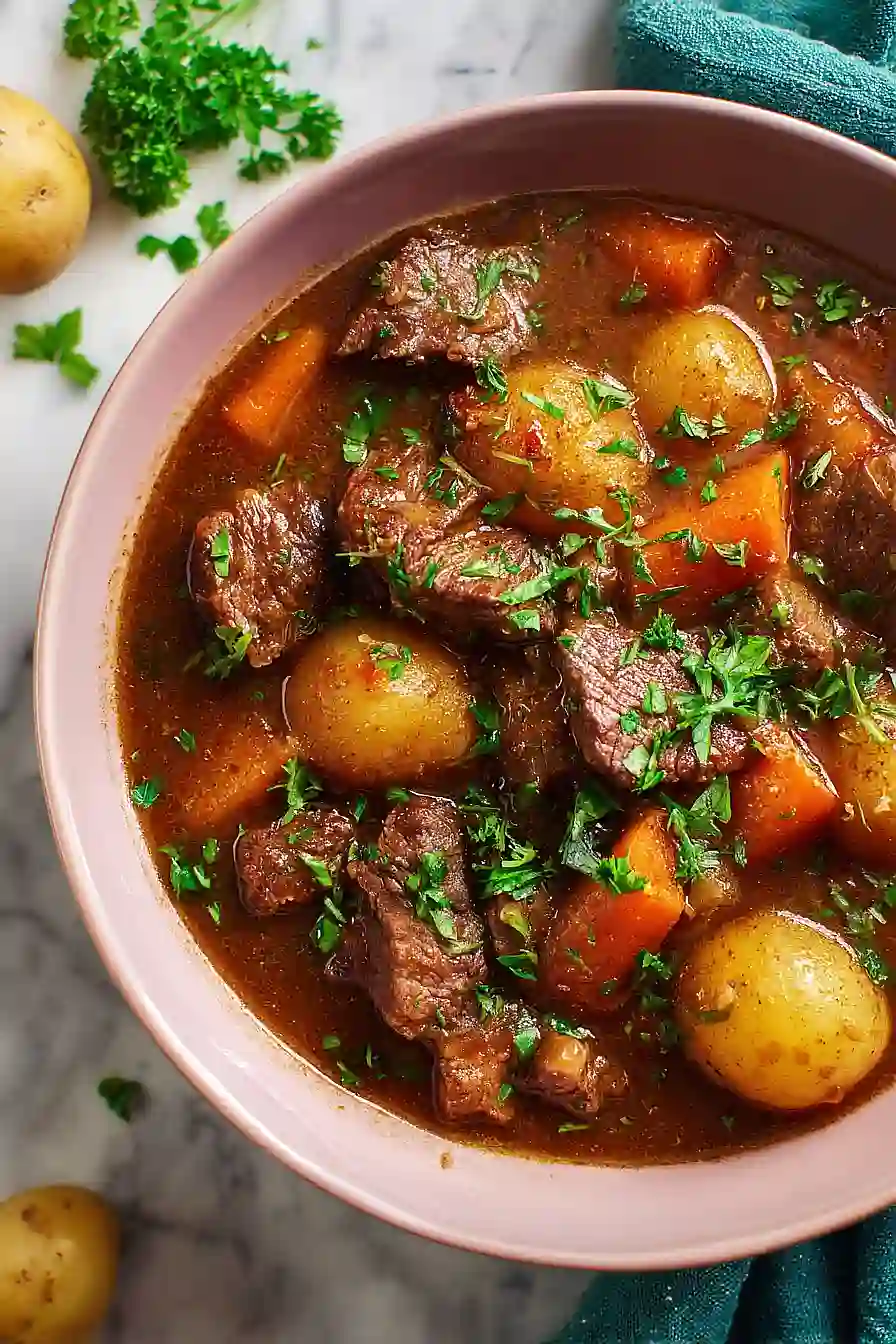
Irish stew is hearty and filling on its own, but I love serving it with thick slices of crusty bread or Irish soda bread for soaking up all that rich broth. A simple side of buttered cabbage or roasted Brussels sprouts adds a nice contrast to the stew’s richness without making the meal feel too heavy. If you want to keep things traditional, a pint of Guinness pairs perfectly with this dish, or you can go with a lighter option like sparkling water with lemon. Some people like to add a dollop of whole-grain mustard on the side for a little extra kick, which really complements the lamb.
Storage Instructions
Store: This Irish stew actually tastes even better the next day after all the flavors have had time to meld together. Keep it in an airtight container in the fridge for up to 4 days. It’s one of those dishes that makes great leftovers for easy weeknight dinners.
Freeze: Irish stew freezes really well for up to 3 months. Let it cool completely, then portion it into freezer-safe containers or bags. Just note that the potatoes might get a slightly different texture after freezing, but the flavor will still be spot on.
Reheat: Warm the stew gently on the stovetop over medium-low heat, stirring occasionally until heated through. You can also microwave individual portions, but I prefer the stovetop method since it helps keep the meat tender. Add a splash of stock or water if it seems too thick after storing.
| Preparation Time | 20-30 minutes |
| Cooking Time | 90-120 minutes |
| Total Time | 110-150 minutes |
| Level of Difficulty | Medium |
| Servings | 5 servings |
Estimated Nutrition
Estimated nutrition for the whole recipe (without optional ingredients):
- Calories: 2200-2500
- Protein: 130-150 g
- Fat: 120-140 g
- Carbohydrates: 110-130 g
Ingredients
For the base:
- 2.2 lb lamb shoulder (cubed into 1.5-inch pieces for even browning)
- 2.5 tbsp olive oil (I prefer Filippo Berio for searing)
- 2.5 cups onions
- 2.5 cups carrots
- 2.5 cups celery
- 4 cloves garlic (freshly smashed and minced for better aroma)
- 2.5 tbsp tomato paste
For the stew:
- 1.25 cups red wine (I suggest a dry Cabernet Sauvignon)
- 4.5 cups stock (I always use Swanson beef broth)
- 2.5 cups potatoes (peeled and cut into large 2-inch chunks)
- 2.5 tsp thyme
- 1 bay leaf
- 1 bunch fresh parsley
Step 1: Prepare the Mise en Place
- 2.5 cups potatoes
- 2.5 cups onions
- 2.5 cups carrots
- 2.5 cups celery
- 4 cloves garlic
- 1 bunch fresh parsley
- 2.2 lb lamb shoulder
Peel and cut potatoes into large 2-inch chunks, then place in cold water to prevent browning.
Dice onions, carrots, and celery into uniform pieces for even cooking.
Peel and mince garlic cloves, and roughly chop fresh parsley.
Pat the cubed lamb shoulder dry with paper towels—this is crucial for proper browning and developing a flavorful crust.
Step 2: Sear the Lamb for Deep Flavor
- 2.5 tbsp olive oil
- 2.2 lb lamb shoulder, from Step 1
Heat olive oil in a large heavy-bottomed pot or Dutch oven over medium-high heat until shimmering.
Working in batches to avoid overcrowding, sear the lamb pieces for 5 minutes per side until deeply browned on all surfaces.
I like to let each batch rest slightly between flips so the meat develops a proper crust—this caramelization creates the backbone of flavor for your stew.
Transfer seared lamb to a plate and set aside.
Step 3: Build the Aromatic Base
- 2.5 cups onions
- 2.5 cups carrots
- 2.5 cups celery
- 4 cloves garlic, from Step 1
- 2.5 tbsp tomato paste
In the same pot with the rendered lamb fat, add the diced onions, carrots, and celery.
Sauté for about 5 minutes, stirring occasionally, until softened and fragrant.
Add the minced garlic and tomato paste, stirring constantly for 1 minute to cook out the raw garlic flavor and allow the tomato paste to slightly caramelize.
This layering of aromatics creates complexity in the final broth.
Step 4: Deglaze and Begin Building the Braising Liquid
- 1.25 cups red wine
Pour in the red wine and use a wooden spoon to scrape the browned bits stuck to the bottom of the pot—these caramelized particles are pure flavor.
Let the wine reduce by about half, which concentrates its flavors and cooks off excess alcohol.
This deglazing step is where restaurant-quality depth comes from.
Step 5: Combine and Simmer the Stew
- 2.2 lb lamb shoulder, from Step 2
- 4.5 cups stock
- 2.5 cups potatoes, from Step 1
- 2.5 tsp thyme
- 1 bay leaf
Return the seared lamb to the pot along with the stock, drained potatoes from Step 1, thyme, and bay leaf.
Bring to a gentle simmer, then reduce heat to low and cover partially.
Let simmer for 1.5 to 2 hours, stirring occasionally, until the lamb is fork-tender and potatoes are completely soft.
The low, gentle heat allows the meat to become incredibly tender and the flavors to meld beautifully without the stew becoming murky.
Step 6: Season and Finish
- 1 bunch fresh parsley, from Step 1
- Salt and pepper to taste
Taste the stew and adjust seasoning with salt and pepper as needed.
Stir in the fresh chopped parsley just before serving—I add it at the last moment to preserve its bright color and fresh flavor.
Remove the bay leaf, then ladle into bowls and serve hot.
Best Gordon Ramsay's Irish Stew
Ingredients
For the base
- 2.2 lb lamb shoulder (cubed into 1.5-inch pieces for even browning)
- 2.5 tbsp olive oil (I prefer Filippo Berio for searing)
- 2.5 cups onions
- 2.5 cups carrots
- 2.5 cups celery
- 4 cloves garlic (freshly smashed and minced for better aroma)
- 2.5 tbsp tomato paste
For the stew
- 1.25 cups red wine (I suggest a dry Cabernet Sauvignon)
- 4.5 cups stock (I always use Swanson beef broth)
- 2.5 cups potatoes (peeled and cut into large 2-inch chunks)
- 2.5 tsp thyme
- 1 bay leaf
- 1 bunch fresh parsley
Instructions
- Peel and cut potatoes into large 2-inch chunks, then place in cold water to prevent browning. Dice onions, carrots, and celery into uniform pieces for even cooking. Peel and mince garlic cloves, and roughly chop fresh parsley. Pat the cubed lamb shoulder dry with paper towels—this is crucial for proper browning and developing a flavorful crust.
- Heat olive oil in a large heavy-bottomed pot or Dutch oven over medium-high heat until shimmering. Working in batches to avoid overcrowding, sear the lamb pieces for 5 minutes per side until deeply browned on all surfaces. I like to let each batch rest slightly between flips so the meat develops a proper crust—this caramelization creates the backbone of flavor for your stew. Transfer seared lamb to a plate and set aside.
- In the same pot with the rendered lamb fat, add the diced onions, carrots, and celery. Sauté for about 5 minutes, stirring occasionally, until softened and fragrant. Add the minced garlic and tomato paste, stirring constantly for 1 minute to cook out the raw garlic flavor and allow the tomato paste to slightly caramelize. This layering of aromatics creates complexity in the final broth.
- Pour in the red wine and use a wooden spoon to scrape the browned bits stuck to the bottom of the pot—these caramelized particles are pure flavor. Let the wine reduce by about half, which concentrates its flavors and cooks off excess alcohol. This deglazing step is where restaurant-quality depth comes from.
- Return the seared lamb to the pot along with the stock, drained potatoes from Step 1, thyme, and bay leaf. Bring to a gentle simmer, then reduce heat to low and cover partially. Let simmer for 1.5 to 2 hours, stirring occasionally, until the lamb is fork-tender and potatoes are completely soft. The low, gentle heat allows the meat to become incredibly tender and the flavors to meld beautifully without the stew becoming murky.
- Taste the stew and adjust seasoning with salt and pepper as needed. Stir in the fresh chopped parsley just before serving—I add it at the last moment to preserve its bright color and fresh flavor. Remove the bay leaf, then ladle into bowls and serve hot.