Here is my favorite roasted asparagus and broccoli recipe, with fresh garlic, olive oil, and a hint of lemon zest that brings out the natural flavors of the vegetables.
This side dish is a regular on our dinner table, especially during busy weeknights. It takes just minutes to prep, and while it roasts in the oven, I can focus on the main course. Plus, it’s one of the few ways I can get my kids to actually eat their greens without complaining!
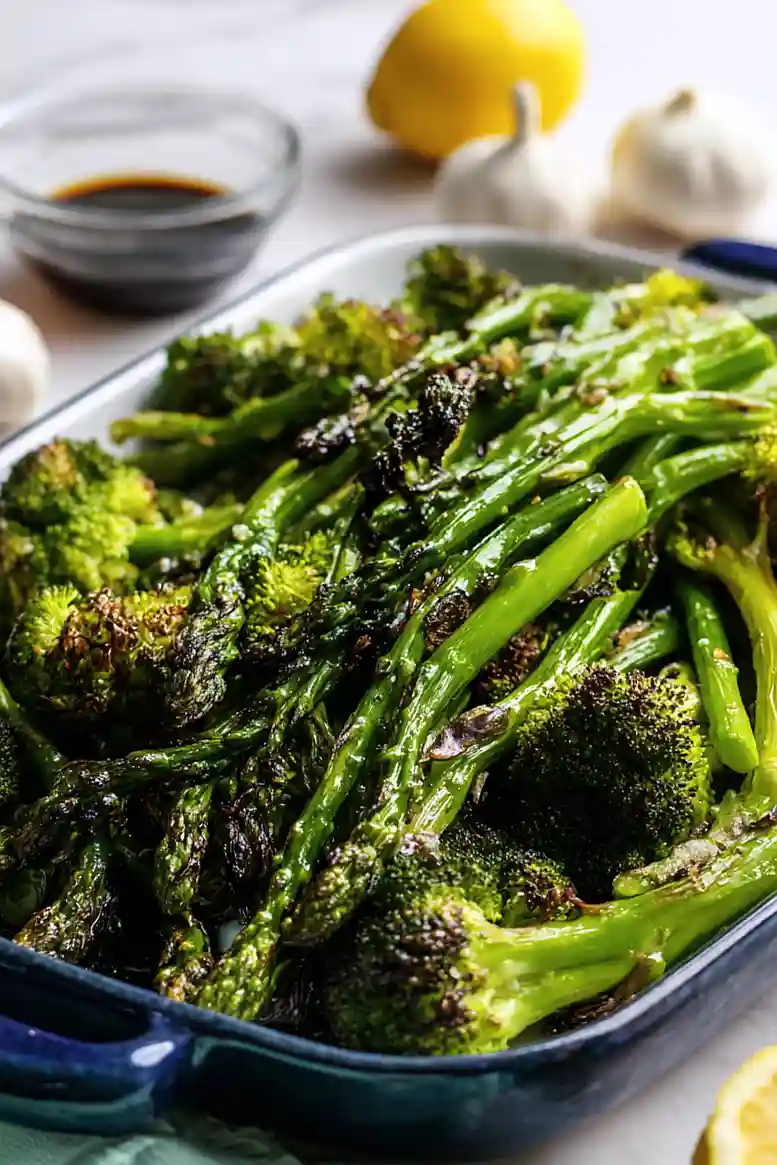
Why You’ll Love This Roasted Asparagus and Broccoli
- Minimal ingredients – With just a handful of simple staples like olive oil, garlic, salt, and pepper, you can create a delicious side dish without a long shopping list.
- Quick and easy – This recipe comes together in under 45 minutes, making it perfect for busy weeknights when you need a healthy side on the table fast.
- Healthy and nutritious – Packed with vitamins and fiber, this veggie combo gives you a wholesome side dish that’s naturally gluten-free and low-carb.
- Simple preparation – Just toss everything on a baking sheet and let the oven do the work while you focus on the rest of your meal.
What Kind of Asparagus Should I Use?
When picking out asparagus for roasting, look for spears that are firm and bright green with tight tips. Medium-thickness asparagus works best for this recipe since thin spears can get a bit too crispy and thick ones might not cook through evenly. You’ll want to snap off the woody ends before roasting – just bend each spear gently near the bottom and it’ll naturally break where the tender part begins. Fresh asparagus should feel crisp and snap easily, so if the spears are limp or bendy at the store, keep looking for a better bunch.
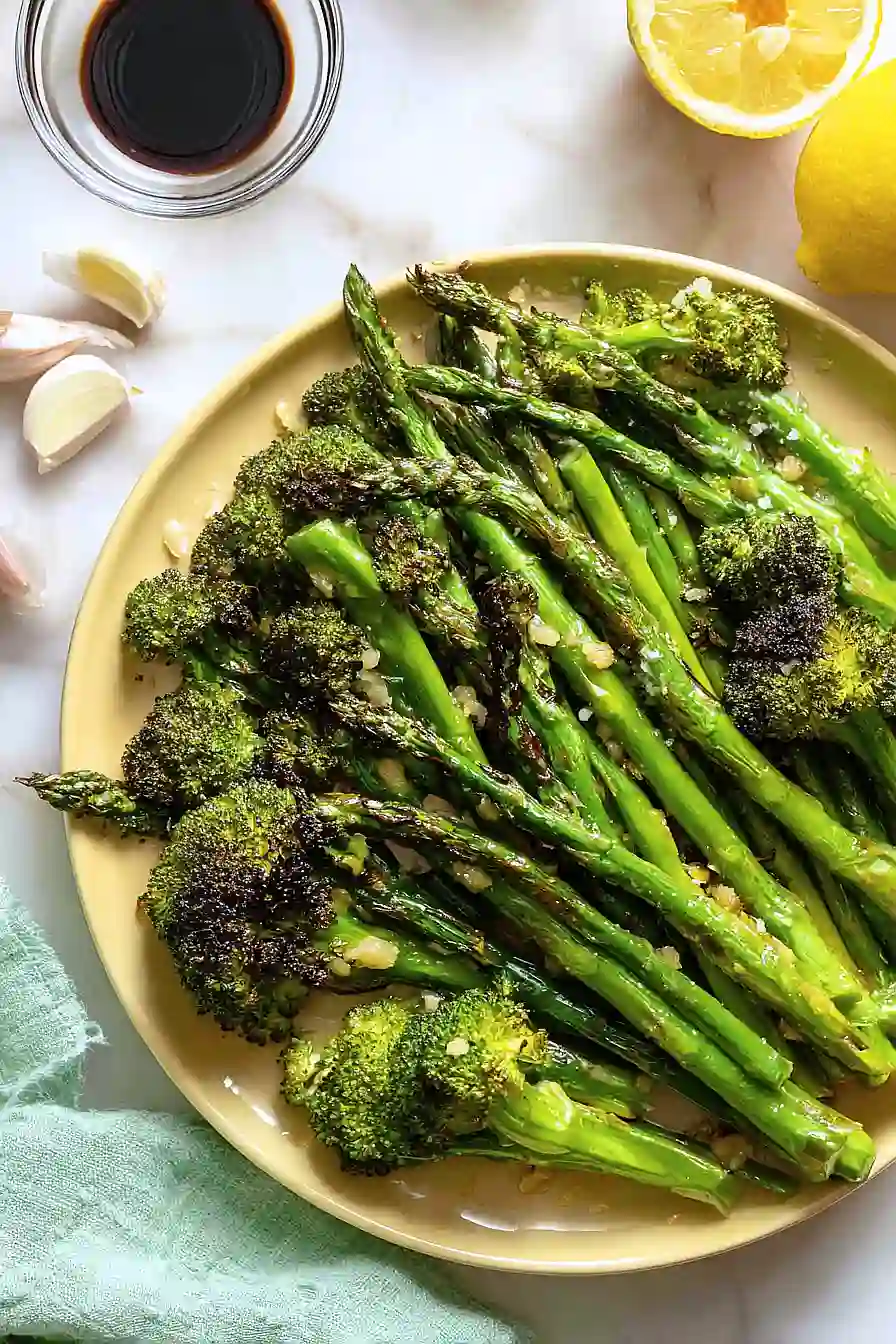
Options for Substitutions
This simple roasted veggie recipe is easy to customize based on what you have:
- Asparagus: Green beans or snap peas make great swaps if asparagus isn’t available. They roast similarly and give you that same crisp-tender texture.
- Broccoli: Cauliflower or Brussels sprouts work really well here. Just note that Brussels sprouts might need an extra 5-10 minutes in the oven to get tender.
- Fresh garlic: If you’re out of fresh garlic, use ½ teaspoon of garlic powder instead. Just toss it with the oil before adding to the vegetables.
- Olive oil: Avocado oil or melted butter are both solid alternatives. Avocado oil has a higher smoke point, which is nice for roasting at higher temperatures.
- Salt and pepper: Feel free to add other seasonings like lemon zest, red pepper flakes, or Italian seasoning to change up the flavor profile.
Watch Out for These Mistakes While Roasting
The biggest mistake when roasting asparagus and broccoli together is overcrowding the pan, which causes the vegetables to steam instead of roast – spread them out in a single layer with some space between pieces so they get crispy and caramelized instead of mushy.
Since broccoli takes longer to cook than asparagus, cut your broccoli florets smaller than usual or add the asparagus to the pan about 10 minutes into roasting to ensure both vegetables finish at the same time.
Another common error is adding the garlic at the beginning, which can burn and turn bitter during the full 25 minutes – instead, add minced garlic during the last 5-7 minutes of roasting for the best flavor.
Make sure your oven is fully preheated before putting the pan in, and if your vegetables aren’t browning nicely, try cranking up the heat to 425°F or moving the pan to the top rack for the last few minutes.
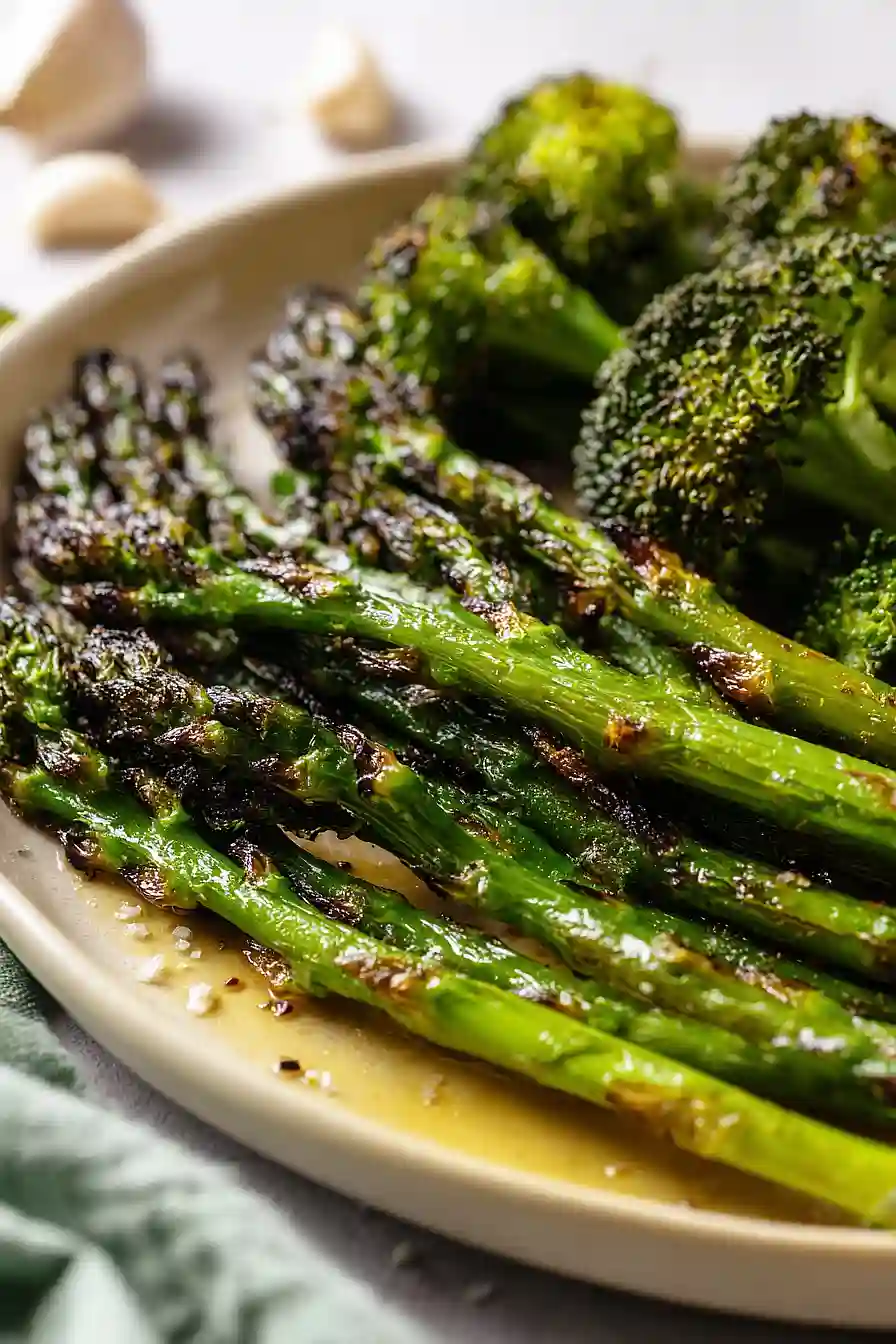
What to Serve With Roasted Asparagus and Broccoli?
These roasted veggies make a great side dish for just about any protein you’re cooking up for dinner. I love serving them alongside grilled chicken breasts, pan-seared salmon, or even a juicy steak – the garlic and olive oil flavors complement everything really well. If you want to make it more of a complete meal, toss the roasted vegetables with some cooked pasta, a squeeze of lemon juice, and extra parmesan cheese. You could also serve them over quinoa or rice with a drizzle of balsamic glaze for a simple vegetarian dinner that’s actually filling.
Storage Instructions
Store: Keep your leftover roasted veggies in an airtight container in the fridge for up to 4 days. They’re great to have on hand for quick lunches or as a side dish throughout the week. I like to toss them into grain bowls or eat them cold with some hummus.
Reheat: You can warm these up in the microwave for about a minute, but honestly, I prefer reheating them in a skillet over medium heat for a few minutes. It brings back some of that nice roasted texture instead of making them mushy.
| Preparation Time | 10-15 minutes |
| Cooking Time | 25-30 minutes |
| Total Time | 35-45 minutes |
| Level of Difficulty | Easy |
| Servings | 3 servings |
Estimated Nutrition
Estimated nutrition for the whole recipe (without optional ingredients):
- Calories: 180-230
- Protein: 7-10 g
- Fat: 14-16 g
- Carbohydrates: 13-18 g
Ingredients
- 1 bunch asparagus (woody ends trimmed off)
- 1 head broccoli (cut into 1.5-inch florets)
- 3 cloves garlic (freshly minced)
- 3 tbsp olive oil (I prefer Bertolli Extra Virgin for roasting)
- 1/4 teaspoon salt
- 1/8 teaspoon pepper
- 1/2 teaspoon lemon zest
- 400 °F oven temperature
Step 1: Preheat Oven and Prepare Vegetables
- 1 bunch asparagus
- 1 head broccoli
- 3 cloves garlic
- 400°F oven temperature
Preheat your oven to 400°F.
While it heats, prepare your vegetables: cut the broccoli head into 1.5-inch florets, and trim the woody ends off the asparagus bunch, then cut the spears into 2-inch pieces.
Pat the vegetables dry with paper towels—this helps them roast more evenly and develop better caramelization.
Mince the garlic cloves fresh, as the flavor will be much brighter than pre-minced garlic.
Step 2: Coat Vegetables and Season
- prepared vegetables from Step 1
- 3 tbsp olive oil
- 1/4 teaspoon salt
- 1/8 teaspoon pepper
Place the prepared broccoli and asparagus on a large roasting pan or baking sheet.
Drizzle with olive oil and toss well to coat all pieces evenly—I like to use my hands for this to ensure every piece gets oiled, which is key for even browning.
Sprinkle the minced garlic, salt, and pepper over the vegetables and toss again until everything is evenly distributed.
Step 3: Roast and Finish
- seasoned vegetables from Step 2
- 1/2 teaspoon lemon zest
Spread the vegetables in a single layer on the pan and roast at 400°F for 25 minutes, stirring halfway through to ensure even cooking.
The vegetables are done when the broccoli florets are golden brown at the edges and the asparagus is tender and lightly charred.
Remove from the oven and immediately sprinkle with fresh lemon zest—I find adding it right after roasting helps it integrate better with the warm vegetables.
Serve immediately while everything is hot.
Paleo Roasted Asparagus and Broccoli
Ingredients
- 1 bunch asparagus (woody ends trimmed off)
- 1 head broccoli (cut into 1.5-inch florets)
- 3 cloves garlic (freshly minced)
- 3 tbsp olive oil (I prefer Bertolli Extra Virgin for roasting)
- 1/4 teaspoon salt
- 1/8 teaspoon pepper
- 1/2 teaspoon lemon zest
- 400 °F oven temperature
Instructions
- Preheat your oven to 400°F. While it heats, prepare your vegetables: cut the broccoli head into 1.5-inch florets, and trim the woody ends off the asparagus bunch, then cut the spears into 2-inch pieces. Pat the vegetables dry with paper towels—this helps them roast more evenly and develop better caramelization. Mince the garlic cloves fresh, as the flavor will be much brighter than pre-minced garlic.
- Place the prepared broccoli and asparagus on a large roasting pan or baking sheet. Drizzle with olive oil and toss well to coat all pieces evenly—I like to use my hands for this to ensure every piece gets oiled, which is key for even browning. Sprinkle the minced garlic, salt, and pepper over the vegetables and toss again until everything is evenly distributed.
- Spread the vegetables in a single layer on the pan and roast at 400°F for 25 minutes, stirring halfway through to ensure even cooking. The vegetables are done when the broccoli florets are golden brown at the edges and the asparagus is tender and lightly charred. Remove from the oven and immediately sprinkle with fresh lemon zest—I find adding it right after roasting helps it integrate better with the warm vegetables. Serve immediately while everything is hot.