I didn’t try rhubarb until I was in my twenties. Growing up, it just never made it onto our family table. My mom stuck with apple pies and berry cobblers—things she knew well. But when I first tasted strawberry rhubarb pie at a friend’s house, I couldn’t believe what I’d been missing.
The thing is, rhubarb can be tricky if you don’t know what you’re doing. Too much and your filling tastes sour. Not enough sugar and you’ll pucker up like you bit into a lemon. But when you get that balance right with sweet strawberries, it’s really something special. These turnovers are my way of enjoying that classic combo without the fuss of making a whole pie. Plus, you can eat them with your hands, which always wins in my book.
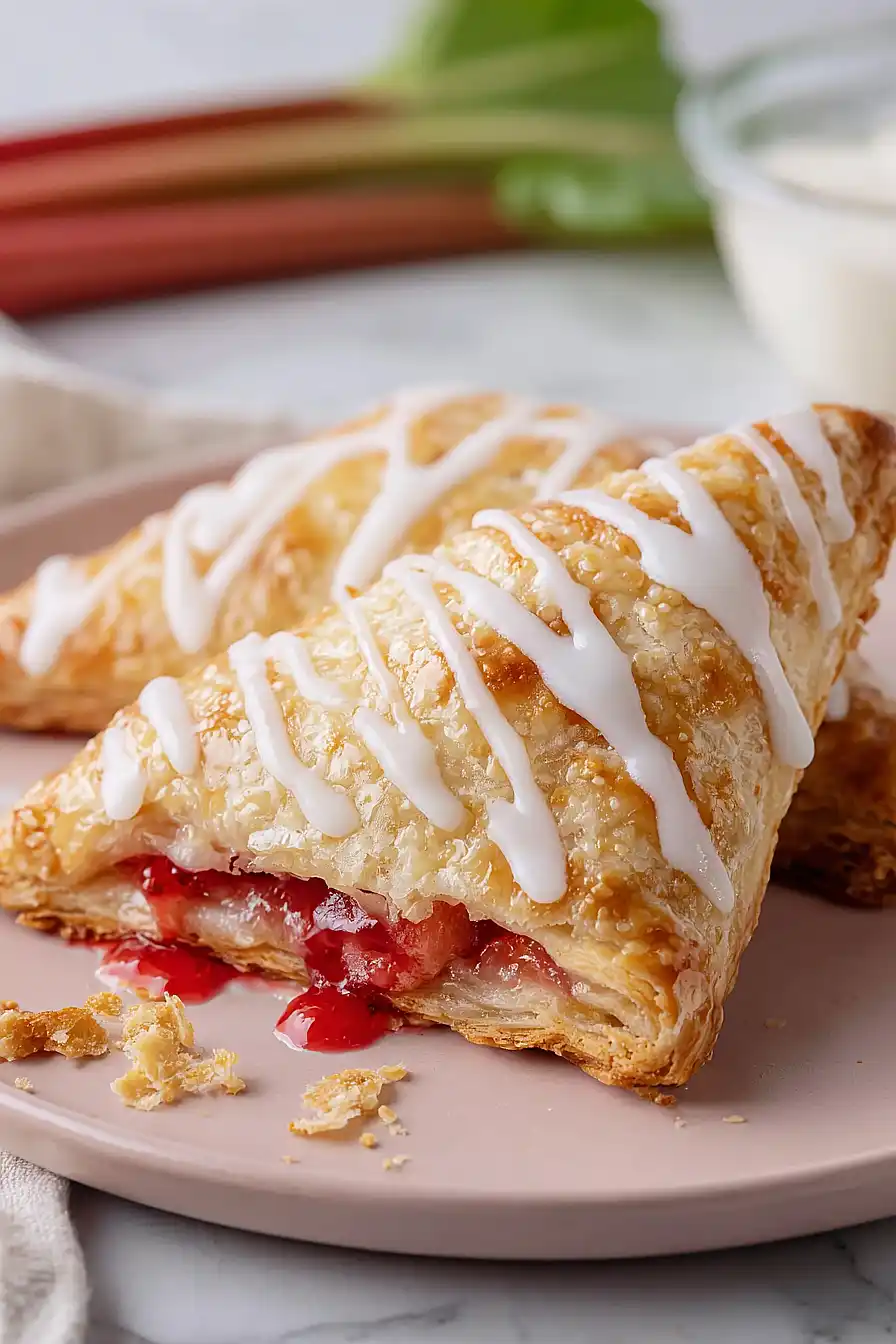
Why You’ll Love These Strawberry Rhubarb Turnovers
- Perfect balance of sweet and tart – The strawberries bring natural sweetness while the rhubarb adds a tangy kick, creating a flavor combination that’s not too sweet and totally addictive.
- Homemade pastry that’s easier than you think – Making your own pastry dough might sound intimidating, but this recipe breaks it down into simple steps that anyone can follow.
- Great for breakfast or dessert – These turnovers work just as well with your morning coffee as they do for an after-dinner treat, making them super practical.
- Seasonal spring favorite – When strawberries and rhubarb are in season, this recipe is the perfect way to use them up and enjoy those fresh, bright flavors.
- Cream cheese glaze takes it over the top – That sweet, creamy glaze drizzled on top adds an extra layer of indulgence that makes these turnovers feel special.
What Kind of Rhubarb Should I Use?
Fresh rhubarb is always your best bet for turnovers, and you’ll find it in grocery stores during spring and early summer. The stalks can range from green to deep red, and while the red varieties look prettier, the color doesn’t actually affect the flavor – both taste equally tart and delicious. When selecting rhubarb, look for firm, crisp stalks and avoid any that feel soft or look dried out at the ends. If fresh rhubarb isn’t available, frozen rhubarb works just fine for this recipe – just make sure to thaw it completely and drain off any excess liquid before using it so your filling doesn’t get too watery.
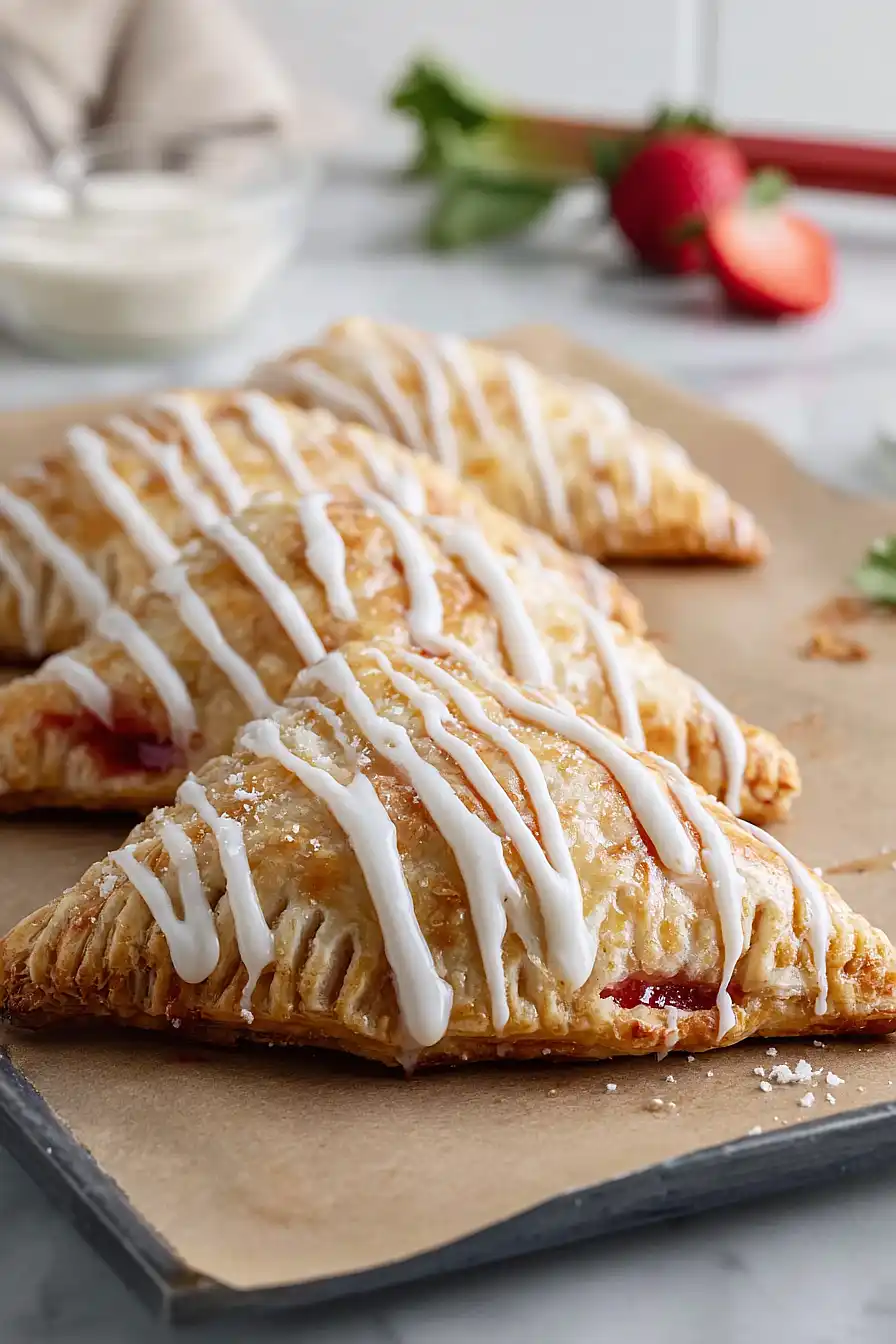
Options for Substitutions
These turnovers are pretty forgiving when it comes to swaps, so here are some options if you need them:
- Rhubarb: If rhubarb isn’t in season or you can’t find it, you can use all strawberries (2 cups total) or try mixing strawberries with diced apples or raspberries for a similar tart flavor.
- Cornstarch: You can swap cornstarch with an equal amount of flour or arrowroot powder to thicken the filling. Just mix it with the water the same way.
- Butter for pastry: The cold butter is really important for flaky pastry, so I’d recommend sticking with it. However, if you’re in a pinch, you can use store-bought puff pastry or pie dough to save time.
- Cream cheese glaze: Not a fan of cream cheese? You can make a simple powdered sugar glaze instead by mixing confectioners’ sugar with milk and vanilla – skip the cream cheese entirely.
- Milk: Any milk works here – whole, 2%, almond, or oat milk will all do the job for thinning out the glaze.
Watch Out for These Mistakes While Baking
The biggest mistake when making turnovers is using warm butter in your pastry dough, which will result in a tough, dense crust instead of the flaky layers you want – keep that butter ice cold and work quickly so your hands don’t melt it. Another common error is overfilling the turnovers with the strawberry rhubarb mixture, which causes them to burst open during baking and leak all over your pan, so stick to just one tablespoon per turnover and seal those edges really well with a fork. Don’t skip cooking down the fruit filling until it’s thick and jammy, because watery filling will make your pastry soggy from the inside out – it should be cool and spreadable, not runny. Finally, make sure your oven is fully preheated to 400°F before baking, as starting with a hot oven helps create steam that puffs up the layers and gives you that crispy, golden exterior.
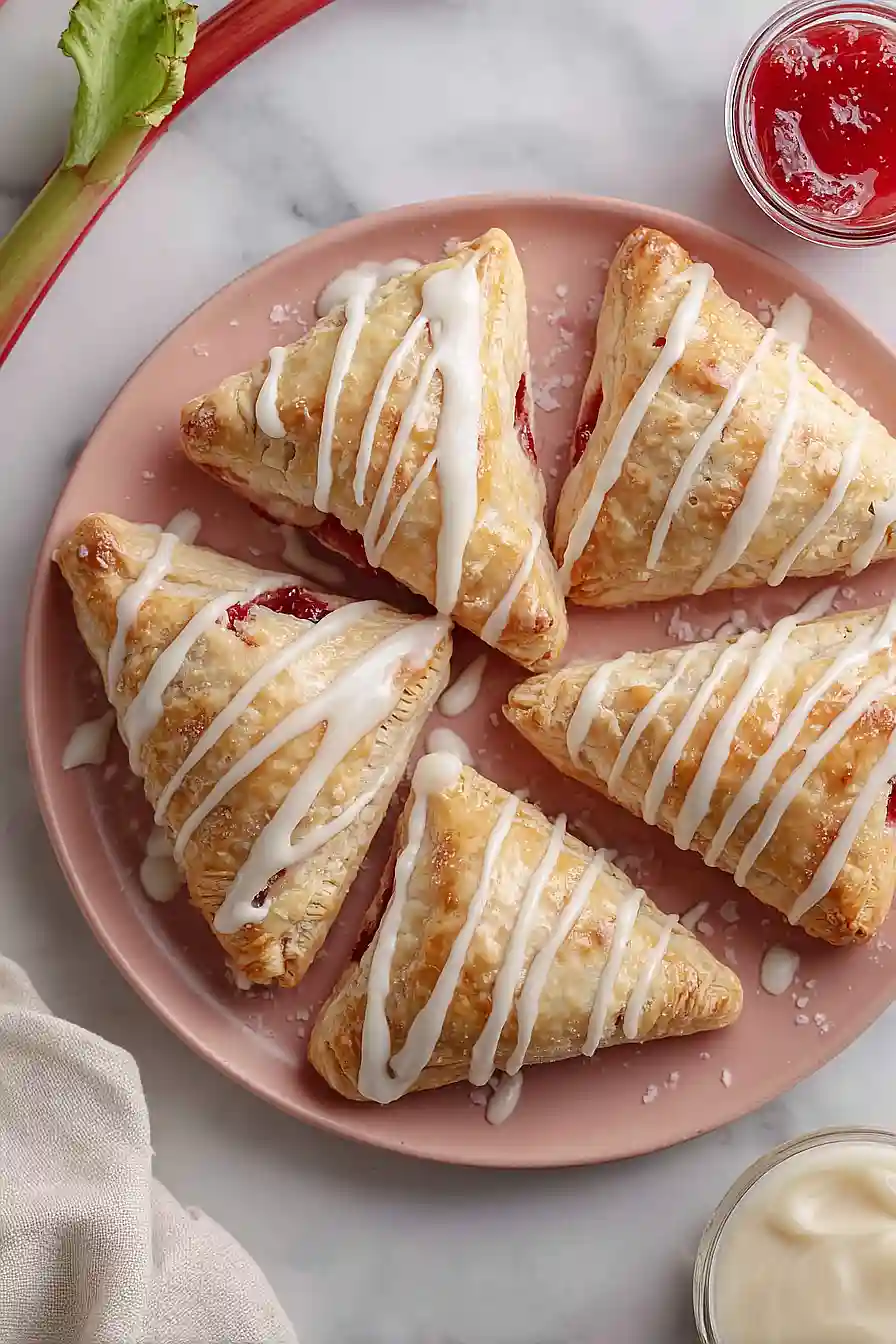
What to Serve With Strawberry Rhubarb Turnovers?
These turnovers are perfect for breakfast or brunch alongside a hot cup of coffee or tea – the sweet-tart filling pairs beautifully with something warm to drink. I love serving them with a simple fruit salad made with fresh berries and melon to keep the fruity theme going. They’re also great as a dessert after a light dinner, especially when served with a scoop of vanilla ice cream that melts into the warm pastry. For a weekend brunch spread, set them out with some scrambled eggs, crispy bacon, and fresh orange juice for a meal that feels special without too much effort.
Storage Instructions
Store: Keep your turnovers in an airtight container at room temperature for up to 2 days, or in the fridge for up to 5 days. The pastry might lose a bit of its crispness in the fridge, but they’ll still taste great. I like to wait and add the glaze right before serving if I’m storing them for later.
Freeze: These turnovers freeze really well, either baked or unbaked. For unbaked, assemble them completely and freeze on a baking sheet, then transfer to a freezer bag for up to 3 months. Bake straight from frozen, adding a few extra minutes to the baking time. Already baked turnovers can be frozen for up to 2 months.
Warm Up: To bring back that fresh-baked taste, pop your turnovers in a 350°F oven for about 5-10 minutes until warmed through and the pastry crisps up again. If they’re frozen, let them thaw in the fridge overnight first, then warm them up before adding the glaze.
| Preparation Time | 45-60 minutes |
| Cooking Time | 20-25 minutes |
| Total Time | 65-85 minutes |
| Level of Difficulty | Medium |
| Servings | 9 turnovers |
Estimated Nutrition
Estimated nutrition for the whole recipe (without optional ingredients):
- Calories: 1750-1950
- Protein: 22-26 g
- Fat: 90-105 g
- Carbohydrates: 220-240 g
Ingredients
For the filling:
- 1 cup rhubarb (sliced into 1/2-inch thick pieces)
- 1 cup strawberries (hulled and quartered)
- 1/3 cup sugar
- 1 tbsp lemon juice
- 1 1/2 tbsp cornstarch
- 2 tbsp water
- 1/8 tsp ground ginger
For the pastry and egg wash:
- 1 1/3 cups flour (I always use King Arthur all-purpose flour)
- 1/2 tsp salt
- 3/4 cup butter (cold refrigerated and grated)
- 6-8 tbsp water (must be ice-cold to keep the pastry flaky)
- 1 egg
- 1 tbsp water
For the glaze:
- 4 oz cream cheese (I prefer Philadelphia brand for a smoother glaze)
- 1/2 cup icing sugar
- 1 tsp vanilla
- 3-4 tbsp milk
- 1 pinch salt
Step 1: Make the Fruit Filling
- 1 cup rhubarb
- 1 cup strawberries
- 1/3 cup sugar
- 1 tbsp lemon juice
- 1 1/2 tbsp cornstarch
- 2 tbsp water
- 1/8 tsp ground ginger
Combine the rhubarb, strawberries, sugar, lemon juice, cornstarch, water, and ground ginger in a saucepan over medium-low heat.
Stir occasionally and cook for 10-12 minutes until the mixture thickens and the fruit breaks down slightly.
The filling should bubble gently and coat the back of a spoon.
Transfer to a bowl and let cool completely—this can be done while you make the pastry, or even the day before.
I like to make the filling first so it’s cooled and ready when I need it, which prevents the dough from getting warm during assembly.
Step 2: Prepare the Pastry Dough
- 1 1/3 cups flour
- 1/2 tsp salt
- 3/4 cup butter
- 6-8 tbsp water
Mix the flour and salt in a large bowl.
Add the cold grated butter and use your fingertips to rub it into the flour until the mixture resembles coarse breadcrumbs with pea-sized pieces of butter still visible—this texture is crucial for flaky layers.
Add the ice-cold water a tablespoon at a time, mixing gently with a fork until the dough just comes together.
Do not overwork the dough.
Form it into a round disc, wrap in plastic wrap, and refrigerate for 2 hours.
The cold butter and minimal handling create steam pockets during baking that make the pastry flaky.
Step 3: Laminate the Dough for Flakiness
- dough from Step 2
Remove the chilled dough from the refrigerator and roll it into a 6×12 inch rectangle on a lightly floured surface.
Fold the dough into thirds like a letter (fold one short end over, then fold the other short end on top), then rotate it 90 degrees and roll again into a 6×12 inch rectangle.
Repeat this fold-and-roll process 3 times total.
Each fold creates more layers of butter and dough, which produces the characteristic flaky texture.
After the final fold, wrap the dough and refrigerate for 30 minutes before the final rolling and cutting.
Step 4: Cut and Fill the Turnovers
- dough from Step 3
- cooled fruit filling from Step 1
Roll the laminated dough into a 12-inch square on a lightly floured surface and cut it into 4-inch squares—you should get 9 squares.
Place about 1 tablespoon of cooled filling from Step 1 on one corner of each square, then fold the square diagonally to form a triangle and press the edges together.
Use a fork to crimp and seal the edges, which helps prevent the filling from leaking during baking.
Arrange the turnovers on a parchment-lined baking sheet and refrigerate for 15 minutes while you preheat the oven.
I like to make sure the edges are well-sealed because a burst turnover loses all its appeal.
Step 5: Egg Wash and Bake
- 1 egg
- 1 tbsp water
Preheat the oven to 400°F.
While the oven heats, whisk together the egg and 1 tablespoon of water to make an egg wash.
Brush the egg wash over each turnover, then use a sharp knife to cut three small slits in the top of each one—these vents allow steam to escape and prevent the pastry from bursting.
Bake for 20-22 minutes until the turnovers are golden brown and puffed.
Remove from the oven and let cool on the baking sheet for a few minutes before transferring to a wire rack to cool completely.
Step 6: Make the Cream Cheese Glaze and Finish
- 4 oz cream cheese
- 1/2 cup icing sugar
- 1 tsp vanilla
- 3-4 tbsp milk
- 1 pinch salt
While the turnovers cool, prepare the glaze by beating together the softened cream cheese, icing sugar, vanilla, milk, and pinch of salt until smooth and pourable.
If the glaze is too thick, add milk one tablespoon at a time until you reach the right consistency.
Once the turnovers are completely cooled, drizzle or pour the glaze over the top of each one.
I prefer Philadelphia brand cream cheese because it creates a smoother, more luxurious glaze without any graininess.
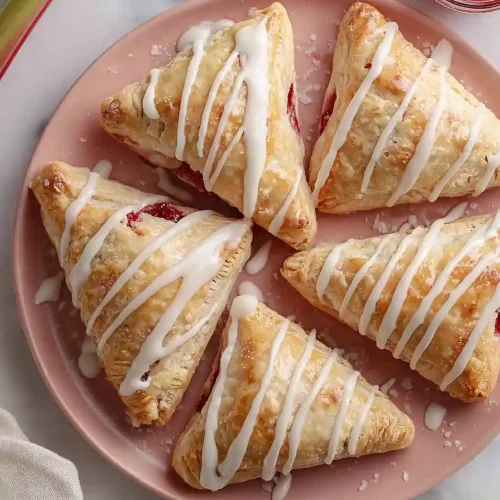
Flaky Strawberry Rhubarb Turnovers
Ingredients
For the filling
- 1 cup rhubarb (sliced into 1/2-inch thick pieces)
- 1 cup strawberries (hulled and quartered)
- 1/3 cup sugar
- 1 tbsp lemon juice
- 1 1/2 tbsp cornstarch
- 2 tbsp water
- 1/8 tsp ground ginger
For the pastry and egg wash
- 1 1/3 cups flour (I always use King Arthur all-purpose flour)
- 1/2 tsp salt
- 3/4 cup butter (cold refrigerated and grated)
- 6-8 tbsp water (must be ice-cold to keep the pastry flaky)
- 1 egg
- 1 tbsp water
For the glaze
- 4 oz cream cheese (I prefer Philadelphia brand for a smoother glaze)
- 1/2 cup icing sugar
- 1 tsp vanilla
- 3-4 tbsp milk
- 1 pinch salt
Instructions
- Combine the rhubarb, strawberries, sugar, lemon juice, cornstarch, water, and ground ginger in a saucepan over medium-low heat. Stir occasionally and cook for 10-12 minutes until the mixture thickens and the fruit breaks down slightly. The filling should bubble gently and coat the back of a spoon. Transfer to a bowl and let cool completely—this can be done while you make the pastry, or even the day before. I like to make the filling first so it's cooled and ready when I need it, which prevents the dough from getting warm during assembly.
- Mix the flour and salt in a large bowl. Add the cold grated butter and use your fingertips to rub it into the flour until the mixture resembles coarse breadcrumbs with pea-sized pieces of butter still visible—this texture is crucial for flaky layers. Add the ice-cold water a tablespoon at a time, mixing gently with a fork until the dough just comes together. Do not overwork the dough. Form it into a round disc, wrap in plastic wrap, and refrigerate for 2 hours. The cold butter and minimal handling create steam pockets during baking that make the pastry flaky.
- Remove the chilled dough from the refrigerator and roll it into a 6x12 inch rectangle on a lightly floured surface. Fold the dough into thirds like a letter (fold one short end over, then fold the other short end on top), then rotate it 90 degrees and roll again into a 6x12 inch rectangle. Repeat this fold-and-roll process 3 times total. Each fold creates more layers of butter and dough, which produces the characteristic flaky texture. After the final fold, wrap the dough and refrigerate for 30 minutes before the final rolling and cutting.
- Roll the laminated dough into a 12-inch square on a lightly floured surface and cut it into 4-inch squares—you should get 9 squares. Place about 1 tablespoon of cooled filling from Step 1 on one corner of each square, then fold the square diagonally to form a triangle and press the edges together. Use a fork to crimp and seal the edges, which helps prevent the filling from leaking during baking. Arrange the turnovers on a parchment-lined baking sheet and refrigerate for 15 minutes while you preheat the oven. I like to make sure the edges are well-sealed because a burst turnover loses all its appeal.
- Preheat the oven to 400°F. While the oven heats, whisk together the egg and 1 tablespoon of water to make an egg wash. Brush the egg wash over each turnover, then use a sharp knife to cut three small slits in the top of each one—these vents allow steam to escape and prevent the pastry from bursting. Bake for 20-22 minutes until the turnovers are golden brown and puffed. Remove from the oven and let cool on the baking sheet for a few minutes before transferring to a wire rack to cool completely.
- While the turnovers cool, prepare the glaze by beating together the softened cream cheese, icing sugar, vanilla, milk, and pinch of salt until smooth and pourable. If the glaze is too thick, add milk one tablespoon at a time until you reach the right consistency. Once the turnovers are completely cooled, drizzle or pour the glaze over the top of each one. I prefer Philadelphia brand cream cheese because it creates a smoother, more luxurious glaze without any graininess.