Lasagna is one of those meals that feels like a warm hug on a plate. I’ve been making it for years, but honestly, I got a little tired of the same old meat sauce version. Then one summer, I had all these gorgeous vegetables from the farmers market sitting on my counter, and I thought, why not grill them and layer them into a lasagna?
That’s how this grilled vegetable lasagna became a regular in my dinner rotation. The grilling step adds a smoky flavor that you just can’t get from oven-roasted veggies. Plus, you can grill everything ahead of time while you’re making dinner the night before, so assembly is quick when you need it to be.
Want something hearty but plant-based? This is your recipe. Craving comfort food that actually includes vegetables? Same. I make this when I need to feed a crowd, and no one even notices there’s no meat.
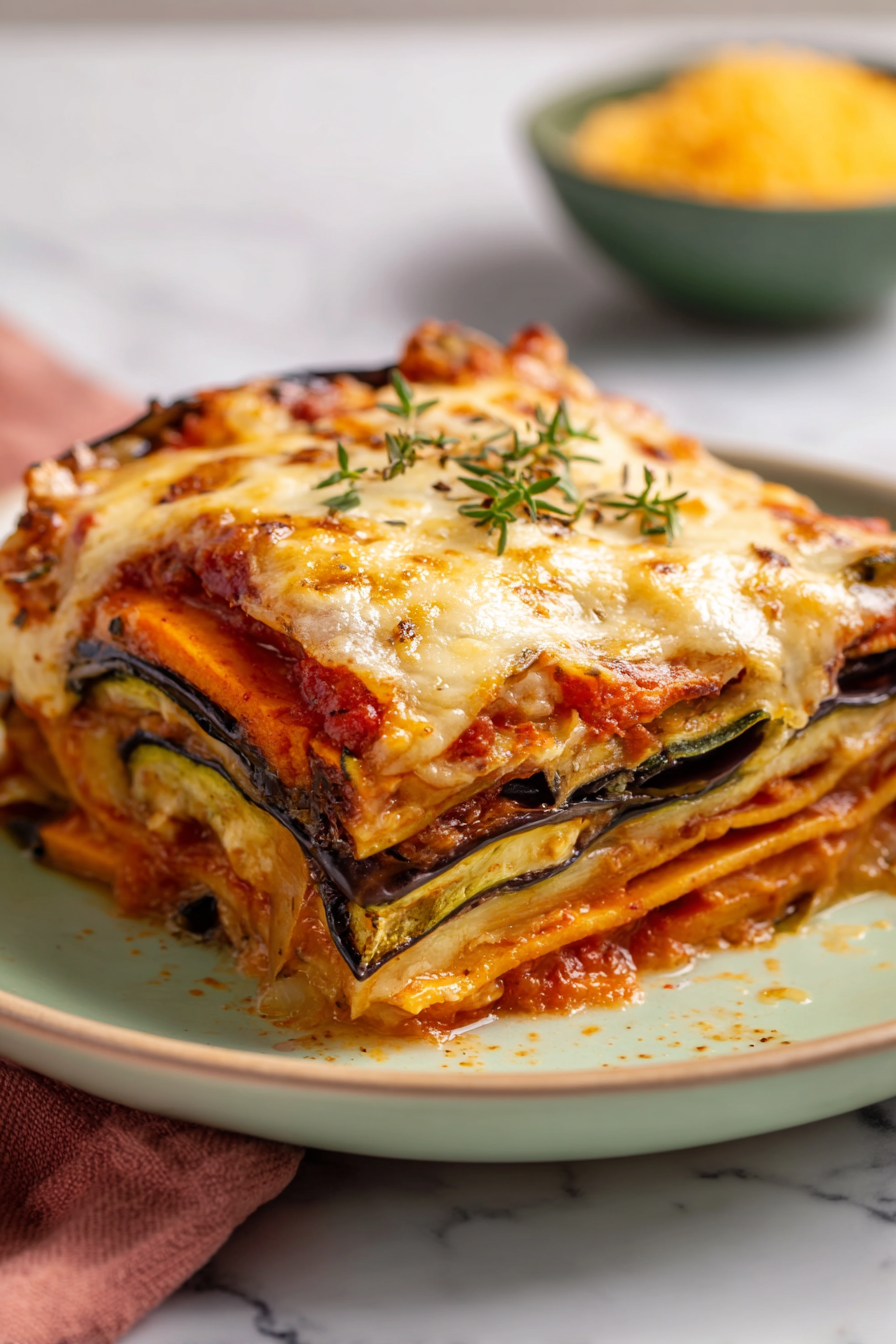
Why You’ll Love This Grilled Vegetable Lasagna
- Packed with grilled vegetables – The grilled sweet potato, zucchini, and eggplant add a smoky depth of flavor that makes this lasagna stand out from the usual versions.
- Plant-based and customizable – Using plant-based ricotta and cheddar makes this perfect for vegan diets, and you can easily swap in gluten-free lasagne sheets if needed.
- Hearty and satisfying – This lasagna is filling enough to please everyone at the table, whether they eat plant-based or not.
- Great for meal prep – Make it ahead for the week or freeze portions for later—it reheats beautifully and tastes even better the next day.
What Kind of Vegetables Should I Use?
The vegetables listed here – sweet potato, zucchini, and eggplant – are a great starting point, but feel free to swap in whatever you have on hand or looks good at the market. Bell peppers, mushrooms, and summer squash all grill beautifully and work perfectly in lasagna. The key is to slice everything about the same thickness (around 1 cm) so they cook evenly on the grill. If your eggplant is particularly large or seems watery, you can salt the slices and let them sit for about 15 minutes before grilling to draw out excess moisture, then just pat them dry before they hit the grill.
Options for Substitutions
This recipe is pretty forgiving when it comes to swapping ingredients around:
- Sweet potato: Regular potatoes or butternut squash work great here. Just slice them to the same thickness so they cook evenly on the grill.
- Zucchini and eggplant: Feel free to mix up the vegetables based on what you have. Bell peppers, mushrooms, or yellow squash are all good options. Just keep the slices around 1 cm thick for even grilling.
- Plant-based ricotta: If you can’t find plant-based ricotta, you can blend silken tofu with a bit of lemon juice, nutritional yeast, and salt to make your own. Or use regular ricotta if you’re not keeping it vegan.
- Plant-based cheddar: Any melty cheese works here – try plant-based mozzarella, regular cheese if you prefer, or even a cashew-based cheese sauce.
- Lasagne sheets: Regular lasagne sheets are fine if gluten isn’t a concern. You can also use no-boil sheets to save a step, though check the package instructions for any adjustments.
- Fresh herbs: Don’t have fresh thyme and rosemary? Use about 1 teaspoon each of dried herbs instead. Add them to the tomato sauce while it simmers.
Watch Out for These Mistakes While Cooking
The biggest mistake when grilling vegetables for lasagna is not cooking them enough beforehand – undercooked eggplant and zucchini will release excess water during baking, turning your lasagna into a watery disaster, so make sure they’re nicely browned and slightly tender before layering.
Skipping the resting time after baking is another common error that leads to a messy, runny lasagna that falls apart when you try to serve it – those 20 minutes allow the layers to set and make slicing much cleaner.
To get even better results, salt your eggplant slices and let them sit for 15 minutes before grilling to draw out moisture, then pat them dry with paper towels.
Finally, don’t forget to cover the lasagna with foil for the first part of baking, otherwise the top will burn before the inside heats through properly.
What to Serve With Grilled Vegetable Lasagna?
A simple side salad is my go-to when serving this lasagna since the greens and tangy vinaigrette help balance out all those rich, cheesy layers. I usually toss together mixed greens, cherry tomatoes, and cucumber with a lemon vinaigrette or balsamic dressing. Garlic bread or focaccia is another great option if you want something to mop up any extra tomato sauce on your plate. For a lighter approach, roasted asparagus or green beans with a squeeze of lemon work really well alongside the grilled vegetables in the lasagna.
Storage Instructions
Store: Leftover lasagna keeps really well in the fridge for up to 4 days. Just cover it tightly with foil or transfer individual portions to airtight containers. The flavors actually get even better the next day as everything melds together!
Freeze: This lasagna is perfect for freezing either before or after baking. Wrap it well in plastic wrap and then foil, and it’ll keep for up to 3 months. You can freeze the whole thing or cut it into portions first for easy weeknight dinners.
Reheat: To reheat, cover with foil and warm in a 350°F oven for about 20-25 minutes until heated through. If you’re reheating from frozen, let it thaw in the fridge overnight first. You can also microwave individual portions for 2-3 minutes, though the oven gives you a better texture.
| Preparation Time | 30-40 minutes |
| Cooking Time | 60-70 minutes |
| Total Time | 90-110 minutes |
| Level of Difficulty | Medium |
| Servings | 6 servings |
Estimated Nutrition
Estimated nutrition for the whole recipe (without optional ingredients):
- Calories: 1800-2000
- Protein: 50-60 g
- Fat: 90-110 g
- Carbohydrates: 190-220 g
Ingredients
For the grilled vegetables:
- 2.2 fl oz olive oil (I prefer Bertolli Extra Virgin for roasting)
- 1 large sweet potato (peeled and sliced into 1/4-inch rounds)
- 2 large zucchinis
- 1 large eggplant (cut into 1/2-inch thick slices)
For the sauce:
- 28 oz canned tomatoes (I like Mutti San Marzano peeled tomatoes)
- 6 garlic cloves (freshly minced for best flavor)
- 2 sprigs fresh thyme
- 2 sprigs fresh rosemary
- 1 tablespoon balsamic glaze
For the assembly:
- 1 box lasagna pasta
- 12 oz plant-based ricotta cheese (maintain consistency with steps)
- 6 oz vegan cheddar cheese (grated into thin shreds)
- 1/2 teaspoon salt
- 1/2 teaspoon black pepper
- 1 tablespoon nutritional yeast
Step 1: Prepare Vegetables for Grilling
- 1 large sweet potato
- 2 large zucchinis
- 1 large eggplant
Peel and slice the sweet potato into 1/4-inch rounds.
Slice the zucchinis lengthwise into 1/4-inch thick planks.
Cut the eggplant into 1/2-inch thick slices.
Pat all vegetables dry with paper towels—this is crucial for proper browning and prevents excess moisture in the final dish.
Set aside on a clean surface.
Step 2: Grill and Char Vegetables
- 2.2 fl oz olive oil
- grilled vegetables from Step 1
Heat 2 tablespoons of olive oil in a large skillet or grill pan over medium-high heat.
Working in batches to avoid overcrowding, grill each vegetable type for 3-4 minutes per side until golden brown and tender with charred edges.
I like to grill the sweet potato first since it takes longest, then zucchini, then eggplant.
Lay the cooked vegetables on a plate to cool—the grilling develops deep, caramelized flavors that are essential to this dish.
Step 3: Build the Tomato Sauce Base
- 28 oz canned tomatoes
- 6 garlic cloves
- 2 sprigs fresh thyme
- 2 sprigs fresh rosemary
- 1 tablespoon balsamic glaze
- 1/2 teaspoon salt
In a blender or food processor, combine the canned tomatoes, minced garlic, fresh thyme sprigs, fresh rosemary sprigs, balsamic glaze, and 1/2 teaspoon salt.
Blend until completely smooth.
Transfer the sauce to a bowl and set aside.
This smooth sauce will coat and bind all the layers of the lasagna.
Step 4: Preheat Oven and Prepare Cheese Mixture
- 12 oz plant-based ricotta cheese
- 6 oz vegan cheddar cheese
- 1 tablespoon nutritional yeast
- 1/2 teaspoon black pepper
Preheat your oven to 180°C (350°F).
While the oven heats, in a small bowl, combine the plant-based ricotta cheese, grated vegan cheddar cheese, nutritional yeast, and 1/2 teaspoon black pepper.
Stir until evenly mixed.
This cheese mixture will be layered throughout the lasagna for richness and flavor.
Step 5: Assemble the Lasagna Layers
- 1 box lasagna pasta
- grilled vegetables from Step 2
- tomato sauce from Step 3
- cheese mixture from Step 4
Spread a thin layer of tomato sauce from Step 3 on the bottom of a 9×13 inch baking dish.
Arrange a single layer of lasagna pasta sheets over the sauce, breaking pieces to fit as needed.
Add a layer of grilled vegetables from Step 2, then spread a portion of the cheese mixture from Step 4, followed by more tomato sauce.
Repeat these layers—vegetables, cheese, sauce—until all ingredients are used, finishing with a final layer of pasta sheets topped with remaining cheese mixture, a drizzle of sauce, and a pinch of salt and pepper.
I always finish with the cheese mixture on top so it gets beautifully browned in the oven.
Step 6: Bake Covered, Then Finish
Cover the assembled lasagna tightly with foil and bake for 30 minutes at 180°C.
This allows the layers to meld and the pasta to cook through while the foil traps steam.
Remove the foil and bake uncovered for an additional 10 minutes until the top is golden brown and the edges are bubbling.
Remove from the oven and let the lasagna rest for 20 minutes before serving—this resting time allows the layers to set so they hold together when plated instead of sliding around.
Step 7: Rest and Serve
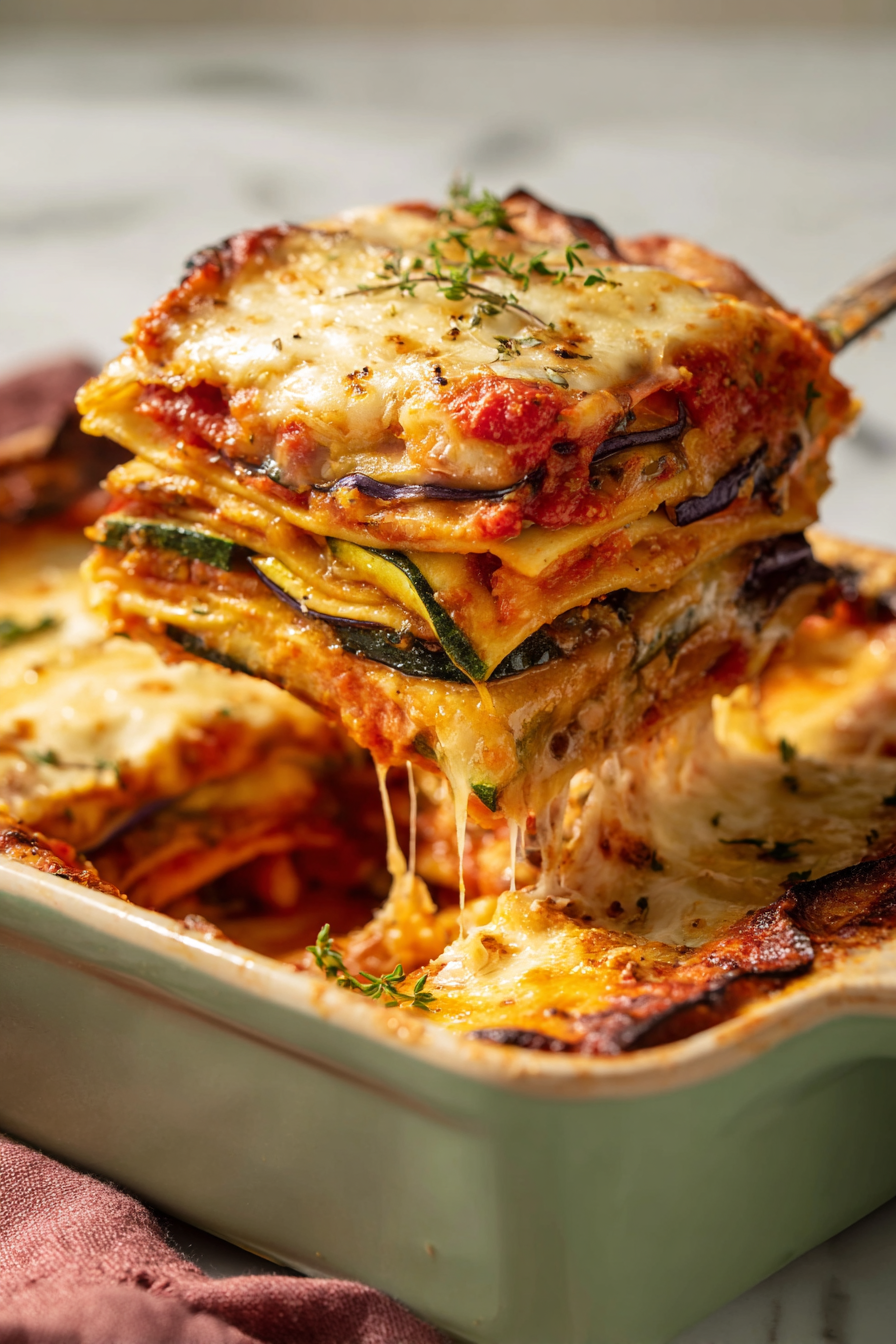
After the 20-minute rest, slice the lasagna into portions and serve warm.
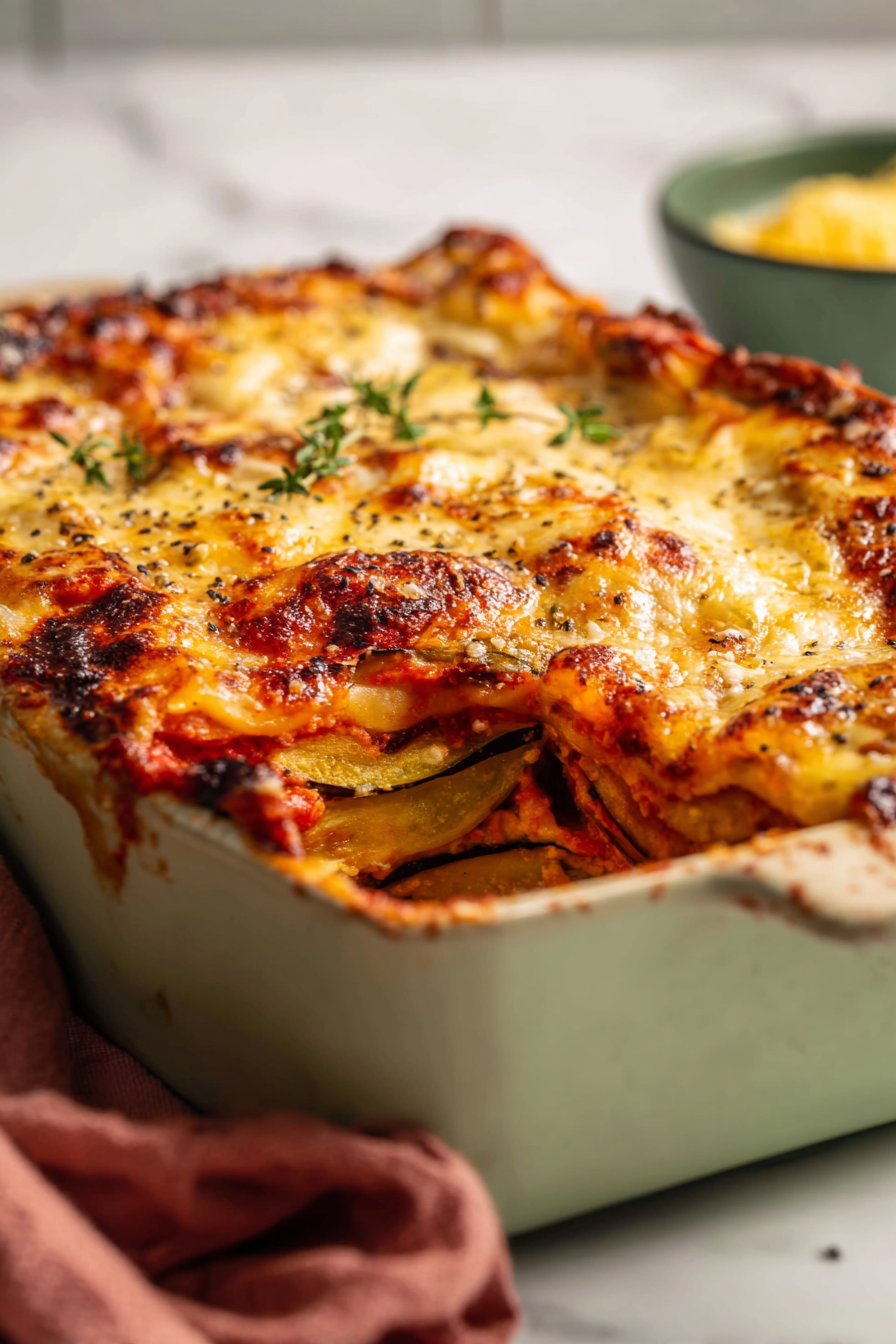
The vegetables will have softened and melded beautifully with the creamy cheese and rich tomato sauce.
Pair with a fresh salad for a complete meal.
Easy Grilled Vegetable Lasagna
Ingredients
For the grilled vegetables
- 2.2 fl oz olive oil (I prefer Bertolli Extra Virgin for roasting)
- 1 large sweet potato (peeled and sliced into 1/4-inch rounds)
- 2 large zucchinis
- 1 large eggplant (cut into 1/2-inch thick slices)
For the sauce
- 28 oz canned tomatoes (I like Mutti San Marzano peeled tomatoes)
- 6 garlic cloves (freshly minced for best flavor)
- 2 sprigs fresh thyme
- 2 sprigs fresh rosemary
- 1 tablespoon balsamic glaze
For the assembly
- 1 box lasagna pasta
- 12 oz plant-based ricotta cheese (maintain consistency with steps)
- 6 oz vegan cheddar cheese (grated into thin shreds)
- 1/2 teaspoon salt
- 1/2 teaspoon black pepper
- 1 tablespoon nutritional yeast
Instructions
- Peel and slice the sweet potato into 1/4-inch rounds. Slice the zucchinis lengthwise into 1/4-inch thick planks. Cut the eggplant into 1/2-inch thick slices. Pat all vegetables dry with paper towels—this is crucial for proper browning and prevents excess moisture in the final dish. Set aside on a clean surface.
- Heat 2 tablespoons of olive oil in a large skillet or grill pan over medium-high heat. Working in batches to avoid overcrowding, grill each vegetable type for 3-4 minutes per side until golden brown and tender with charred edges. I like to grill the sweet potato first since it takes longest, then zucchini, then eggplant. Lay the cooked vegetables on a plate to cool—the grilling develops deep, caramelized flavors that are essential to this dish.
- In a blender or food processor, combine the canned tomatoes, minced garlic, fresh thyme sprigs, fresh rosemary sprigs, balsamic glaze, and 1/2 teaspoon salt. Blend until completely smooth. Transfer the sauce to a bowl and set aside. This smooth sauce will coat and bind all the layers of the lasagna.
- Preheat your oven to 180°C (350°F). While the oven heats, in a small bowl, combine the plant-based ricotta cheese, grated vegan cheddar cheese, nutritional yeast, and 1/2 teaspoon black pepper. Stir until evenly mixed. This cheese mixture will be layered throughout the lasagna for richness and flavor.
- Spread a thin layer of tomato sauce from Step 3 on the bottom of a 9x13 inch baking dish. Arrange a single layer of lasagna pasta sheets over the sauce, breaking pieces to fit as needed. Add a layer of grilled vegetables from Step 2, then spread a portion of the cheese mixture from Step 4, followed by more tomato sauce. Repeat these layers—vegetables, cheese, sauce—until all ingredients are used, finishing with a final layer of pasta sheets topped with remaining cheese mixture, a drizzle of sauce, and a pinch of salt and pepper. I always finish with the cheese mixture on top so it gets beautifully browned in the oven.
- Cover the assembled lasagna tightly with foil and bake for 30 minutes at 180°C. This allows the layers to meld and the pasta to cook through while the foil traps steam. Remove the foil and bake uncovered for an additional 10 minutes until the top is golden brown and the edges are bubbling. Remove from the oven and let the lasagna rest for 20 minutes before serving—this resting time allows the layers to set so they hold together when plated instead of sliding around.
- After the 20-minute rest, slice the lasagna into portions and serve warm. The vegetables will have softened and melded beautifully with the creamy cheese and rich tomato sauce. Pair with a fresh salad for a complete meal.