Finding a fresh and tasty way to use up spring asparagus can be tricky, especially when you’re tired of the same old roasted or steamed side dish. And let’s be honest, getting enough greens into your weekly meal rotation takes some creativity, particularly when you want something that actually tastes good and doesn’t feel like a chore to eat.
That’s where this asparagus pesto pasta salad comes in handy: it transforms seasonal asparagus into a creamy, flavorful pesto that coats every bite of pasta, works great as a make-ahead lunch or dinner, and gives you a satisfying meal that happens to be packed with vegetables.
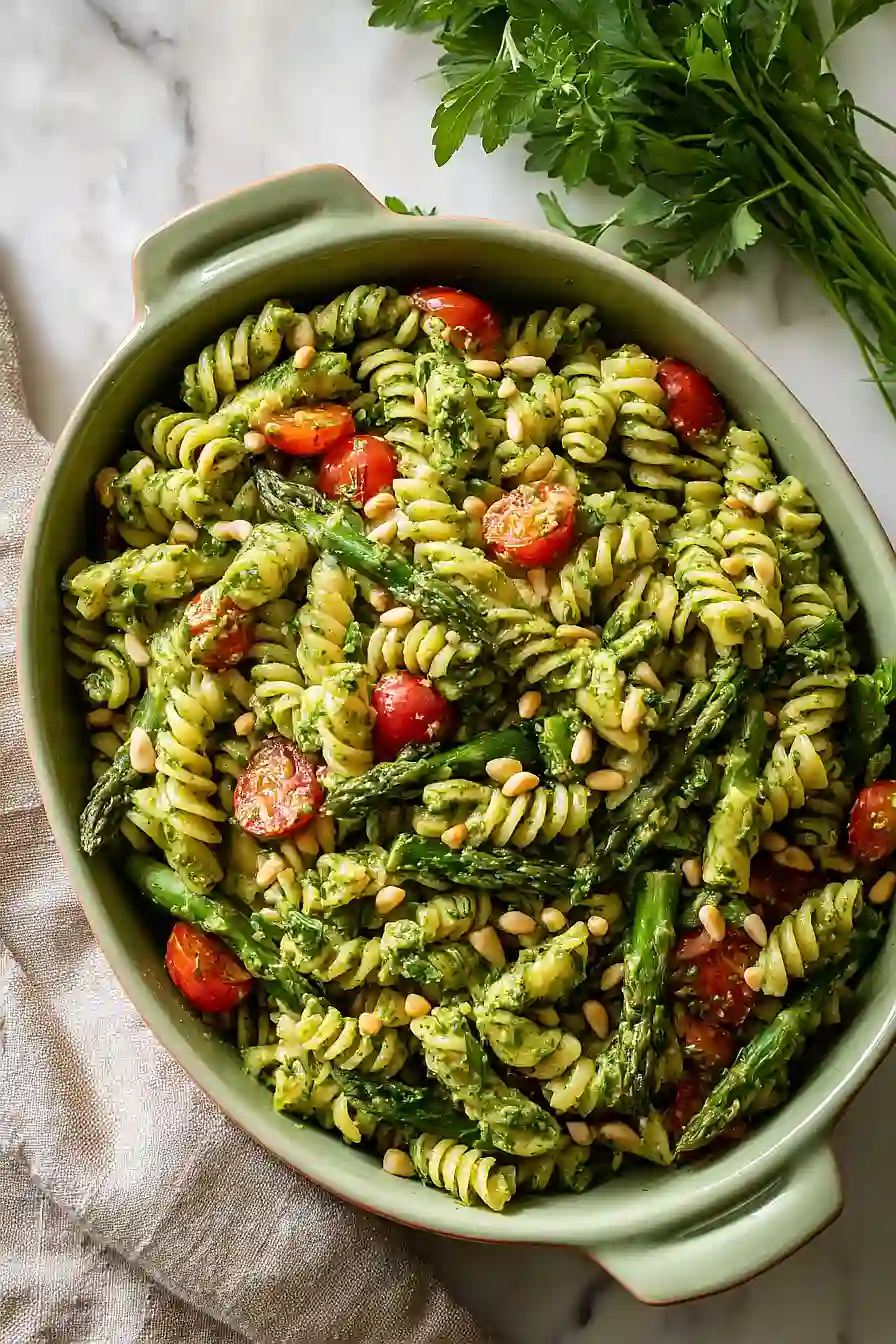
Why You’ll Love This Asparagus Pesto Pasta Salad
- Ready in 30-45 minutes – This pasta salad comes together quickly, making it perfect for busy weeknights or last-minute potluck invitations.
- Fresh, seasonal flavors – The homemade asparagus pesto brings a bright, springtime taste that’s way better than anything from a jar.
- Great for meal prep – Make it ahead and enjoy it throughout the week for easy lunches or side dishes. It actually tastes even better the next day when the flavors have had time to blend.
- Vegetarian-friendly – Using nutritional yeast instead of parmesan makes this dish naturally vegetarian, and it’s easy to swap for gluten-free pasta if needed.
What Kind of Asparagus Should I Use?
When picking asparagus for this pasta salad, look for spears that are firm and bright green with tight, compact tips. Thinner asparagus tends to be more tender and cooks faster, while thicker spears have a meatier texture – either will work great in this recipe. Avoid any bunches with wrinkled or slimy stalks, as these are past their prime. Before cooking, just snap off the woody ends at the bottom where they naturally break, or trim about an inch off with a knife. If your asparagus seems a bit thick, you can also peel the lower part of the stalks with a vegetable peeler to make them more tender.
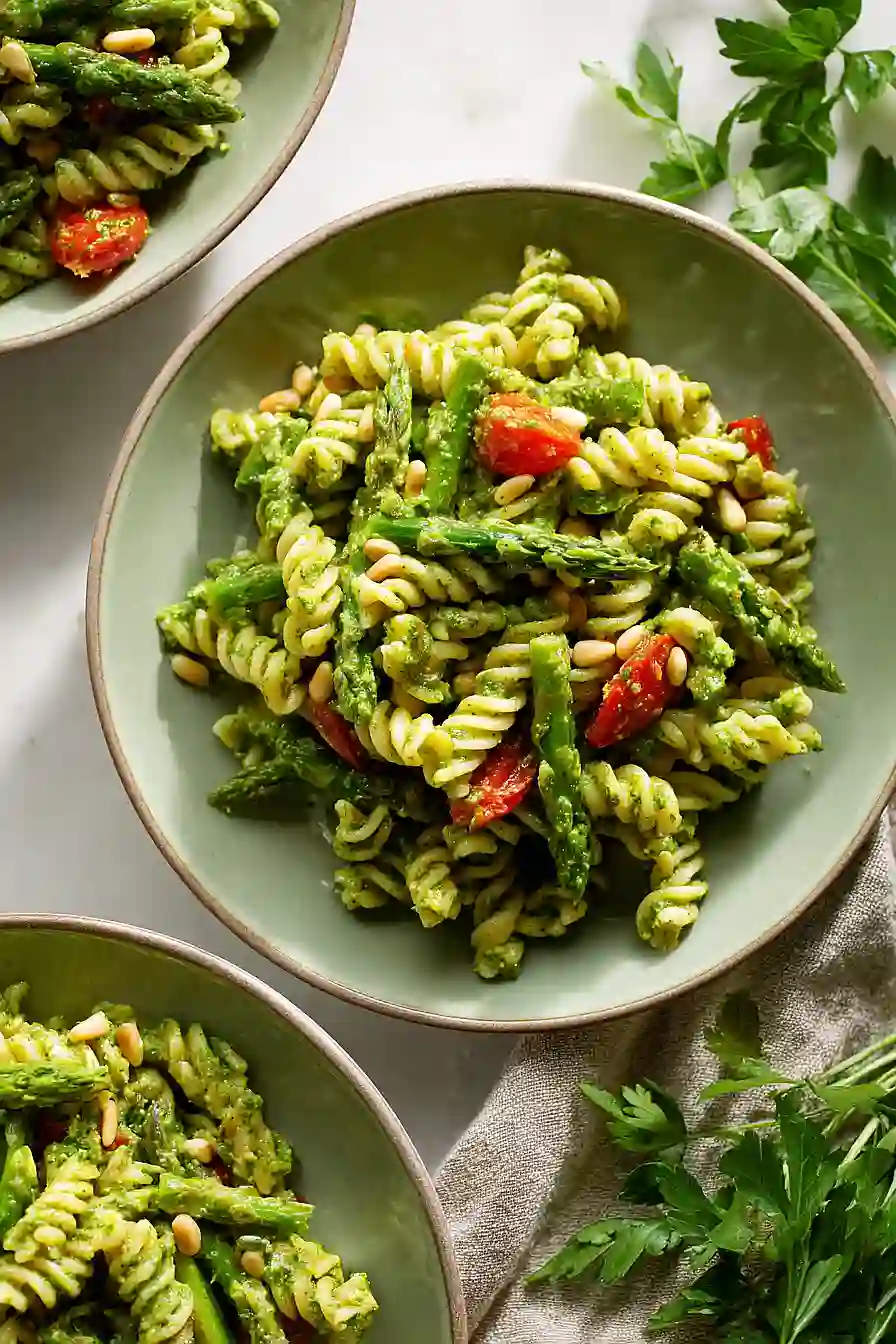
Options for Substitutions
This pasta salad is pretty forgiving when it comes to swapping ingredients:
- Pine nuts: Pine nuts can be pricey, so feel free to use walnuts, almonds, or sunflower seeds instead. Toast them lightly in a dry pan first to bring out their flavor before adding to the pesto.
- Asparagus: If asparagus isn’t in season or you want to switch things up, try using green beans, broccolini, or zucchini. Just adjust the cooking time accordingly – green beans need a bit longer, while zucchini cooks faster.
- Nutritional yeast: Don’t have nutritional yeast? You can use grated parmesan cheese for a non-vegan version, or simply leave it out and add a pinch more salt to taste.
- Basil: Fresh basil is best for pesto, but if you’re in a bind, you can use baby spinach or arugula mixed with a tablespoon of dried basil. The flavor will be different but still tasty.
- Pasta: Any short pasta shape works great here – penne, fusilli, farfalle, or rotini all hold the pesto nicely. Whole wheat or chickpea pasta are good options too.
- Lemon juice: Lime juice or white wine vinegar can step in if you’re out of lemons, though lemon gives the brightest flavor.
Watch Out for These Mistakes While Cooking
Overcooking your asparagus is the biggest mistake you can make here – if it goes beyond 4 minutes, it turns mushy and loses its bright color, so set a timer and have that ice bath or cool water ready the second it’s done.
Another common error is tossing the pasta water down the drain without saving some first, since those starchy few tablespoons are what help the pesto cling to the pasta instead of pooling at the bottom of the bowl.
When blending the pesto, start with just 3 tablespoons of pasta water and add more gradually – you want a smooth, spreadable consistency that coats the back of a spoon, not a watery sauce.
Finally, make sure to let both the asparagus and pasta cool down before combining them with the pesto, as hot ingredients can wilt the basil and turn your fresh, green sauce an unappetizing brown color.
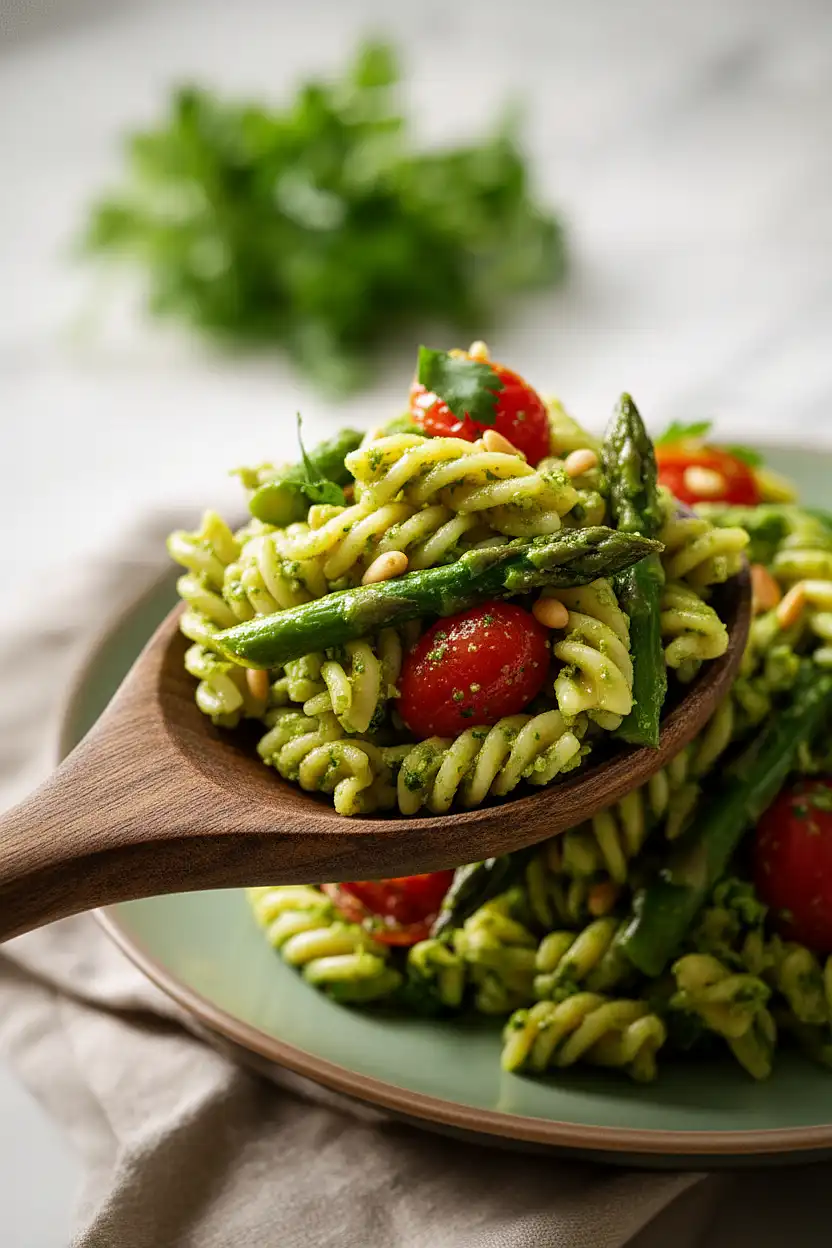
What to Serve With Asparagus Pesto Pasta Salad?
This pasta salad is pretty filling on its own, but it pairs really well with grilled chicken or salmon if you want to add some protein to your meal. I love serving it alongside other picnic or potluck favorites like a simple cucumber salad or some marinated mozzarella balls. If you’re firing up the grill, throw on some Italian sausages or veggie skewers to round out the plate. For a lighter option, a mixed green salad with a lemony vinaigrette complements the pesto flavors without weighing things down.
Storage Instructions
Store: This pasta salad keeps really well in the fridge for up to 4 days in an airtight container. The pesto might darken a bit over time, which is totally normal, but the flavor stays great. You might want to give it a good stir before serving since the pesto can settle at the bottom.
Make Ahead: I actually think this tastes even better the next day after all the flavors have had time to hang out together. You can make it a day ahead and just keep it chilled until you’re ready to serve. If it seems a bit dry after sitting, just toss in a splash of lemon juice or a drizzle of olive oil to freshen it up.
Serve: This salad is delicious cold straight from the fridge, which makes it perfect for packed lunches or picnics. If you prefer it at room temperature, just let it sit out for about 20 minutes before serving.
| Preparation Time | 10-15 minutes |
| Cooking Time | 20-30 minutes |
| Total Time | 30-45 minutes |
| Level of Difficulty | Easy |
| Servings | 6 servings |
Estimated Nutrition
Estimated nutrition for the whole recipe (without optional ingredients):
- Calories: 1600-1800
- Protein: 55-65 g
- Fat: 25-35 g
- Carbohydrates: 300-320 g
Ingredients
For the pesto:
- 2.25 lb asparagus (woody ends trimmed and stalks cut into 1-inch pieces)
- 3 tbsp lemon juice (freshly squeezed for brighter acidity)
- 4 garlic cloves
- 2 tbsp pine nuts (lightly toasted in a dry pan until fragrant)
- 1 cup basil
- 1/2 tsp salt
- 4 tbsp nutritional yeast (I use Bragg for its superior nutty flavor)
For the pasta salad:
- 1 lb pasta (I prefer Barilla Collezione Penne for better sauce grip)
- 2 large tomatoes (seeded and diced into 1/2-inch cubes)
- 3 tbsp pine nuts
- salt to taste
- pepper to taste
Step 1: Prepare the Mise en Place and Toast Pine Nuts
- 2.25 lb asparagus
- 2 tbsp pine nuts
Trim the woody ends from the asparagus and cut the stalks into 1-inch pieces, then separate about 3 inches of the top tender pieces and set aside—these will stay fresh and bright in the final dish.
Measure out your basil, lemon juice, and other ingredients.
Toast the 2 tablespoons of pine nuts in a dry pan over medium heat for 2-3 minutes until fragrant, shaking occasionally to prevent burning, then set aside.
I like to toast pine nuts just before using them because they release their oils and become so much more flavorful than raw nuts.
Step 2: Cook the Asparagus and Pasta
- 1 lb pasta
- asparagus from Step 1
Bring a large pot of salted water to a boil and add the asparagus pieces (including both the tender tops and thicker stalks).
Boil for 4 minutes until just tender-crisp, then remove with a slotted spoon and rinse with cool water to stop the cooking.
Set aside the tender asparagus tips separately.
In the same boiling water, cook the pasta according to package directions until al dente.
Before draining, reserve 1/2 cup of the starchy pasta water—this is liquid gold for adjusting your pesto sauce’s consistency.
Drain and lightly rinse the pasta, then transfer to a large bowl.
Step 3: Build the Asparagus Pesto Sauce
- 4 garlic cloves
- 2 tbsp toasted pine nuts from Step 1
- 3 tbsp lemon juice
- 1 cup basil
- 1/2 tsp salt
- 4 tbsp nutritional yeast
- cooked thicker asparagus stalks from Step 2
- 3-6 tbsp reserved pasta water from Step 2
In a food processor, combine the 4 garlic cloves and the toasted pine nuts from Step 1, pulsing until finely chopped.
Add the lemon juice, basil, salt, nutritional yeast, and the cooked thicker asparagus stalks (not the tender tops—save those for texture in the final dish).
Pulse and blend until smooth, then slowly add 3-6 tablespoons of the reserved pasta water until you reach a pourable sauce consistency.
I find that starting with 3 tablespoons and adding more as needed gives you better control over the thickness than dumping it all in at once.
Step 4: Assemble and Season the Salad
- asparagus pesto sauce from Step 3
- cooked pasta from Step 2
- tender asparagus tips from Step 2
- 2 large tomatoes
- salt to taste
- pepper to taste
- 3 tbsp pine nuts
Pour the asparagus pesto sauce from Step 3 over the warm pasta in the bowl, then fold in the tender asparagus tips from Step 2 and the diced tomatoes.
Toss gently but thoroughly to coat all the pasta evenly.
Taste and adjust seasoning with salt and pepper as needed, keeping in mind that the nutritional yeast and pesto already contain saltiness.
Top with the remaining 3 tablespoons of pine nuts for added crunch and richness.
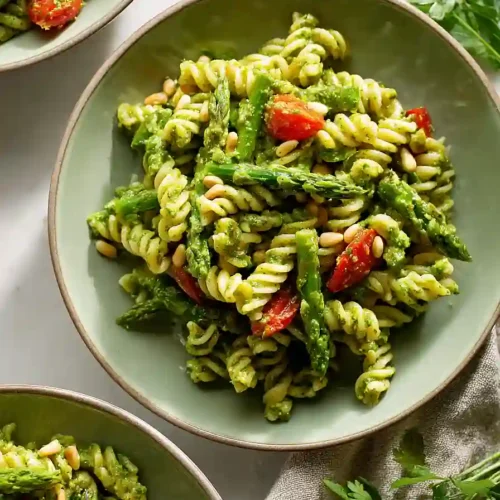
Basil Asparagus Pesto Pasta Salad
Ingredients
For the pesto::
- 2.25 lb asparagus (woody ends trimmed and stalks cut into 1-inch pieces)
- 3 tbsp lemon juice (freshly squeezed for brighter acidity)
- 4 garlic cloves
- 2 tbsp pine nuts (lightly toasted in a dry pan until fragrant)
- 1 cup basil
- 1/2 tsp salt
- 4 tbsp nutritional yeast (I use Bragg for its superior nutty flavor)
For the pasta salad::
- 1 lb pasta (I prefer Barilla Collezione Penne for better sauce grip)
- 2 large tomatoes (seeded and diced into 1/2-inch cubes)
- 3 tbsp pine nuts
- salt to taste
- pepper to taste
Instructions
- Trim the woody ends from the asparagus and cut the stalks into 1-inch pieces, then separate about 3 inches of the top tender pieces and set aside—these will stay fresh and bright in the final dish. Measure out your basil, lemon juice, and other ingredients. Toast the 2 tablespoons of pine nuts in a dry pan over medium heat for 2-3 minutes until fragrant, shaking occasionally to prevent burning, then set aside. I like to toast pine nuts just before using them because they release their oils and become so much more flavorful than raw nuts.
- Bring a large pot of salted water to a boil and add the asparagus pieces (including both the tender tops and thicker stalks). Boil for 4 minutes until just tender-crisp, then remove with a slotted spoon and rinse with cool water to stop the cooking. Set aside the tender asparagus tips separately. In the same boiling water, cook the pasta according to package directions until al dente. Before draining, reserve 1/2 cup of the starchy pasta water—this is liquid gold for adjusting your pesto sauce's consistency. Drain and lightly rinse the pasta, then transfer to a large bowl.
- In a food processor, combine the 4 garlic cloves and the toasted pine nuts from Step 1, pulsing until finely chopped. Add the lemon juice, basil, salt, nutritional yeast, and the cooked thicker asparagus stalks (not the tender tops—save those for texture in the final dish). Pulse and blend until smooth, then slowly add 3-6 tablespoons of the reserved pasta water until you reach a pourable sauce consistency. I find that starting with 3 tablespoons and adding more as needed gives you better control over the thickness than dumping it all in at once.
- Pour the asparagus pesto sauce from Step 3 over the warm pasta in the bowl, then fold in the tender asparagus tips from Step 2 and the diced tomatoes. Toss gently but thoroughly to coat all the pasta evenly. Taste and adjust seasoning with salt and pepper as needed, keeping in mind that the nutritional yeast and pesto already contain saltiness. Top with the remaining 3 tablespoons of pine nuts for added crunch and richness.