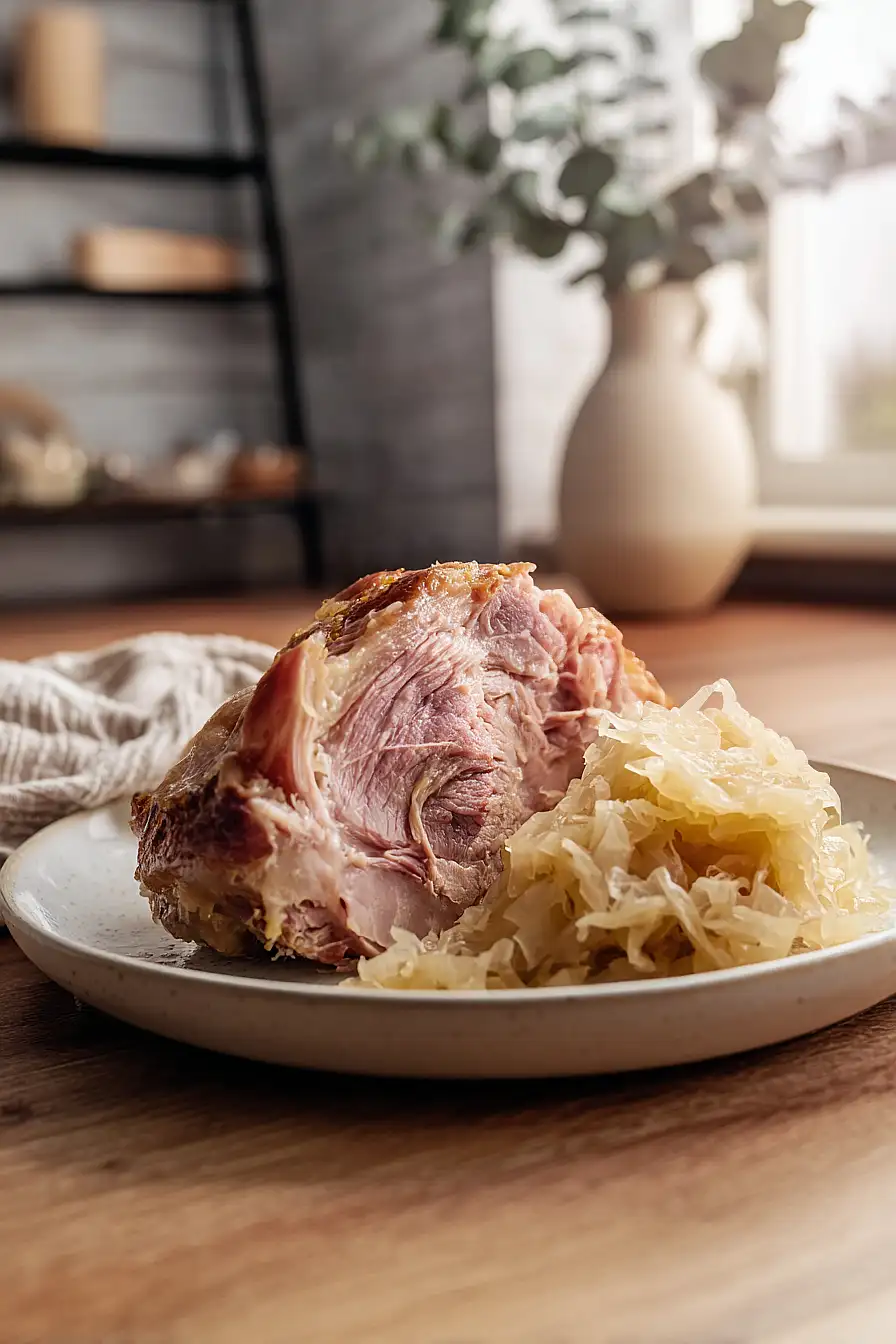
I’ll be honest—pork knuckle used to intimidate me. It’s this big, awkward piece of meat that looks like it belongs in a medieval feast, not in my weeknight dinner rotation. But then I learned the secret: it’s actually one of the easiest things to make if you just give it time and pair it with something tangy like sauerkraut.
The Germans have been doing this combo forever, and there’s a good reason why. The rich, fatty pork knuckle gets this crispy, crackly skin on the outside while staying tender inside, and the sauerkraut cuts through all that richness with its sour bite. Throw in some apples and caraway seeds, and you’ve got a meal that tastes way fancier than the effort you put in. It’s the kind of dish that makes people think you really know what you’re doing in the kitchen.

Without the ingredient list, I won’t be able to identify the key advantages of the recipe (such as simple ingredients, diet-friendliness, preparation style, etc.) that should be highlighted in the section.
Once you share the ingredients, I’ll create the section following the format and style guidelines you’ve provided.
What Kind of Pork Knuckle Should I Use?
You can use either fresh or smoked pork knuckle for this recipe, though smoked will give you a deeper, more traditional flavor that pairs really well with sauerkraut. Fresh pork knuckle is usually labeled as “ham hock” or “pork shank” at most grocery stores, and you’ll typically find them in the meat section near the other pork cuts. If you’re buying fresh, look for knuckles that have a good amount of meat on them and nice, intact skin – that skin will become wonderfully tender during the long cooking process. Most pork knuckles weigh between 1 to 2 pounds each, so plan on one knuckle per person if you’re feeding hungry eaters, or one knuckle for every two people if you’re serving it with plenty of sides.
Options for Substitutions
Since I don’t have the specific ingredient list for this recipe, here are some common substitutions for traditional pork knuckle with sauerkraut:
- Pork knuckle: If you can’t find pork knuckle (also called ham hock), you can use pork shoulder or a small pork roast instead. Keep in mind that pork knuckle has more collagen and fat, which makes the dish extra rich, so other cuts will taste a bit different.
- Sauerkraut: Fresh sauerkraut from the refrigerated section works best, but jarred or canned sauerkraut is fine too. Just rinse it under cold water if you prefer a milder, less tangy flavor.
- Caraway seeds: These are traditional in this dish, but if you’re not a fan, you can leave them out or use a small amount of fennel seeds instead.
- Beer or white wine: Many recipes call for beer or wine to braise the meat. If you don’t want to use alcohol, substitute with chicken or vegetable stock mixed with a tablespoon of apple cider vinegar.
- Onions: Yellow onions are standard, but white or sweet onions work just as well in this recipe.
Watch Out for These Mistakes While Cooking
The biggest mistake when making pork knuckle is not scoring the skin deep enough – you need to cut through the skin and into the fat layer (but not the meat) to get that crispy crackling everyone loves.
Another common error is forgetting to baste the pork regularly with the pan juices, which keeps the meat moist and helps develop a golden, crispy exterior, so set a timer to remind yourself every 30 minutes.
Many people also rush the resting period after cooking, but letting the pork sit for those 10 minutes allows the juices to redistribute throughout the meat, making it more tender and easier to carve.
If your skin isn’t getting crispy enough, try increasing the oven temperature to 425°F for the last 15-20 minutes of cooking, and make sure the skin is completely dry before it goes in the oven by patting it with paper towels.
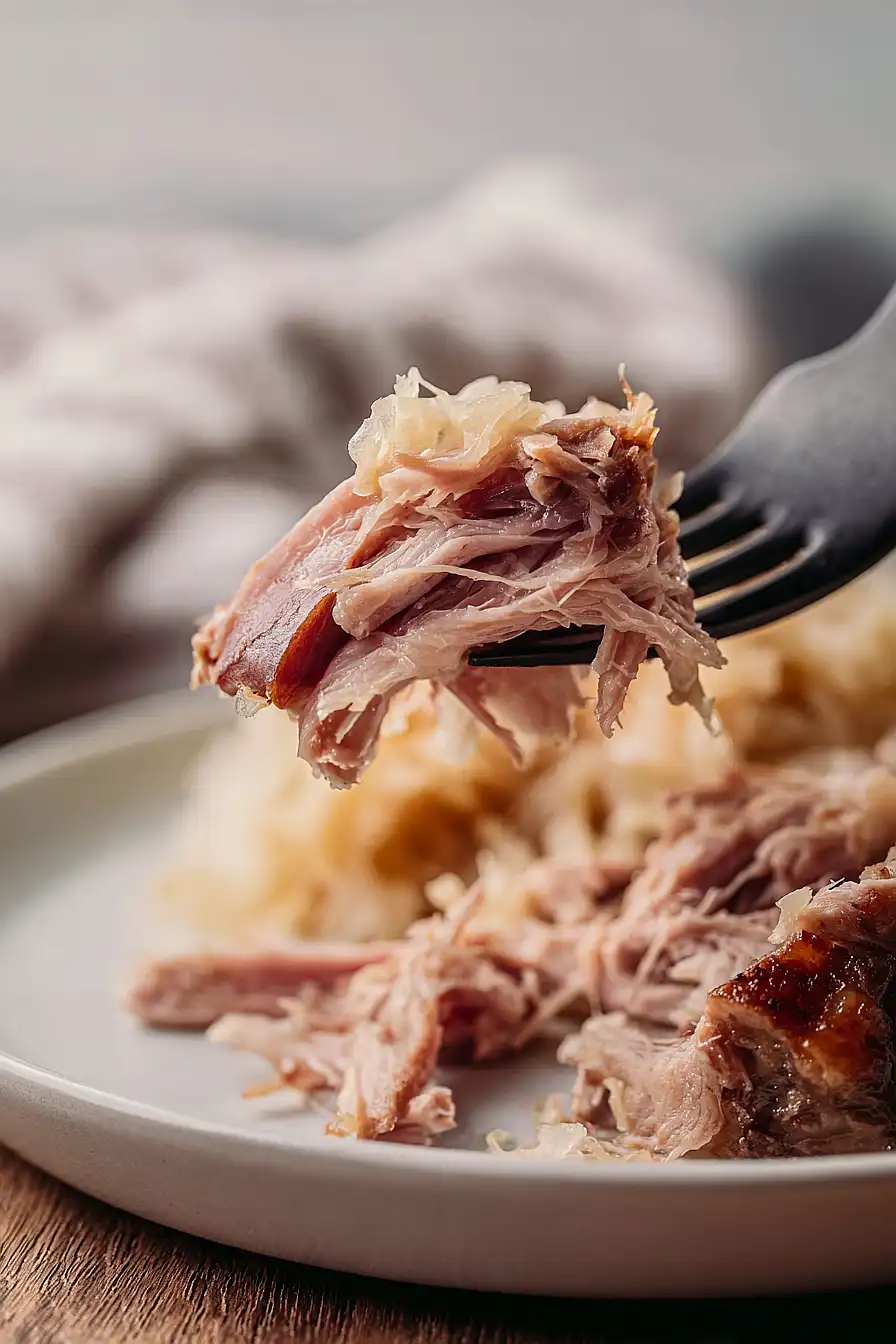
What to Serve With Pork Knuckle?
Pork knuckle with sauerkraut is a hearty German dish that pairs perfectly with creamy mashed potatoes or boiled potatoes to soak up all those delicious juices. A side of crusty rye bread or pretzel rolls is great for mopping up any extra sauce on your plate. If you want to add more vegetables to the meal, roasted root vegetables like carrots and parsnips work really well, or you could go with a simple cucumber salad dressed with vinegar and dill to cut through the richness. Don’t forget a cold beer or apple cider to complete the experience!
Storage Instructions
Store: Pork knuckle and sauerkraut actually taste even better the next day after all those flavors have had time to mingle. Keep leftovers in an airtight container in the fridge for up to 4 days. The meat stays moist and tender, making it perfect for easy weeknight dinners.
Freeze: This dish freezes really well for up to 3 months. I like to portion it out into individual servings before freezing, so I can grab just what I need. Let it cool completely first, then store in freezer-safe containers or heavy-duty freezer bags.
Reheat: Warm it up gently in a covered pot on the stove over medium-low heat, adding a splash of broth or water if it seems dry. You can also reheat it in the oven at 325°F covered with foil until heated through, which helps keep the pork from drying out.
| Preparation Time | 10-15 minutes |
| Cooking Time | 140-170 minutes |
| Total Time | 150-185 minutes |
| Level of Difficulty | Medium |
| Servings | 4 servings |
Estimated Nutrition
Estimated nutrition for the whole recipe (without optional ingredients):
- Calories: N/A
- Protein: N/A
- Fat: N/A
- Carbohydrates: N/A
Ingredients
For the pork knuckle:
- black pepper to taste
- 1 pork knuckle (skin scored in a crosshatch pattern for crackling)
- 1 cup water or broth (chicken or vegetable broth works well)
- salt to taste (about 1-2 tsp for seasoning)
For the sauerkraut:
- 2 medium onions (diced into 1/2-inch pieces)
- 2 medium apples (peeled, cored, and cut into 1-inch chunks)
- salt to taste
- 2 lbs sauerkraut (drained and rinsed if too salty)
- 2 tbsp butter (I use Kerrygold unsalted for richness)
- 1 tbsp caraway seeds (freshly ground preferred for more flavor)
- black pepper to taste
Step 1: Prepare the Pork and Start Roasting
- 1 pork knuckle
- salt to taste
- black pepper to taste
- 1 cup water or broth
Pat the pork knuckle dry with paper towels, then season generously all over with salt and pepper, making sure to work the seasoning into the scored crosshatch pattern on the skin—this helps create crispy, flavorful crackling.
Place the seasoned pork skin-side up in a roasting pan and add the water or broth to the bottom of the pan (not touching the meat).
Roast in a 350°F oven for 2 to 2.5 hours, basting with the pan juices every 30 minutes or so.
This long, gentle cooking renders the fat under the skin and tenderizes the meat while the constant basting keeps it moist and develops the crackling.
Step 2: Prepare the Sauerkraut Base While Pork Roasts
- 2 lbs sauerkraut
- 2 tbsp butter
- 2 medium onions
- 2 medium apples
While the pork is roasting, rinse and drain the sauerkraut thoroughly under cold water to remove excess brine and soften the flavor—taste it and squeeze out excess liquid with your hands.
In a large skillet over medium heat, melt the butter, then add the diced onions and cook for about 5-7 minutes until they begin to soften and turn translucent.
I find that adding the apples at this point, while the onions are still cooking, allows them to release their natural sweetness into the pan and create a balanced flavor base for the sauerkraut.
Step 3: Build and Braise the Sauerkraut
- sauerkraut mixture from Step 2
- 1 tbsp caraway seeds
- salt to taste
- black pepper to taste
Add the rinsed sauerkraut to the pan with the cooked onions and apples, then stir in the caraway seeds, a pinch of salt, and a few grinds of black pepper.
Cook this mixture over medium heat for 15-20 minutes, stirring occasionally, allowing the flavors to meld together and the apples to fully soften.
The sauerkraut will release some liquid and create a brasing medium that becomes more flavorful as it reduces slightly.
I like to taste and adjust the seasoning toward the end of cooking—remember the pork will also contribute saltiness when served together.
Step 4: Rest the Pork and Finish
When the pork knuckle is deeply golden and fork-tender, remove it from the oven and transfer it to a clean cutting board.
Let it rest for 10 minutes—this allows the juices to redistribute throughout the meat, keeping every bite moist and tender.
While the pork rests, give the sauerkraut mixture a final stir and taste for seasoning adjustments.
Slice or portion the pork at the table and serve alongside the warm sauerkraut, spooning some of the apple and caraway-infused braising liquid over each portion.

Best Pork Knuckle with Sauerkraut
Ingredients
For the pork knuckle:
- black pepper to taste
- 1 pork knuckle (skin scored in a crosshatch pattern for crackling)
- 1 cup water or broth (chicken or vegetable broth works well)
- salt to taste (about 1-2 tsp for seasoning)
For the sauerkraut:
- 2 medium onions (diced into 1/2-inch pieces)
- 2 medium apples (peeled, cored, and cut into 1-inch chunks)
- salt to taste
- 2 lbs sauerkraut (drained and rinsed if too salty)
- 2 tbsp butter (I use Kerrygold unsalted for richness)
- 1 tbsp caraway seeds (freshly ground preferred for more flavor)
- black pepper to taste
Instructions
- Pat the pork knuckle dry with paper towels, then season generously all over with salt and pepper, making sure to work the seasoning into the scored crosshatch pattern on the skin—this helps create crispy, flavorful crackling. Place the seasoned pork skin-side up in a roasting pan and add the water or broth to the bottom of the pan (not touching the meat). Roast in a 350°F oven for 2 to 2.5 hours, basting with the pan juices every 30 minutes or so. This long, gentle cooking renders the fat under the skin and tenderizes the meat while the constant basting keeps it moist and develops the crackling.
- While the pork is roasting, rinse and drain the sauerkraut thoroughly under cold water to remove excess brine and soften the flavor—taste it and squeeze out excess liquid with your hands. In a large skillet over medium heat, melt the butter, then add the diced onions and cook for about 5-7 minutes until they begin to soften and turn translucent. I find that adding the apples at this point, while the onions are still cooking, allows them to release their natural sweetness into the pan and create a balanced flavor base for the sauerkraut.
- Add the rinsed sauerkraut to the pan with the cooked onions and apples, then stir in the caraway seeds, a pinch of salt, and a few grinds of black pepper. Cook this mixture over medium heat for 15-20 minutes, stirring occasionally, allowing the flavors to meld together and the apples to fully soften. The sauerkraut will release some liquid and create a brasing medium that becomes more flavorful as it reduces slightly. I like to taste and adjust the seasoning toward the end of cooking—remember the pork will also contribute saltiness when served together.
- When the pork knuckle is deeply golden and fork-tender, remove it from the oven and transfer it to a clean cutting board. Let it rest for 10 minutes—this allows the juices to redistribute throughout the meat, keeping every bite moist and tender. While the pork rests, give the sauerkraut mixture a final stir and taste for seasoning adjustments. Slice or portion the pork at the table and serve alongside the warm sauerkraut, spooning some of the apple and caraway-infused braising liquid over each portion.