I didn’t grow up with fancy liqueurs in the house, so the first time I tasted Grand Marnier was at a dinner party in my twenties. I remember thinking, “Wait, oranges can taste like *that*?” It was sweet and boozy and had this warmth that regular orange juice just doesn’t have.
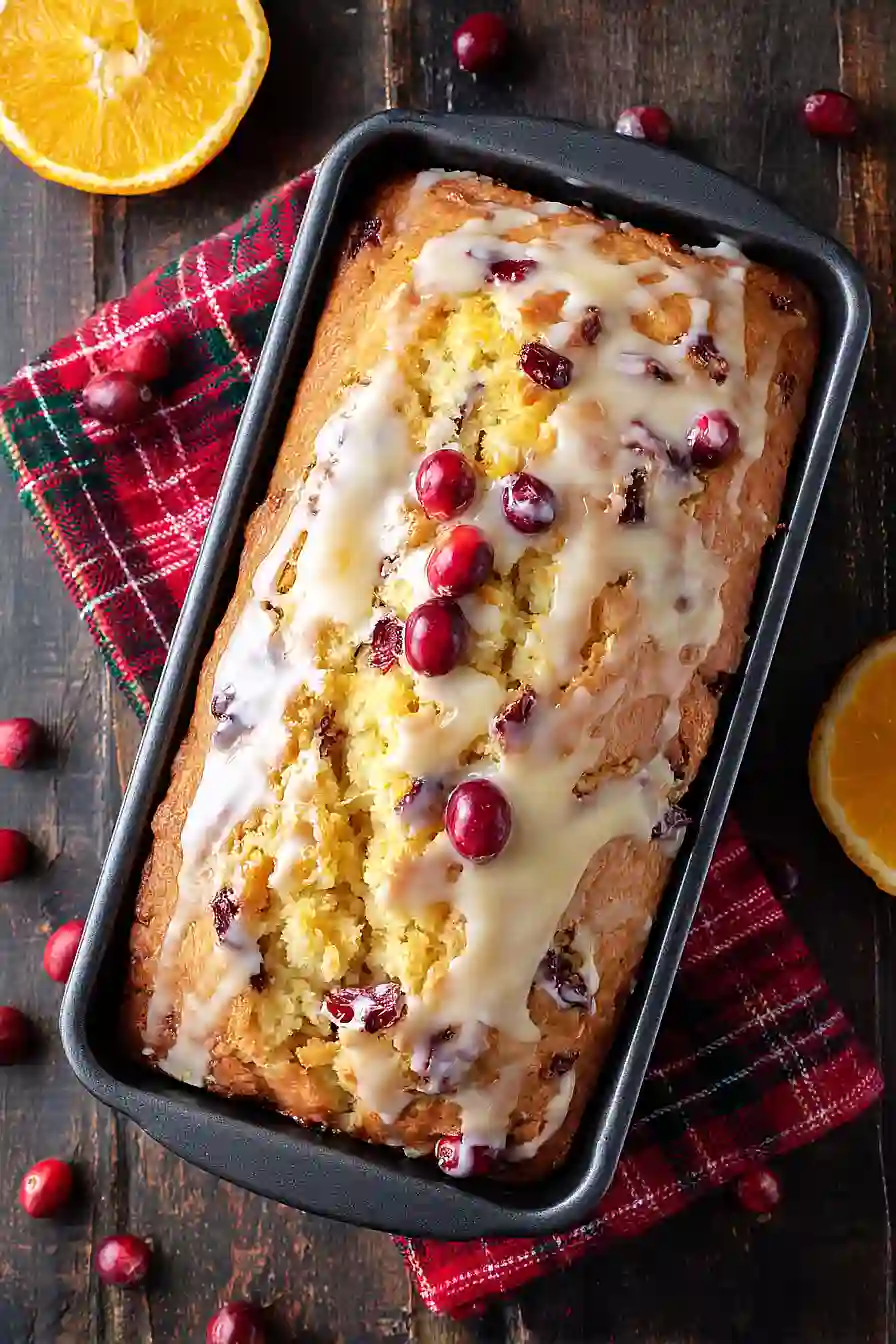
Now I keep a bottle around just for baking. Sure, you could skip it and make a plain orange glaze, and the bread would still be good. But adding that splash of Grand Marnier takes it from “nice breakfast bread” to “something you’d actually be excited to serve guests.” Plus, it makes your kitchen smell like a bakery and a cocktail bar had a baby—in the best way possible.
Why You’ll Love This Cranberry Orange Bread
- Perfect balance of sweet and tart – The tangy cranberries and bright orange flavors create a delicious contrast that keeps every bite interesting without being too sweet.
- Impressive yet easy – This bread looks and tastes like it came from a fancy bakery, but it’s simple enough for beginner bakers to pull off successfully.
- Make-ahead friendly – You can bake this bread a day or two in advance, making it ideal for holiday gatherings or when you need to prep ahead for guests.
- Festive and versatile – Whether you’re serving it for breakfast, as a snack with coffee, or as a holiday dessert, this cranberry orange bread fits any occasion.
- Boozy glaze option – The Grand Marnier glaze adds a sophisticated touch for adults, but you can easily swap it for orange juice to keep it family-friendly.
What Kind of Cranberries Should I Use?
For this bread, dried cranberries are the way to go since they won’t add extra moisture that could make your loaf soggy. You can find them in the baking aisle or near the raisins at most grocery stores, and both sweetened and unsweetened varieties will work just fine. If you can only find fresh or frozen cranberries, you’ll want to chop them up and toss them with a tablespoon of flour before folding them into the batter to help prevent them from sinking to the bottom. Some people like to plump up their dried cranberries by soaking them in warm water or orange juice for about 10 minutes before using them, which can give you a softer, juicier bite in the finished bread.

Options for Substitutions
This recipe is pretty forgiving, so here are some swaps you can make if you need to:
- Unsalted butter: You can use salted butter if that’s what you have – just skip the added salt in the recipe to avoid making it too salty.
- Sour cream: Greek yogurt or plain yogurt work great as a substitute and give you the same moist texture. Use the same amount as called for in the recipe.
- Orange juice and zest: Fresh is best, but bottled orange juice works fine. For the zest, you can use 1 teaspoon of orange extract if you don’t have fresh oranges, though you’ll miss out on some of that bright citrus flavor.
- Dried cranberries: Feel free to swap these with dried cherries, blueberries, or even chopped dried apricots. Fresh cranberries work too – just toss them in a bit of flour before adding to prevent sinking.
- Grand Marnier: The recipe already suggests orange juice as an alternative for the glaze, which works perfectly. You could also use Cointreau, Triple Sec, or even a mix of orange juice with a splash of vanilla extract.
- All purpose flour: Stick with all purpose flour for this recipe – it’s really important for getting the right texture in quick breads like this one.
Watch Out for These Mistakes While Baking
The biggest mistake when making this bread is overmixing the batter once you add the flour, which develops too much gluten and creates a tough, dense loaf instead of a tender crumb – mix just until the flour disappears and you see no more streaks.
Another common error is skipping the step of tossing your dried cranberries in a tablespoon of flour before folding them in, which prevents them from sinking to the bottom of the pan during baking.
Make sure your butter is truly at room temperature (it should leave a slight indent when pressed), not melted or too cold, as this affects how well it creams with the sugar and impacts the final texture.
When adding the Grand Marnier glaze, wait until the bread has cooled for at least 15 minutes but is still slightly warm – this sweet spot allows the glaze to soak in a bit without sliding right off or making the bread soggy.

What to Serve With Cranberry Orange Bread?
This bread is perfect for breakfast or brunch alongside a hot cup of coffee or tea – the orange and cranberry flavors really shine in the morning. I love serving it with a simple spread of softened cream cheese or butter, which balances out the sweetness of the glaze. It also makes a great addition to a holiday brunch spread with scrambled eggs, crispy bacon, and fresh fruit salad. For an afternoon snack, try pairing a slice with vanilla yogurt and some extra fresh berries on the side.
Storage Instructions
Store: This cranberry orange bread stays moist and delicious for days. Wrap it tightly in plastic wrap or store in an airtight container at room temperature for up to 4 days. The glaze will set nicely and the flavors actually get better as they meld together overnight.
Freeze: You can freeze this bread with or without the glaze for up to 3 months. I like to wrap individual slices in plastic wrap, then put them all in a freezer bag so I can grab just what I need. If freezing whole loaves, wrap tightly in plastic wrap and then in foil.
Thaw: Let frozen slices sit at room temperature for about 30 minutes, or thaw a whole loaf on the counter for a few hours. If you’re in a hurry, you can microwave individual slices for 20-30 seconds on low power.
| Preparation Time | 15-20 minutes |
| Cooking Time | 70-75 minutes |
| Total Time | 85-95 minutes |
| Level of Difficulty | Medium |
Estimated Nutrition
Estimated nutrition for the whole recipe (without optional ingredients):
- Calories: 5700-6300
- Protein: 45-55 g
- Fat: 270-310 g
- Carbohydrates: 770-860 g
Ingredients
For the bread:
- 1 cup sour cream
- 1.5 cups granulated sugar
- 4 cups all-purpose flour (I use King Arthur all-purpose flour)
- 1.5 cups unsalted butter (softened to room temperature)
- 1/2 tsp salt
- 2 tbsp orange zest (finely grated from 1-2 oranges)
- 1 tbsp baking powder
- 2 tsp vanilla extract
- 1.5 cups dried cranberries (roughly chopped for even distribution)
- 4 large eggs (room temperature)
- 1 cup orange juice (freshly squeezed preferred)
For the glaze:
- 6 tbsp Grand Marnier (or brandy as a substitute)
- 2 cups powdered sugar (sifted to remove lumps)
Step 1: Prepare Mise en Place and Preheat
- 2 tbsp orange zest
- 1 cup orange juice
- 1.5 cups dried cranberries
- 2 cups powdered sugar
Preheat your oven to 330°F and spray two loaf pans with cooking spray.
While the oven heats, gather all ingredients and prepare your mise en place: finely grate the orange zest from 1-2 oranges, squeeze fresh orange juice to measure 1 cup, roughly chop the dried cranberries (this helps them distribute evenly throughout the batter), and sift the powdered sugar to remove any lumps.
Bring your eggs and butter to room temperature—this ensures proper emulsification and a tender crumb.
I find that taking just 5 minutes for thoughtful prep prevents mixing issues later.
Step 2: Cream Butter and Sugar, Then Add Eggs
- 1.5 cups unsalted butter
- 1.5 cups granulated sugar
- 4 large eggs
In a large mixing bowl, cream together the softened butter and granulated sugar for 3 minutes on medium speed until the mixture is pale, fluffy, and nearly doubled in volume.
This incorporates air and creates a lighter crumb structure.
Add the room-temperature eggs one at a time, mixing well after each addition.
Taking time between eggs ensures proper emulsification and prevents the batter from curdling.
Step 3: Incorporate Wet Ingredients and Aromatics
- 1 cup orange juice
- 1 cup sour cream
- 2 tbsp orange zest
- 2 tsp vanilla extract
Add the orange juice, sour cream, orange zest, and vanilla extract to the butter-egg mixture and blend on medium speed until well combined.
The sour cream adds tang and tenderness while the orange juice and zest layer in bright citrus notes.
Mix just until smooth; overmixing at this stage can develop gluten and make the bread tough.
Step 4: Combine Dry Ingredients and Fold Into Batter
- 4 cups all-purpose flour
- 1 tbsp baking powder
- 1/2 tsp salt
- 1.5 cups dried cranberries
In a separate bowl, whisk together the all-purpose flour, baking powder, and salt.
Add this dry mixture to the wet ingredients from Step 3 along with the chopped cranberries.
Fold gently with a spatula or mix on low speed just until the dry ingredients are absorbed—do not overmix.
The cranberries are added here at the end to prevent them from sinking to the bottom.
I prefer to toss them lightly in a tablespoon of flour from the measured amount before folding to help them suspend throughout the batter.
Step 5: Divide Batter and Bake
- batter from Step 4
Divide the batter evenly between the two prepared loaf pans, smoothing the tops gently.
Bake at 330°F for 70 to 75 minutes for large loaves, or 55 to 60 minutes for mini loaves, until a toothpick inserted into the center comes out clean or with just a few moist crumbs.
The loaves should be golden brown on top.
While they bake, start preparing the glaze.
Step 6: Prepare Grand Marnier Glaze
- 2 cups powdered sugar
- 6 tbsp Grand Marnier
While the loaves are baking, whisk together the sifted powdered sugar and 6 tablespoons of Grand Marnier (or brandy as a substitute) in a small bowl until smooth and pourable.
The mixture should have the consistency of heavy cream—if it’s too thick, add a few drops of water or extra Grand Marnier; if too thin, add a bit more powdered sugar.
Let it sit until the loaves are ready.
Step 7: Cool, Pierce, and Glaze the Loaves
- baked loaves from Step 5
- Grand Marnier glaze from Step 6
Once baked, let the loaves cool in their pans for 10 minutes, then carefully turn them out onto a cooling rack.
While still warm (but not piping hot), use a wooden skewer or cake tester to poke holes evenly across the top of each loaf.
This allows the glaze to soak in and distribute its flavors throughout.
Drizzle the Grand Marnier glaze generously over the warm loaves, letting it pool and seep into the holes.
Allow the loaves to cool completely before slicing—this sets the glaze and allows the flavors to fully develop.

Buttery Cranberry Orange Bread with Grand Marnier Glaze
Ingredients
For the bread:
- 1 cup sour cream
- 1.5 cups granulated sugar
- 4 cups all-purpose flour (I use King Arthur all-purpose flour)
- 1.5 cups unsalted butter (softened to room temperature)
- 1/2 tsp salt
- 2 tbsp orange zest (finely grated from 1-2 oranges)
- 1 tbsp baking powder
- 2 tsp vanilla extract
- 1.5 cups dried cranberries (roughly chopped for even distribution)
- 4 large eggs (room temperature)
- 1 cup orange juice (freshly squeezed preferred)
For the glaze:
- 6 tbsp Grand Marnier (or brandy as a substitute)
- 2 cups powdered sugar (sifted to remove lumps)
Instructions
- Preheat your oven to 330°F and spray two loaf pans with cooking spray. While the oven heats, gather all ingredients and prepare your mise en place: finely grate the orange zest from 1-2 oranges, squeeze fresh orange juice to measure 1 cup, roughly chop the dried cranberries (this helps them distribute evenly throughout the batter), and sift the powdered sugar to remove any lumps. Bring your eggs and butter to room temperature—this ensures proper emulsification and a tender crumb. I find that taking just 5 minutes for thoughtful prep prevents mixing issues later.
- In a large mixing bowl, cream together the softened butter and granulated sugar for 3 minutes on medium speed until the mixture is pale, fluffy, and nearly doubled in volume. This incorporates air and creates a lighter crumb structure. Add the room-temperature eggs one at a time, mixing well after each addition. Taking time between eggs ensures proper emulsification and prevents the batter from curdling.
- Add the orange juice, sour cream, orange zest, and vanilla extract to the butter-egg mixture and blend on medium speed until well combined. The sour cream adds tang and tenderness while the orange juice and zest layer in bright citrus notes. Mix just until smooth; overmixing at this stage can develop gluten and make the bread tough.
- In a separate bowl, whisk together the all-purpose flour, baking powder, and salt. Add this dry mixture to the wet ingredients from Step 3 along with the chopped cranberries. Fold gently with a spatula or mix on low speed just until the dry ingredients are absorbed—do not overmix. The cranberries are added here at the end to prevent them from sinking to the bottom. I prefer to toss them lightly in a tablespoon of flour from the measured amount before folding to help them suspend throughout the batter.
- Divide the batter evenly between the two prepared loaf pans, smoothing the tops gently. Bake at 330°F for 70 to 75 minutes for large loaves, or 55 to 60 minutes for mini loaves, until a toothpick inserted into the center comes out clean or with just a few moist crumbs. The loaves should be golden brown on top. While they bake, start preparing the glaze.
- While the loaves are baking, whisk together the sifted powdered sugar and 6 tablespoons of Grand Marnier (or brandy as a substitute) in a small bowl until smooth and pourable. The mixture should have the consistency of heavy cream—if it's too thick, add a few drops of water or extra Grand Marnier; if too thin, add a bit more powdered sugar. Let it sit until the loaves are ready.
- Once baked, let the loaves cool in their pans for 10 minutes, then carefully turn them out onto a cooling rack. While still warm (but not piping hot), use a wooden skewer or cake tester to poke holes evenly across the top of each loaf. This allows the glaze to soak in and distribute its flavors throughout. Drizzle the Grand Marnier glaze generously over the warm loaves, letting it pool and seep into the holes. Allow the loaves to cool completely before slicing—this sets the glaze and allows the flavors to fully develop.