My kids love spaghetti, but they always ask for something different. Regular marinara sauce gets boring after a while, and I found myself in a dinner rut. That’s when I started experimenting with Asian flavors in our pasta dishes.
This ground beef spaghetti combines the comfort of pasta with the bold taste of soy sauce, ginger, and garlic. It’s become our go-to weeknight meal because it uses ingredients I already have in my pantry. Plus, it comes together in about 20 minutes, which is perfect for those busy school nights.
The best part? My picky eaters actually request this dish. They love the savory sauce, and I love that it’s packed with protein and vegetables. It’s different enough to feel special but familiar enough that everyone will eat it.
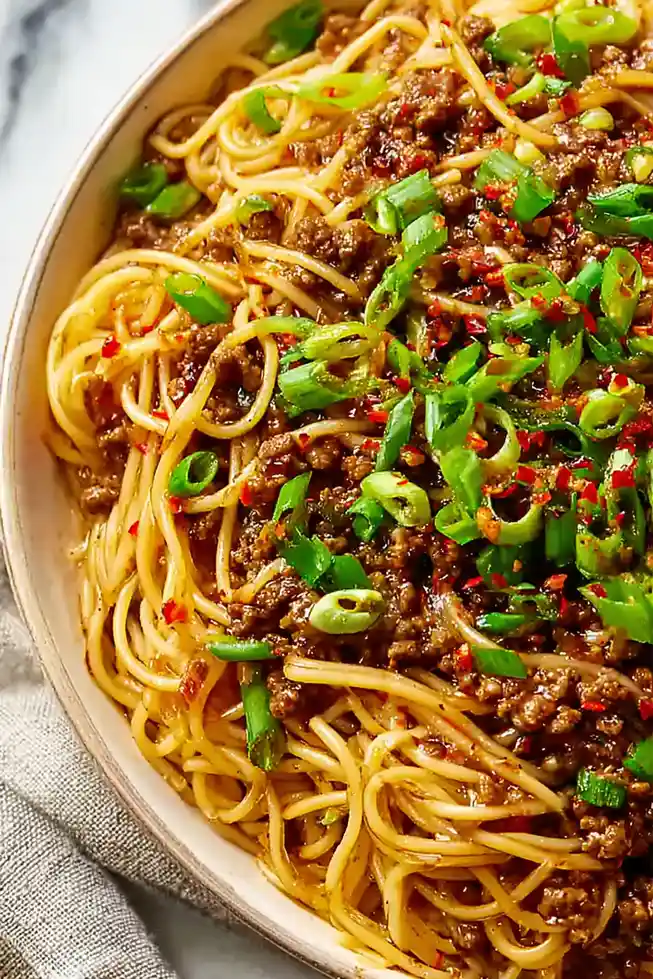
Why You’ll Love This Asian-Style Ground Beef Spaghetti
- Quick weeknight dinner – Ready in just 30-45 minutes, this recipe is perfect when you need something tasty on the table fast after a busy day.
- Simple ingredients – Most of these pantry staples are easy to find, and you probably already have ground beef and basic seasonings at home.
- Bold Asian flavors – The combination of soy sauce, ginger, and white pepper gives regular ground beef a delicious twist that’s way more exciting than plain pasta.
- Customizable heat level – You can adjust the white pepper and add as much or as little chili oil as you want, making it perfect for everyone’s taste preferences.
- Budget-friendly comfort food – Ground beef and vermicelli are affordable ingredients that stretch into a filling meal for the whole family.
What Kind of Ground Beef Should I Use?
For this Asian-style spaghetti, you’ll want to use ground beef with a fat content around 80/20 or 85/15 – this gives you enough fat for flavor without making the dish too greasy. Leaner ground beef like 90/10 can work too, but you might need to add a bit more oil during cooking to prevent it from drying out. The key is to break up the beef into small, even pieces as it cooks so it mixes well with the vermicelli and absorbs all those great Asian flavors. If you can find ground beef that’s freshly ground at your butcher, that’s even better since it tends to have a better texture than pre-packaged options.
Options for Substitutions
This fusion dish is pretty forgiving when it comes to swaps – here are some easy substitutions:
- Ground beef: Ground pork, chicken, or turkey work great here. You could even try crumbled firm tofu for a vegetarian version – just add it during the last few minutes of cooking.
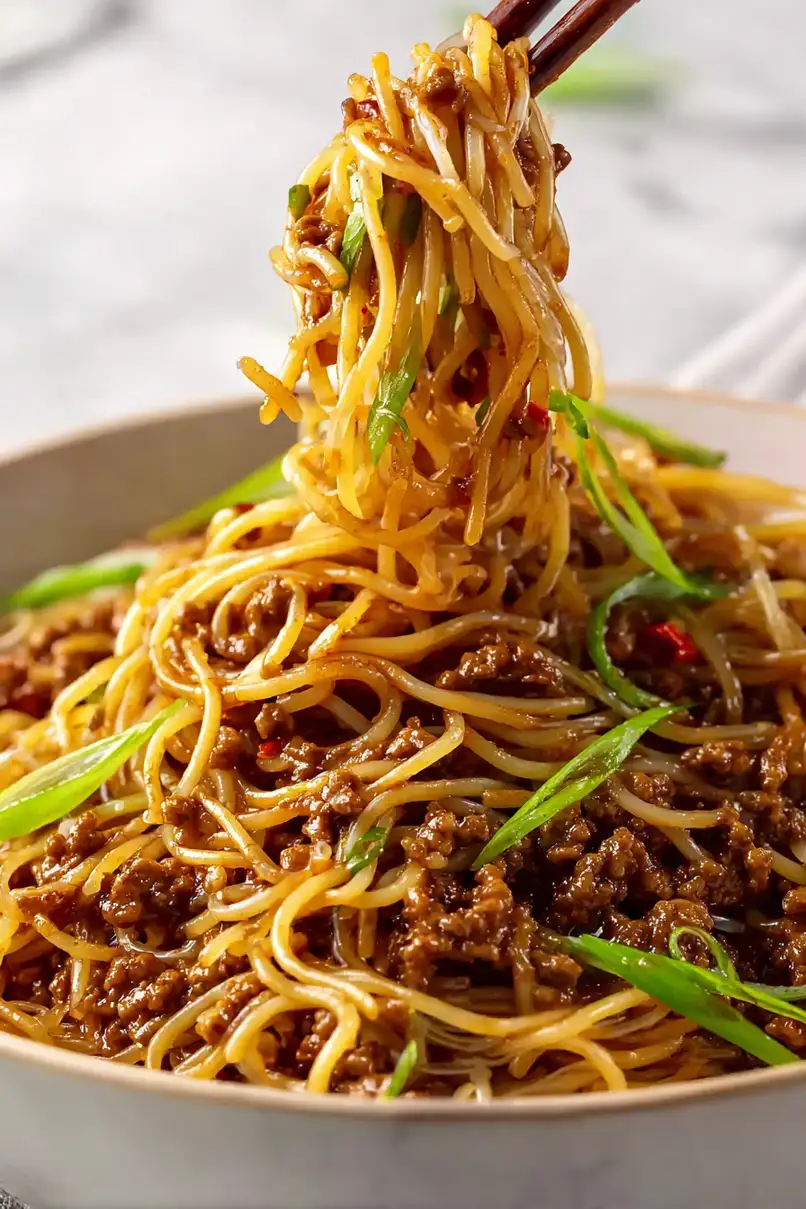
- Vermicelli: Regular thin spaghetti, angel hair pasta, or rice noodles are perfect substitutes. Cook according to package directions and adjust cooking time as needed.
- White pepper powder: Black pepper works fine if that’s what you have, though it’ll give a slightly different flavor. Start with less since black pepper can be stronger.
- Fresh ginger: In a pinch, use ½ teaspoon ground ginger powder instead of fresh, but add it early in the cooking process so it doesn’t taste harsh.
- Chinese dark vinegar: Rice vinegar or even a splash of balsamic vinegar can work as substitutes, though the flavor will be a bit different.
- Chinese chili oil: Regular chili flakes mixed with a bit of sesame oil, or sriracha sauce can give you that spicy kick if you don’t have chili oil on hand.
- Spring onions: Regular green onions or even finely chopped regular onions work just fine as a substitute.
Watch Out for These Mistakes While Cooking
The biggest mistake when making this Asian-style spaghetti is adding the cornstarch directly to the hot pan, which will create lumps – instead, mix it with a tablespoon of cold water first to create a smooth slurry before stirring it into the beef.
Another common error is overcooking the vermicelli, since these thin noodles cook much faster than regular pasta and can turn mushy in just a minute or two past their cooking time.
Don’t forget to cook your ground beef over high heat and avoid overcrowding the pan, as this helps you get a nice sear instead of steaming the meat, which keeps the texture firm and flavorful.
Finally, add your ginger and spring onions at the right time – ginger should go in early to release its flavor, while spring onions work best when added at the very end to keep their fresh crunch.
What to Serve With Asian-Style Ground Beef Spaghetti?
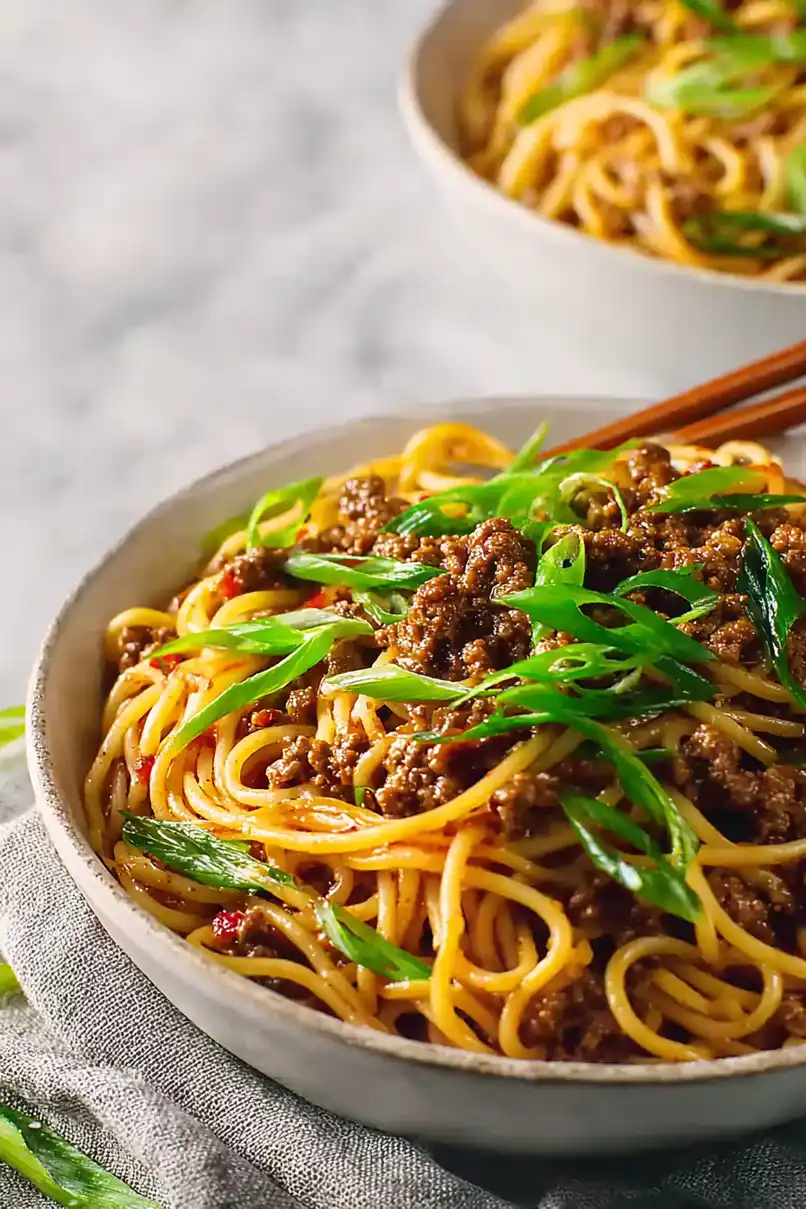
This fusion dish pairs beautifully with some simple steamed vegetables like bok choy, broccoli, or snap peas to balance out the rich, savory flavors. A light cucumber salad with rice vinegar dressing also works great as a refreshing side that cuts through the richness of the beef. If you want to make it more filling, try serving it alongside some crispy pan-fried dumplings or spring rolls for a complete Asian-inspired meal. For extra flavor, don’t forget to have some extra chili oil and soy sauce on the table so everyone can adjust the heat and saltiness to their liking.
Storage Instructions
Refrigerate: This Asian-style ground beef spaghetti keeps really well in the fridge for up to 4 days in an airtight container. I actually think it tastes even better the next day because all those flavors have time to meld together. Store the noodles and beef mixture together – they won’t get mushy like you might expect.
Freeze: You can freeze this dish for up to 3 months in freezer-safe containers or bags. Just make sure it’s completely cooled first, and leave a little room at the top for expansion. It’s great for those busy weeknight dinners when you need something quick and satisfying.
Reheat: Warm it up in the microwave with a splash of water to keep the noodles from drying out, or toss it in a pan over medium heat for a few minutes. If you’re reheating from frozen, let it thaw overnight in the fridge first. Add a drizzle of extra soy sauce or chili oil if it needs a flavor boost.
| Preparation Time | 10-15 minutes |
| Cooking Time | 20-30 minutes |
| Total Time | 30-45 minutes |
| Level of Difficulty | Easy |
Estimated Nutrition
Estimated nutrition for the whole recipe (without optional ingredients):
- Calories: 850-1000
- Protein: 30-36 g
- Fat: 42-50 g
- Carbohydrates: 85-100 g
Ingredients
For the beef topping:
- 2 tsp white pepper powder (adjust to taste)
- 1 cup water
- 9 oz ground beef (80/20 blend preferred)
- 1/2 cup water (for corn starch slurry to thicken)
- 2 tbsp soy sauce (I use Kikkoman)
- 2 tbsp corn starch (for thickening the sauce)
- 2 tbsp neutral oil (or peanut oil for authentic flavor)
- 1 tsp grated ginger (freshly minced for best flavor)
For the noodles:
- 4.25 oz vermicelli noodles (or 2 oz dry noodles per serving)
For garnish/serving:
- 2 tbsp Chinese dark vinegar (optional, adds tangy depth)
- 2 tbsp Chinese chili oil (optional, adds heat and aroma)
- 2 tbsp chopped spring onion (or green onion, finely sliced)
Step 1: Prepare the Mise en Place and Cook the Noodles
- 4.25 oz vermicelli noodles
- salt
- 1 tsp grated ginger
- 2 tbsp chopped spring onion
While you’re organizing your ingredients, bring a large pot of salted water to a boil—this takes about 10 minutes and allows you to multitask efficiently.
Mince the ginger finely, slice the spring onions, and measure out all your liquids and seasonings into small bowls.
Once the water is boiling, add the vermicelli noodles and cook according to package directions until al dente (usually 4-5 minutes).
Drain the noodles and set aside—I like to lightly toss them with a touch of oil to prevent sticking while you finish the sauce.
Step 2: Brown the Ground Beef and Build the Flavor Base
- 2 tbsp neutral oil
- 9 oz ground beef
- 1 tsp grated ginger
- 2 tbsp soy sauce
Heat the neutral oil in a large wok or skillet over medium-high heat until shimmering.
Add the ground beef and cook, breaking it up with a spoon or spatula as it cooks, until it’s fully browned and no pink remains (about 5-7 minutes).
This browning step develops a deep, savory flavor that forms the foundation of your sauce.
Once browned, immediately add the minced ginger and soy sauce, stirring constantly for just 10-15 seconds—this blooms the aromatic ginger and distributes the salty soy flavor throughout the meat.
Step 3: Simmer the Sauce and Develop Depth
- 1 cup water
- 2 tsp white pepper powder
Pour in the 1 cup of water and add the white pepper, stirring to combine.
Cover the pan and reduce heat to medium-low, allowing the mixture to simmer gently for 10 minutes.
This simmering time lets the flavors meld together and the sauce reduce slightly, concentrating the taste.
I find that covering the pan during this step helps the sauce develop more cohesively while preventing too much evaporation.
Step 4: Thicken the Sauce to Silky Perfection
- 2 tbsp corn starch
- 1/2 cup water
While the sauce simmers, whisk together the corn starch with the 1/2 cup of water in a small bowl until completely smooth with no lumps—this corn starch slurry is crucial for creating a glossy, clinging sauce.
Once the 10-minute simmer is complete, pour the corn starch mixture slowly into the beef sauce while stirring constantly.
Continue stirring for 1-2 minutes until the sauce thickens and becomes glossy.
The sauce should coat the back of a spoon and cling beautifully to the noodles.
Step 5: Combine and Season to Taste
- cooked vermicelli noodles from Step 1
- thickened beef sauce from Step 4
- 2 tbsp Chinese dark vinegar
- 2 tbsp Chinese chili oil
Add the cooked noodles from Step 1 to the thickened beef sauce and toss everything together until the noodles are evenly coated.
If you’re using the optional Chinese dark vinegar and chili oil, add them now while the noodles are still hot—the heat will release their aromas and flavors more effectively.
Toss again to distribute the optional seasonings evenly throughout the dish.
Step 6: Plate and Garnish
- 2 tbsp chopped spring onion
Transfer the noodles to serving bowls and top generously with the chopped spring onions.
Serve immediately while the sauce is still hot and clinging to the noodles.