If you ask me, couscous salad is one of the smartest dishes you can make for a busy weeknight.
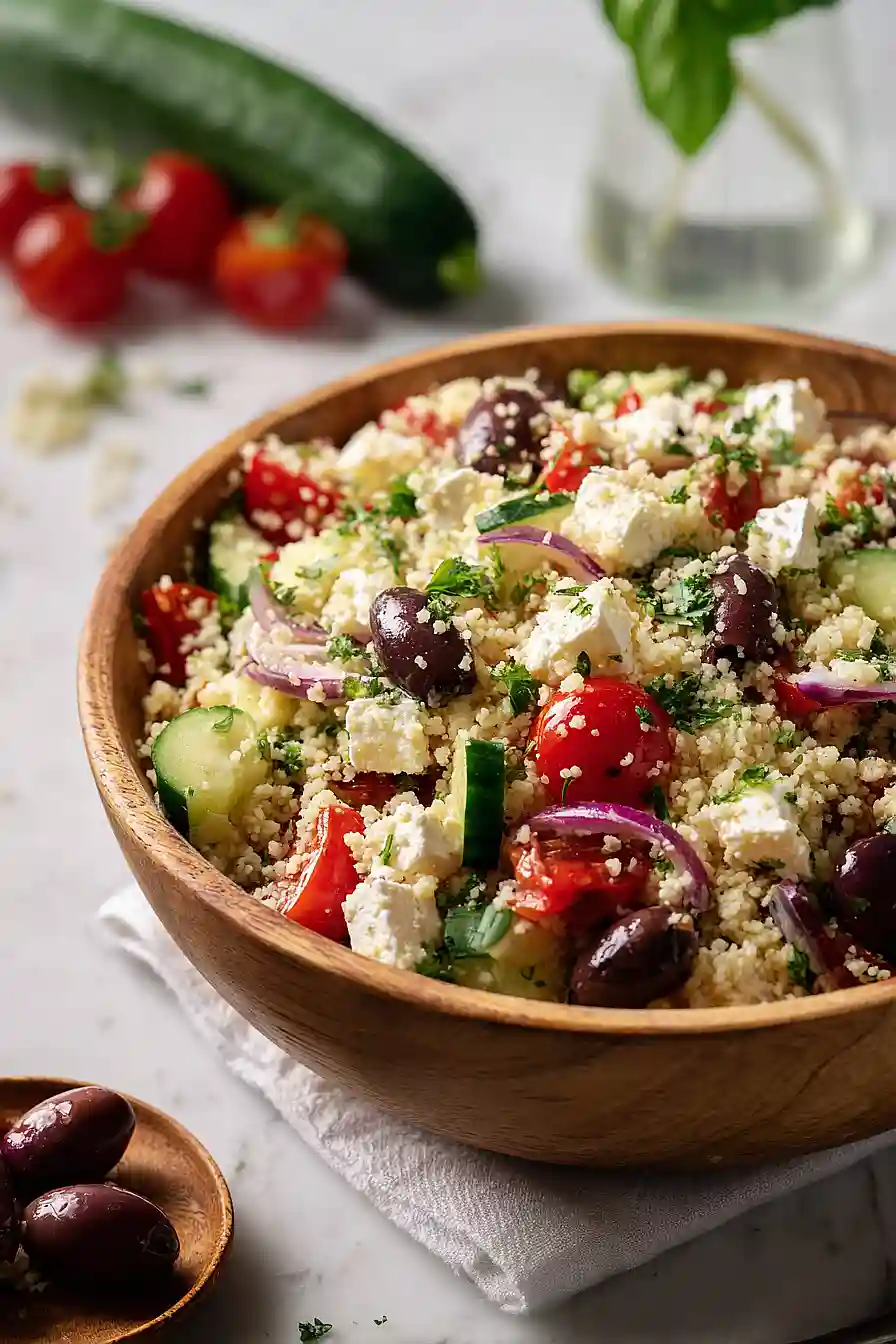
This Mediterranean-inspired side dish brings together fluffy couscous with crisp vegetables and briny olives. Cherry tomatoes and cucumber add a fresh crunch, while crumbled feta gives it a creamy, salty bite.
It’s tossed with a simple lemon-garlic dressing and finished with fresh herbs like basil and parsley. The couscous soaks up all those flavors while staying light and satisfying.
It’s a go-to recipe that works just as well for potlucks as it does for meal prep, perfect for those days when you want something good without a lot of fuss.
Why You’ll Love This Mediterranean Couscous Salad
- Ready in 20 minutes – This salad comes together super fast, making it perfect for busy weeknights or last-minute gatherings when you need something quick and satisfying.
- Fresh and healthy – Packed with colorful vegetables, herbs, and protein-rich feta, this salad gives you a nutritious meal that doesn’t feel heavy.
- Great for meal prep – Make it ahead and enjoy it throughout the week for lunch or dinner. The flavors actually get better as they sit together in the fridge.
- No cooking required – Just pour boiling water over the couscous and chop your veggies. There’s no actual cooking involved, which means less cleanup and no heating up your kitchen.
- Perfect for any occasion – Whether you need a side dish for a barbecue, a potluck contribution, or a light main course, this salad works for everything.
What Kind of Couscous Should I Use?
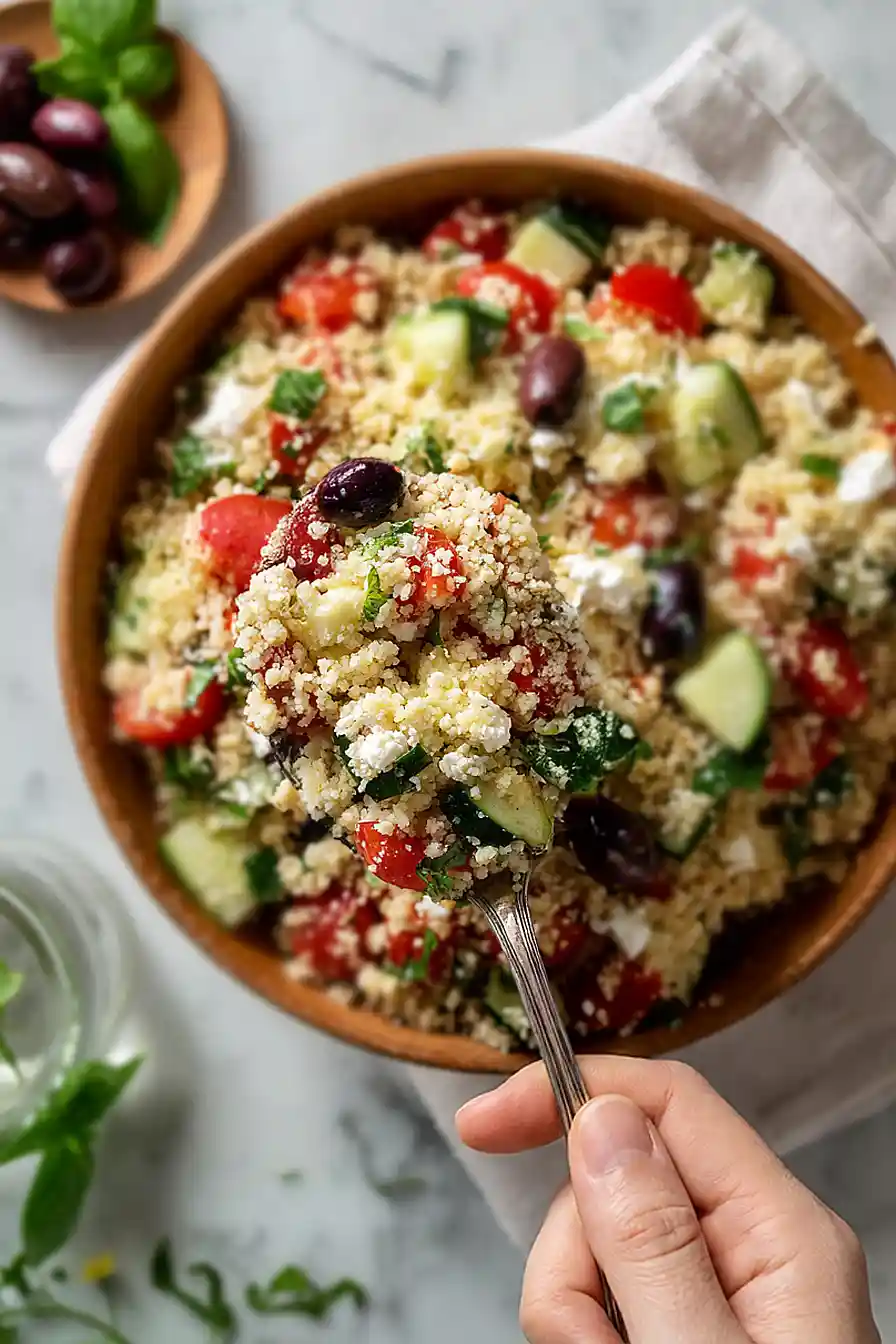
For this Mediterranean salad, regular couscous (also called Moroccan couscous) is your best bet since it cooks quickly and has a light, fluffy texture that soaks up all the flavors. You’ll find it in the pasta or grain aisle at most grocery stores, and it usually comes in a box or bulk bin. Israeli couscous (the larger, pearl-shaped kind) can work too, but keep in mind it takes longer to cook and has a chewier texture that changes the feel of the salad. If you’re looking for a whole grain option, whole wheat couscous is available and adds a nuttier flavor while boosting the fiber content.
Options for Substitutions
This salad is pretty forgiving when it comes to swaps, so feel free to work with what you have:
- Couscous: You can swap regular couscous for Israeli (pearl) couscous, though it’ll need about 10 minutes of cooking time instead of just steaming. Quinoa or bulgur wheat also work great – just cook according to package directions and let cool before mixing.
- Feta cheese: If you’re not a feta fan, try crumbled goat cheese or small mozzarella balls. For a dairy-free version, just leave it out or add some toasted pine nuts for that salty, rich element.
- Kalamata olives: Any type of olives will do here – green olives, black olives, or even a mix. If you’re not into olives at all, sun-dried tomatoes make a nice substitute.
- Fresh herbs: Don’t have all three herbs? Use what you’ve got. Basil and parsley are the main players, so prioritize those. You can also use about 1-2 teaspoons of dried herbs if fresh aren’t available, just add them to the couscous while it steams.
- Courgette: Bell peppers, yellow squash, or even grilled eggplant work well here. Just dice them to similar sizes so everything mixes nicely.
- Lemon juice: Lime juice or red wine vinegar can step in if you’re out of lemons, though lemon really does give it that classic Mediterranean taste.
Watch Out for These Mistakes While Cooking
The biggest mistake when making couscous salad is not fluffing the couscous properly after it steams, which leaves you with clumpy grains instead of light, fluffy texture – use a fork to gently separate the grains and break up any lumps.
Another common error is adding the vegetables and dressing while the couscous is still warm, which can make your cucumber and tomatoes release water and turn the salad soggy, so always let it cool completely first.
To get the most flavor, dice your vegetables into similar-sized pieces so every bite has a good mix, and don’t skip salting your cucumber beforehand – this draws out excess moisture that would otherwise water down your dressing.
Finally, add the feta just before serving rather than mixing it in too early, as this keeps the cheese from breaking down and turning the whole salad creamy instead of maintaining those nice crumbly chunks.
What to Serve With Mediterranean Couscous Salad?
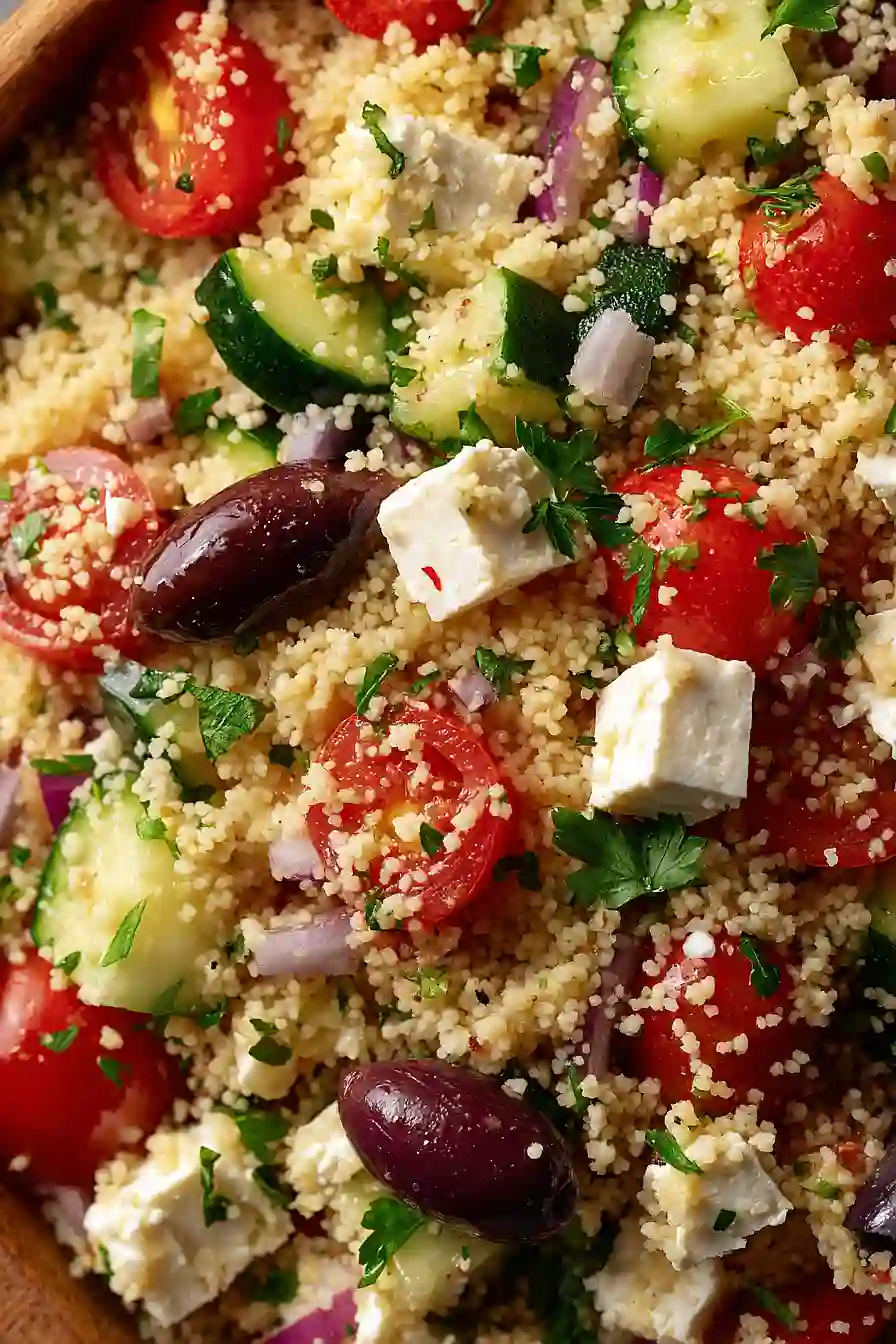
This couscous salad is pretty filling on its own, but it pairs beautifully with grilled chicken, lamb kebabs, or even some pan-seared salmon if you want to add protein. I love serving it alongside some warm pita bread and hummus for a complete Mediterranean spread that everyone can dig into. It also works great as a side dish for a summer barbecue – think grilled meats, roasted vegetables, or even just some simple grilled shrimp skewers. Since the salad is already packed with fresh veggies and tangy feta, you really don’t need much else to make it a satisfying meal.
Storage Instructions
Store: This couscous salad actually gets better after sitting for a few hours as the flavors meld together. Keep it in an airtight container in the fridge for up to 4 days. Just give it a good stir before serving since the dressing may settle at the bottom.
Make Ahead: This is a great make-ahead dish for meal prep or parties. You can prepare everything up to 2 days in advance, though I’d recommend adding the feta right before serving so it stays nice and creamy. The salad is best served cold or at room temperature, so just pull it out of the fridge about 20 minutes before eating if you prefer it less chilled.
Keep Fresh: If you notice the salad seems a bit dry after a day or two, just drizzle a little extra olive oil and a squeeze of lemon juice to freshen it up. The vegetables will release some moisture over time, which is totally normal and doesn’t affect the taste.
| Preparation Time | 15-20 minutes |
| Cooking Time | 0-0 minutes |
| Total Time | 15-20 minutes |
| Level of Difficulty | Easy |
| Servings | 6 servings |
Estimated Nutrition
Estimated nutrition for the whole recipe (without optional ingredients):
- Calories: 1450-1600
- Protein: 30-36 g
- Fat: 62-70 g
- Carbohydrates: 180-200 g
Ingredients
For the couscous:
- 1.75 cups couscous (I always use RiceSelect Original Couscous)
- 1.5 cups water
- 1 tsp bouillon (I prefer Better Than Bouillon roasted chicken base)
For the mix-ins:
- 0.33 cup olive oil (extra-virgin gives the best texture and moisture)
- 0.5 red onion (diced into 1/4-inch pieces)
- 0.25 cucumber (deseeded and cut into 1/2-inch chunks)
- 1 courgette
- 7 oz cherry tomatoes (halved lengthwise)
- 10 kalamata olives (pitted and sliced into rounds)
- 3.5 oz feta (I like to buy it in a block and crumble it for extra creaminess)
- 3 tbsp basil
- 2 tbsp parsley
- 1 tsp mint
- 1.5 fl oz lemon juice (freshly squeezed for best flavor and aroma)
- 3 garlic cloves
- 0.25 tsp pepper
- 0.25 tsp salt
Step 1: Prepare the Mise en Place
- 0.5 red onion
- 0.25 cucumber
- 1 courgette
- 7 oz cherry tomatoes
- 10 kalamata olives
- 3.5 oz feta
- 3 tbsp basil
- 2 tbsp parsley
- 1 tsp mint
- 3 garlic cloves
Dice the red onion into 1/4-inch pieces, deseed and cut the cucumber into 1/2-inch chunks, and cut the courgette into similar-sized chunks.
Halve the cherry tomatoes lengthwise, pit and slice the kalamata olives into rounds, and mince the garlic cloves.
Crumble the feta cheese into bite-sized pieces.
Roughly chop the basil and parsley, and measure out the mint.
Having everything prepped before cooking means the couscous will cool properly while you finish the vegetables, and you’ll be ready to assemble quickly.
Step 2: Cook the Couscous Base
- 1.75 cups couscous
- 1.5 cups water
- 1 tsp bouillon
Bring 1.5 cups water to a boil in a small pot and stir in the bouillon until dissolved.
Pour the boiling liquid over the couscous in a medium bowl, stir once, then cover tightly with plastic wrap or a lid.
Let it sit undisturbed for 10 minutes—this steaming process allows the couscous to absorb the liquid evenly.
After 10 minutes, fluff the couscous with a fork to separate the grains, then spread it on a shallow plate or baking sheet to cool for about 5-10 minutes while you continue with the other components.
Step 3: Build the Flavor Base with Herbs and Lemon
- cooled couscous from Step 2
- 3 tbsp basil
- 2 tbsp parsley
- 1 tsp mint
- 3 garlic cloves
- 1.5 fl oz lemon juice
Once the couscous has cooled slightly and is no longer steaming hot, transfer it to a large mixing bowl.
Add the fresh basil, parsley, mint, and minced garlic cloves, then pour in the freshly squeezed lemon juice.
Toss gently but thoroughly to distribute the herbs and lemon juice evenly throughout the couscous.
The acid from the lemon will brighten the flavor and help the couscous absorb the dressing.
I like to add the herbs at this stage because they’ll stay fresher and more vibrant rather than sitting in the salad for too long.
Step 4: Combine Vegetables and Dress the Salad
- herb-dressed couscous from Step 3
- 0.5 red onion
- 0.25 cucumber
- 1 courgette
- 7 oz cherry tomatoes
- 0.33 cup olive oil
- 0.25 tsp salt
- 0.25 tsp pepper
Add the prepared vegetables from Step 1—red onion, cucumber, courgette, and cherry tomatoes—to the couscous mixture.
Pour in the olive oil and sprinkle with salt and pepper, then toss everything together gently but thoroughly until evenly combined.
The olive oil will coat all the grains and vegetables, creating a cohesive salad.
Extra-virgin olive oil gives the best texture and adds a fruity depth that complements the Mediterranean flavors, so don’t skimp on quality here.
Step 5: Finish with Olives and Feta
- dressed couscous mixture from Step 4
- 10 kalamata olives
- 3.5 oz feta
Fold in the sliced kalamata olives and crumbled feta cheese gently with a rubber spatula or wooden spoon, being careful not to break apart the feta too much—those creamy pockets of cheese are what make this salad special.
Taste and adjust the seasoning if needed with an extra pinch of salt or squeeze of lemon.
Transfer to a serving bowl or individual plates and serve at room temperature.
I prefer to crumble fresh feta from a block rather than using pre-crumbled versions, as it keeps a creamier texture and doesn’t get dusty.
Classic Mediterranean Couscous Salad with Feta
Ingredients
For the couscous::
- 1.75 cups couscous (I always use RiceSelect Original Couscous)
- 1.5 cups water
- 1 tsp bouillon (I prefer Better Than Bouillon roasted chicken base)
For the mix-ins::
- 0.33 cup olive oil (extra-virgin gives the best texture and moisture)
- 0.5 red onion (diced into 1/4-inch pieces)
- 0.25 cucumber (deseeded and cut into 1/2-inch chunks)
- 1 courgette
- 7 oz cherry tomatoes (halved lengthwise)
- 10 kalamata olives (pitted and sliced into rounds)
- 3.5 oz feta (I like to buy it in a block and crumble it for extra creaminess)
- 3 tbsp basil
- 2 tbsp parsley
- 1 tsp mint
- 1.5 fl oz lemon juice (freshly squeezed for best flavor and aroma)
- 3 garlic cloves
- 0.25 tsp pepper
- 0.25 tsp salt
Instructions
- Dice the red onion into 1/4-inch pieces, deseed and cut the cucumber into 1/2-inch chunks, and cut the courgette into similar-sized chunks. Halve the cherry tomatoes lengthwise, pit and slice the kalamata olives into rounds, and mince the garlic cloves. Crumble the feta cheese into bite-sized pieces. Roughly chop the basil and parsley, and measure out the mint. Having everything prepped before cooking means the couscous will cool properly while you finish the vegetables, and you'll be ready to assemble quickly.
- Bring 1.5 cups water to a boil in a small pot and stir in the bouillon until dissolved. Pour the boiling liquid over the couscous in a medium bowl, stir once, then cover tightly with plastic wrap or a lid. Let it sit undisturbed for 10 minutes—this steaming process allows the couscous to absorb the liquid evenly. After 10 minutes, fluff the couscous with a fork to separate the grains, then spread it on a shallow plate or baking sheet to cool for about 5-10 minutes while you continue with the other components.
- Once the couscous has cooled slightly and is no longer steaming hot, transfer it to a large mixing bowl. Add the fresh basil, parsley, mint, and minced garlic cloves, then pour in the freshly squeezed lemon juice. Toss gently but thoroughly to distribute the herbs and lemon juice evenly throughout the couscous. The acid from the lemon will brighten the flavor and help the couscous absorb the dressing. I like to add the herbs at this stage because they'll stay fresher and more vibrant rather than sitting in the salad for too long.
- Add the prepared vegetables from Step 1—red onion, cucumber, courgette, and cherry tomatoes—to the couscous mixture. Pour in the olive oil and sprinkle with salt and pepper, then toss everything together gently but thoroughly until evenly combined. The olive oil will coat all the grains and vegetables, creating a cohesive salad. Extra-virgin olive oil gives the best texture and adds a fruity depth that complements the Mediterranean flavors, so don't skimp on quality here.
- Fold in the sliced kalamata olives and crumbled feta cheese gently with a rubber spatula or wooden spoon, being careful not to break apart the feta too much—those creamy pockets of cheese are what make this salad special. Taste and adjust the seasoning if needed with an extra pinch of salt or squeeze of lemon. Transfer to a serving bowl or individual plates and serve at room temperature. I prefer to crumble fresh feta from a block rather than using pre-crumbled versions, as it keeps a creamier texture and doesn't get dusty.