I used to think tuna salad meant one thing: tuna mixed with mayo, maybe some celery if you were feeling fancy. That’s what I grew up eating, and honestly, I never questioned it. Then I tried making it with Greek yogurt instead, and tossed in some Mediterranean ingredients I had sitting in my fridge.
Turns out, swapping mayo for Greek yogurt gives you the same creamy texture but with a tangy kick that actually tastes like something. Add cucumbers, bell peppers, olives, and a bit of feta, and suddenly you’ve got a tuna salad that feels less like sad desk lunch and more like something you’d actually want to eat. Plus, it takes about five minutes to throw together, which is exactly my speed on a busy weeknight.
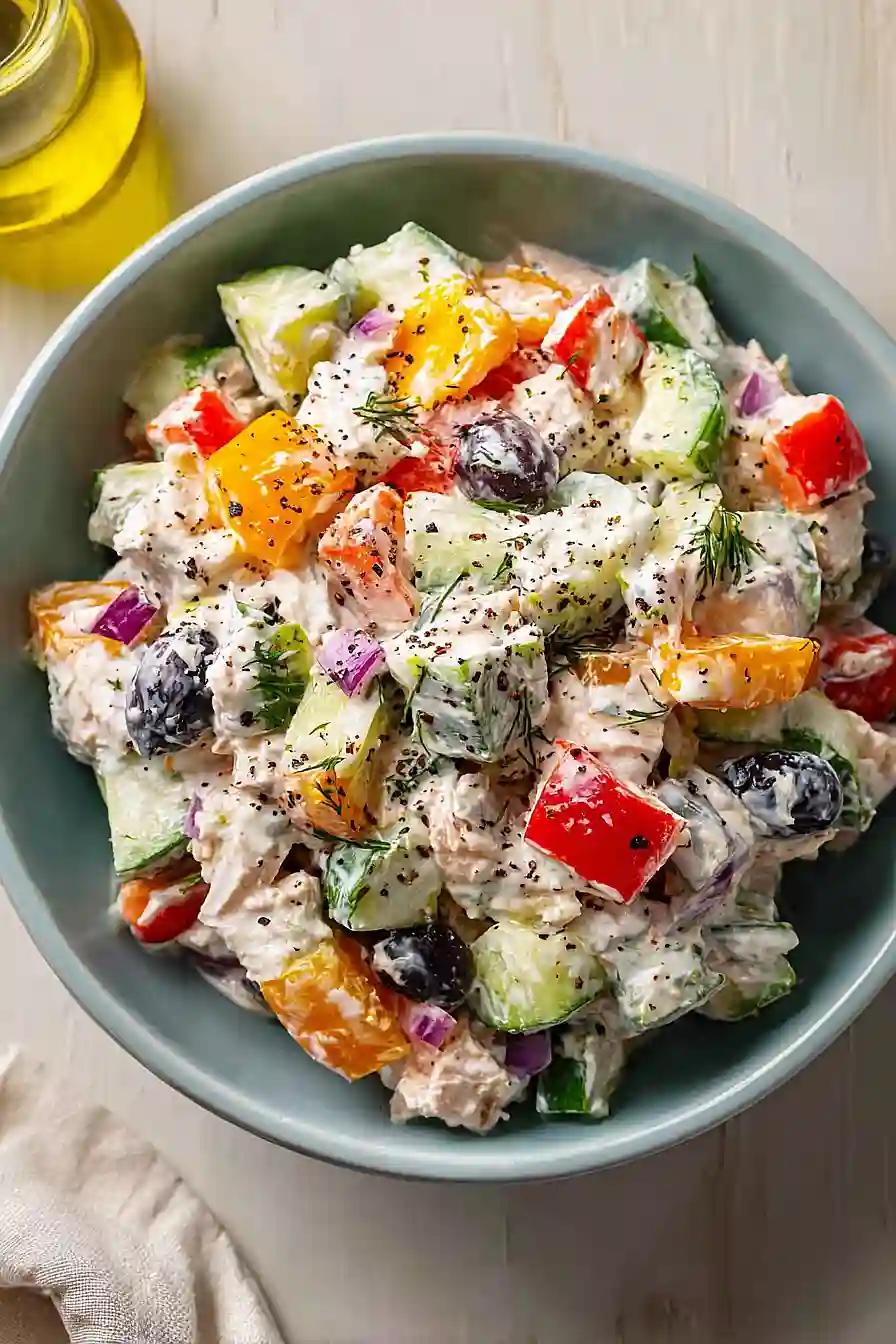
Why You’ll Love This Mediterranean Tuna Salad
- Ready in minutes – This tuna salad comes together in just 5-10 minutes, making it perfect for busy weekdays when you need lunch or dinner fast.
- High-protein and healthy – Greek yogurt instead of mayo keeps it light and protein-packed, while the fresh veggies add crunch and nutrients without weighing you down.
- Fresh Mediterranean flavors – The combination of feta, olives, cucumber, and lemon juice gives you that bright, tangy taste that makes every bite interesting.
- No cooking required – Just chop, mix, and eat. It’s that simple, with no stove or oven needed.
- Meal prep friendly – Make a batch at the beginning of the week and enjoy it for quick lunches in wraps, on crackers, or straight from the bowl.
What Kind of Tuna Should I Use?
For this Mediterranean tuna salad, you can use either chunk light or solid white albacore tuna – both work great. Chunk light tuna tends to be more budget-friendly and has a milder flavor, while albacore is a bit meatier with a firmer texture. Whether you go for tuna packed in water or oil is totally up to you, though water-packed is the lighter option and lets the Mediterranean flavors really shine through. Just make sure to drain your tuna well before mixing it into the salad, giving the can a good squeeze to get rid of excess liquid so your salad doesn’t end up watery.

Options for Substitutions
This tuna salad is easy to customize based on what you have in your kitchen:
- Canned tuna: You can swap tuna for canned salmon, canned chicken, or even cooked shrimp if you want to change things up. The rest of the recipe stays the same.
- Greek yogurt: If you’re out of Greek yogurt, regular plain yogurt works fine – just drain off any excess liquid first. You can also use sour cream or a mix of mayo and yogurt for a creamier texture.
- Feta cheese: No feta? Try crumbled goat cheese, shredded parmesan, or even diced mozzarella. Each will give you a slightly different flavor but still taste great.
- Bell pepper: Any color bell pepper works here, or you can use cherry tomatoes, celery, or shredded carrots for crunch instead.
- Olives: Kalamata, black, or green olives all work well. If you’re not an olive fan, you can leave them out or add some capers for that briny flavor.
- Lemon juice: Fresh lemon juice is best, but bottled works too. In a pinch, use lime juice or a splash of red wine vinegar.
Watch Out for These Mistakes While Cooking
The biggest mistake people make with tuna salad is forgetting to drain the tuna completely, which leaves you with a watery, diluted mess instead of a creamy salad – press the tuna with a fork or paper towel to remove every last bit of liquid.
Another common error is adding the salt before tasting, since both the tuna and feta are already pretty salty, so always taste first and season at the end to avoid an overly salty dish.
To keep your vegetables from making the salad soggy, especially the cucumber, remove the seeds and pat everything dry with a paper towel before mixing.
Finally, let the salad sit in the fridge for at least 15 minutes before serving, which allows all the flavors to blend together and makes a noticeable difference in taste.

What to Serve With Mediterranean Tuna Salad?
This tuna salad is perfect stuffed into a pita pocket or wrapped up in a warm flatbread for an easy lunch. I love serving it on top of mixed greens with some cherry tomatoes and extra cucumbers for a light, protein-packed meal. You can also scoop it onto crackers or toasted baguette slices for a quick snack, or serve it alongside some hummus and raw veggies for a Mediterranean-style spread. If you want something more filling, pair it with a simple pasta salad or some roasted chickpeas on the side.
Storage Instructions
Store: Keep your tuna salad in an airtight container in the fridge for up to 3 days. The Greek yogurt base keeps it fresh and creamy, though you might notice a little liquid at the bottom after a day or two – just give it a quick stir before eating.
Make Ahead: This salad actually tastes better after sitting for a few hours because the flavors have time to mingle. I like to prep it the night before and let it chill overnight, so it’s ready to grab for lunch the next day.
Serve: This salad is best enjoyed cold, straight from the fridge. You can eat it on its own, scoop it onto crackers, or pile it into a pita pocket. If it seems a bit thick after storing, just add a tiny splash of lemon juice to loosen it up.
| Preparation Time | 5-10 minutes |
| Cooking Time | 0-0 minutes |
| Total Time | 5-10 minutes |
| Level of Difficulty | Easy |
| Servings | 2 servings |
Estimated Nutrition
Estimated nutrition for the whole recipe (without optional ingredients):
- Calories: 300-350
- Protein: 28-33 g
- Fat: 13-17 g
- Carbohydrates: 12-16 g
Ingredients
- 1 can tuna
- 1/2 cup cucumber (diced into 1/4-inch pieces)
- 1/2 cup bell pepper (diced into 1/4-inch pieces)
- 1/4 cup olives (pitted and sliced)
- 1/3 cup Greek yogurt (plain, full-fat for creaminess)
- 1.5 tsp lemon juice (freshly squeezed)
- 1/4 tsp garlic (finely minced or grated)
- 1/4 cup feta cheese (crumbled)
- 2 tbsp onion (finely diced red onion preferred)
- 1/2 tbsp fresh dill (chopped, optional)
- salt to taste
- pepper to taste (freshly ground black pepper)
Step 1: Prepare All Fresh Ingredients
- 1/2 cup cucumber, diced into 1/4-inch pieces
- 1/2 cup bell pepper, diced into 1/4-inch pieces
- 2 tbsp red onion, finely diced
- 1/4 tsp garlic, finely minced
- 1/4 cup olives, pitted and sliced
- 1/2 tbsp fresh dill, chopped
Dice the cucumber and bell pepper into uniform 1/4-inch pieces—this consistent sizing ensures even texture throughout the salad.
Finely dice the red onion and mince the garlic as small as possible so the flavors distribute evenly without overpowering any single bite.
Pit and slice the olives, and chop the fresh dill if using.
Having everything prepped and ready before mixing ensures you can work quickly and the vegetables stay crisp.
Step 2: Create the Creamy Greek Yogurt Base
- 1/3 cup Greek yogurt, plain full-fat
- 1.5 tsp lemon juice, freshly squeezed
- 1/4 tsp garlic, finely minced
In a large mixing bowl, combine the Greek yogurt with the freshly squeezed lemon juice and minced garlic.
Stir well to fully incorporate—the lemon juice will brighten the yogurt and prevent it from tasting flat.
I find that whisking these together first creates a smooth, well-seasoned base that coats everything evenly when the other ingredients are added.
Step 3: Combine Tuna and Vegetables with the Yogurt Dressing
- 1 can tuna, drained
- prepared vegetables from Step 1
- creamy yogurt base from Step 2
- 1/4 cup feta cheese, crumbled
- 1/2 tbsp fresh dill, chopped
Drain the canned tuna thoroughly and break it into bite-sized chunks as you add it to the yogurt mixture.
Add the prepared cucumber, bell pepper, red onion, and olives from Step 1, then gently fold everything together using a spatula or large spoon.
Be careful not to overmix—you want the tuna to stay in nice chunks rather than becoming mushy.
Fold in the crumbled feta cheese and fresh dill last.
Step 4: Season to Taste and Finish
- salt to taste
- pepper to taste, freshly ground
Taste the salad and season with salt and freshly ground black pepper as needed.
Start conservatively—you can always add more salt, but you can’t take it back.
I recommend using freshly ground black pepper over pre-ground, as it provides a much brighter, more complex pepper flavor that complements the Mediterranean ingredients beautifully.
Serve immediately or chill until ready to eat.
Classic Mediterranean Tuna Salad with Greek Yogurt
Ingredients
- 1 can tuna
- 1/2 cup cucumber (diced into 1/4-inch pieces)
- 1/2 cup bell pepper (diced into 1/4-inch pieces)
- 1/4 cup olives (pitted and sliced)
- 1/3 cup Greek yogurt (plain, full-fat for creaminess)
- 1.5 tsp lemon juice (freshly squeezed)
- 1/4 tsp garlic (finely minced or grated)
- 1/4 cup feta cheese (crumbled)
- 2 tbsp onion (finely diced red onion preferred)
- 1/2 tbsp fresh dill (chopped, optional)
- salt to taste
- pepper to taste (freshly ground black pepper)
Instructions
- Dice the cucumber and bell pepper into uniform 1/4-inch pieces—this consistent sizing ensures even texture throughout the salad. Finely dice the red onion and mince the garlic as small as possible so the flavors distribute evenly without overpowering any single bite. Pit and slice the olives, and chop the fresh dill if using. Having everything prepped and ready before mixing ensures you can work quickly and the vegetables stay crisp.
- In a large mixing bowl, combine the Greek yogurt with the freshly squeezed lemon juice and minced garlic. Stir well to fully incorporate—the lemon juice will brighten the yogurt and prevent it from tasting flat. I find that whisking these together first creates a smooth, well-seasoned base that coats everything evenly when the other ingredients are added.
- Drain the canned tuna thoroughly and break it into bite-sized chunks as you add it to the yogurt mixture. Add the prepared cucumber, bell pepper, red onion, and olives from Step 1, then gently fold everything together using a spatula or large spoon. Be careful not to overmix—you want the tuna to stay in nice chunks rather than becoming mushy. Fold in the crumbled feta cheese and fresh dill last.
- Taste the salad and season with salt and freshly ground black pepper as needed. Start conservatively—you can always add more salt, but you can't take it back. I recommend using freshly ground black pepper over pre-ground, as it provides a much brighter, more complex pepper flavor that complements the Mediterranean ingredients beautifully. Serve immediately or chill until ready to eat.