Finding a bread recipe that rivals your favorite restaurant’s famous rolls can feel like searching for a needle in a haystack. After all, we’ve all been there – sitting at Texas Roadhouse, practically inhaling those warm, fluffy rolls before our meal even arrives, wondering how on earth they make them taste so good.
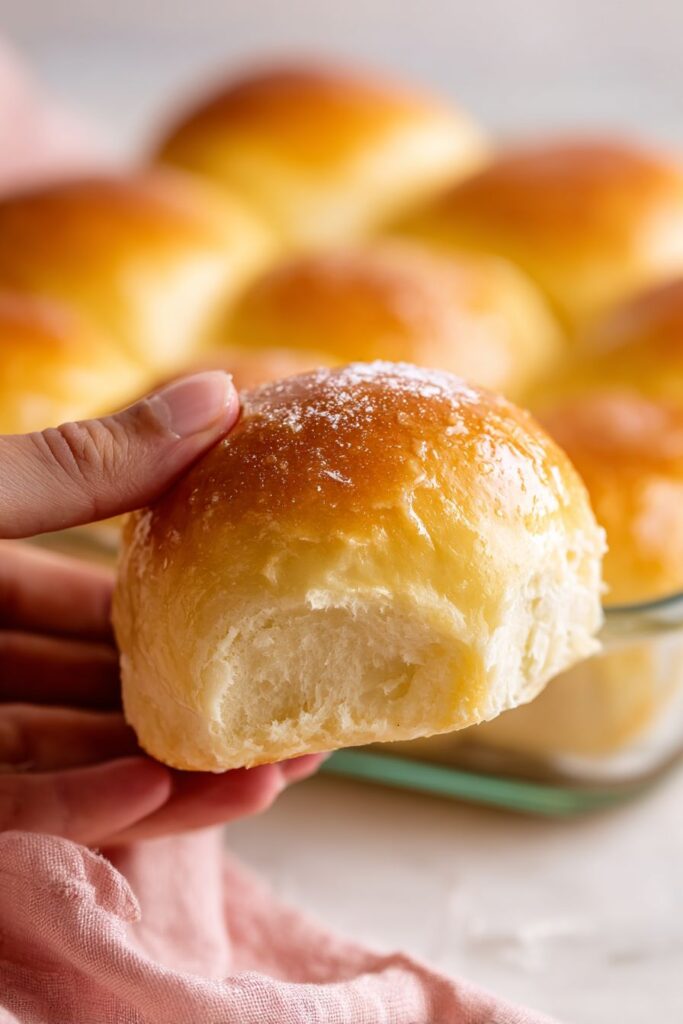
Luckily, this copycat Texas Roadhouse dinner roll recipe delivers all the buttery, sweet goodness you crave: they’re soft and pillowy, surprisingly easy to make at home, and perfect for any dinner table or special occasion.
Why You’ll Love These Texas Roadhouse Dinner Rolls
- Restaurant-quality at home – You can finally recreate those famous soft, buttery rolls from Texas Roadhouse right in your own kitchen without having to wait for a table.
- Simple pantry ingredients – Made with basic baking staples like flour, yeast, milk, and butter that you probably already have on hand.
- Soft and fluffy texture – These rolls come out perfectly tender and light, just like the ones you remember from the restaurant.
- Perfect for any meal – Whether you’re serving them with dinner, using them for sandwiches, or just enjoying them warm with butter, they’re always a hit.
- Make-ahead friendly – You can prepare the dough earlier in the day and bake them fresh when you’re ready to serve, making dinner prep so much easier.
What Kind of Flour Should I Use?
All-purpose flour is your best bet for these Texas Roadhouse-style dinner rolls, and it’s probably what you already have in your pantry. You don’t need anything fancy here – regular all-purpose flour from any brand will give you those soft, fluffy rolls you’re after. The protein content in all-purpose flour is just right for creating a tender crumb without making the rolls too dense or too chewy. If you only have bread flour on hand, you can use it, but your rolls might turn out a bit chewier than the original restaurant version. Just make sure to measure your flour properly by spooning it into the cup and leveling it off, since too much flour can make your rolls heavy.
Options for Substitutions
These fluffy dinner rolls are pretty forgiving when it comes to swaps, but there are a few things to keep in mind:
- Active dry yeast: You can use instant yeast instead – just use the same amount and mix it directly with the dry ingredients (no need to proof it first). Fresh yeast works too, but you’ll need about 2 ½ tablespoons.
- Whole milk: 2% milk works fine, though your rolls might be slightly less rich. You can also use buttermilk for a tangy flavor, or even substitute with warm water plus 2 tablespoons of powdered milk.
- Granulated sugar: Brown sugar adds a nice caramel note, or you can use honey (reduce milk by 2 tablespoons if using honey).
- All-purpose flour: Bread flour will give you chewier rolls with more structure, while cake flour makes them more tender. Don’t substitute with whole wheat flour completely – use no more than half whole wheat or your rolls will be dense.
- Unsalted butter: Salted butter works fine – just reduce the kosher salt to ½ teaspoon. You can also use vegetable oil or melted coconut oil, though the flavor won’t be quite as rich.
- Large egg: In a pinch, you can skip the egg, but add an extra 2 tablespoons of milk to keep the rolls moist. The texture will be slightly different but still good.
Watch Out for These Mistakes While Baking
The biggest mistake when making dinner rolls is using water that’s too hot for the yeast, which will kill it and leave you with dense, flat rolls – aim for milk that feels just warm to the touch, around 105-110°F.
Another common error is adding too much flour too quickly, so start with 3½ cups and gradually add more only if the dough is still sticky after kneading for several minutes.
Don’t rush the rising process by placing the dough in a hot spot, as this can cause uneven rising and tough rolls – instead, let them rise in a warm, draft-free area until they’ve doubled in size, which usually takes about an hour.
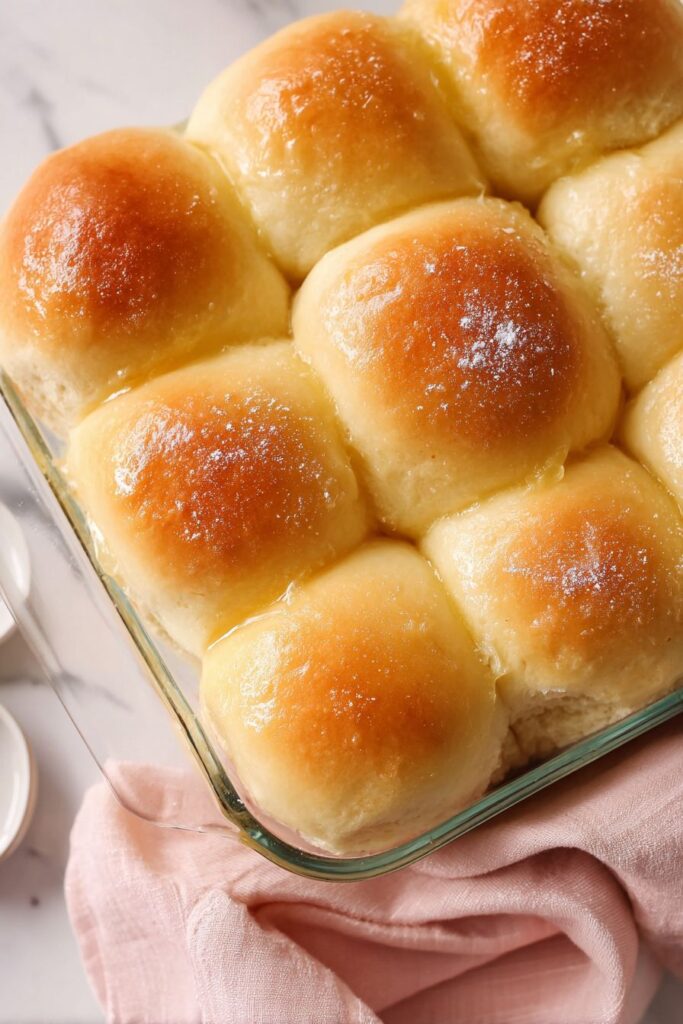
Finally, resist the urge to overbake these rolls since they continue cooking from residual heat once removed from the oven, and brush them with melted butter immediately after baking for that signature soft, buttery crust.
What to Serve With Texas Roadhouse Dinner Rolls?
These soft, buttery rolls are perfect alongside just about any hearty meal, but they really shine with classic comfort foods like grilled steak, roasted chicken, or a big bowl of chili. I love serving them with a spread of honey butter or regular butter for that authentic steakhouse experience. They’re also great for soaking up the sauce from dishes like beef stew, pot roast, or even a simple pasta dinner. Don’t forget to save a few rolls for making leftover sandwiches the next day – they’re just as good then!
Storage Instructions
Keep Fresh: These soft dinner rolls stay perfect when stored in an airtight container or wrapped in plastic wrap at room temperature for up to 3 days. I like to keep them on the counter so they’re ready to grab whenever I want one with dinner or as a snack.
Freeze: You can freeze these rolls for up to 3 months! Just wrap them individually in plastic wrap or place them in a freezer bag with parchment paper between each roll. I love doing this when I make a double batch – it’s like having fresh rolls ready anytime.
Warm Up: To bring back that fresh-from-the-oven taste, wrap the rolls in a damp paper towel and microwave for 15-20 seconds, or pop them in a 350°F oven for about 5 minutes. If they’re frozen, let them thaw at room temperature first, then warm them up the same way.
| Preparation Time | 30-45 minutes |
| Cooking Time | 12-15 minutes |
| Total Time | 1-1.5 hours |
| Level of Difficulty | Medium |
Estimated Nutrition
Estimated nutrition for the whole recipe (without optional ingredients):
- Calories: 2100-2300
- Protein: 45-55 g
- Fat: 60-70 g
- Carbohydrates: 370-400 g
Ingredients
For the rolls:
- 1/4 cup unsalted butter (softened to room temperature for easy mixing)
- 1 1/4 cups warm milk (105–110°F, helps activate yeast properly)
- 1 tsp kosher salt
- 1/3 cup sugar
- 1 large egg (room temperature, blends smoothly into dough)
- 1 package active dry yeast (I use Red Star for reliable rising)
- 3 1/2 to 4 cups all-purpose flour (I prefer King Arthur, add gradually until dough is soft and slightly sticky)
For the finish:
- 3 tbsp unsalted butter (melted and brushed on warm rolls for that signature golden finish)
Step 1: Activate Yeast and Build the Dough Base
- 1 1/4 cups warm milk
- 1 package active dry yeast
- 1/3 cup sugar
- 1/4 cup unsalted butter
- 1 large egg
- 1 tsp kosher salt
- 2 cups all-purpose flour
Pour the warm milk (105–110°F) into a large mixing bowl and add the yeast and sugar.
Let this mixture sit undisturbed for 5 minutes—this bloom period activates the yeast and creates a foamy surface, which signals the yeast is alive and ready to work.
Add the softened butter, room-temperature egg, and kosher salt to the bowl, then stir to combine.
Add 2 cups of flour and beat vigorously for 2-3 minutes with a wooden spoon or mixer.
I like to use the stand mixer on medium speed here because it develops the gluten structure evenly and saves your arm!
Step 2: Develop the Dough to Proper Consistency
- 1.5 to 2 cups all-purpose flour
Gradually add the remaining 1.5 to 2 cups of flour, one handful at a time, mixing constantly until the dough comes together into a soft, slightly sticky mass.
You want the dough to be tacky but not wet—it should pull away from the sides of the bowl while still clinging to your fingers.
Knead for another minute or two until the dough feels smooth and elastic.
I add flour gradually because humidity varies, and you want to stop just before the dough becomes stiff or dry.
Step 3: First Rise – Bulk Fermentation
Lightly grease a large bowl with butter or oil and place the dough inside, turning it once to coat all sides.
Cover the bowl tightly with plastic wrap or a damp towel and let it rise in a warm, draft-free spot for 45–60 minutes, until the dough roughly doubles in size.
This slow rise develops flavor and allows the gluten network to relax, which makes shaping easier later.
Step 4: Shape the Rolls and Arrange for Second Rise
- dough from Step 3
Once the dough has risen, punch it down gently to release excess gas, then turn it out onto a lightly floured surface.
Roll the dough into a rectangle approximately 12 inches long and 8 inches wide, aiming for about ½ inch thickness.
Using a sharp knife or pizza cutter, cut the rectangle into 24–30 equal pieces (smaller pieces create denser, darker rolls; larger pieces make fluffier rolls—choose based on your preference).
Arrange the pieces on parchment-lined baking sheets, spacing them about 1 inch apart so they have room to expand without touching.
Step 5: Second Rise and Oven Preparation
Cover the baking sheets with plastic wrap or a towel and let the rolls rise for another 45–60 minutes at room temperature until they’re puffy and springy to the touch.
Toward the end of this rise, preheat your oven to 350°F so it reaches the proper temperature right as the rolls finish rising.
This timing ensures the rolls bake evenly and develop that signature golden exterior without drying out.
Step 6: Bake and Finish with Butter
- rolls from Step 5
- 3 tbsp unsalted butter
Bake the rolls at 350°F for 12–15 minutes until the tops are deep golden brown.
Remove them from the oven and immediately brush the entire surface of each warm roll with the melted butter—this gives them that restaurant-quality shine and flavor that makes Texas Roadhouse rolls so irresistible.
The butter soaks into the warm dough and creates a tender, rich crust.




can the dough be frozen to bake later?