I’ve been obsessed with focaccia lately. There’s something about that chewy, oily bread that makes me want to eat the whole pan in one sitting. But plain focaccia, while great, can get a little boring after the tenth batch. That’s when I started playing around with toppings.
Cherry tomatoes changed everything for me. They get sweet and jammy in the oven, and their juice soaks right into the dough. Plus, they look pretty without me having to try too hard. I like using rosemary because it grows like a weed in my garden, and honestly, what else pairs better with tomatoes?
This recipe takes a little time because of the rising, but most of that is hands-off. I’ll start the dough in the morning and let it do its thing while I’m working. By dinner time, I’ve got fresh bread that makes the whole house smell like an Italian bakery. My kids will actually eat their vegetables if they’re baked into this focaccia.

Why You’ll Love This Tomato Focaccia
- Simple ingredients – You probably have most of these staples in your pantry already – just flour, yeast, salt, and olive oil form the base of this delicious bread.
- Beginner-friendly – Even if you’ve never made bread before, focaccia is forgiving and easy to work with, making it a great first homemade bread recipe.
- Impressive presentation – The cherry tomatoes and rosemary on top make this look like it came from a fancy bakery, perfect for serving to guests or bringing to gatherings.
- Versatile side dish – This focaccia pairs well with soups, salads, pasta dishes, or you can enjoy it on its own as a snack with some olive oil for dipping.
What Kind of Tomatoes Should I Use?
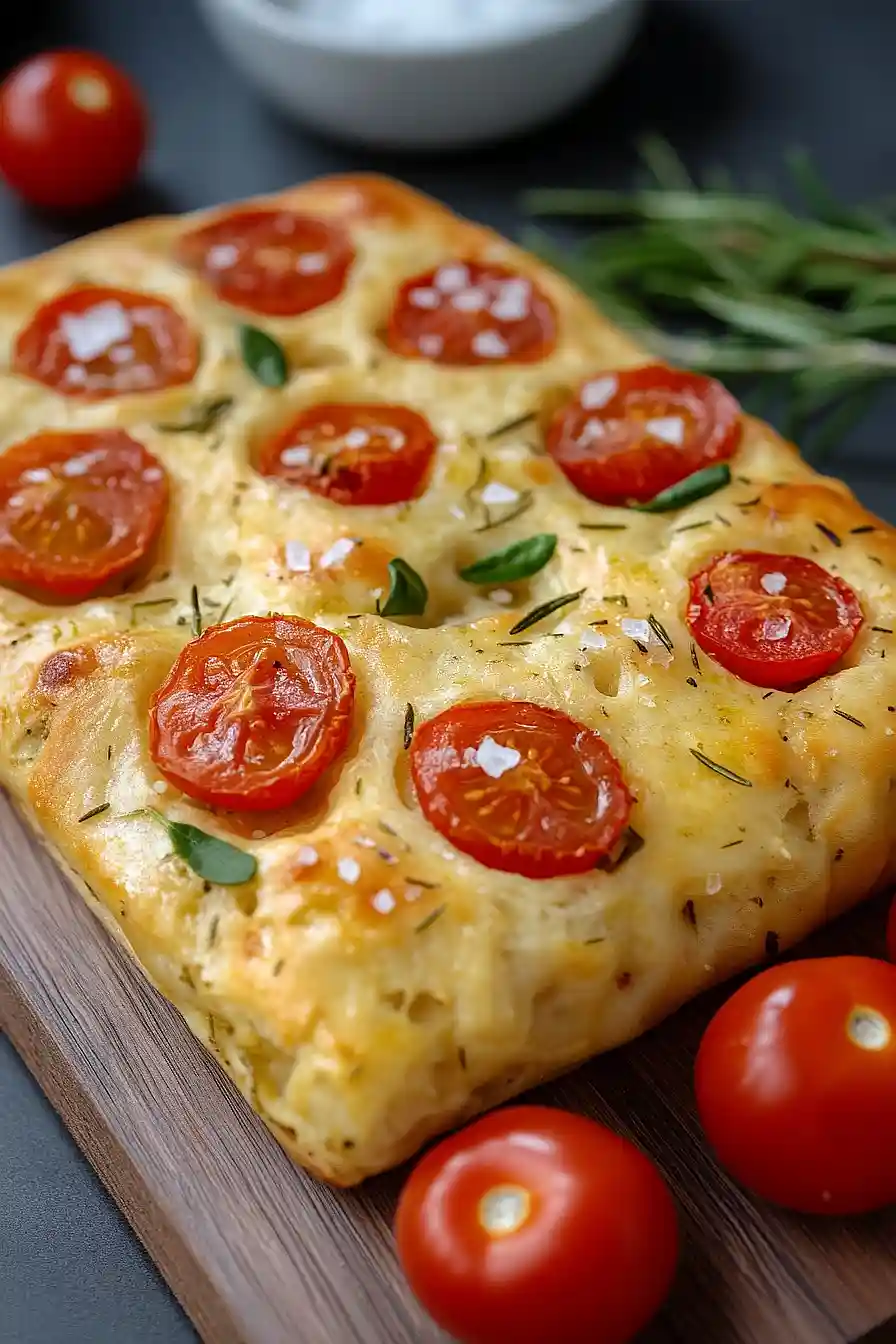
Cherry tomatoes are the classic choice for focaccia, and they work great because they’re small enough to nestle into the dough without weighing it down. You can use any variety you find at the store – red cherry tomatoes, grape tomatoes, or even those sweet little Sungolds if you can get your hands on them. If cherry tomatoes aren’t available, you could also slice up some Roma or plum tomatoes into rounds, though they’ll release more moisture during baking. Whatever you choose, try to pick tomatoes that are ripe but still firm, as overly soft ones can get a bit mushy in the oven.
Options for Substitutions
This focaccia recipe is pretty forgiving, so here are some swaps you can make:
- Flour: All-purpose flour is what you need here – don’t substitute with whole wheat or other flours as they’ll change the texture and won’t give you that classic light, airy focaccia we’re after.
- Fresh rosemary: If you don’t have fresh rosemary, you can use dried rosemary but cut the amount to 1 tablespoon since dried herbs are more concentrated. Other herbs like thyme or oregano work nicely too.
- Cherry tomatoes: Grape tomatoes are basically the same thing and work perfectly. You could also use sliced Roma tomatoes, but make sure to pat them dry with paper towels first so they don’t make the bread soggy.
- Olive oil: Olive oil really is best for focaccia since it adds that signature flavor, but if you’re in a bind, you can use vegetable or canola oil. Just know the taste won’t be quite as rich.
- Active dry yeast: Instant yeast works just as well and can be mixed directly with the flour without proofing first. Use the same amount.
Watch Out for These Mistakes While Baking
The biggest mistake people make with focaccia is not using enough olive oil – this bread should be generously oiled both on the pan and on top, which creates that crispy, golden crust everyone loves.
Another common error is skipping the dimpling step or not pressing deep enough into the dough, as those fingerprint indents are what hold the olive oil and create the signature texture of focaccia.
Make sure your water is lukewarm (around 100-110°F) when mixing with the yeast – water that’s too hot will kill the yeast, while water that’s too cold won’t activate it properly.
Finally, resist the urge to cut into the focaccia right out of the oven, since letting it cool on a rack for at least 10 minutes prevents the bottom from getting soggy and helps the texture set perfectly.

What to Serve With Tomato Focaccia?
Tomato focaccia is perfect for serving alongside a big Italian salad with mixed greens, olives, and a simple vinaigrette. I love pairing it with a hearty minestrone or white bean soup since the bread is ideal for soaking up all those flavorful broths. You can also serve it as part of an antipasto spread with cured meats, cheeses, marinated artichokes, and roasted peppers for a casual appetizer situation. If you’re making it for dinner, it goes great with pasta dishes like spaghetti carbonara or baked ziti, or even as a side to grilled chicken or fish.
Storage Instructions
Store: Keep your focaccia fresh by wrapping it in plastic wrap or storing it in an airtight container at room temperature for up to 2 days. After that, move it to the fridge where it’ll last another 3-4 days, though it might lose a bit of that fresh-baked softness.
Freeze: Focaccia freezes really well! Wrap it tightly in plastic wrap, then again in foil, and freeze for up to 3 months. You can freeze the whole thing or cut it into portions first so you can grab just what you need.
Refresh: To bring your focaccia back to life, thaw it at room temperature if frozen, then warm it in a 350°F oven for about 10 minutes. A light drizzle of olive oil before reheating helps restore that crispy exterior and soft inside we all love.
| Preparation Time | 20-30 minutes |
| Cooking Time | 35-40 minutes |
| Total Time | 95-110 minutes |
| Level of Difficulty | Medium |
| Servings | 8 pieces |
Estimated Nutrition
Estimated nutrition for the whole recipe (without optional ingredients):
- Calories: 1800-2000
- Protein: 45-55 g
- Fat: 40-50 g
- Carbohydrates: 340-370 g
Ingredients
For the dough:
- 4 1/4 cups flour (I always use King Arthur bread flour for a better chew)
- 2 1/4 tsp yeast
- 2 tsp salt
- 2 tbsp rosemary (finely chopped to release aromatic oils)
- 3 tbsp olive oil
- 2 cups water (lukewarm, ideally between 105°F and 115°F)
For the topping:
- 2 cups cherry tomatoes (sliced in half vertically)
- 1 tbsp rosemary
- olive oil (I prefer Filippi Berio extra virgin for finishing)
- sea salt (flaky variety like Maldon adds a nice crunch)
Step 1: Mix the Dough and Begin First Rise
- 4 1/4 cups flour
- 2 1/4 tsp yeast
- 2 tsp salt
- 2 tbsp rosemary
- 2 cups lukewarm water
- 3 tbsp olive oil
In a large bowl, combine the flour, yeast, salt, and finely chopped rosemary.
The fine chopping of the rosemary releases its aromatic oils, distributing flavor throughout the dough more evenly.
Add the lukewarm water and olive oil, mixing until a shaggy dough forms.
Use a wooden spoon or your hands to bring everything together, then cover the bowl with a damp towel or plastic wrap.
Let it rise at room temperature for 40-60 minutes until it has roughly doubled in size and looks puffy and airy.
Step 2: Prepare the Oven and Pan
- olive oil
While the dough is rising, preheat your oven to 425°F.
This gives you plenty of time for the oven to reach full temperature and stabilize.
Generously oil a baking sheet or focaccia pan (approximately 9×13 inches or similar size) with olive oil, making sure to coat the entire surface including the edges.
Step 3: Shape the Dough and Create Dimples
- dough from Step 1
- olive oil
Once the dough has risen, transfer it to your oiled pan.
Using oiled fingers (this prevents sticking), gently press and stretch the dough to fill the pan evenly, working from the center outward.
Don’t be afraid to let it rest a minute if it springs back—dough has memory!
Once it’s stretched to fill the pan, use your oiled fingertips to poke dimples all across the surface, creating those signature focaccia indentations.
These dimples not only look beautiful but also help trap oil and seasonings.
Step 4: Top with Tomatoes, Rosemary, and Salt
- 2 cups cherry tomatoes
- 1 tbsp rosemary
- sea salt
Arrange the halved cherry tomatoes cut-side up across the dough, pressing them gently into the dimples so they nestle in and won’t slide around during baking.
Sprinkle the remaining fresh rosemary evenly over the surface, then finish with flaky sea salt.
I like to use Maldon salt here because the larger crystals add a pleasant textural crunch that you lose with fine table salt.
The tomatoes will release their juices as they bake, creating little pockets of flavor throughout the focaccia.
Step 5: Bake Until Golden and Crisp
Place the pan in your preheated 425°F oven and bake for 35-40 minutes until the top is golden brown and the focaccia has risen noticeably.
You’ll know it’s done when the edges are deeply browned and smell wonderfully aromatic, and the bottom sounds hollow when you tap it gently.
The tomatoes should be slightly caramelized at the edges.
Step 6: Cool and Finish with Extra Virgin Olive Oil
- olive oil
Remove the focaccia from the oven and immediately drizzle it with your best extra virgin olive oil (I prefer Filippi Berio for its fruity, peppery notes that complement the tomato and rosemary).
Transfer to a wire rack to cool for at least 5-10 minutes before slicing.
This brief cooling allows the structure to set while the oil soaks in, and it keeps the inside tender while the crust stays crisp.
Slice into portions and serve warm or at room temperature.
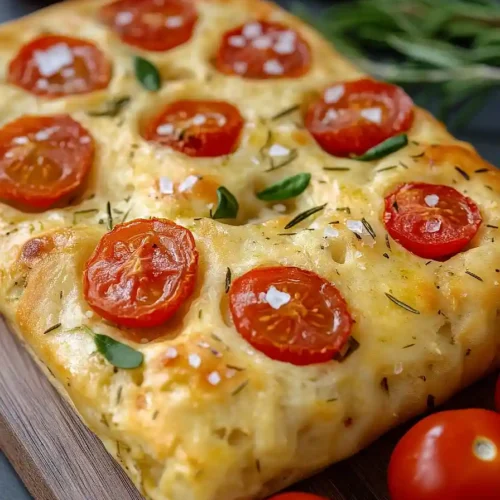
Classic Tomato Focaccia
Ingredients
For the dough
- 4 1/4 cups flour (I always use King Arthur bread flour for a better chew)
- 2 1/4 tsp yeast
- 2 tsp salt
- 2 tbsp rosemary (finely chopped to release aromatic oils)
- 3 tbsp olive oil
- 2 cups water (lukewarm, ideally between 105°F and 115°F)
For the topping
- 2 cups cherry tomatoes (sliced in half vertically)
- 1 tbsp rosemary
- olive oil (I prefer Filippi Berio extra virgin for finishing)
- sea salt (flaky variety like Maldon adds a nice crunch)
Instructions
- In a large bowl, combine the flour, yeast, salt, and finely chopped rosemary. The fine chopping of the rosemary releases its aromatic oils, distributing flavor throughout the dough more evenly. Add the lukewarm water and olive oil, mixing until a shaggy dough forms. Use a wooden spoon or your hands to bring everything together, then cover the bowl with a damp towel or plastic wrap. Let it rise at room temperature for 40-60 minutes until it has roughly doubled in size and looks puffy and airy.
- While the dough is rising, preheat your oven to 425°F. This gives you plenty of time for the oven to reach full temperature and stabilize. Generously oil a baking sheet or focaccia pan (approximately 9x13 inches or similar size) with olive oil, making sure to coat the entire surface including the edges.
- Once the dough has risen, transfer it to your oiled pan. Using oiled fingers (this prevents sticking), gently press and stretch the dough to fill the pan evenly, working from the center outward. Don't be afraid to let it rest a minute if it springs back—dough has memory! Once it's stretched to fill the pan, use your oiled fingertips to poke dimples all across the surface, creating those signature focaccia indentations. These dimples not only look beautiful but also help trap oil and seasonings.
- Arrange the halved cherry tomatoes cut-side up across the dough, pressing them gently into the dimples so they nestle in and won't slide around during baking. Sprinkle the remaining fresh rosemary evenly over the surface, then finish with flaky sea salt. I like to use Maldon salt here because the larger crystals add a pleasant textural crunch that you lose with fine table salt. The tomatoes will release their juices as they bake, creating little pockets of flavor throughout the focaccia.
- Place the pan in your preheated 425°F oven and bake for 35-40 minutes until the top is golden brown and the focaccia has risen noticeably. You'll know it's done when the edges are deeply browned and smell wonderfully aromatic, and the bottom sounds hollow when you tap it gently. The tomatoes should be slightly caramelized at the edges.
- Remove the focaccia from the oven and immediately drizzle it with your best extra virgin olive oil (I prefer Filippi Berio for its fruity, peppery notes that complement the tomato and rosemary). Transfer to a wire rack to cool for at least 5-10 minutes before slicing. This brief cooling allows the structure to set while the oil soaks in, and it keeps the inside tender while the crust stays crisp. Slice into portions and serve warm or at room temperature.